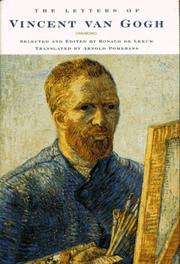
Read The letters of Vincent van Gogh first, before any biography. About 820 letters survive, most of them to his brother Theo, and they are the primary source every biographer on this list is working from: technical discussion of colour, accounts of specific canvases, and an unsparing record of his religious crisis and his illness. Our record is an early English selection at 351 pages, so buy whichever complete edition or well-chosen selection you can find rather than that specific printing.
Putting the letters first is the one decision that changes everything downstream. Once you have heard him think, you can see exactly where a biographer is quoting, where they are inferring, and where they are storytelling. Irving Stone's Dear Theo is the letters arranged into a continuous autobiography, which is how most twentieth-century readers met them — useful, but a selection shaped by the same author who wrote the novel at the end of this path.
The documented life, in three sizes
Two different books on this list display in our catalogue as Van Gogh, so buy by author. Julian Bell's is the short one, 163 pages by a working painter, and it is unusually good on what Van Gogh was trying to do with paint rather than on his psychology. Read it first as orientation.
Steven Naifeh and Gregory White Smith's Van Gogh is the definitive modern biography — 953 pages in our record, ten years of work, with the Van Gogh Museum's archive behind it, and the fullest account of the family, the illness and the money. It also argues, in an appendix, that Van Gogh did not shoot himself but was accidentally shot by local boys. That thesis is disputed: researchers at the Van Gogh Museum have rejected it publicly and continue to hold that the evidence supports suicide. Read the appendix as a live scholarly argument that most specialists do not accept, not as a revelation.
Philip Callow's Vincent van Gogh is a more conventional single-volume life written before Naifeh's, and is useful precisely as a check on how much of the standard narrative the newer research actually changed.
Arles, Gauguin and the ear
Martin Gayford's The yellow house reconstructs the nine weeks Gauguin and Van Gogh spent working in the same house, day by day from letters and canvases. It is the most vivid book here and the right way into the period. Douglas Druick's Van Gogh and Gauguin is the Art Institute of Chicago's exhibition study of the whole relationship, before, during and after Arles, with the paintings reproduced alongside the argument — read it after Gayford for the scholarly apparatus.
Martin Bailey's Studio of the South is the most granular treatment of the yellow house itself, using local archival material other biographers did not. Bernadette Murphy's Van Gogh's ear is seven years of archival detective work in Arles, which established among other things who the woman he gave the ear to actually was, and how much of the ear was cut. Between them these four books show how thin the evidence is under most of what everyone thinks they know about December 1888.
Looking at the pictures
Now stop treating the paintings as evidence about the man. Ronald Pickvance's Van Gogh in Arles is the Metropolitan Museum catalogue that established the chronology of the Arles paintings and remains the standard reference for the period; Van Gogh in Saint-Rémy and Auvers is its companion, covering the asylum year and the final months. Both are dry and indispensable, and between them they cover almost everything most readers want to look at, in the order it was painted. Keep Van Gogh - the Complete Paintings by Ingo Walther and Rainer Metzger beside you as the practical index for finding any picture the other books mention; buy it for the reproductions rather than the commentary.
The legend, read last
Lust for Life is a novel. Irving Stone published it in 1934, it became a film, and it is the single most influential thing ever written about Van Gogh — it is where the mad-genius image in the public mind comes from. Read it after the biographies, never before, and treat every scene as invented unless you have seen it documented elsewhere. It is on this path because you cannot see what the legend added until you know what the record says.
Finish with Mariella Guzzoni's Vincent's Books, a study of what Van Gogh actually read — Dickens, Zola, Michelet, the Bible — and how specific books shaped specific paintings. It is the correction to the novel: a formidably literate man making deliberate choices, which is not the figure the legend requires. Stage goals and study plans for the whole sequence are at /paths/pt_ai_vincent-van-gogh.