Vagabond Reading Order: How to Read Takehiko Inoue's Musashi Manga
Takehiko Inoue's Vagabond exists in English in two incompatible numbering schemes, and the collected VIZBIG edition is the one to read: twelve fat volumes, three original volumes each, and the only form in which the whole available run is reliably in one place. This path runs all twelve in order, marks the point where Inoue's ink brush replaces his pen, and ends with Eiji Yoshikawa's Musashi, the 1930s serial novel Vagabond is adapting.
Takezo becomes Musashi: VIZBIG volumes 1 to 3
IntermediateRead the Sekigahara opening and the Takuan sequence, and learn the cast the rest of the series keeps circling back to.
▸ Study plan for this stage
Pace: Two to three weeks, and read the page counts correctly before you plan. These three VIZBIG volumes come to 1,976 pages — 728, 632 and 616 — but each one collects three original volumes, so this stage is nine ordinary Vagabond volumes rather than three long books. At manga pace a VIZBIG is two to thr
- Sekigahara as the starting condition rather than a set piece: Takezo begins as a survivor of a lost side, not as a hero
- Takuan and the renaming — the moment the historical Musashi is manufactured out of a violent teenager
- The village hunt as the series' statement of method: pursuit drawn in near-silence, over many more pages than the incident warrants
- The double narrative introduced in volume 3 — Kojiro's childhood running in parallel with Musashi's rise — and the structural gamble it represents
- Strength as the only value Takezo has at the start, and the series' patience in taking it away from him
- VIZBIG numbering versus the original volumes, and why mixing the two schemes produces a run that looks complete but gaps
- What is Takezo before Takuan finds him, and what precisely does the renaming change — his behaviour, his standing, or only what he is called?
- How many pages does the village hunt occupy, and what would be lost if Inoue had drawn it in a quarter of that space?
- Why does volume 3 introduce Kojiro as a child rather than as an opponent, and what does the parallel narrative cost the reader in momentum?
- Which characters introduced in these nine original volumes does the series keep returning to, and what do they each represent to Musashi?
- Is this series' Musashi recognisably a protagonist you are meant to admire in these opening volumes? Argue it from specific scenes.
- Before starting, confirm which edition you are holding. If a volume says VIZBIG on the spine it contains three original volumes; if it does not, you are in the other numbering scheme and this path's stage boundaries will not line up.
- Time yourself on volume 1's 728 pages. Knowing whether that took you two hours or six tells you which kind of reader you are for this series and lets you plan the Ichijoji stage honestly.
- Pick the longest wordless sequence in volume 1 and reread it deliberately slowly, one panel at a time. Then read it at your normal speed. The difference is the argument for the pace this stage recommends.
- Keep a two-column log from volume 3 onward: what Musashi is doing, what Kojiro is doing. The parallel structure is much easier to hold when it is written down.
Next up: The cast and the double narrative are in place; the next stage takes Musashi into the long duel arc where Inoue's tools change under him.

The only correct entry point: Takezo surviving Sekigahara, the hunt through his home village, and the monk Takuan who renames him. Collects the first three original volumes, so it covers considerably more ground than a single-volume start.
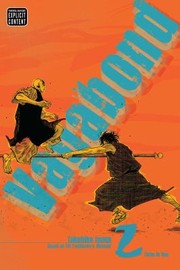
Musashi on the road and the first Yoshioka encounters, which set up the feud that structures the entire middle of the series. Read straight on — the first two VIZBIG volumes are one continuous movement.
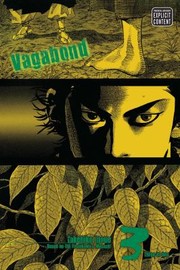
Introduces Sasaki Kojiro's childhood in parallel with Musashi's rise, the structural gamble the whole series rests on. If the double narrative works for you here, it will work for the next nine volumes.
The Yoshioka school: VIZBIG volumes 4 to 6
IntermediateFollow the long duel arc and watch Inoue's line change from manga pen to brush.
▸ Study plan for this stage
Pace: Two to three weeks for 1,872 pages across three VIZBIG volumes — 664, 624 and 584 — which is another nine original volumes. This stage is the one to read in daylight and unhurried. The Inshun fight in volume 4 is drawn as a study in stillness, and the Sekishusai sequence in volume 5 is almost entire
- The Hozoin spear temple and the Inshun fight: a duel constructed out of stillness, setting the pacing rules for everything after it
- Sekishusai and the Yagyu sequence as the reframing of mastery — the point where winning stops being Musashi's goal
- Pen to brush: Inoue's line changing from manga convention toward ink painting, and what that does to weight, texture and speed
- The Yoshioka feud as the structural spine of the middle of the series
- Combat as characterisation, where a fighter's technique is the most reliable statement of who he is
- Silence used as a narrative resource, with pages of no dialogue carrying the argument
- What does the Inshun fight achieve that a conventional action sequence could not, and how does Inoue build tension without motion?
- What does Sekishusai demonstrate to Musashi, and does Musashi understand it at the time or only later?
- Where exactly does the brushwork take over? Identify a page before and a page after, and describe the difference in the line.
- How does the Yoshioka feud escalate — through the school's actions, Musashi's, or the logic of reputation?
- After these nine original volumes, what does mastery mean in this series, and how does that differ from what Takezo believed in the opening?
- Read the Inshun fight twice: once at your normal pace, once forcing yourself to spend at least ten seconds on every page. Write down what you noticed only on the second pass.
- Find the earliest page in volume 6 where you are confident the brush has replaced the pen, then work backwards a hundred pages to see whether the change is a switch or a gradient.
- Take the Sekishusai encounter and summarise, in one sentence, what changes in Musashi. If your sentence is about the fight rather than about him, reread the sequence.
- Add the Yoshioka names to the log you started in the previous stage. The feud has more participants than it first appears and the schoolyard duel assumes you have kept track.
Next up: The Yoshioka feud has escalated past any possibility of resolution by duel, which is what makes the next stage's set piece — seventy men against one — the inevitable rather than the spectacular option.

The Hozoin spear temple and the Inshun fight, the first duel Inoue draws as a study in stillness rather than motion. The pacing rules for the rest of the series are set here.

Sekishusai and the Yagyu sequence — the encounter that reframes what mastery means and quietly ends Musashi's belief that winning is the goal.

The Yoshioka feud escalates toward the schoolyard duel. This is the volume where the brushwork takes over completely; read it in daylight and slowly.
Ichijoji and after: VIZBIG volumes 7 to 9
IntermediateRead the series' longest set piece and the collapse that follows it.
▸ Study plan for this stage
Pace: Three weeks, and this is the one stage where the page counts genuinely understate the work. 1,864 pages across three VIZBIG volumes — 640, 624 and 600 — but volume 7's approach to Ichijoji runs for hundreds of near-wordless pages and rewards being read at a fraction of normal manga speed; treat it l
- Ichijoji as the series' longest set piece: seventy against one, drawn nearly without dialogue over hundreds of pages
- Technical extremity as content — the drawing itself is what the sequence is about, not merely how it is delivered
- The breakdown in volume 8, and the series abandoning the action-comic mode it does not fully return to
- Kojiro's parallel narrative coming forward and the two lives converging in scale before they converge in person
- Aftermath given more space than the event, which is the inversion most action comics never attempt
- Why volume 9 is a prerequisite for the farming arc rather than a bridge to it
- How does Inoue sustain hundreds of near-wordless pages without the sequence becoming repetitive — what varies, panel to panel?
- What is Musashi's state at the end of Ichijoji, and how much of it is physical?
- Volume 8 is where the book stops being an action comic. What replaces the action, and does the series ever get it back?
- How does Kojiro's story change when it moves to the foreground, and what does his deafness let Inoue do formally?
- Why must volume 9 be read before the farming arc? Answer it in terms of what volume 10 assumes you already understand.
- Read volume 7's Ichijoji sequence across two or three sessions, at deliberately reduced speed. Count roughly how many pages carry no dialogue at all — the number is the sequence's claim on your attention.
- Pick five consecutive pages from the middle of Ichijoji and describe what changes between them. If you can find variation in five pages chosen at random, the sequence is doing what it claims.
- Write down Musashi's condition at the end of volume 7 and again at the end of volume 8. The gap between the two is the arc this stage exists to deliver.
- Bring your two-column Musashi and Kojiro log up to date at the end of volume 9. The convergence is easier to see as two columns closing than as a feeling.
Next up: Musashi has been broken and Kojiro's life has caught up with his in scale, which is the state the series needs before it can spend three volumes on a man learning to farm.

The approach to Ichijoji, seventy men against one, drawn over hundreds of near-wordless pages. The most technically extraordinary stretch of the series.

The aftermath, and Musashi's physical and mental breakdown. The book stops being an action comic here and does not fully return.

Kojiro's parallel narrative comes fully forward, and the two lives finally converge in scale if not yet in person. Essential before the farming arc, which otherwise reads as a digression.
The farm, and where the series stops: VIZBIG volumes 10 to 12
IntermediateRead the agricultural arc on its own terms and understand that Vagabond is unfinished.
▸ Study plan for this stage
Pace: Two to three weeks for 1,888 pages — 624, 632 and 632 — nine more original volumes, and the stage that divides readers. The farming arc has almost no fighting in it and its interest is in bodies at work: planting, flooding, failing, planting again. Read it at the same unhurried pace as the duels rat
- The agricultural arc on its own terms — labour, seasons and failure as subject matter rather than as interlude
- Inoue's real interest in bodies at work, of which the duels were always a special case
- Musashi outside the logic of reputation, and what he is when nobody is trying to kill him
- The return to the road, and what the village leaves in him
- The series as unfinished: no Ganryujima, no conclusion to the Kojiro narrative, and a hiatus of years
- How to end a reading of an unfinished work deliberately rather than by running out of pages
- What does the farming arc do for Musashi's development that another duel arc could not have done?
- Readers who abandon Vagabond usually leave in these volumes. Reconstruct their case as strongly as you can, then answer it.
- How does Inoue draw agricultural labour differently from combat, and what does the comparison suggest about what he finds interesting in either?
- What has changed in Musashi by the time he returns to the road, and how is it shown rather than stated?
- Given that the series does not reach Ganryujima, what does the double narrative with Kojiro amount to as it stands?
- Before opening volume 10, write down what you want from the rest of the series. Read to the end of volume 12 and compare — the exercise exists to make the hiatus a known condition rather than an ambush.
- Pick one sequence of farm labour and one duel of comparable length and compare how Inoue distributes panels, black and empty space across each.
- Close your Musashi and Kojiro log at the end of volume 12 and write the two columns' final entries. Seeing the unfinished convergence written out is the honest version of the ending.
- Decide whether you want the ending badly enough to read a 977-page novel for it. That is precisely the choice the next stage is built around.
Next up: Vagabond stops without its duel; the last stage goes to the novel Inoue is adapting, which does reach it.

Musashi in the village, learning to farm. Readers who quit Vagabond usually quit here; readers who love it usually love it because of here.

The farming arc's resolution and the return to the road. Inoue's interest in bodies at work rather than bodies fighting is at its clearest.

The last collected volume, and the end of what exists in English. The series has been on hiatus for years and does not reach the Ganryujima duel — read it knowing that, so the stopping point is a choice rather than a disappointment.
The novel underneath
IntermediateRead the source Inoue is adapting and see how much of Vagabond is his own invention.
▸ Study plan for this stage
Pace: Four to six weeks, and change your expectations completely. Musashi is 977 pages of prose in Charles S. Terry's translation — by a very long way the biggest single reading commitment on this path, and unlike the twelve VIZBIG volumes it will not go down in an afternoon. It was written as a newspaper
- Yoshikawa's serial novel as Vagabond's direct source, and the difference between adapting and inventing
- Newspaper serialisation as a form — short chapters, recurring hooks, a large cast handled in rotation
- How much of what feels most characteristic of Vagabond is Inoue's rather than Yoshikawa's
- The Ganryujima duel as the novel's destination, and the shape a completed version of this story has
- A twentieth-century popular novel about a seventeenth-century figure, which is neither a chronicle nor a biography
- Reading a source after an adaptation: what that ordering shows you that the reverse would not
- Which characters and episodes are Yoshikawa's and which are Inoue's inventions or heavy reworkings?
- How does the novel handle Kojiro compared with the manga's parallel-childhood structure?
- What does Yoshikawa do with Takuan, Otsu and Matahachi that Vagabond changes, and what does each change accomplish?
- Having reached the Ganryujima duel in prose, does it read as the ending Vagabond was building toward?
- What does the serial form give Yoshikawa, and what does it cost him — point to specific chapter transitions.
- Keep a running list, as you read, of episodes you recognise from the manga and episodes you do not. By the end you will have a rough map of where the adaptation departs from its source.
- Read the Ganryujima chapters, then reread the last fifty pages of VIZBIG volume 12. The manga's stopping point looks different once you know where it was headed.
- Pace yourself at forty to fifty pages an evening for the first week and check whether the serial chapter structure makes that easier than it would be in a modern novel of the same length.
- Write a paragraph on the single largest thing Inoue added that Yoshikawa does not have. Most readers name the same one; the exercise is to justify it from both texts rather than from consensus.
Next up: This is the end of the path: the whole English-language Vagabond in one numbering scheme, the point where the brush replaced the pen, an honest account of where the series stops, and the novel that supplies the ending it never reached.
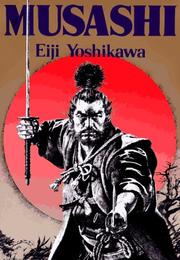
Yoshikawa's serialised novel is the direct source for Vagabond, and it does reach the duel with Kojiro that the manga has not. Read it after the twelve volumes, when you want an ending.