Truman Capote Reading Order: Where to Start with His Books
Capote's output is small, wildly uneven, and dominated by one true-crime book that is nothing like the rest of him. Reading In Cold Blood first makes everything else look slight; reading it fourth makes it look like the endpoint it was. This path takes the fiction in order of how much of the later manner it contains.
Start here
BeginnerBegin with the two short works that show the prose at its most charming.
▸ Study plan for this stage
Pace: About 10 days for 208 pages. Breakfast at Tiffany's is 160 pages and is genuinely a two-evening novella; A Christmas Memory is 48 pages and is one sitting, best taken on its own rather than tacked onto the end of the other. Read the novella first, then leave a day before the story — the two are clos
- Holly Golightly on the page is harder, poorer and sadder than the film made her. She is nineteen, she is being paid, and the narrator is not her love interest — going in expecting the movie is the commonest way to misread the book.
- The novella is narrated in retrospect by a writer looking back at a neighbour, and the whole thing is framed by a piece of news at the start. The nostalgia is built into the structure rather than added by tone.
- Holly invented herself, and the novella lets the invention slip in front of you rather than exposing it. The moment her earlier name arrives is the book's only real revelation and Capote spends no time on it.
- Capote's sentences are the reason to read him first here. The prose is exact, unforced, and much plainer than his reputation suggests, and the novella is short enough to notice every choice.
- The unnamed cat is the whole argument in one object — belonging, refusal to belong, and what it costs the thing that gets left.
- A Christmas Memory is autobiography with the machinery removed. A boy and an elderly cousin make fruitcakes in Depression-era Alabama, and the story does almost nothing except record it precisely.
- It is the least defended thing he wrote — no irony, no glamour, no distance. Reading it beside Holly Golightly's New York gives you both ends of him inside a hundred pages.
- Who is the narrator of Breakfast at Tiffany's, and what does he want from Holly? He never says, so you will have to build it from what he notices.
- Where does Holly's manufactured self first crack, and what does Capote do with the sentence immediately afterwards?
- The mean reds are distinguished from the blues in one short passage. Is the distinction real, and is it Holly's or Capote's?
- A Christmas Memory has no conflict. What is holding it together instead, and why does the ending land as hard as it does?
- Both pieces are about someone who is loved and then lost. What is the difference in how each handles the loss?
- Copy out the first paragraph of Breakfast at Tiffany's and the first paragraph of A Christmas Memory and read both aloud. Written within a couple of years of each other, they are the clearest possible demonstration of Capote's range of voice.
- Track every fact the narrator learns about Holly and where he learns it. Almost nothing comes from her directly, and mapping that is how the novella's method becomes visible.
- Watch the 1961 film after reading the novella, not before, and list the changes to the ending and to the narrator. The differences are a short course in what the prose was doing.
- Read A Christmas Memory a second time attending only to the money — what things cost, what is scraped together, who has none. The Depression is present in every paragraph without being named once.
Next up: You have met the charm at its most controlled; the two early Southern novels are where the same material sits before it was polished, and where the autobiography is.
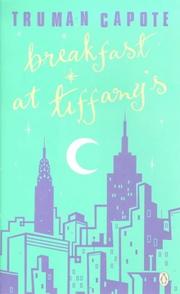
Holly Golightly is a harder and sadder creation on the page than in the film, and the novella is under a hundred pages. The best entry to what Capote could do with a sentence.

A boy and an elderly cousin making fruitcakes in Depression-era Alabama. Very short, and the least defended thing he wrote.
The Southern novels
BeginnerMove to the early fiction, which is where the autobiography is.
▸ Study plan for this stage
Pace: 3 weeks for 418 pages. Other Voices, Other Rooms is 231 pages and takes about two — it is his most humid and least plotted book and reading it quickly makes it seem like nothing happens, which is not quite true. The Grass Harp is 187 pages and takes one; it is the warmest thing on this path and read
- Other Voices, Other Rooms was published when Capote was twenty-three and is a coming-of-age story about a boy sent to a decaying Southern house to find a father who cannot receive him.
- The novel is closer to Southern Gothic than to anything else he wrote — heat, decay, a mansion, a set of adults who are all in some way ruined — and it is the only place he used that machinery at full strength.
- Joel's sexuality is the actual subject, handled through image and gesture rather than statement, and the final scene is the point at which the book stops being ambiguous about it. It was startling in 1948 and it is the reason the novel is still argued about.
- The author photograph on the first edition — Capote reclining, looking directly at the camera — caused as much comment as the prose, and it is worth knowing as a fact about how his career was made, not just how the book was received.
- The Grass Harp starts from the same Alabama childhood and makes it comic and communal instead of Gothic. Three misfits move into a tree and refuse to come down, and the town's response is the plot.
- The elderly cousin of A Christmas Memory reappears in a different form in The Grass Harp. Capote reused this one relationship across his whole career and reading the three pieces together shows the same figure being tried three ways.
- The title image — the field of grass that holds and repeats the stories of everyone buried under it — is Capote's clearest statement about what he thought fiction was for.
- Joel is looking for his father. What does he find instead, and at what page does the novel stop pretending the search is the point?
- Other Voices, Other Rooms is heavily atmospheric. Name one thing the atmosphere is doing that plain narration could not do here.
- Idabel is one of the strongest child characters he wrote. What is she for in Joel's story, and does the novel do right by her?
- The Grass Harp is a comedy about people who withdraw from a town. Is the withdrawal a protest, a game, or a grief?
- Set the elderly cousin of The Grass Harp beside the one in A Christmas Memory. Which version is the more honest, and which is the better writing?
- Mark every appearance of the house in Other Voices, Other Rooms and note what state it is in each time. The building tracks Joel's understanding and is the most reliable guide through a deliberately hazy book.
- Reread the final page of Other Voices, Other Rooms immediately, then reread the first page. The novel is a closed circuit and confirming that is the best defence against feeling it went nowhere.
- Read the tree-house chapters of The Grass Harp straight after A Christmas Memory. Both are about an alliance between a child and an unworldly older woman, and the shift from private to public is the whole difference.
- Keep a note of how much dialogue each of these two novels uses compared with Breakfast at Tiffany's. Capote's move toward reported speech across four years is measurable, and it is the road to the next stage.
Next up: You now know how Capote wrote invented people; the next book abandons invention entirely and applies the same sentences to six real deaths.
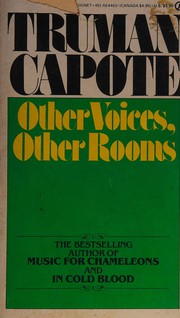
His first novel, published at twenty-three, about a boy sent to a decaying Southern house. The jacket photograph caused nearly as much comment as the book.
Three misfits move into a tree house rather than go home. The warmest of the novels.
The book that changed everything
IntermediateRead In Cold Blood knowing what it came out of and what it cost.
▸ Study plan for this stage
Pace: 3 weeks for 352 pages. It reads faster than that — it is structured in four parts with short cinematic sections and it pulls hard — but read it at about twenty pages a day anyway, because the pull is part of what is being questioned. Position matters here: coming to it fourth rather than first is th
- In Cold Blood reconstructs the murder of a Kansas farm family in November 1959 and the six years that followed, and it is built like a novel — parallel tracks, withheld information, scene rather than summary.
- Capote called it a nonfiction novel and claimed the form as an invention. Whether or not the claim holds, the book effectively created modern literary true crime and everything in that genre since is downstream of it.
- The cross-cutting between the Clutter household and the two men driving toward it in the opening section is a fiction writer's structure, and it produces dread out of an outcome the reader already knows.
- The book's central relationship is Capote's with one of the two killers, and his access is both the source of the book's depth and the reason its method has been questioned ever since.
- Specific scenes — including the closing one — have not been corroborated by later reporting, and Capote's insistence that every word was true does not survive scrutiny. Read it as a masterpiece with a live argument attached rather than as a document.
- The book could not be finished until the executions happened, which is the hardest fact about it and the one that most readers only learn afterwards. It should be in your head while you read the final part.
- The prose is the plainest he ever wrote. After the humidity of Other Voices, Other Rooms, the flatness here is a deliberate instrument and the restraint is what makes the violence bearable.
- The outcome is announced early. Where does the suspense actually come from?
- How does Capote handle the murders themselves — where in the book do they appear, in whose voice, and why there?
- Which of the two killers does the book understand better, and what does that imbalance do to its argument about the crime?
- Name a scene you would want to verify. What kind of evidence could exist for it, and does Capote say he has it?
- Having read the four fiction titles before this one, which specific technique from them is doing the most work here?
- Read the first fifteen pages tracking only the cutting between locations. Diagram it. That structure is the invention people mean when they call this a nonfiction novel.
- Mark every passage that reports a person's private thoughts and ask, in the margin, who could have told him. Doing this honestly for one chapter is the single most useful exercise on this path.
- Read the final two pages, then read a summary of the later reporting on that scene, then read the pages again. The question of whether the book is damaged by it is genuinely open and you should answer it yourself.
- Compare the description of the Clutter house with the description of Skully's Landing in Other Voices, Other Rooms. Same author, same attention, opposite methods — one enveloping, one inventoried.
Next up: In Cold Blood is the summit and also the break; the last stage is the work that came after it, and the record of what it cost him to have written it.
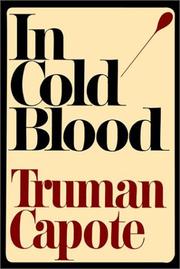
The Clutter murders in Kansas, reported over six years and written as a novel. It effectively invented a genre. It is also a book whose method has been questioned ever since — Capote's closeness to one of the killers, and scenes that later reporting could not confirm. Read it as a masterpiece with a live argument attached.
After
IntermediateFinish with the late work, and the collapse.
▸ Study plan for this stage
Pace: 3 weeks for 262 pages, read as a miscellany rather than a book — three or four pieces a sitting, in the order printed. It is a collection of short nonfiction, a novella-length crime account, and a set of conversational portraits, and it does not build to anything. Start with the preface, which is th
- Music for Chameleons is the last book he published, and its preface is an unusually direct account of a writer describing his own crisis and the technique he thinks will get him out of it.
- The conversational portrait — a piece constructed almost entirely from talk, with the interviewer present — is the form he settles on here, and it is In Cold Blood's method reduced to two people in a room.
- Handcarved Coffins is presented as a nonfiction account of an American crime and reads like a compressed rerun of In Cold Blood. Its factual basis has been doubted for decades, which makes it the most revealing thing in the collection.
- The portrait of Marilyn Monroe is the best-known piece and is a genuine demonstration of what he could still do — a whole afternoon rendered as two voices with the writing almost invisible.
- The book exists in the shadow of the unfinished society novel whose published chapters ended his friendships with the wealthy women he had spent twenty years cultivating. He wrote almost no fiction afterwards.
- Read as a career ending, this is a writer who traded access for material and then found the account had come due. The path has taken you from the Alabama childhood to that, and the arc is the argument for reading him in this order.
- The prose is still, at the sentence level, as good as it ever was. Whatever failed here, it was not the writing.
- In the preface Capote describes a new technique. Name it, then find a piece in the book where he actually uses it.
- Handcarved Coffins reads like In Cold Blood at a quarter length. What does the compression cost, and what does it reveal about the earlier book's construction?
- In the conversational portraits, how much of Capote is on the page? Is the interviewer a character or a device?
- Why is the Monroe portrait effective when so much writing about her is not? Point to a specific technique.
- Having read the whole path, what did In Cold Blood take from him, and does this book know?
- Read the preface, then skip to the last piece, then go back to the beginning. Capote arranged this book carefully and reading the frame first makes the middle legible.
- Take one conversational portrait and mark every line of Capote's own speech. Count them. The proportion is the technique.
- Set Handcarved Coffins beside the first part of In Cold Blood and note what is the same — the small town, the withheld killer, the investigator's frustration. Then decide what you believe about it.
- Finish the path by choosing the two books you would give someone who has only seen the film of Breakfast at Tiffany's. Defending that pair against the obvious answer of In Cold Blood alone is the whole reason for reading him in this order.
Next up: This is the end of the path — you have read Capote from the Alabama childhood through the book that made him and into what came after it, in the order that makes each one legible.
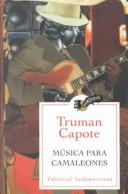
The late pieces, including Handcarved Coffins. It is also the book that shows what happened after Answered Prayers destroyed his social life and he did not finish another novel.