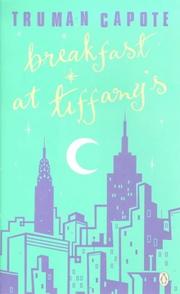
Start with Breakfast at Tiffany's. It runs to about a hundred pages, most editions pad it out with three short stories, and it is the shortest complete demonstration of what Capote's prose actually does — the exactness, the comedy, the narrator who adores someone he cannot hold onto. You can read it in a sitting and know immediately whether you want more.
The obvious alternative is In Cold Blood, and starting there is a mistake for a specific reason: it is the least characteristic book he wrote. It is long, cold, deliberately impersonal and reported rather than invented, and readers who begin with it and then pick up the Southern novels find a completely different writer. Read it third or fourth, when you can see what it cost him to write that way.
One buying note before you order: check what is in the edition. The standard Breakfast at Tiffany's volume includes House of Flowers, A Diamond Guitar and A Christmas Memory, which means you may already own A Christmas Memory by the time you finish it. It is also sold on its own as a slim illustrated gift book, which is a pleasant object and a duplicate purchase.
The Southern books
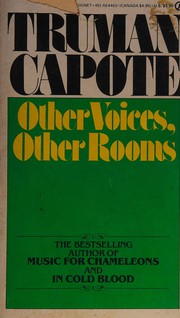
Other Voices, Other Rooms was his first novel, published in 1948 when he was twenty-three, and it made him famous partly for the dust-jacket photograph and partly for the book. A boy is sent to a decaying Alabama house to find a father he has never met. It is heavily atmospheric, close to Southern Gothic, and much more openly about a boy's dawning sense of himself than anything else published in America that year. It is the least plot-driven book on this list.
The Grass Harp is the gentler companion piece: a boy, two elderly women and a judge take up residence in a treehouse rather than submit to the town. It is short, comic and elegiac at once, and it is the book to read if Other Voices, Other Rooms felt airless.
A Christmas Memory is a story of about thirty pages, drawn from his childhood in Monroeville with his cousin Sook, and it is the most purely likeable thing he wrote. Read it in December.
In Cold Blood
Then take on In Cold Blood, the account of the 1959 murder of the Clutter family in Holcomb, Kansas, and the six years that followed. Capote called it a nonfiction novel and claimed near-total recall rather than notes or tape. It is the book that made the true-crime genre a literary form, and its structure — cutting between the family's last day and the two men driving toward them — is still being copied.
Its factual reliability has been questioned, including by researchers working from Kansas Bureau of Investigation files who dispute reconstructed dialogue and at least one invented scene, and that argument is unresolved. It does not make the book less worth reading; it does mean you should read it as literature built on reporting rather than as a court record.
The late work
Music for chameleons collects the writing of his last decade: short pieces, a long conversational self-portrait, and Handcarved Coffins, a novella-length crime narrative presented as reportage. It is uneven and it is the honest picture of where he ended up, still capable of extraordinary sentences and no longer able to finish a big book.
The big book was Answered Prayers, the roman-a-clef about New York society that he never completed. Publishing extracts from it in Esquire in 1975 cost him most of his friends. The surviving chapters are not in our catalogue, and the fragment is mainly of biographical interest.
Where to stop
Four books make the complete case: Breakfast at Tiffany's, Other Voices, Other Rooms, In Cold Blood and A Christmas Memory. Add The Grass Harp if the Southern work is what you liked and Music for chameleons if you want the last act. The Complete Stories, collected after his death and not in our catalogue, is the natural next purchase after that. You can see how these sit against the wider shelf of American fiction on our discover page.
Follow the full ordered path here: Truman Capote Reading Order: Where to Start with His Books.