Tort Law: The Best Books on Negligence and Liability, in Order
Tort law is the body of rules that decides who pays when one person's conduct injures another, and almost every book about it is written for one jurisdiction. This path is built on United States law — negligence, duty, causation, strict liability and damages as American courts apply them — with two English texts read deliberately as comparison, because the same problems get solved differently there. It moves from a student overview to the working treatises, then to the theory that explains why the rules take the shape they do, and finally to the empirical fight over whether the system is out of control.
The shape of the subject
BeginnerLearn the vocabulary — duty, breach, causation, damages, intentional torts, strict liability — and see how a negligence claim is actually structured, in the United States and, for contrast, in England. These are overviews, not authorities: read them to get oriented, then stop citing them.
▸ Study plan for this stage
Pace: Three to four weeks for 887 pages, and they do not read at one rate. Diamond's Understanding torts is 459 pages of American law-student exposition and is the bulk of the stage; give it two to three weeks at 30 to 40 pages a session, working chapter by chapter through the negligence elements. Goldber
- The five elements of a negligence claim as Diamond sets them out — duty, breach, cause in fact, proximate cause, damages — and the fact that a claim fails entirely if any one of them fails. Everything later in this path is an argument about one of these five.
- The difference between an intentional tort, negligence and strict liability as three separate liability regimes with three different triggers, not three degrees of the same thing.
- Goldberg and Zipursky's central claim, which our catalogue displays under the series title Short Introduction to Torts: a tort is a wrong one person owes another, not a public scheme for compensating accidents. This is the interpretive quarrel the entire path keeps running into.
- Duty is the element courts use to make policy. Diamond's treatment of when a duty is owed at all — to rescuers, to bystanders, for purely economic loss — is where American judges decide what tort law is for without saying so.
- Weir's English contrasts: no jury setting damages, a narrower duty of care, and a much less generous attitude to recovery for pure economic loss. Same raw materials, different answers.
- The reasonable person is an objective standard, meaning it does not ask what this defendant could manage. Note where Diamond says it bends — children, professionals, physical disability — because Holmes in stage three explains why the standard is objective in the first place.
- These three are orientation texts. Once you have the vocabulary you should stop citing them and cite the treatises in stage two instead.
- Recite the elements of negligence in order and state, for each, who bears the burden of proving it in a United States court.
- What is Goldberg and Zipursky's objection to treating tort law as an accident-compensation system, and what would change about the doctrine if the compensation view won?
- Name three specific points on which Weir's English law reaches a different result from the American law in Diamond, and say what drives each difference.
- Where does Diamond's treatment of duty stop being descriptive and start being a policy argument? Pick one passage and say what the policy is.
- Why is the reasonable-person standard objective, and what does the law give up by making it so?
- Before reading Diamond's chapter on proximate cause, write your own one-paragraph rule for when a defendant should stop being liable for consequences. Then read the chapter and mark every case that breaks your rule.
- Build a two-column table as you read Weir, one column American per Diamond and one English per Weir, with a row for each doctrine they both cover. Keep it — you will add a third column for Cane in stage four.
- Take the negligence elements from Diamond and apply them to a real incident you know about, writing one paragraph per element. Note which element you cannot resolve without facts you do not have; that is what discovery is for.
- Check the copyright page of whichever edition of Diamond you buy against the state you actually live in, and find one statement of law in it that a later edition would have had to change. Doing this once builds the reflex the rest of this path assumes.
Next up: You now have the vocabulary and a rough map of where American and English tort law part company, which is the minimum needed to read a casebook without drowning in the cases.

The cleanest single-volume orientation to American tort doctrine, written for US law students and organised the way a torts course is. Our catalogue record is an early edition and the book is revised frequently — check for the current edition before relying on any statement of law, because tort rules shift by state and by decade.

Goldberg and Zipursky's short introduction to United States tort law, which our record displays as 'Short Introduction to Torts' — the same work under a series title. Read it immediately after Diamond because it argues that torts are wrongs owed between individuals rather than a public accident-compensation scheme, which is the interpretive quarrel the rest of this path keeps running into.

Weir writes about English tort law, and the point of reading him here is that England reaches different answers with the same raw materials — no jury on damages, a narrower duty of care, a different attitude to economic loss. Short, opinionated and comparative, so it inoculates you against treating any single jurisdiction's rules as natural.
The doctrine at working depth
IntermediateMove from summary to source. A casebook teaches you to read the cases the doctrine is actually made of; a treatise tells you what the law is across every US jurisdiction and where the states split. Both are edition-sensitive in a way the overviews are not.
▸ Study plan for this stage
Pace: Three to four months, and it is not a stage you read straight through. Dobbs's casebook Torts and compensation runs 1,018 pages and his hornbook The law of torts runs 1,671; between them that is 2,689 pages, and nobody reads them front to back. Work the casebook at a case a sitting, three or four si
- What a casebook is for. Dobbs's Torts and compensation sequences the leading negligence cases so the doctrine unfolds in the order it developed; you are learning to extract a holding from an opinion, not to memorise summaries.
- What a treatise is for. Dobbs's The law of torts states the rule across United States jurisdictions and, crucially, flags where the states split. When the casebook and your intuition disagree, the hornbook is the tiebreaker.
- The state-split problem itself. Comparative fault versus contributory negligence, the various duty rules for landowners, and the survival of joint and several liability all vary by state, and no single answer is correct nationally.
- The Restatements of Torts and how the treatises use them. They are influential summaries adopted piecemeal by courts, not law, and knowing which sections your state has adopted is a real research skill.
- Prosser and Keeton's characteristic move, which is to explain a rule by its history and its policy rather than by citation alone. This is why courts still quote it and why its age is tolerable in a way an old casebook's is not.
- Where doctrine is genuinely unsettled rather than merely varied — emotional distress without physical injury, liability for pure economic loss, the scope of duty to third parties. Note these; stage three is about why they stay unsettled.
- Reading practice: brief a case in four lines — facts, procedural posture, holding, rule — and stop. Long briefs are how people fail to finish a 1,018-page casebook.
- Take any negligence case in Dobbs's casebook and state its holding in one sentence, then find the corresponding general rule in Dobbs's hornbook. Do the two agree, and if not, what accounts for the difference?
- Name three doctrines where Dobbs's hornbook records a genuine split among the states, and say which position your own state takes.
- What does Prosser and Keeton give you that neither Dobbs volume does, and what does its 1984 vintage make it unreliable for?
- How does the casebook's developmental ordering change what you notice about proximate cause, compared with learning the rule as a finished statement?
- Pick one rule you learned from Diamond in stage one and check it against the hornbook. Was the overview accurate, incomplete or simply out of date?
- Brief twenty cases from Dobbs's casebook in the four-line format and keep them in one file. At the end of the stage, sort them by which negligence element they turned on; the distribution will tell you where American litigation actually lives.
- For any five rules the casebook states, look each one up in Dobbs's hornbook and write down every state variation it lists. This is the exercise that converts doctrine from a single rule into a map.
- Read Prosser and Keeton's treatment of one doctrine you already know from the casebook, then write a paragraph on what its historical account explains that the modern statement leaves out.
- Check one specific proposition you take from Prosser and Keeton against a source published this century. Note whether it held, narrowed or was abandoned; doing this once tells you how much of a 1984 treatise to trust.
- Before buying anything, compare the table of contents of the current edition of Dobbs's casebook against our record's edition and list the topics that were added. That list is a map of what changed in American tort law since.
Next up: Having seen how much of the doctrine varies by state and stays unsettled, you are ready to ask why the rules take these shapes at all rather than what they currently say.
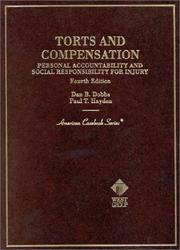
The standard American torts casebook, sequenced so you meet the leading negligence cases in the order the doctrine developed rather than by topic. Our record is an early edition; a superseded casebook is genuinely worse than no casebook, so buy the current one and use this entry only to identify the book.
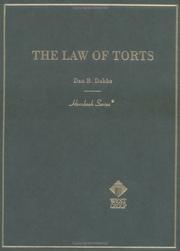
Dobbs's hornbook — the reference you open when you need to know what the rule is in the United States and which states depart from it, rather than what a court said in one case. Read it alongside the casebook, not before it, and again check the edition, since it is kept current by supplement.

The most-cited American tort treatise there is, and the one courts quote; the fifth edition of 1984 is the last one, so unusually for this stage the old record is the current book. Read it for the historical reasoning behind the rules and check any specific proposition against something written this century.
Why the rules are the rules
IntermediateStop asking what the law is and start asking what it is for. Corrective justice, loss-spreading, deterrence and economic efficiency are four different answers, and they generate genuinely different doctrines. Read these knowing the argument is unresolved.
▸ Study plan for this stage
Pace: Two to three months for 1,216 pages, weighted heavily toward the end. Holmes's The common law is 422 pages of nineteenth-century American legal prose and reads slowly for the sentences rather than the ideas; a chapter a sitting is right, and the lectures on trespass and negligence are the ones this
- Holmes's objective-standard argument: liability rests on an external measure of conduct rather than on the defendant's moral blameworthiness. The modern reasonable-person test is this idea in doctrinal form.
- The four competing purposes Abraham lays side by side — corrective justice, loss-spreading, deterrence and economic efficiency — and, more usefully, which doctrines each one explains and which it cannot.
- Corrective justice as Coleman defends it: the wrongdoer's duty to repair is owed to the person wronged, which is why tort pairs a specific plaintiff with a specific defendant rather than paying out of a fund.
- The law-and-economics account Coleman is writing against, in which tort exists to minimise the sum of accident costs and precaution costs. Under it the pairing of plaintiff and defendant is administrative convenience, not principle.
- That these accounts generate different doctrine, not just different rhetoric. Strict liability, damages caps and the treatment of the uninsured defendant all come out differently depending on which purpose you take as primary.
- The argument is unresolved and none of these three books settles it. Abraham is the one who says so most plainly; Holmes and Coleman are both advocates for a position.
- Holmes's history is doing work for his theory. He reads the old forms of action as evidence that liability was always external, which is a claim about the past used to justify a rule in the present.
- State Holmes's objective standard in your own words, and say what it costs a defendant who genuinely could not have done better.
- For each of Abraham's four purposes, name a tort doctrine it explains well and one it explains badly.
- What exactly is Coleman's objection to the economic account of tort law, and does it depend on the economic account being wrong about consequences or about what tort law is?
- Which of the four purposes best explains the state splits you catalogued in stage two, and which of them predicts splits that do not exist?
- Where does Abraham refuse to adjudicate between the purposes, and is that a weakness of the book or the honest state of the field?
- After Coleman, which side of the corrective justice and efficiency argument do you hold, and what evidence would change your mind?
- Take Holmes's chapter on negligence and rewrite his argument as a numbered list of premises and a conclusion. Then find the premise a modern critic would deny.
- Use Abraham's four-purpose grid on five specific doctrines from your stage-two case briefs, marking for each doctrine which purposes support it and which cut against it. The doctrines where the marks conflict are the contested ones.
- Read Coleman's central chapter on corrective justice twice — once for the argument and once tracking only the examples — and write down which examples do independent work and which merely illustrate.
- Write a one-page defence of the economic account of tort that Coleman would have to answer, using his own statement of the position. Arguing the side you reject is the fastest way to find out whether you understood him.
- Return to the reasonable-person passage you marked in Diamond during stage one and reread it after Holmes. Note precisely what changed about what you thought the standard was doing.
Next up: With four competing accounts of what tort law is for now in hand, the obvious next question is whether some other institution could do the job better, which is exactly what the next stage puts on trial.
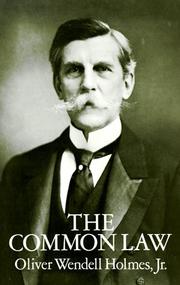
The 1881 lectures where Holmes argued that liability rests on an external, objective standard rather than on moral blame — the intellectual foundation of the modern reasonable-person test. Nineteenth-century American law, so read it as the origin of an idea rather than as a statement of current doctrine.
Abraham lays the competing purposes of tort law side by side and shows which doctrines each one explains and which it cannot — the single most useful bridge between a doctrine course and the theory literature. Written about US law and short enough to read in a week.
The fullest philosophical defence of corrective justice as tort law's organising principle, written directly against the law-and-economics account of tort as accident-cost minimisation. Demanding, and the right place to end the theory stage because it forces you to say which side of that argument you are on.
Tort as one system among several
IntermediateSee tort law as one of several ways a society can compensate injury, competing with workers' compensation, no-fault schemes, social insurance and regulation. Both books here are written by people who think tort does that job badly, from opposite ends of the political range.
▸ Study plan for this stage
Pace: Five to six weeks for 857 pages. Cane's Atiyah's Accidents, Compensation and the Law is 537 pages and is the substantial one — three to four weeks at 30 pages a session, and read it with the fact firmly in mind that it is about England and Wales throughout. Its whole comparison is between tort damag
- Atiyah's founding question as Cane carries it forward: does the fault principle earn its administrative cost, given how few injured people ever recover anything through tort at all?
- The comparison set — workers' compensation, no-fault motor schemes, social insurance, direct regulation — and the fact that in Britain the National Health Service already removes the medical-cost component that drives much American litigation.
- Horizontal inequity as the central empirical charge: two people with identical injuries receive wildly different sums depending on whether someone was at fault and whether that someone was insured.
- Tort as a regulatory instrument, which is Schuck's collective theme. If litigation shapes product design and professional practice, it is doing public work through a private mechanism that was never designed for it.
- The insurance point that sits under both books: liability insurance means the money almost never comes from the wrongdoer personally, which is a direct problem for the corrective-justice account you met in Coleman.
- Why the same critique can come from both left and right. One side objects that tort compensates too few people too arbitrarily, the other that it taxes productive activity through juries — and both propose taking work away from tort.
- That a jurisdiction's alternatives determine what tort has to do. New Zealand's accident compensation scheme, discussed in the English literature, is the standard demonstration of how much of tort is contingent.
- What proportion of injured people recover through tort on the evidence Cane presents, and what happens to the rest?
- Identify three features of Cane's British comparison that do not transfer to the United States, and say what a reader in the United States should substitute for each.
- In what sense do the Schuck essays treat American tort litigation as regulation, and what makes it a poor regulator on their account?
- How does the prevalence of liability insurance damage the corrective-justice argument you read in Coleman, and how might Coleman answer?
- Cane and the Schuck contributors reach a similar verdict from different politics. What exactly do they agree on, and where does the agreement stop?
- Add a third column to the American and English table you built in stage one, recording for each doctrine what Cane says the British alternative institutions do with the same problem.
- Take one injury type — a road accident, a workplace injury, a defective product — and write out the full list of routes to compensation available in your own jurisdiction, then mark which of them tort is competing with.
- Pick two essays from the Schuck collection that reach opposite conclusions about the same industry and write a paragraph reconciling or adjudicating between them. Edited collections rarely do this work for you.
- Reread your stage-three verdict on corrective justice against Cane's insurance evidence and note whether it survives. If it does, write the sentence that saves it.
Next up: Both books here assume that how much litigation there actually is can be measured, which is precisely the claim the last stage puts to the evidence.

Atiyah's classic English study, now edited by Cane, which sets tort damages against the whole British compensation landscape and asks whether the fault principle earns its cost. Our record displays it as 'Atiyah's Accidents, Compensation and the Law' — the same book under the fuller published title. English law throughout, and the argument travels.

An edited collection on how American tort litigation actually functions as a regulatory instrument — competition, innovation and safety — rather than as private dispute resolution. Read it after Cane so you can compare a system-level critique with a jurisdiction-level one.
The reform fight, and the evidence
IntermediateThe 'litigation explosion' has been asserted, denied and measured for forty years, and it drives real US legislation on damage caps and pleading standards. Read the accusation and the empirical rebuttal in that order and hold the disagreement open — the data question and the political question are not the same question.
▸ Study plan for this stage
Pace: Six to seven weeks for 949 pages, read strictly in order. Olson's The litigation explosion is 388 pages of American polemic and reads fast; give it two weeks and read it first so the rebuttals have a target. Haltom and McCann's Distorting the Law is 347 pages of academic political science with real
- Olson's thesis in its strongest form: that the United States sues too much, and that changes to fee arrangements, pleading rules and professional ethics engineered the increase rather than any change in how often people are injured.
- Haltom and McCann's counter-mechanism: how a handful of atypical cases, the McDonald's coffee case above all, were selected and reshaped by press coverage into a national narrative that the filing data does not support.
- The distinction between the volume of claims and the salience of claims. Both books can be partly right, because the number of suits and what the public believes about them are different variables.
- Baker's inversion of the malpractice crisis: on his evidence American medicine has a negligence problem rather than a litigation problem, because most negligent injuries never produce a claim at all.
- The tort reform measures actually at stake — caps on non-economic damages, heightened pleading standards, certificate-of-merit requirements — and which of them would bite on the problem each author identifies.
- How to read a claim about litigation rates: per capita or absolute, filings or trials, state courts or federal, over what baseline year. Almost every disagreement in this stage hides in one of those choices.
- That Olson is an advocate writing for a policy movement and Haltom, McCann and Baker are academics writing against it. None of them is a neutral referee, and reading them in order is what makes the disagreement legible.
- State Olson's causal story in four steps, from the change in legal practice to the increase in suits. Which step is the weakest, and how do Haltom and McCann attack it?
- What actually happened in the McDonald's coffee case, and what does the gap between the facts and the popular version demonstrate about how tort narratives are made?
- If Baker is right that most negligent medical injuries never generate a claim, what follows for damages caps, and what follows for the negligence system itself?
- Which specific measure of litigation does each of these three books rely on, and would they still disagree if forced to use the same one?
- Where would you now place the burden of proof in the tort reform debate, and what evidence published since these books would you want before deciding?
- As you read Olson, list every empirical claim he makes about litigation rates. Then read Haltom and McCann with that list beside you, marking each claim as answered, unanswered or reframed.
- Trace one statistic from Distorting the Law back through the book's own citation to the source it came from, and check what population and time period it actually covers. Doing this once permanently changes how you read litigation numbers.
- Write the strongest one-page case for damages caps using only evidence from Baker, whose book argues against the crisis framing. If you cannot build it, say precisely which piece of evidence blocks you.
- Look up the tort reform statutes actually in force in your own state and match each to whichever author's diagnosis it responds to. Several will match none of them.
- Return to Abraham's four purposes from stage three and score this whole debate against them: decide which purpose each of the three authors is implicitly assuming tort law serves.
Next up: You now hold a doctrine, a theory and an evidentiary record for one jurisdiction, which is the point at which reading about tort law gives way to following the case law and the statutes as they change.
The book that gave American tort reform its central claim: that the United States sues too much and that the legal profession engineered it. Polemical and influential, and it is the argument every later study is measured against — read it first so the rebuttals have a target.
Haltom and McCann go after the litigation-explosion story empirically and show how a handful of atypical cases, the McDonald's coffee case above all, were shaped into a national narrative that the filing data does not support. The direct answer to Olson, so read it immediately after him.
The same argument tested on the one area where the crisis claim is loudest: Baker's finding is that American medicine has a malpractice problem rather than a litigation problem, since most negligent injuries never generate a claim at all. A narrow, evidence-led case study to close on, and a useful check on how confidently you now hold either side.