Tom Stoppard Reading Order: Where to Start with the Plays
Stoppard's plays are stacked with allusion — to Hamlet, to Dada, to thermodynamics, to A.E. Housman's Latin scholarship — and the wrong first choice makes him look like a man showing off rather than a dramatist with something at stake. The order below front-loads the two plays whose emotional engine is obvious, moves through the great intellectual comedies once you trust that there is a heart under them, and saves the late, personal work for the end, where it reads as an answer to everything before it.
The Two Best Entry Points
BeginnerSee both halves of Stoppard at once — the metatheatrical joker and the writer about love and fidelity — and stop expecting the cleverness to be a substitute for feeling.
▸ Study plan for this stage
Pace: Two to three weeks. Both plays are short enough to read in an evening, but read each twice — once for the story and once for the language, which is how drama actually gets read. Refresh your memory of Hamlet's plot before Rosencrantz and Guildenstern are dead; a summary is enough, and you do not nee
- Two minor characters offstage in someone else's tragedy, unable to see the plot they are inside — the premise is a joke and a metaphysical situation at the same time
- The coin-tossing opening, where a run of impossible results establishes both the comedy and the fact that the laws of this world have been suspended in some way nobody on stage can name
- Structural dependence on Hamlet. Stoppard's play runs in the gaps of Shakespeare's, which means the source is doing plot work while Stoppard does everything else
- Terror underneath the wordplay. The pair genuinely do not know who they are, where they are going or which of them is which, and the comedy never quite covers that
- The Real Thing as the deliberate corrective — his most straightforwardly emotional play, about a playwright's marriage and what sincerity costs a professional ironist
- The cricket-bat speech in The Real Thing, in which a character explains what good writing does, and which is the closest thing in the body of work to Stoppard defending himself
- Plays within plays. The Real Thing opens on a scene that turns out to be a scene from a play, which sets up the whole question of what counts as genuine feeling
- Reading a play on the page. Stage directions are information, silences are events, and the second reading is where both become visible
- What do Rosencrantz and Guildenstern actually know about their situation at the start, and how much have they learned by the end?
- Why the coins? What does the opening establish that a conventional exposition scene could not?
- In The Real Thing, which relationships are performed and which are meant? The play makes this deliberately hard — say where you were caught out.
- What is the cricket-bat speech arguing, and is it Stoppard's own position or a character's?
- Both plays are about people playing parts. How does each define the difference between acting and being?
- Having read only these two, what would you say Stoppard is actually interested in?
- Read the coin-tossing opening aloud with someone else taking the second part. It is written for two voices and is nearly inert read silently.
- Write 200 words on what happens to Rosencrantz and Guildenstern between their scenes in Hamlet, using only Stoppard's play. This is the structural trick laid bare.
- Mark every place in The Real Thing where you were unsure whether you were watching a scene or a play-within-a-scene. Then check how Stoppard signals it.
- Copy out the cricket-bat speech by hand and note the rhythm. Stoppard's arguments are built as prose rhythm, and this one is the clearest example.
Next up: You have seen both halves of Stoppard — the metatheatrical joker and the writer about love — which means you can now read the intellectual comedies without suspecting that the cleverness is standing in for feeling.
The famous debut, and still the right first play: two minor characters wait offstage in Hamlet for a fate they cannot see. You need only a rough memory of Hamlet, and the terror underneath the coin-tossing comedy is unmistakable from the first page.
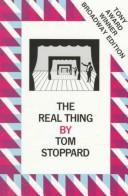
Read second, and deliberately — it is his most straightforwardly emotional play, about a playwright's marriage and what sincerity costs a professional ironist. It pre-empts the standard complaint that Stoppard is all surface.
The Great Intellectual Comedies
IntermediateHandle Stoppard's signature structure — two time periods, or two systems of thought, cut against each other — and read Arcadia, which is where all of it comes together.
▸ Study plan for this stage
Pace: Five to six weeks. Jumpers and Travesties are each an evening's reading but need a second pass; Travesties in particular is close to opaque on a first run and clarifies enormously on the second. Give Arcadia the most time — read it twice with a gap of a few days, and read the final scene a third tim
- Jumpers's method: a moral philosopher dictates a lecture on the existence of God while a murder goes uninvestigated in the next room and acrobats form pyramids around him — a serious argument carried entirely by farce
- The argument is real. The lecture material on moral absolutes against relativism is a genuine philosophical position being defended, not decoration, and following it is part of the play
- Travesties's premise, that Lenin, James Joyce and Tristan Tzara were all in Zurich in 1917, staged inside one unreliable old man's memory, which keeps collapsing into The Importance of Being Earnest
- Unreliable memory as a structural device. Scenes restart, contradict themselves and change register because the man remembering them is confused, which is why hunting for a consistent plot fails
- Three theories of art in collision — revolutionary, aesthetic and Dadaist — with the play declining to hand the argument to any of them
- Arcadia's two time periods sharing one room, one table and a set of props that accumulate across both centuries until the two casts are on stage together
- Entropy and the second law as the play's governing idea, introduced through a schoolgirl's mathematics and paid off as an emotional fact rather than as a scientific one
- The last scene of Arcadia, in which the two centuries dance in the same room, which is by wide agreement one of the great endings in English drama and is worth arriving at unspoiled
- In Jumpers, what is the philosophical argument actually saying, and does the farce strengthen or undermine it?
- Why is the murder in Jumpers never resolved? What would resolving it cost the play?
- How does Travesties signal that a scene is unreliable? Find three separate devices.
- Which of the three artists in Travesties gets the best of the argument, and is the play's refusal to decide a strength or an evasion?
- In Arcadia, what does Thomasina work out, and why does it matter that she is thirteen?
- How do the two timelines in Arcadia inform each other? Find a case where the modern scholars get it wrong and the audience knows why.
- For Travesties, make a list of every scene and mark where it restarts, contradicts an earlier version or shifts into Wilde. The list is the play's actual structure.
- Write 300 words explaining Thomasina's insight about heat and irreversibility in plain terms, using only what the play supplies.
- Track the props on the table in Arcadia across all seven scenes — who put each one there and in which century. Stoppard's plotting is visible in that list and nowhere else.
- Read the final scene of Arcadia aloud. It is written as overlapping action across two centuries and the effect is largely inaudible on a silent read.
- Write a paragraph on what Jumpers, Travesties and Arcadia have structurally in common. Naming it is the point of the stage.
Next up: With the puzzle-box plays behind you, the next stage follows the same techniques out of the drawing room and into espionage, empire and Czechoslovak dissidence — where the subject turns out to have been liberty all along.
A moral philosopher dictates a lecture on the existence of God while a murder goes unsolved in the next room, surrounded by acrobats. The purest early example of a serious argument carried entirely by farce.
Lenin, James Joyce and Tristan Tzara were all in Zurich in 1917, and Stoppard puts them in one unreliable old man's memory of The Importance of Being Earnest. Dense, and much easier once Jumpers has taught you to stop hunting for a plot.
The play everything else in this path is preparation for, and by most accounts the finest English play of the late twentieth century: one room, two centuries, entropy, landscape gardening and a genuinely heartbreaking last scene. Read third here, never first.
Politics, Science and Empire
IntermediateFollow Stoppard outside the puzzle-box into journalism, espionage, colonial India and Czechoslovak dissidence, and notice how consistently he writes about liberty.
▸ Study plan for this stage
Pace: Four to five weeks. Hapgood is the hardest of the three to follow and should be read slowly, with the doubles and the swaps mapped out as you go — it is famously confusing in performance and considerably clearer on the page, which is why a reading path is the right place for it. Indian ink is the ge
- Hapgood building a Cold War double-agent plot on quantum mechanics, so that the spy structure literally enacts wave-particle duality rather than merely alluding to it
- Physics as plot rather than as ornament. The scientific idea determines what can happen, which is the most rigorous version of a technique Stoppard uses everywhere
- Why it reads better than it plays. Following which twin is which at any moment requires backtracking, and on the page you can
- Indian ink applying the two-timeline method of Arcadia to the Raj — a poet in India in the 1930s and her sister's biographer fifty years later
- Historical distance carrying the feeling. Indian ink is the gentlest of these plays and the one where what cannot be recovered does most of the emotional work
- The biographer as a recurring Stoppard figure: someone reconstructing a past from documents and getting it partly wrong, which is Arcadia's scholars again in a different key
- Rock 'n' roll running from 1968 to 1990 between Prague and Cambridge, with a Czech student, a Cambridge Marxist and a real band standing for a politics that was not a politics
- Stoppard's own Czech origins surfacing openly for the first time here, which is what makes the final stage legible as the culmination of something rather than a late change of subject
- How does the physics in Hapgood determine the plot? Give a specific plot event that depends on it.
- Is Hapgood's central analogy illuminating or decorative? Argue it from the text rather than from the reputation.
- In Indian ink, what does the modern timeline get wrong about the historical one, and how does the audience know?
- What is Stoppard saying about biography as a form? Set it beside the scholars in Arcadia.
- In Rock 'n' roll, why does a rock band stand in for political dissent? What was the band's actual position, as the play presents it?
- Across all three plays, what does Stoppard appear to believe liberty consists of?
- Diagram the identities and swaps in Hapgood scene by scene. Doing it once makes the play straightforward and is impossible to do in a theatre.
- Write 200 words on the wave-particle analogy as the play states it, and 200 more on where the analogy stops holding.
- For Indian ink, list what the biographer knows, what the reader knows and what nobody knows. The third column is the play's subject.
- Build a timeline of Rock 'n' roll's Czech events beside its Cambridge ones. The play assumes you can hold both and the parallel is the argument.
- Write a paragraph on where the word liberty would appear in each of these three plays if any character were tactless enough to say it.
Next up: The Czech material has surfaced and the erudition has started pointing somewhere personal, which is the right moment for the late plays where it finally becomes autobiography.
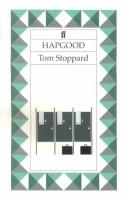
A Cold War spy thriller built on quantum mechanics, in which the double-agent plot literally enacts wave-particle duality. Notoriously hard to follow in performance and far clearer on the page, which is why it belongs on a reading path.

The two-timeline method from Arcadia applied to the Raj — a 1930s poet in India and her sister's biographer fifty years later. Gentler than the other plays here and the one where the historical distance carries most of the emotion.

Prague from 1968 to 1990 via a Czech student, a Cambridge Marxist and the band the Plastic People of the Universe. Stoppard's own Czech origins surface openly here for the first time, which sets up the final stage.
Late, Personal, and the Novel
IntermediateRead the work of Stoppard's last decades, where the erudition finally becomes autobiography, plus the early novel almost nobody reads.
▸ Study plan for this stage
Pace: Five to six weeks. The invention of love is the most demanding text in the path and needs two readings, with a gap; it assumes some tolerance for Latin scholarship as a subject, which the play itself supplies. Hard Problem is short and reads in an evening. Leopoldstadt spans several generations and
- The invention of love opening with A.E. Housman at the moment of death, arguing with his own younger self about textual scholarship and about a love he never spoke
- Textual emendation as an emotional subject. The play makes the correction of a corrupted Latin manuscript stand for the wish to fix a life, which is Stoppard's most complete fusion of erudition and feeling
- Two Housmans on stage at once, which is the structural training from Arcadia applied to a single consciousness rather than to two centuries
- Hard Problem as a late, short and oddly plain play about consciousness and altruism in a brain-science institute — divisive on arrival, and best read as the last statement of the argument Jumpers began fifty years earlier
- The plainness itself as information. A writer famous for density writing simply in his late seventies is a fact about the career worth registering rather than a defect to excuse
- Leopoldstadt following a Viennese Jewish family from 1899 to 1955, and ending in a scene that names what was lost with almost no wit at all
- The career reframed. Stoppard grew up not knowing what had happened to his relatives, and the final play confronts it directly — which recasts the earlier plays' brilliance as something that had been serving a purpose
- Lord Malquist and Mr. Moon, his only novel, published the same week his first great play opened and buried by it — a curiosity rather than a masterpiece, and a revealing look at the sensibility before the stage disciplined it
- What does textual emendation stand for in The invention of love, and where does the play make the equivalence explicit?
- The two Housmans disagree. About what, precisely, and which of them does the play favour?
- How does Hard Problem restate the argument of Jumpers, and what has changed in the answer?
- Hard Problem divided its readers. Set out the case for it and the case against, then say which you find better founded.
- In Leopoldstadt, what does the final scene do that the rest of the play has been withholding?
- Having read the whole path, does Leopoldstadt change your reading of Rosencrantz and Guildenstern are dead? Say how.
- Draw the Leopoldstadt family tree across its generations as you read. The play requires it and the tree is itself the final scene's argument.
- Write 300 words on the Housman play's central conceit for someone who knows no Latin. If it survives the translation, the play has done its work.
- Set the closing pages of Jumpers beside the closing pages of Hard Problem and write a paragraph on the fifty years between them.
- Read fifty pages of Lord Malquist and Mr. Moon and write 200 words on what the stage later imposed on this sensibility.
- Write your own five-play Stoppard reading order for a friend, and justify every departure from the one you have just followed.
Next up: This is the end of the path — eleven plays and a novel, from the debut that made him famous to the last play that explained what the wit had been protecting — and the natural next step is a reread of Arcadia, which is a considerably sadder play once you have read Leopoldstadt.
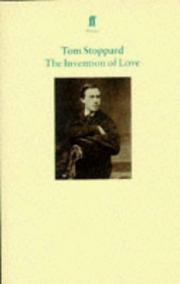
A.E. Housman at the moment of death, arguing with his younger self about textual scholarship and unspoken love. The most demanding play here and the most moving; it needs Arcadia's structural training behind it.

A late, short, oddly plain play about consciousness and altruism in a brain-science institute. Divisive, and worth reading as the last statement of the Jumpers argument by a man now in his late seventies.

The final play and the one that reframes the career: a Viennese Jewish family from 1899 to 1955, and Stoppard confronting the relatives he grew up not knowing he had lost. Read last, after everything the wit was protecting.

His only novel, published the same week Rosencrantz opened and immediately buried by it. A curiosity rather than a masterpiece, and a genuinely revealing look at the sensibility before the stage disciplined it.