Start with Rosencrantz and Guildenstern are dead. Two minor characters from Hamlet wait offstage for a plot they are not told about, and it works whether or not you know Hamlet well. It is the play that made Stoppard's name overnight in 1966 and it remains the cleanest introduction to what he does: philosophical anxiety played as comedy.
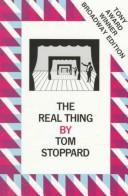
Read it second-guessed by The real thing, which is the deliberate change of pace — his play about love and adultery and whether a writer's fluency with words helps him at all when the feelings are his own. Between them they establish that he is not only a games player, which is the accusation his early work invites.
The reason to hold Arcadia back
Arcadia is generally taken to be his best play and it is the one you should read fourth or fifth, not first. It braids two time periods in one room, and it asks the reader to hold a mathematical idea, a literary detective story and a love plot in mind simultaneously while they slowly converge. It rewards a reader who already trusts Stoppard's habits. It can defeat one who does not.
The middle run
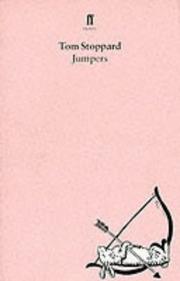
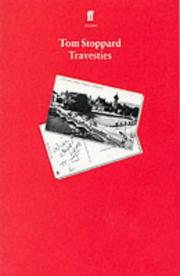
Jumpers puts a moral philosopher's lecture against a murder mystery and a gymnastics troupe. Travesties imagines Lenin, James Joyce and the Dadaist Tristan Tzara in Zurich in 1917, filtered through the unreliable memory of a minor consular official — historically they were all there, which is the joke that starts it.
Then Arcadia. Then Hapgood, a Cold War spy play built on quantum mechanics, which is the one most often called too clever for its own good and is worth reading to see where the method reaches its limit.
The later plays
Indian ink revisits the Raj through two time periods. Rock 'n' roll runs from the Prague Spring to the Velvet Revolution with Czech dissidence and Pink Floyd holding it together — Stoppard was born in Czechoslovakia, and it is his most personal political play. The invention of love is about the poet and classicist A. E. Housman, and it is the most moving thing he wrote before the last one.
Hard Problem — published as The Hard Problem — takes on consciousness and is the slightest of the late plays. Leopoldstadt is not slight at all: a Viennese Jewish family across half a century, written when Stoppard was in his eighties and had come to terms with a Jewish heritage he had spent most of his life not examining. It is the play to end on.
The odd one out
Lord Malquist and Mr. Moon is his only novel, published in the same week as Rosencrantz opened and completely eclipsed by it. It is a curiosity rather than a discovery, and it belongs at the end for completists.
Where to stop
Rosencrantz, The real thing, Travesties, Arcadia and Leopoldstadt is the essential Stoppard and a genuinely satisfying arc — you can watch a writer who began as a virtuoso learn to be a serious one. Everything else is for readers who want more of him.
One practical note: these are plays, and they are built to be spoken. Where a production or a filmed version exists, it will teach you things the page will not.
Follow the full ordered path here: Tom Stoppard Reading Order: Where to Start with the Plays.
Ready to learn something deeply?
Build a reading path — free