Tokyo Ghoul Reading Order: Where to Start and Where :re Fits In
Sui Ishida's Tokyo Ghoul runs fourteen volumes, and the single question every new reader hits is where Tokyo Ghoul :re goes. The answer is: after, never interleaved — :re is a sequel set two years later and it spoils the original from its first chapter. This path reads the fourteen volumes in publication order in four arcs, then hands you the light novels, which are the one piece of side material worth reading.
Anteiku: volumes 1 to 5
BeginnerMeet Kaneki before and after the transplant, and learn the rules of the ward system the rest of the series never restates.
▸ Study plan for this stage
Pace: Two weeks at a comfortable pace, and much less if you get caught. Page counts mislead badly for manga: a volume here is about two hundred pages of largely wordless panel art and reads in well under an hour, so a volume a sitting is a slow pace rather than a demanding one. Three of these five have a
- The ward system and the CCG's jurisdiction over it — established once, in these volumes, and assumed without restatement for the rest of the series
- Kagune types and what they signal about a character, which is the closest thing the series has to a power system
- Kaneki as a half-ghoul: neither side's member, and the structural reason he can carry both points of view
- Anteiku as a place rather than a faction, and how a coffee shop is used to make the ghoul cast domestic before it makes them sympathetic
- The turn in volume 3, where the investigators stop being obstacles and become a second protagonist group
- Grief held from two irreconcilable directions at once — the Mado sequence in volume 4 is the series stating its actual method
- What are the rules a ghoul lives by in the 20th ward, and which of them are stated outright versus inferred from how characters behave?
- At what point does the series stop being a monster story, and what specifically changes — the plot, the point of view, or the sympathies?
- How does the Mado material in volume 4 make both griefs legitimate without asking you to choose, and does it succeed?
- What does Kaneki actually want in these five volumes, and how often does he state it?
- Which characters introduced in volumes 1 to 5 are still load-bearing later, and which turn out to be scaffolding?
- Keep a running roster as you read: name, ghoul or investigator, ward, kagune type. Ishida rarely reintroduces anyone, and the roster is what makes volume 6 survivable.
- Read volumes 1 and 2 in a single sitting, then reread only the first chapter of volume 1. Almost every rule the series will use for fourteen volumes is on those early pages.
- Take the Mado confrontation in volume 4 and read it twice — once following the investigator, once following Touka. Note which panels change meaning depending on which of them you are with.
- Pick three pages of pure action and count the panels and the lines of dialogue. That ratio is why a two-hundred-page volume takes forty minutes, and it is worth knowing before you plan the rest of the path.
Next up: Volume 5 closes the Anteiku arc and points directly at the Aogiri Tree, which is where the cast triples and the series stops being about one coffee shop.
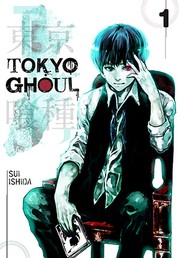
The only correct starting point: Kaneki's accident, the transplant and the first hunger. Everything about the CCG, the wards and the kagune is established here and assumed forever after.
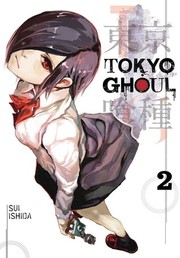
Kaneki's apprenticeship at Anteiku and the arrival of the investigators. Read straight on — volumes 1 and 2 are effectively one long introduction.

Introduces Amon and Mado properly and turns the CCG from an obstacle into a second point of view. This is where the series stops being a monster story.

The Mado confrontation and Touka's half of it — the first time the book asks you to hold two irreconcilable griefs at once. Do not skip ahead here; the payoff is immediate.

Closes the Anteiku arc and sets up the Aogiri Tree. A natural pause point if you want to check whether the series is for you before committing.
Aogiri Tree: volumes 6 to 8
IntermediateFollow the arc that breaks Kaneki, and understand why the art and pacing change afterwards.
▸ Study plan for this stage
Pace: One week, or a single long weekend. Three volumes totalling 611 pages — 198, 199 and 214 — which is three unhurried sittings at manga pace, and this is the stretch most readers do not manage to space out. Two specific instructions. Read volume 6 with your roster from the last stage open, because Ish
- Aogiri Tree as the first organisation with an agenda neither Anteiku nor the CCG can absorb
- The size of the cast as a deliberate pressure: a reader who cannot hold the names feels the same loss of footing Kaneki does
- The Yamori sequence as the hinge — what happens to Kaneki there is the cause of every change in the second half
- Ishida's line changing after volume 7, and how the drawing itself carries the character shift
- Volume 8 as the retroactive explanation for a tonal shift readers usually attribute to the anime adaptation
- Acceptance rather than cure as the series' answer to Kaneki's divided nature
- What does Aogiri Tree want, and how much of it is stated in these three volumes rather than later?
- What exactly changes in Kaneki after volume 7 — in behaviour, in speech, and in how he is drawn?
- How does Ishida's art change between volumes 6 and 8, and which specific pages show it most clearly?
- Why does the series stage its hinge as a static torture sequence rather than as a battle, and what would a battle have failed to do?
- Volume 8 is often said to explain a tonal shift blamed on the anime. What is the shift, and does the volume actually account for it?
- Read all 611 pages of this stage across a single weekend, one volume a sitting, then write four sentences on Kaneki — two describing him at the start of volume 6 and two at the end of volume 8. The distance between them is the arc.
- Set a page from volume 6 beside a page from volume 8 with a comparable subject: same character, similar shot. Describe what has changed in the line weight, the shading and the use of black.
- Add every new name from volume 6 to the roster you started in the previous stage, marking which faction each belongs to. Count them; the number is the point.
- After finishing volume 7, go back to Kaneki's first appearance in volume 1 and reread that chapter. Nothing in it has changed and all of it now reads differently.
Next up: The changed Kaneki of volume 8 is the character who drives the next three volumes, in which the CCG side finally takes over the narrative and the Anteiku cast pays for the first eight books.

The Aogiri raid begins and the cast triples in size. Keep a note of names here — Ishida introduces most of the second half's characters in a single volume.

The Yamori sequence, the most notorious stretch in the series and the hinge the whole story turns on. Read it in one sitting; broken across days it loses its shape.

The immediate aftermath, with a changed Kaneki and a changed drawing style. This is the volume that retroactively explains the tonal shift readers often blame on the anime.
The Owl Suppression: volumes 9 to 11
IntermediateWatch the CCG side become the driving narrative and the Anteiku cast pay for the first eight volumes.
▸ Study plan for this stage
Pace: One week. Three volumes at 198, 202 and 215 pages, 615 in total, and they read as one continuous movement rather than as three books — volumes 9 and 10 in particular should be read back to back, since 10 is entirely build-up to an operation that 11 then executes. Volume 11 carries the longest sustai
- The map widening past the 20th ward, and the political geography the earlier volumes only implied
- Kaneki's independent group as a third position between Anteiku and Aogiri
- CCG internal politics becoming legible — the bureau as an institution with factions rather than a monolith of hunters
- The Owl Suppression Operation as the point at which the CCG side becomes the driving narrative
- Cost accounting: the first eight volumes' investment in Anteiku exists so that this operation can spend it
- The acceleration into the endgame that starts the moment volume 11 closes
- How does the story's scope change in volume 9, and what makes that expansion feel earned rather than arbitrary?
- Who inside the CCG disagrees with whom by volume 10, and about what?
- Why does the series give the Owl Suppression to the investigators' point of view rather than to Kaneki's?
- Which deaths in volume 11 depend on work done in volumes 1 to 5, and would land as nothing without it?
- What is Kaneki's group for, strategically — and does the story ever let it achieve that?
- Draw the ward map as volumes 9 to 11 give it to you, marking which faction holds what. The series never supplies one and the operation is hard to follow without it.
- List the named characters alive at the end of volume 8 and cross them off as volume 11 proceeds. Then check the list against your roster from the first stage.
- Read volumes 9 and 10 in one session and note where you would have put a break if you were the editor. Volume boundaries in serialised manga rarely fall where the story's joints are.
- Pick the single page in volume 11 that you think is the operation's turning point and justify it in two sentences. Compare with where the volume's own chapter break falls.
Next up: Volume 11 is the last book before the ending accelerates sharply, and the next stage finishes the fourteen-volume run — with one gap in what our catalogue can link you to.

Kaneki's independent group and the widening of the political map beyond the 20th ward. The series' scope expands here more than at any other point.

The build to the Owl Suppression Operation, with the CCG's internal politics finally legible. Read it directly after volume 9; the two are one movement.
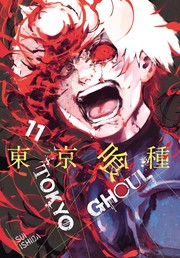
The operation itself, and the most sustained action sequence in the original run. Also the last volume before the ending accelerates sharply.
The end of the original run
IntermediateFinish the fourteen-volume story and be ready for the sequel — with one honest gap in what our catalogue can offer.
▸ Study plan for this stage
Pace: A few days, with a caveat you need before you start. Volume 12 is not on this path: it has no distinct English record we can link, resolving only to a two-volume omnibus, so you will need to source it yourself — a library, a bookshop, or a digital copy — and read it between volumes 11 and 13. The ru
- Publication order as the only workable order for this series, and :re as a sequel rather than a parallel run
- The acceleration of the final volumes, and which threads Ishida chooses to close against which he leaves open for :re
- Volume 13 as a gathering volume: almost every surviving character is repositioned before the finale
- The ending of the original run as a genuine ending, whatever :re later does with it
- The catalogue gap at volume 12 — a real hole in what this path can link, not a volume the story skips
- Which threads does the original run close for good, and which are visibly parked for the sequel?
- What does volume 13 spend its 248 pages doing, and why does the finale need that much repositioning first?
- Does the original fourteen volumes work as a complete story if you never read :re? Argue it from the ending itself.
- Where in volume 14 would :re's opening chapter constitute a spoiler, and how central is that material to the ending?
- Looking back across all fourteen, when did the series decide what its ending would be — and what is your evidence?
- Source volume 12 before you begin this stage rather than after. Check your library system or a bookshop first; do not start volume 13 without it, because 13 opens mid-consequence.
- Before reading volume 13, write down what you expect to happen to each of the four or five characters you care most about. Read to the end of 14 and score yourself.
- Reread the last chapter of volume 14 immediately after finishing it, then reread the first chapter of volume 1. The series is built to reward that pairing.
- Decide, in writing, whether you are going on to :re. If you are, note down the three questions you most want answered — they are the honest test of whether the sequel is for you.
Next up: With the original run finished and :re either started or deliberately declined, the last stage covers the one strand of side material that adds to the story rather than restating it.

The penultimate volume, gathering every surviving thread for the finale. Note the jump: volume 12 has no distinct English record we can link — it resolves only to a two-volume omnibus — so read it from your own copy or a library between volumes 11 and 13.

The ending of the original series, and the point at which Tokyo Ghoul :re becomes readable. Stop here before :re rather than interleaving them — :re opens two years later and spoils this volume in its first chapter.
The side material worth reading
IntermediateRead the one strand of supplementary Tokyo Ghoul that adds rather than repeats, and know where the sequel manga stands.
▸ Study plan for this stage
Pace: Two or three evenings, and a change of gear. Tokyo Ghoul: Days is a prose light novel, not manga — 232 pages of text written by Shin Towada using Ishida's characters, with Ishida illustrating — so it reads at prose speed and will take longer than any manga volume on this path despite the modest page
- Light novels as a distinct form — prose with illustrations, written by a different author under licence, not a manga volume in another shape
- Towada writing Ishida's cast: what a second hand can add, and where the voice audibly differs
- Side material that adds rather than repeats, and the test that separates the two
- Quiet time with the Anteiku cast as the thing the manga structurally could not afford
- Where :re stands in relation to all of this, and why nothing in Days depends on it
- What does prose let Days do with these characters that Ishida's panels cannot?
- Which scenes in Days would have been spoilers had you read it in publication sequence rather than after volume 14?
- Where can you hear Towada rather than Ishida, and does the difference damage the characters or extend them?
- Does Days change anything you believed about the Anteiku cast, or only deepen it — and which of those is the better outcome for side material?
- Having finished the path, what is the argument for reading :re, and what is the argument for stopping here?
- Pick one character who appears both in Days and in volumes 1 to 5 and write down three things the light novel tells you that the manga does not. If you cannot find three, that is a finding about the book.
- Read one of Days' quieter chapters immediately after rereading the corresponding manga volume. Note which of the two you trust more on the character, and why.
- Look at Ishida's illustrations in Days beside his panels from the same period of the manga. The same artist working without sequence is doing a different job; describe it.
- Write a two-paragraph reading order for someone starting Tokyo Ghoul tomorrow, including where volume 12 has to come from and where :re goes. If you can write that clearly, you have the path.
Next up: This is the end of the path: you have the fourteen-volume original run in publication order, the one gap named honestly, the side material that earns its place, and a clear line drawn at where the sequel begins.

A light novel written by Shin Towada with Ishida's characters and illustrations, covering the Anteiku cast between the early volumes. Read it after volume 14 rather than in sequence — it assumes you know who survives.