The Winternight Trilogy Reading Order: Where to Start
Katherine Arden's Winternight books have the simplest reading order in modern fantasy and the least forgiving one: The Bear and the Nightingale, The Girl in the Tower, The Winter of the Witch, in that order, with no side stories, no prequels and no alternative entry point. What looks like a standalone folk tale in the first book turns out to be the opening third of one continuous arc, and each volume opens on the exact consequence of the last. The genuine questions are what to read alongside it — the Russian tales Arden is retelling are short, in print and freely readable, and knowing the domovoi from the vazila changes what the novels feel like — and where to go afterwards. This path takes the three books first, then the folklore, then the history, then the neighbouring novels.
The trilogy, in order
BeginnerRead the three novels in the only order they work in, and understand where each volume hands off to the next
▸ Study plan for this stage
Pace: Five to six weeks for 1,144 pages across the three novels — The Bear and the Nightingale at 368, The Girl in the Tower at 392, The Winter of the Witch at 384. They are almost identical in length and they get faster as they go, so the honest split is two weeks on the first and about ten days on each
- There is exactly one order and no alternative entry point: The Bear and the Nightingale, then The Girl in the Tower, then The Winter of the Witch. No prequels, no side stories, no publication-versus-chronological argument to have. The only real mistake available is stopping after book one.
- The first novel is engineered to feel standalone and is not. Its ending resolves a village-scale conflict while leaving the actual bargain — Vasya, Morozko and the Bear — untouched. Readers who treat it as a complete folk novel are the ones who never find out it was an opening third.
- The chyerti are the household and landscape spirits — the domovoi of the hearth, the vazila of the stable, the rusalka in the water — and in Arden's system they survive on being fed and remembered. Belief is a material resource in these books, not a metaphor, which is why a priest who stops the offe
- Morozko is the frost-demon of the Russian tale and Arden's most substantial invention is what she does with him: the source Morozko rewards a polite girl and freezes a rude one, and hers is bound by obligations he cannot simply break.
- The register changes hard at book two — forest to city, folk tale to court politics, with Vasya riding disguised as a boy among the Grand Prince's men. This is deliberate design and not a stumble. The folklore does not disappear; it relocates.
- The trilogy sits on real fourteenth-century history: Moscow paying tribute under Mongol overlordship, and Dmitrii Ivanovich, the Grand Prince who is a character here, going on to the battle of Kulikovo in 1380 that the third novel ends on.
- The books' argument is not paganism versus Christianity. Both are true inside the story, both make demands, and the priest Konstantin is dangerous because he is sincere. Read for that rather than for a straightforward villain.
- What does the first novel resolve, and what does it leave completely open? Name the specific obligation that is still outstanding when it ends.
- Vasya's ability is described as seeing rather than doing. What can she actually do that other characters cannot, and where does the trilogy make that ability cost her something?
- How does the change of setting between the first and second novels change what kind of danger Vasya is in? Is she safer or less safe in Moscow?
- Konstantin believes what he says. What in the books makes his sincerity worse rather than better?
- Which debt from The Girl in the Tower does The Winter of the Witch assume you remember, and what happens to a reader who has forgotten it?
- By the end, has anything about the chyerti's situation actually been fixed, or only postponed?
- Keep a running list of every chyert as it appears — name, where it lives, what it is owed. By the third book Arden stops introducing them and expects the list to be in your head.
- At the end of The Bear and the Nightingale, write down what you think the trilogy is about. Do it again after The Winter of the Witch and compare the two sentences; the gap is the thing the first book is hiding.
- Read the last thirty pages of The Girl in the Tower again immediately before starting The Winter of the Witch. It costs an hour and it is the single highest-return move in this stage.
- Track Vasya's name across the three books — what she is called, by whom, and what she is called when she is passing as a boy. Arden uses naming as a plot mechanism, not just a texture.
Next up: You now know Arden's versions of Morozko, Baba Yaga and the domovoi, which is exactly the state you need to be in to meet them in their original form and see what she changed.
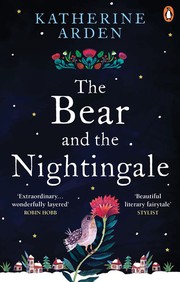
Start here without exception. A girl in a fourteenth-century village north of Moscow can still see the household spirits everyone else has stopped feeding, at the moment a new priest arrives to stamp them out. It reads like a self-contained folk novel, which is why so many readers stop after it and never learn that the ending is a setup.
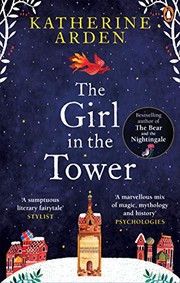
Second, and immediately — it opens days after the first book closes and moves the story from the forest to the politics of Moscow, with Vasya disguised as a boy among the Grand Prince's men. The change of register is deliberate; the folklore has not gone anywhere, it has moved into a city.
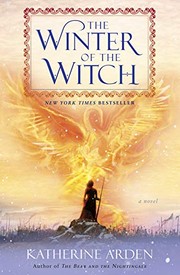
The finale, and the book the first two exist to make possible: it runs from a riot in Moscow to the battle of Kulikovo and resolves the bargain between Vasya, Morozko and the Bear. Read it last and read it close to the second, because it assumes you remember every debt owed in that book.
The folklore Arden is retelling
BeginnerMeet the domovoi, the rusalka, Morozko and Baba Yaga in their original form, so the novels' inventions become visible as inventions
▸ Study plan for this stage
Pace: Three to four weeks, and this stage is deliberately uneven in pace. Afanasyev's Russian Fairy Tales is the one book here whose length our catalogue does not record; read it by the tale rather than by the page — three or four a sitting, since each runs only a few pages and they blur badly if you take
- Afanasyev's collection is to Russia what Grimm is to Germany: a nineteenth-century gathering of oral tales, and the direct source-water for Winternight. Morozko, Vasilisa the Beautiful and the firebird are all here, each in a handful of pages.
- The source Morozko is a test-and-reward figure: he asks a freezing girl whether she is warm, she answers politely, she is rewarded; the rude stepsister answers otherwise and dies. Set that against Arden's frost-demon and the scale of her invention becomes visible.
- Baba Yaga in the tales is not consistently a villain. Johns's whole argument across 368 pages is that her ambiguity — helper and devourer in different tellings of the same tale type — is the point rather than a corruption, which is precisely the reading Arden takes.
- Vasilisa the Beautiful, the tale of a girl sent to Baba Yaga's hut with a doll her dead mother gave her, is the closest single source to Vasya's arc. Read it and the shape of the trilogy's first novel is suddenly legible.
- Ryan's survey establishes the historical fact the novels are built on: magic, divination and Orthodox Christianity coexisted in Russia for centuries. The trilogy's tension is not a war between two systems but the long, uncomfortable overlap of them.
- The bathhouse itself is a real category of Russian belief — an unclean, unconsecrated space with its own spirit, outside the house and outside the church — which is why Ryan's title is what it is and why bathhouses keep appearing in the fiction.
- Tale-type and motif indexing is the machinery of folklore scholarship, and Johns uses it constantly. You do not need to master it; you need to know that when he cites a number he is pointing at a family of tellings, not a single story.
- In the Afanasyev version of Morozko, what is being tested and what is being rewarded? What has Arden kept and what has she removed?
- Give two tales in which Baba Yaga behaves in opposite ways. What does Johns argue that inconsistency means?
- What does Vasilisa's doll do in the source tale, and what has Arden replaced it with?
- According to Ryan, what kind of space is a bathhouse in Russian belief, and why does that make it the right title for a book about magic?
- Where does the trilogy invent something with no source behind it at all? Name one and say why she needed it.
- Read the Afanasyev Morozko and the Afanasyev Vasilisa the Beautiful back to back in one sitting, then reread the first fifty pages of The Bear and the Nightingale. Almost every reader finds at least one borrowing they had read straight past.
- Make a two-column list: what the tales say a domovoi is, and what Arden's domovoi does. The divergences are where her argument lives.
- Take one of Johns's chapters and find a tale in Afanasyev that contradicts his generalisation. He expects this; the tales are not consistent, and doing it once teaches you how folklore scholarship actually works.
- Use Ryan's contents page to look up one practice mentioned in passing in the novels — divination by mirror, or the treatment of the bathhouse — and read only that section. This is a reference book and reading it as one is the correct technique.
Next up: Having separated the folklore from the fiction, the remaining unknown is the actual fourteenth century — the tribute, the princes and the battle the third novel ends on.

The source collection, Russia's equivalent of Grimm, and the direct ancestor of the trilogy — Morozko, Vasilisa and the firebird are all here in a few pages each. Read a handful before the second novel and you will recognise which turns Arden is following and which she has reversed.

A full scholarly study of the ambiguous witch of the Slavic tales — helper as often as devourer, which is precisely the reading Arden takes. Come to it after the tales themselves, when you have enough versions in your head for Johns's argument about her ambiguity to have something to bite on.
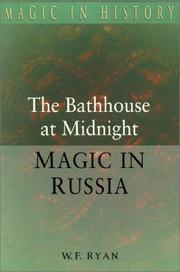
The standard survey of magic and divination in Russia, and the book that explains the trilogy's central tension: not paganism versus Christianity but a long coexistence of both. Placed third here because it is a reference work rather than a narrative, and it rewards a reader who already has the tales.
The Rus the novels are set in
IntermediateGet the real fourteenth century behind the novels — Mongol tribute, Moscow's rise, and the battle the third book ends on
▸ Study plan for this stage
Pace: Five to six weeks for 1,242 pages, and they are not interchangeable pages. Janet Martin's Medieval Russia, 980-1584 is 456 pages of a standard academic survey covering precisely the trilogy's period, including the Mongol tribute system and Dmitrii Donskoi's Moscow; read it first at roughly 25 pages
- The trilogy's political frame in one sentence: Rus principalities pay tribute to the Mongol khanate, Moscow rises by collecting that tribute for the khan, and the Grand Prince in the novels is the man who eventually stops paying.
- The battle of Kulikovo in 1380, where The Winter of the Witch ends, is the point that later Russian nationalism made into a founding moment. Martin is useful precisely because she treats it as an event rather than a symbol.
- Dmitrii Ivanovich, the prince Vasya deals with, is Dmitrii Donskoi — the byname comes from the Don, the river Kulikovo was fought near.
- Martin's book is a survey: chronology, institutions, sources, and where historians disagree. Billington's is an argument about Russian cultural character, structured around symbols rather than years. Reading the second as if it were the first is the standard mistake.
- Billington's title is his thesis — the icon and the axe as the two poles of Russian culture, the sacred image and the instrument of clearing and violence. Whether you accept that framing is exactly the question to hold while reading him.
- Monasteries are the hinge in both accounts: as landholders, as the sites of the written record almost everything is known from, and as the institutional face of the Christianisation the novels dramatise.
- Both books make plain that Christianisation was slow and layered rather than a switch being thrown. That is the historical fact underneath Arden's fiction, and it is why her priest is fighting something that is still very much alive.
- How did Moscow actually become dominant among the Rus principalities, and what role did the tribute arrangement play in that?
- What does Martin say about the evidentiary basis for this period — where does what we know come from, and who wrote it down?
- What is Billington's thesis, stated in a sentence? What kind of evidence does he use for it, and would Martin accept that evidence?
- Where does the trilogy simplify the politics, and does the simplification serve the story or distort it?
- What is the difference between what happened at Kulikovo and what Kulikovo came to mean?
- Find Martin's treatment of Kulikovo and read it directly against the last act of The Winter of the Witch. Note every place the novel compresses, invents, or moves a person.
- Write Billington's thesis in one sentence, then find one page in Martin that supports it and one that sits awkwardly with it. That exercise is the whole point of reading the two together.
- Draw a rough timeline of the princes named in the novels with dates from Martin. Arden assumes a chronology she never states, and seeing it laid out changes which characters look powerful.
- Pick one institution — the monastery, the tribute levy, the princely retinue — and follow it through both books. Martin will tell you how it worked, Billington what it meant.
Next up: With the sources and the history separated out, the remaining question is a reader's rather than a scholar's: what else is being written in this territory, and how does Winternight compare.

The standard one-volume history of exactly the period the trilogy occupies, including the Mongol tribute system and Dmitrii Donskoi's Moscow. Read it after the novels rather than before: it turns the political background Arden keeps in the corner of the frame into the foreground.

A sweeping interpretive history of Russian culture, and the classic account of how Orthodox Christianity and older popular belief settled into each other. Longer and more argumentative than Martin; take it second, as the interpretation laid over the facts.
The novels next door
BeginnerRead the closest neighbours to Winternight and see the range of what Slavic-folklore fantasy is currently doing
▸ Study plan for this stage
Pace: Six to seven weeks for 1,695 pages across four novels, and unlike the history stage these read fast — 40 to 50 pages an evening is comfortable for all four. Take them in the listed order. Catherynne Valente's Deathless is 352 pages and by some distance the hardest prose here: baroque, allusive, and
- Deathless takes Koschei the Deathless — the villain whose death is hidden inside a needle inside an egg — and relocates the tale to twentieth-century Leningrad. It is the same source material as Winternight taken in the opposite direction: denser, stranger, far less consoling.
- Valente's method is maximalist where Arden's is restrained. Setting the two side by side is the cleanest available demonstration that the folklore does not dictate the register; the novelist does.
- Uprooted is Polish rather than Russian in its sources, and its Wood is genuinely malevolent — not a symbol of something, an antagonist. It is the tighter of Novik's two books and the better first one.
- Spinning Silver is structurally the more ambitious Novik: three narrators, a Rumpelstiltskin frame, a winter court, and a Jewish moneylender's daughter whose situation the book takes seriously rather than using as colour. Read it second because it asks more.
- The Snow Child transplants Snegurochka, the snow-maiden tale, to 1920s Alaska and leaves the magic formally undecided — the novel never confirms whether anything supernatural has happened.
- That undecidability is the stage's real lesson: a folk tale needs very little machinery to work. Ivey uses almost none and gets the same effect Valente gets with a great deal.
- All four books are working the same problem from different angles — how much of a folk tale survives being moved into a novel, and what the novel has to give up in exchange.
- What does Valente gain by setting Koschei in the purges and the siege, and what does she lose compared with a medieval setting?
- Novik's Wood is an antagonist rather than a metaphor. What does that decision do to the shape of Uprooted's plot?
- Spinning Silver has three narrators and Uprooted has one. What does the extra machinery buy, and is it worth it?
- The Snow Child never confirms whether the child is real. Where exactly does Ivey leave the evidence ambiguous, and would the book be better or worse if she resolved it?
- Rank the four by how much they trust the reader. Where does the Winternight trilogy fall on that scale?
- Read a summary of the Koschei tale before Deathless. Valente assumes the outline and moves fast; ten minutes of preparation converts a confusing first fifty pages into a legible one.
- Copy a paragraph of Valente and a paragraph of Arden onto the same page. Sentence length, adjective density, how often each names an emotion — the contrast is stark enough to see in two paragraphs.
- After Spinning Silver, list what each of the three narrators knows that the others do not. Novik is running an information plot, and laying it out shows how the book is actually built.
- Finish The Snow Child and write down the strongest case that nothing supernatural occurred, then the strongest case that it did. Both are supportable, which is the achievement.
Next up: Having placed Winternight among its neighbours, the last open question is its author — what Arden writes when she leaves medieval Rus behind.

Koschei the Deathless relocated to the Leningrad of the purges and the siege — the same source material as Winternight taken in the opposite direction, denser and far stranger in its prose. The best single answer to what else the Russian tales can carry.
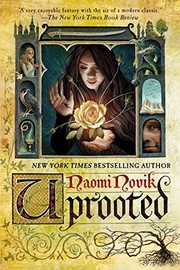
Polish rather than Russian folklore, and the standalone most often recommended to Winternight readers: a village girl, a hostile wizard, and a wood that is genuinely malevolent. Start here of the two Noviks, because it is the tighter book.

Rumpelstiltskin crossed with a winter court, told through three narrators, and structurally the more ambitious of Novik's pair. Read it after Uprooted; it asks more of you and repays it.

The Russian Snegurochka tale transplanted to 1920s Alaska, with the magic left genuinely undecided. Placed last because it is the least fantastical book here and the one that shows how little of the machinery a folk tale actually needs.
Arden's other books
BeginnerSee what Arden writes when she is not in medieval Rus, and judge whether to follow her out of it
▸ Study plan for this stage
Pace: Two to three weeks for 656 pages, and the two are wildly different jobs. Small Spaces is 224 pages of middle-grade horror and can be read in two evenings; do not let the shelving mislead you, it is considerably more frightening than the trilogy. The Warm Hands of Ghosts is 432 pages of adult literar
- Small Spaces is the opening of a middle-grade quartet, not a standalone. A school bus, a fog, and scarecrows, at 224 pages — the compression is what makes it work.
- It is the cleanest evidence that Arden's real subject is folk horror rather than Slavic material. Take the Russia away and the same instinct is still there, operating on American rural landscape instead.
- The Warm Hands of Ghosts is her first adult novel after the trilogy: a Canadian combat nurse searching for her brother in the aftermath of Passchendaele, with a single supernatural element held deliberately at arm's length.
- That restraint is the point of the comparison. In Winternight the supernatural is fully present and materially real; here it is rationed almost to nothing, and the book has to carry its weight another way.
- Across all three registers — trilogy, middle grade, war novel — the recurring structure is a young woman who perceives something the surrounding institution insists is not there, and pays socially for saying so.
- Her prose changes far less than her subject does. The same clear, concrete, unshowy sentences do village folk tale, children's horror and trench fiction without visible strain.
- What is frightening in Small Spaces, and how is it built differently from the fear in The Bear and the Nightingale?
- How much supernatural content does The Warm Hands of Ghosts actually contain, and what work is the rest of the novel doing instead?
- What survives from Winternight into both later books — subject, structure, sentence, or something else?
- Small Spaces is written for children and is arguably scarier than the adult books. What does the shorter form allow her to do?
- On this evidence, is Arden a folklore novelist or a horror novelist who has used folklore twice?
- Read Small Spaces in one sitting, then write down the three moments that landed hardest. Each is a compression of a technique she used at length in the trilogy.
- Take a page of Winternight and a page of The Warm Hands of Ghosts and mark every sentence longer than twenty words. The count barely moves; the subject has changed and the instrument has not.
- List what each of the three books refuses to explain. Arden withholds explanation consistently, and comparing what she withholds where is the sharpest way to see her method.
- Decide whether to continue with the Small Spaces quartet before starting it — it is a four-book commitment, and this first volume is the right place to make that call.
Next up: That is the whole of Arden in print, read in the order that makes each book explain the next.

Her middle-grade horror novel and the first of a quartet — a school bus, a fog, and scarecrows. Much shorter and much scarier than Winternight, and proof that the folk-horror instinct is the constant in her work rather than the Russian setting.

Her first adult novel after the trilogy: a combat nurse searching for her brother on the Western Front in 1918, with one supernatural element held at arm's length. Read it last — it is the book that shows what she took from Winternight and what she left behind.