The Warsaw Uprising of 1944: books to read, in order
On 1 August 1944 the Polish Home Army rose against the German garrison of Warsaw expecting the Red Army, sitting across the Vistula, to arrive within days. It did not. Sixty-three days later the rising had cost roughly 200,000 lives and the Germans levelled what was left of the city. This path builds from Poland's occupation and its underground state, through the rising itself, to the long argument about Soviet intent and about whether the rising should have been ordered at all. One caution built into the order: the 1944 Uprising is constantly confused with the 1943 Ghetto Uprising, and the final stage addresses that directly.
Poland Under Occupation
BeginnerUnderstand what German and Soviet occupation meant for Poland from 1939, and why Warsaw by 1944 was a city already half destroyed and wholly radicalised
▸ Study plan for this stage
Pace: 5 weeks. Kochanski's The Eagle Unbowed is 775 pages — three weeks at 35-40 pages a day, and it is the reference you will keep returning to. Snyder's Bloodlands takes ten days. Lukas's Forgotten Holocaust is short and finishes the stage. All three describe mass killing of civilians in detail: Bloodla
- The double occupation: German rule in the west and centre, Soviet rule in the east from September 1939 to June 1941, and the fact that Poland's war has two occupying powers and two sets of crimes
- The General Government as a governing structure designed for extraction and for the elimination of Polish leadership, not for administration of a conquered nation-state
- The Katyn massacre and the mass deportations east, and their direct effect on Polish-Soviet relations by 1944 — the Home Army command's assessment of Soviet intentions was not abstract
- Snyder's geographic frame: the lands between Berlin and Moscow as the site of both regimes' worst violence, with Poland at the centre, and why an account organised by territory rather than by regime shows something a national history cannot
- The Warsaw Ghetto and its 1943 destruction as an event that happened in the same city eighteen months before the Uprising and left visible ruins the 1944 fighters moved through
- Lukas's framing of the German occupation's treatment of ethnic Poles, and the criticism his book has drawn for how it sets Polish and Jewish suffering alongside one another — read it aware of the argument, not innocent of it
- The Polish government-in-exile in London and its dependence on allies who had already made commitments about Poland's eastern border
- What did German occupation policy in the General Government actually aim at, and how does it differ from occupation policy in Western Europe?
- Snyder organises by territory and Kochanski by nation. What does each organisation make visible, and what does each make it easy to lose sight of?
- By mid-1944, what did the Polish underground leadership know about Soviet conduct toward Poles, and from what specific evidence?
- Lukas's framing has been criticised. State the criticism accurately, then state what the book establishes that is not in dispute
- Why was Warsaw by 1944 a city that had already been partly destroyed, and what had happened in it in April and May 1943?
- Build a timeline of Poland from September 1939 to July 1944 from Kochanski, marking every event that would have informed the Home Army's judgement of the Soviet Union. That list is the evidence base for the decision in stage four
- Take one of Snyder's aggregate figures and find where he sources it. Then find Kochanski's figure for the same category of deaths. Note the difference and what accounts for it — different definitions, different territory, or different sources
- Read Lukas's account of a specific German reprisal action and check it against Kochanski's treatment of the same events. Write a paragraph on where the two differ in emphasis rather than in fact
- Write down, before you go further, what you think the Home Army's realistic options were in the summer of 1944. Keep it; the fourth stage is an argument about exactly this
Next up: Knowing what the occupation was, you can look at the state the Poles built underneath it — the institution that would give the order to rise.
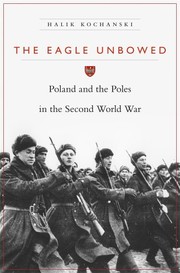
The best single-volume history of Poland in the Second World War, covering the two occupations, the government-in-exile and the armed forces abroad. Start here so the rising arrives as the culmination of five years, not as a sudden decision.
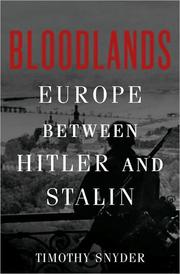
The territory between Berlin and Moscow where fourteen million civilians were killed by two regimes, Poland at its centre. It supplies the scale of violence that makes the Home Army's calculations in 1944 comprehensible.
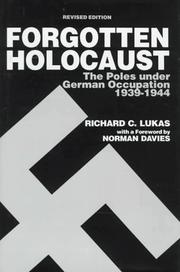
On the German occupation's treatment of ethnic Poles. Its framing has been criticised for the way it sets Polish and Jewish suffering alongside each other; read it for the occupation detail while noting that the comparison is contested.
The Underground State
IntermediateLearn how the Home Army and the civilian underground actually worked — couriers, clandestine courts, an underground press and school system — and meet the people who would give the order
▸ Study plan for this stage
Pace: 5 weeks. Karski's Story of a Secret State is a 1944 memoir and reads fast — a week. Korboński's Fighting Warsaw takes ten days. Nowak's Courier from Warsaw a week. Fairweather's The Volunteer is longer and harder; give it ten days. Karski's book contains his eyewitness account of the Warsaw Ghetto a
- The Polish Underground State as an actual state: a clandestine parliament, courts that tried and executed collaborators, an education system running secret schooling, and an underground press
- The Home Army's relationship to that civilian structure and to the government-in-exile in London — a chain of command that ran through occupied Europe by courier
- Karski's mission as a document: he was inside the Ghetto and a transit camp, carried the report to London and Washington, met Roosevelt, and the information did not change Allied policy
- Korboński's civil resistance apparatus: sabotage, boycott, the enforcement of underground law, and the daily administration of an illegal government
- Nowak's courier route between Warsaw and London, and what it reveals about the latency and the fidelity of the information the exile government was acting on
- Pilecki's voluntary imprisonment in Auschwitz and his reports out — evidence produced deliberately, at extraordinary cost, and largely unused
- The recurring pattern across all four books: accurate information reaching Allied capitals and producing no change in policy, which is the fact the Uprising's planners were reasoning from
- Describe the institutional structure of the Polish Underground State. Which of its functions would you not have expected an occupied population to sustain?
- Karski, Nowak and Pilecki all carried information out. In each case, who received it, and what happened next? The pattern across the three is the question
- Korboński ran civil rather than armed resistance. What was the relationship between the two, and where did they conflict over tactics?
- Fairweather is writing a modern biography from records; Karski and Korboński are writing memoirs about themselves. What can each form establish that the other cannot?
- By 1944, what did the Home Army leadership believe about the likely Western response to a rising in Warsaw, and was that belief reasonable on the evidence available to them?
- Reconstruct the information chain for one specific report — Karski's or Pilecki's — from origin to recipient, with dates. Then write one sentence on where in that chain the information stopped producing effects
- Karski wrote in 1943-44 for a wartime Allied audience. Read his account of the Ghetto and mark what he is arguing for as well as what he is describing. Then check whether Fairweather, writing seventy-five years later, treats any of it as unreliable
- Korboński and Nowak both describe the practical mechanics of the underground. List every operational task they mention — printing, forgery, courier routes, radio — and estimate what each required in people and money. This is the organisation that mounted the rising
- Write the case, in a paragraph, that by mid-1944 the Home Army had rational grounds to expect Western support for a rising. Use only what these four books show was actually communicated and received
- Pilecki's reports were accurate and were not acted on. Write two sentences on what an intelligence system is for, if accurate intelligence changes nothing
Next up: You have met the organisation and the people who would give the order; the next stage is the sixty-three days that followed it.

Written and published in 1944 while the war was still on, by the courier who carried news of the Holocaust to Roosevelt and Churchill. A primary document of the underground rather than a history of it.
The memoir of the head of the underground's civil resistance, on the day-to-day mechanics of running a clandestine state. Read after Karski for the administrative reality behind the courier's mission.
Nowak's account of running the courier route between occupied Warsaw and London, including his attempts to convey what the Poles needed and were not given. The single best memoir for understanding the rising's political context.

Witold Pilecki, who had himself imprisoned in Auschwitz to report on it and then fought in the Uprising. Placed at the end of this stage because his story carries the underground straight into August 1944.
The Sixty-Three Days
IntermediateFollow the rising itself — the first days' gains, the sewers, the German reprisal massacres in Wola, the district-by-district defeat and the capitulation
▸ Study plan for this stage
Pace: 6 weeks. Davies's Rising '44 is long and structurally unusual — two weeks. Richie's Warsaw 1944 is longer still and needs two weeks. Borodziej's The Warsaw Uprising of 1944 is a compact scholarly treatment; ten days. Borowiec's Warsaw Boy closes the stage in under a week. Richie documents the Wola m
- The W-Hour decision: the order to rise at 5pm on 1 August 1944, the state of Home Army armament at that moment, and what the plan assumed about how long the fighting would last
- The first days' gains and their limits — districts taken, districts never taken, and the failure to secure the bridges or the Vistula crossings
- The Wola massacres of 5-7 August: Himmler's order, the units that carried it out, and the deliberate killing of tens of thousands of non-combatants as a method of suppressing the rising
- The sewers as a functioning line of communication and evacuation between cut-off districts, and what moving through them actually involved
- The district-by-district reduction — Old Town, Powiśle, Czerniaków, Mokotów — and the Soviet position across the river throughout
- The airdrops: what the Western allies flew, at what loss rate, from how far, and why the Soviet refusal of landing rights until mid-September mattered operationally
- The capitulation of 2 October, its terms, and the subsequent systematic demolition of the city
- Davies's argument about Allied conduct, Richie's documentary reconstruction of the German side, and Borodziej's cooler insistence on what the evidence supports — three different scholarly temperaments on one event
- What did the Home Army have in the way of weapons and ammunition on 1 August, and how long did the plan assume the fighting would need to be sustained?
- Reconstruct the Wola massacres from Richie: which units, whose orders, over what days, and how does she establish the death toll?
- Davies and Borodziej reach different conclusions about the Allies. Identify the factual point on which they differ, if there is one, and where instead they are weighing the same facts differently
- The Western airdrops continued at heavy cost. What did they actually deliver, and what would Soviet cooperation have changed materially?
- Borowiec was fifteen. What does his memoir establish that three works of scholarship cannot, and what claims should not be built on it?
- By what date was the rising militarily lost, and what were the arguments inside the Home Army command for continuing after that date?
- Map the rising district by district on the maps in Davies or Borodziej, marking what was held on 4 August, on 1 September, and on 1 October. The shape of the loss is the operational argument
- Trace the civilian death toll across all three scholarly accounts. Write down each figure, the basis each author gives for it, and whether the figure covers the whole rising or the Wola killings specifically
- Take Davies's account of the airdrops and Richie's, and check both against Borodziej. Write two sentences on which claims about Allied effort are documented and which are inferred from the outcome
- Read Borowiec's account of one episode and find the same episode in Davies or Richie. Write both versions in a paragraph each, then note what the scholarly account had to leave out and what the memoir cannot corroborate
- Write down the Soviet Red Army's position and activity for each week of the rising, from these three books. You will need this list in the next stage, and building it before you read the argument is the point
Next up: With the rising's course established, the argument about whether it should have happened at all — and whose fault its failure was — can be conducted on evidence.
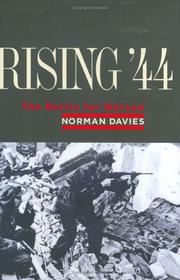
The anchor and the book that brought the Uprising to a wide English readership, combining narrative with survivor testimony and a sustained argument about Allied failure. Davies has a case to make; it is stated openly.

The strongest account of the German side, using SS and Wehrmacht records to document the Wola massacres and the men who ordered them. Read after Davies: it supplies from the perpetrator archive what he assembles from the Polish.
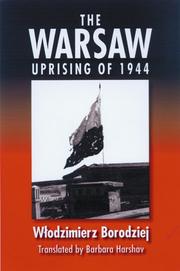
The leading Polish scholarly treatment in English, cooler than Davies and careful about what the evidence supports. The right third book, because by now you can see where the accounts diverge.

The memoir of a fifteen-year-old who fought through the rising and later became a foreign correspondent. It restores the individual scale after three books of operational and political analysis.
The Argument That Never Ended
IntermediateWeigh the case that Stalin deliberately let the rising die, the counter-case that the Home Army command misjudged, and the abandonment by the Western allies — then separate 1944 from 1943
▸ Study plan for this stage
Pace: 4 weeks. Ciechanowski's The Warsaw Rising of 1944 is the controversial study and deserves ten days read closely and adversarially. Olson and Cloud's A Question of Honor takes ten days. Gutman's Resistance is a history of the 1943 Warsaw Ghetto Uprising by a historian who fought in it, and closes the
- The three competing explanations of the failure, stated separately: Soviet bad faith, Home Army misjudgement, and Western abandonment — they are not mutually exclusive and the argument is about weighting
- Ciechanowski's case: that the decision to rise was a political misjudgement by the Polish leadership, made to establish a claim to the city before the Soviets arrived, on military assumptions that were not defensible
- Ciechanowski's own position as a participant writing against the participants' consensus, and why the book was received as it was in Polish exile circles
- The Soviet halt on the Vistula: the distinction between a deliberate political decision to let the rising die and a genuine operational pause after a long advance, and what evidence exists for each
- The Soviet refusal of landing rights for Western aircraft until mid-September, which is a harder fact to explain operationally and does more work than the halt itself
- Olson and Cloud on the Polish squadrons in the Battle of Britain and the diplomatic abandonment that followed — the Western half of the betrayal argument, with Yalta and the exclusion from the London victory parade as its end points
- Why 1943 and 1944 are two different risings a year apart, with different participants, aims and outcomes, and why conflating them is the most common error about Warsaw
- State Ciechanowski's thesis in your own words as strongly as you can, then state the strongest objection to it. Do not adjudicate until both are complete
- What evidence exists that the Soviet halt on the Vistula was a political decision? Separate what is documented from what is inferred from Soviet conduct before and after
- The refusal of landing rights is a separate question from the halt. Why is it harder to explain as an operational necessity?
- Olson and Cloud argue the Western allies abandoned Poland. What did Britain and the United States actually commit to, and at what point did those commitments become incompatible with the Soviet alliance?
- Gutman's 1943 rising and Davies's 1944 rising happened in the same city. Name three specific differences — in participants, aims, and expected outcome — that make them different events rather than two phases of one
- Having read the whole path: how would you distribute responsibility for the destruction of Warsaw, and which of your reasons rest on documents rather than on judgement of intent?
- Take the Soviet position log you built at the end of the last stage and test Ciechanowski's argument against it week by week. Mark each week as consistent with a deliberate halt, an operational pause, or neither
- Ciechanowski fought in the rising and argues against it. Find the passages where his own experience enters the analysis, and write a paragraph on whether that experience is functioning as evidence or as authority
- Trace one claim — that Stalin deliberately allowed the rising to be destroyed — across Davies, Borodziej and Ciechanowski. Write each author's exact claim and the evidence behind it. The three will not agree on what the claim even asserts
- Write the opposing case in a paragraph: that the decision to rise was correct on the information available on 31 July 1944, whatever followed. Use Ciechanowski's own reconstruction of that information
- Compare Gutman's account of the Ghetto rising's aims with the Home Army's aims in 1944. Write two sentences on what each rising expected to achieve, and note that only one of them expected to survive
- Return to what you wrote at the end of stage one about the Home Army's realistic options and revise it. Mark which of your original assumptions came from knowing the outcome
Next up: This is the final stage: the argument about Warsaw is not settled and this path leaves you able to hold a position in it and know what the position rests on.
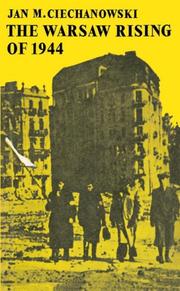
The controversial study, by a historian who fought in the rising, arguing that the decision to rise was a political misjudgement by the Polish leadership. Widely disliked in Poland and essential to reading the debate honestly.
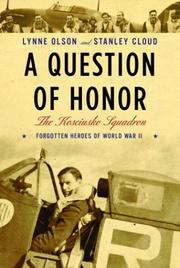
Written with Stanley Cloud, on the Polish squadron in the Battle of Britain and the diplomatic abandonment of Poland by its allies. The Western half of the betrayal argument, from the American side.

The history of the 1943 Warsaw Ghetto Uprising by a historian who fought in it. Deliberately last: these were two different risings a year apart, and the path is not complete until you can tell them apart and see how they relate.