Two risings happened in the same city sixteen months apart, and they are confused constantly. The Warsaw Ghetto Uprising of April 1943 was a revolt by the remaining Jewish population against deportation to Treblinka. The Warsaw Uprising of August 1944 was a general insurrection by the Polish Home Army against the German occupation, timed to the approach of the Red Army. Sorting that out is the first job, and getting it wrong makes everything downstream incoherent.
The rising lasted sixty-three days. Roughly 150,000 to 200,000 Polish civilians were killed, tens of thousands of them in mass shootings in the Wola district during the first week; the surviving population was expelled and the city was then systematically demolished on Hitler's order. That is what these books are about, stated plainly, because several of them are unreadable if you do not know it going in.
Occupied Poland first
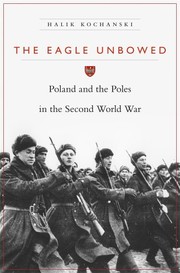
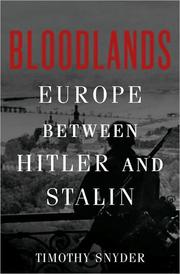
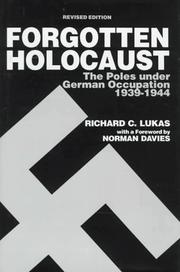
The eagle unbowed by Halik Kochanski is the single best foundation — Poland's whole war, from the two invasions of 1939 through occupation, exile, resistance and the Soviet settlement. Read it and the 1944 decision stops being mysterious. Bloodlands by Timothy Snyder sets Poland inside the wider zone between Hitler and Stalin where the mass killing happened, and gives the numbers a shape. Forgotten Holocaust by Richard C. Lukas covers the German campaign against ethnic Poles specifically; it makes an argument about relative neglect that some historians contest, and it is worth reading alongside Snyder rather than instead of him.
The underground state, in its own words
Poland's resistance built an entire clandestine state — courts, schools, press, army — and the memoirs are extraordinary. Story of a secret state by Jan Karski is the famous one: Karski was the courier who reached London and Washington with eyewitness testimony about the extermination of Polish Jews and was not believed. Fighting Warsaw by Stefan Korboński is the account of the civil side of that underground state by the man who ran much of it. Courier from Warsaw by Jan Nowak is the other great courier memoir, and is particularly good on what London actually understood. The Volunteer by Jack Fairweather is the modern reconstruction of Witold Pilecki, who had himself imprisoned in Auschwitz to report on it and later fought in the rising.
The sixty-three days
Rising '44 by Norman Davies is the best-known English narrative and is explicitly an argument as well as a story: Davies is hard on the Western Allies and on Soviet conduct across the Vistula. Warsaw 1944 by Alexandra Richie is the more detailed and more harrowing account, and is the fullest treatment in English of the Wola massacres and the German units responsible. The Warsaw Uprising of 1944 by Włodzimierz Borodziej is the Polish scholarly synthesis, drier and more careful than Davies, and the best check on him. Warsaw Boy by Andrew Borowiec is the memoir of a teenage fighter, and returns the scale to one street at a time.
Then the hard question. The Warsaw Rising of 1944 by Jan M. Ciechanowski is the classic analysis of the decision to rise — was it a political gamble, a military judgement, or an act taken because the alternative was watching the Soviets install a government unopposed? Ciechanowski was himself a participant, and his conclusions were unwelcome in Poland for years. A question of honor by Lynne Olson covers the Polish airmen and the wider betrayal argument. Close with Resistance by Israel Gutman on the 1943 Ghetto Uprising, which brings you back to the distinction you started with.
Take the full path in order and you end with the argument intact rather than resolved. Historians still disagree about whether Stalin halted deliberately and whether the rising should have been launched at all, and the honest position is to hold both cases in view.
Follow the full ordered path here: Best Books on the Warsaw Uprising of 1944, in Reading Order.
Ready to learn something deeply?
Build a reading path — free