The Tulsa race massacre: books to read, in order
On 31 May and 1 June 1921 a white mob, deputised by city officials and joined by aircraft dropping incendiaries, destroyed the Greenwood district of Tulsa — thirty-five blocks of the most prosperous Black commercial neighbourhood in the United States. Somewhere between thirty-nine and three hundred people were killed; nobody knows, because the bodies were not counted and some were not buried where the records say. Then the event was removed from Oklahoma's public memory for over fifty years: absent from state histories, absent from the schools, and known mainly to the people who had survived it. The word used for it is not a detail. For most of the twentieth century it was called a riot, and that word did specific work — insurance policies excluded riot damage, so Greenwood's rebuilding claims were denied almost without exception, and framing the event as a disturbance rather than an organised attack shaped who was and was not prosecuted. The shift to massacre is recent, was contested, and was formally adopted by the Oklahoma commission and then by the state in 2018. This path is ordered so you can watch that shift happen, which is why the older books, still carrying the older word in their titles, are here rather than filtered out.
What Happened
BeginnerEstablish the events of 31 May and 1 June and the days around them. By the end you should be able to explain the Dick Rowland and Sarah Page incident, the role of the Tulsa Tribune's coverage, how the confrontation at the courthouse escalated, what happened at the internment centres, and why the aerial attack matters to the argument about whether this was a riot or an assault.
▸ Study plan for this stage
Pace: Three books, 1,000 pages, and they read at roughly the same pace — about three weeks at 50 pages a session. Tim Madigan's The Burning is 304 pages and is the most vivid reconstruction, built on survivor testimony; take it first for the sequence of events, and note as you open it that its subtitle st
- The Dick Rowland and Sarah Page elevator incident and how little is actually known about it
- The Tulsa Tribune's coverage, the missing front page, and incitement as a documentable act
- The confrontation at the courthouse and the moment it became gunfire
- The deputisation of white civilians by city officials, which is the fact that most resists the word riot
- The aircraft over Greenwood and the dispute about what they dropped
- The internment of Greenwood residents at the fairgrounds and the convention hall
- The scale of the destruction — roughly thirty-five blocks of the district
- Why the death toll is unknown, and what would have to be true for a firm figure to exist
- Reconstruct the sequence from the elevator incident to the first shots at the courthouse, marking what is documented and what is inferred.
- What did the Tulsa Tribune publish, what is missing from the record, and what can be established about its effect?
- Who deputised the white mob, and what does that fact do to the description of events as a riot?
- What is known and what is disputed about the aircraft, and why does the question carry so much weight?
- What happened to Greenwood's residents who survived the night — where were they taken and under what authority?
- Where does Krehbiel correct the popular narrative, and on what evidence?
- Build an hour-by-hour timeline of 31 May and 1 June from Madigan, then annotate it with Krehbiel's corrections in a different colour. The disagreements are the exercise.
- List every official act by a Tulsa or Oklahoma authority during the two days — deputisation, arrest, internment, the National Guard's role — and mark each as documented or asserted.
- Write down the death toll each of the three books gives and the basis for it. Do not pick one yet.
- Note the subtitle of each book on this stage and the year it belongs to. You will return to this list in the third stage.
Next up: You now know what was done; the next stage is about what was destroyed, which the narrative accounts largely take as given.
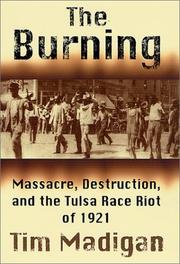
The most vivid narrative reconstruction, built on survivor testimony, and the fastest way to acquire the sequence of events. Note that its subtitle still reads 'the Tulsa Race Riot of 1921', which is the language of 2001 and part of the record this path asks you to read.

A Tulsa newspaperman's reconstruction, subtitled Reporting a Massacre, and the best account of the press — including his own paper's role in the incitement and the missing front page of the Tribune. Read it second: it corrects several details of the popular narrative.
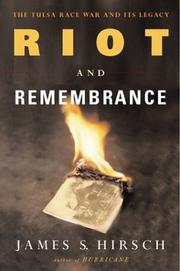
Covers the massacre and then the eighty years after it, including the 1997 state commission and the reparations campaign. The single most useful book for seeing the event and its afterlife as one continuous story.
Greenwood Before, and the Witnesses
BeginnerUnderstand what was destroyed. You should be able to describe how Greenwood was built, why Black Oklahoma was economically distinctive, and what a survivor's account of the attack looks like as against a historian's — and be able to say why the earliest eyewitness account went out of print for seventy years.
▸ Study plan for this stage
Pace: Three books, 725 pages, and the shortest is the one to read most slowly. Start with Hannibal B. Johnson's Black Wall Street at 298 pages — Greenwood as a community rather than as a crime scene: the businesses, churches, newspapers and the people who built them, and the rebuilding afterwards. Read it
- How Greenwood was built — the capital, the segregation that concentrated it, and the businesses that resulted
- The all-Black towns of Oklahoma and the territorial promise that drew people there
- Oklahoma statehood and the imposition of Jim Crow on a territory that had been different
- A survivor's collected testimony as a source, and how it differs from a historian's reconstruction
- Why the first account of the massacre went out of print and stayed out for decades
- The rebuilding of Greenwood after 1921, which happened despite the denials
- Segregation as the condition that both produced Black Wall Street and made it a target
- The difference between describing a community and describing its destruction
- How did Greenwood come to be as prosperous as it was? Give the economic mechanism, not the adjective.
- What were the all-Black towns of Oklahoma, and what happened to them after statehood?
- What does Parrish's account contain that the later histories do not, and what does it get wrong or leave out?
- Why did the earliest eyewitness account effectively disappear, and who kept it alive?
- Greenwood was rebuilt. By whom, with what money, and why is that part of the story usually missing?
- In what sense was Greenwood the largest example of something rather than an anomaly?
- From Johnson's Black Wall Street, list twenty Greenwood businesses and their owners. Keep the list; it makes the destruction specific in a way page counts do not.
- Read one of Parrish's collected testimonies in full, then find the same episode in Madigan or Krehbiel and note what the historian did with it.
- Map the all-Black towns Johnson describes in Acres of aspiration and mark which still exist.
- Write a paragraph on what was lost in 1921 using only economic facts — property, businesses, insurance value, employment. Then write one using only Parrish. Compare what each can carry.
Next up: With the community and the eyewitness record in hand, you can take up the legal machinery that decided none of it would be paid for — and the word that machinery turned on.
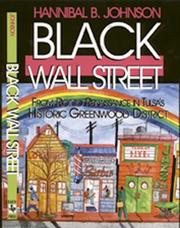
Greenwood as a community rather than as a crime scene — the businesses, churches, newspapers and the men and women who built them, and the rebuilding after 1921. Read it before or alongside the narratives; without it the massacre reads as an event without a subject.

The first account ever written, by a Greenwood survivor who collected eyewitness testimony within months, self-published in 1923 and then effectively lost. This modern edition adds essays by her great-granddaughter and by historians. Also catalogued separately under its original title, Events of the Tulsa Disaster; they are the same text, so buy one.
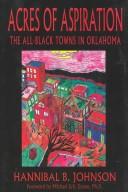
The wider history of African Americans in Oklahoma — the all-Black towns, the promise of the territory, and what statehood and Jim Crow did to it. The context in which Greenwood was not an anomaly but the largest example of something.
The Law, the Insurance and the Word
IntermediateTake up the legal and historiographical argument directly. You should be able to explain how the riot classification voided insurance claims, why no white participant was successfully prosecuted, what the 2001 commission recommended and what Oklahoma did with it, and what is at stake in choosing between the words riot and massacre.
▸ Study plan for this stage
Pace: Three books, 591 pages, the shortest stage on the path and the most argumentative. Alfred L. Brophy's Reconstructing the Dreamland: The Tulsa Riot of 1921 is 208 pages and is the legal history: the deputisation of the mob, the insurance exclusions, the litigation that failed, and the case for repara
- Riot exclusion clauses in property insurance, and how the classification voided Greenwood's claims
- Deputisation, and why an officially armed mob is legally a different object from a crowd
- The prosecutions that were brought, against whom, and what became of them
- The failed litigation and the statute-of-limitations problem that defeated the later suits
- The 1997 commission, its findings, its recommendations and what Oklahoma did with them
- Riot against massacre: what each word asserts about intent, organisation and responsibility
- The formal adoption of massacre by the state, and the fact that it was contested
- Unprosecuted racial violence as a category, and the repair mechanisms Ifill examines
- Explain precisely how the riot classification defeated the insurance claims. Quote the mechanism, not the outcome.
- Why was no white participant successfully prosecuted? Separate the legal obstacles from the political ones.
- What did the state commission recommend, and what was actually enacted?
- State the case for calling this a massacre and the case that was made for calling it a riot. What turns on the choice?
- Ellsworth's study broke a long silence. What made the silence possible, and what ended it?
- What does Ifill mean by repair, and which of her mechanisms could apply to Greenwood?
- Write out the insurance argument as a chain: policy clause, classification, denial, litigation, outcome. Cite Brophy at each link.
- Take the list of book subtitles you made in stage one and add Brophy's and Ellsworth's. Arrange them by the word each uses and see what the sequence shows.
- Read the commission's recommendations and mark each as implemented, partly implemented or ignored.
- Draft two versions of a one-sentence description of 31 May and 1 June, one using riot and one using massacre, and list what each version obliges you to prove.
- Apply one of Ifill's repair mechanisms to Tulsa specifically and write down what it would require of whom.
Next up: The naming question was settled recently and the factual question — how many died — was not, which is where the last stage begins.
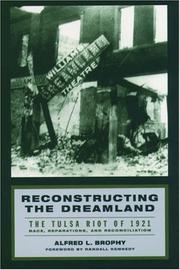
The legal history: the deputisation of the mob, the insurance exclusions, the litigation that failed, and the case for reparations. Brophy's subtitle reads 'The Tulsa Riot of 1921', and he argues explicitly about what the event should be called — which makes this the book where the naming question is most usefully joined.
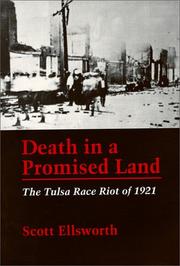
The 1982 study that recovered the massacre for scholarship after six decades of silence, and the foundation everything since rests on. Its title and framing are of their moment; read it as both a history of 1921 and evidence of where the historiography stood before the commission.
Not about Tulsa, but about how American communities live with unprosecuted racial violence and what repair could mean. Read it after Brophy as the general argument his particular case belongs to.
The Graves and the Present
IntermediateFollow the story to the present: the search for mass graves, the excavations begun in 2020, and the ongoing dispute over the death toll. You should be able to explain why the number of dead is still unknown and what the forensic work has and has not established.
▸ Study plan for this stage
Pace: Three books. Scott Ellsworth's The Ground Breaking is 321 pages and is the current account: Ellsworth returning to the subject decades after Death in a Promised Land, this time on the search for the mass graves — the oral history that pointed to Oaklawn Cemetery, the ground-penetrating radar, and th
- Oral history as the lead that located the search areas, and its standing as evidence
- Ground-penetrating radar: what it can show and what it cannot
- The excavations at Oaklawn and what has and has not been established by them
- Why the death toll remains unknown, and what forensic work would have to produce to settle it
- Urban renewal and highway construction as a second destruction of Greenwood
- One family across a century as a method — what a narrow lens shows that a survey cannot
- The 1919 wave of attacks and the national pattern Tulsa belongs to
- The difference between recovering a fact and recovering a memory
- How were the search areas identified, and what role did survivor and descendant testimony play?
- What have the excavations established so far, and what remains open?
- Why is the death toll still unknown after a century, and what specifically would resolve it?
- What did urban renewal and the highway do to Greenwood, and how does that change the meaning of 1921?
- How does Luckerson's family narrative alter what you took from the event-centred accounts in stage one?
- Where does Tulsa sit in the pattern McWhirter describes — typical, extreme, or different in kind?
- Return to the three death-toll figures you recorded in stage one and write what you would now say, stating the range and the reason for it rather than picking a number.
- Trace the Greenwood site through Luckerson: 1921, the rebuilding, urban renewal, the highway, the present. Mark who made each decision.
- From McWhirter, list the cities attacked in 1919 and, for each, whether anyone was prosecuted.
- Compare Ellsworth's early study with The Ground Breaking on the same question — where the dead are — and note what forty years of work changed.
- Write a single paragraph for a reader who knows nothing about this, using the word you have decided on and defending it in a clause.
Next up: This closes the path: you can describe what happened, what was destroyed, how the law and a single word ensured it went unpaid for, and what a century of recovery has and has not been able to establish.

Ellsworth returning to the subject forty years later, this time on the hunt for the mass graves — the oral history that pointed to Oaklawn Cemetery, the ground-penetrating radar, the politics of getting permission to dig. The most current account.

A century of Greenwood told through one family, running past 1921 through urban renewal and the highway that finished what the mob started. The most ambitious recent book on the subject and the best answer to treating 1921 as the whole story.
The wave of white attacks on Black communities across the United States in 1919, two years before Tulsa. Read it last: it establishes that Greenwood was the largest instance of a national pattern, not an isolated Oklahoma event.