The Old Filth Trilogy Reading Order: Where to Start with Jane Gardam
Jane Gardam's Old Filth trilogy is one marriage told three times. Old Filth is Edward Feathers's life; The Man in the Wooden Hat is his wife Betty's account of the same decades; Last Friends belongs to Terry Veneering, the rival who shadowed them both. Because each book withholds what the next one supplies, reading them out of publication order costs you the entire effect — you would learn Betty's secret before you have spent a novel believing Edward's version of his own marriage. Read Old Filth, then The Man in the Wooden Hat, then Last Friends, in that order and preferably close together. Everything else on this path is the world around them: a story collection set in the same village with the same characters, the history of the Raj orphans Edward was one of, and the fifty-year run of novels that made Gardam capable of the trilogy in her seventies.
The trilogy, in order
IntermediateRead the three novels in publication order and see one marriage rebuilt twice from the outside
▸ Study plan for this stage
Pace: Four to five weeks for 786 pages — Old Filth at 289, The Man in the Wooden Hat at 261, Last Friends at 236. They are short novels and Gardam's prose is light on the page, but they are not fast: she moves between decades without signalling it, and a paragraph will carry forty years, so 30 to 35 pages
- The trilogy is one marriage told three times. Old Filth is Edward Feathers's life, The Man in the Wooden Hat is his wife Betty's account of the same decades, and Last Friends belongs to Terry Veneering, the rival who shadowed both.
- Reading out of publication order costs the entire effect. Each novel is constructed around what the previous one did not say, so knowing the second book's secret first turns the first book from a portrait into a summary.
- Old Filth is Sir Edward Feathers — Failed In London Try Hong Kong — a retired judge in Dorset, remembering a childhood as a Raj orphan sent home to strangers in Wales.
- It reads as complete in itself, which is why so many readers stop after it. It is also, as you discover later, an unreliable account, and its completeness is part of the unreliability.
- The Man in the Wooden Hat quietly detonates the first novel: a decision Betty makes in its opening pages reframes fifty years of what Edward believed. There is no reading of this trilogy in which learning that first is not a loss.
- Last Friends fills in Veneering's origins and turns out to be nothing either of the other two assumed. It is the least self-sufficient of the three and the one that makes the whole design visible.
- The Raj orphan system is the trilogy's engine: children sent back from India to boarding schools and paid guardians, often not seeing their parents for years. Edward's manners, his silences and his marriage are all consequences of it.
- Gardam's technique is withholding rather than surprise. Nothing is concealed unfairly; the information is simply attached to a person who has no reason to say it.
- What does Old Filth tell you about Edward's childhood, and what does it leave you to assume?
- What is the decision Betty makes in the opening pages of the second novel, and what does it change about every scene of the first?
- How does Gardam move between decades without confusing the reader? Take one page and describe the mechanism.
- Veneering is a rival in two novels before he becomes a subject. What did the earlier books get wrong about him?
- Which of the three is the most reliable narrator? Is any of them reliable?
- By the end, is this a trilogy about a marriage, about an empire, or about what children are owed?
- Before starting The Man in the Wooden Hat, write down what you believe about the Feathers marriage. Reading that page again afterwards is the trilogy's designed experience.
- Keep a rough timeline of Edward's life from the first novel. The second and third both hang events on it and you will want the dates.
- Mark every place in Old Filth where Edward declines to answer a question. Almost all of them are answered in one of the later books.
- After Last Friends, reread the first chapter of Old Filth. Nothing has changed on the page and the whole scene has moved.
- Write one sentence stating what each of the three books knows that the other two do not. Three sentences is the design of the trilogy.
Next up: The trilogy leaves the Dorset village and the Raj childhood half-explained, and there is one more story about the first and a whole history behind the second.
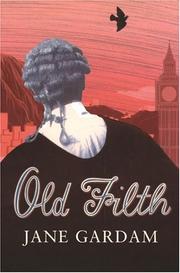
Start here, without exception. Sir Edward Feathers — Failed In London Try Hong Kong — a retired judge in Dorset, remembering a childhood as a Raj orphan sent home to strangers in Wales. It is complete in itself, which is why so many readers stop; it is also, you discover later, an unreliable account.

Betty's version of the same marriage, and the book that quietly detonates the first one — a decision she makes in its opening pages reframes everything Edward believed for fifty years. It must be read second; there is no version of this trilogy where knowing this first is not a loss.

Veneering's book, filling in the origins of the man who was the rival in both previous novels and turning out to be nothing either of them assumed. Read it third and last: it is the least self-sufficient of the three and the one that makes the design visible.
The world just outside the trilogy
IntermediateRead the stories set in the same Dorset village and the history of the childhood the trilogy turns on
▸ Study plan for this stage
Pace: Three to four weeks for 589 pages, and the two books have nothing in common except subject. The People on Privilege Hill is 213 pages of short stories and can be read a story at a sitting over a week; its title piece returns to Old Filth in retirement, so read it after the first novel rather than af
- The People on Privilege Hill is a story collection whose title piece returns to Old Filth among the same Dorset neighbours — effectively a coda, and the only other place these characters appear.
- Reading it between the first and second novels works better than reading it at the end, because it extends Edward's own version before Betty's arrives to contradict it.
- The rest of the collection is not about the Feathers at all, and is worth reading for its own sake as the best short introduction to Gardam's range.
- Children of the Raj is the history of the system that produced Edward: British children sent home from India to boarding schools and paid guardians, sometimes for a decade at a time.
- Brendon works from letters, diaries and memoirs, so the book is largely the children's own testimony. That is what makes it usable as a companion to a novel about a man who cannot say what happened to him.
- It documents the range of outcomes, which matters — some children were well looked after, some were badly neglected, and a few were seriously abused. The trilogy's Wales episode sits at the harsher end and is not an invention.
- After Brendon, Old Filth stops being an eccentric and becomes a type. Whether that makes the novel larger or smaller is a genuine question worth holding.
- What does the title story add to Old Filth's life, and where does it sit chronologically?
- How does the collection's non-Filth material differ in tone from the novels?
- What was the Raj orphan system for, in the terms its parents used? What did they believe they were protecting children from?
- Brendon uses first-hand testimony throughout. What are memoirs and letters good at, and where does she say the evidence is thin?
- How typical is Edward's experience against the range Brendon documents?
- Does knowing the history make the trilogy better or does it reduce a character to a case?
- Read the title story of The People on Privilege Hill immediately after finishing Old Filth. It is one sitting and it is placed exactly right.
- In Brendon, find two accounts — one benign and one harmful — of the same arrangement. The variation is the historian's point and it is easy to flatten.
- Match specific details of the Wales episode in Old Filth against Brendon's evidence. Gardam's invention turns out to be smaller than most readers assume.
- Write down what Edward would have said about his childhood if asked directly. Then check it against a Brendon testimony. The gap between the two is the subject of the trilogy.
Next up: The trilogy is late work; the early novels show where the child narrator who registers what she cannot yet understand first appeared.

A story collection whose title piece returns to Old Filth in his retirement among the same neighbours — effectively a coda between the first and second novels. Read it after Old Filth; it is the only other place these characters appear.
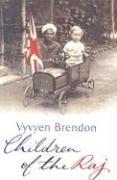
The history of the British children sent back from India to boarding schools and paid guardians, often not seeing their parents for years — the exact system that produced Edward Feathers and the damage the trilogy is about. Read it after the three novels and Old Filth stops being an eccentric and becomes a type.
Gardam's early novels
IntermediateRead the first books and meet the sharp, funny narrators the late trilogy grew out of
▸ Study plan for this stage
Pace: Three weeks for 572 pages — A Long Way from Verona at 197, Bilgewater at 202, God on the Rocks at 173 — which makes this the lightest stage on the path. All three are short, funny and narrated by adolescents, and they read at 50 pages an evening; five or six days each is comfortable. Read them in th
- A Long Way from Verona is her first novel, narrated by a thirteen-year-old in a wartime seaside town who has been told by a visiting writer that she is a genius and has decided to believe it.
- It is the freshest voice Gardam ever wrote, and it establishes the constant of her work: a narrator whose confidence and comprehension are badly mismatched.
- Bilgewater is a headmaster's awkward daughter at a boys' boarding school, in a comic novel that keeps turning serious without announcing it — the best of the early books.
- The unannounced tonal shift is the technique to watch. Gardam never marks the transition from comedy to grief, which is exactly what the trilogy does fifty years later.
- God on the Rocks was shortlisted for the Booker in 1978 and is narrated by an eight-year-old in a strict evangelical household in the 1930s, watching adults she does not understand.
- This is where the trilogy's central method first appears: a child registering facts whose meaning arrives decades later, for her and for the reader at the same time.
- All three are shelved variously as adult or as young adult fiction. The narrators are children; the books are not written for children, and the trilogy's readers will recognise the sensibility immediately.
- The prose is already unmistakably hers — short sentences, jokes that land a beat after you expect, no explanation offered.
- Jessica in A Long Way from Verona believes she is a genius. Does the novel agree with her, and how can you tell?
- Where does Bilgewater stop being funny? Gardam gives no signal — find the paragraph.
- What does the eight-year-old in God on the Rocks see that she cannot interpret, and when does the reader work it out?
- Compare these three narrators with Edward Feathers. What do a confident child and a reticent old man have in common as narrators?
- What is Gardam consistently interested in about children? Answer in one sentence.
- Read God on the Rocks and then immediately reread the Wales chapters of Old Filth. The same method is at work and the resemblance is startling.
- In Bilgewater, mark every joke in the last thirty pages. There are almost none, and the drop-off is measurable.
- Copy out a paragraph from A Long Way from Verona and one from Last Friends. Forty years apart, and the sentence rhythm is the same.
- For each of the three, write down what the narrator does not know. That list is what Gardam is actually writing about.
Next up: The children come first; the middle decades are where Gardam learned to hold an entire adult life inside one short book.

Her first novel, narrated by a thirteen-year-old in a wartime seaside town who has been told by a visiting writer that she is a genius and believes it. The freshest voice she ever wrote, and the earliest — start here.
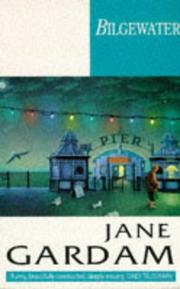
A headmaster's awkward daughter at a boys' boarding school, in a comic novel that keeps turning serious without announcing it. The best of the early books and the one that shows how far Gardam could push an unreliable adolescent narrator.

Booker-shortlisted in 1978: an eight-year-old in a strict evangelical household in the 1930s watching adults she does not understand. Read it third — it is where the technique of the trilogy first appears, a child registering facts whose meaning arrives decades later.
The mid-career novels
IntermediateRead the books of the middle decades, where Gardam is writing adults rather than children
▸ Study plan for this stage
Pace: Six to seven weeks for 1,130 pages, the longest stage here — Crusoe's Daughter at 224, The Queen of the Tambourine at 234, Faith Fox at 384, The Flight of the Maidens at 288. The lengths are misleading in both directions. Crusoe's Daughter is 224 pages carrying eighty years of a life and it needs to
- Crusoe's Daughter covers eighty years of a woman's life in a yellow house on a salt marsh, held together by an obsession with Robinson Crusoe. Gardam named it as her own favourite among her books.
- It is the most obvious rehearsal for Old Filth: a whole life compressed into a short novel, told in retrospect, with the meaning of early events only available at the end.
- The Crusoe conceit is doing real work — a life defined by isolation and by a book about isolation, with the reader invited to decide how much of the identification is self-knowledge and how much is refuge.
- The Queen of the Tambourine is a novel of letters written to a neighbour who may not be receiving them, by a woman whose life is coming apart just outside her own account of it. It won the Whitbread.
- It is the sharpest thing Gardam wrote about self-deception before the trilogy, and it is the direct ancestor of Old Filth's unreliability — an account that is honest in every sentence and wrong as a whole.
- Faith Fox follows a baby passed between a Yorkshire commune, a Kentish family and various unwilling relatives after her mother dies in childbirth. It is the most socially panoramic of her novels.
- The Flight of the Maidens has three Yorkshire girls in the summer of 1946, between school and university and the rest of their lives. It is the last novel before Old Filth and the closest to it in method.
- Across these four the subject is consistent: how much of a life is decided early, and how little the person concerned can see of it while it is happening.
- What does Robinson Crusoe give Polly in Crusoe's Daughter — a model, an excuse, or a companion?
- In The Queen of the Tambourine, when do you first suspect the letters are not what they appear to be? What gives it away?
- Faith Fox collects an unusually wide range of English types. What is Gardam comparing, and does the novel prefer any of them?
- The Flight of the Maidens is set in 1946. What is the historical moment doing for three girls at that particular age?
- Which of these four is closest to Old Filth in method? Make the case with a specific technique.
- Gardam writes very short books about very long lives. What has to be left out for that to work?
- Read the last twenty pages of Crusoe's Daughter and the last twenty of Old Filth together. Both are a long life arriving at its own summary and the resemblance is the argument of this stage.
- In The Queen of the Tambourine, keep a note of what Eliza asserts and what can be independently confirmed from the letters. The two columns diverge steadily.
- Count the point-of-view characters in Faith Fox. The number explains why it feels so different from the trilogy, which never has more than one at a time.
- Read The Flight of the Maidens immediately before rereading any part of Old Filth. It is the clearest before-and-after available in Gardam's career.
- Write one sentence on what Gardam learned between 1985 and 2004. This stage exists to let you answer that with evidence.
Next up: The novels compress a life into two hundred pages; the stories compress one into twenty, which is where the method is most visible.
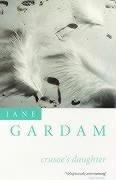
Eighty years of a woman's life in a yellow house on a salt marsh, held together by an obsession with Robinson Crusoe. Gardam's own favourite among her books and the most obvious rehearsal for the long retrospective life of Old Filth.
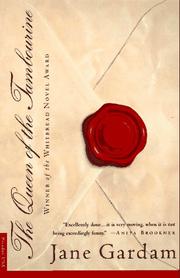
An epistolary novel of letters written to a neighbour who may not be receiving them, by a woman whose life is coming apart just outside her own account of it. Whitbread winner, and the sharpest thing she wrote about self-deception before the trilogy.
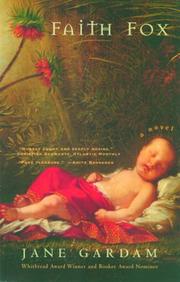
A baby passed between a Yorkshire commune, a Kentish family and various unwilling relatives after her mother dies in childbirth. The most socially panoramic of her novels; read it fourth here for the range of English types it collects.
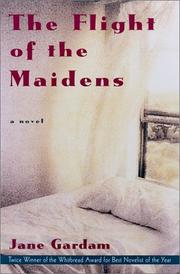
Three Yorkshire girls in the summer of 1946, between school and university and the rest of their lives. The last novel before Old Filth and the closest to it in method — read it immediately before returning to the trilogy.
The short stories
IntermediateRead the story collections, which are where Gardam's compression is most visible
▸ Study plan for this stage
Pace: About two weeks for 284 pages — Black Faces, White Faces at 128 and The Pangs of Love at 156 — making this the shortest stage on the path by a wide margin. Do not read either straight through. Gardam's stories are extremely compressed and three in a row blur; one or two at a sitting over a fortnight
- Black Faces, White Faces is a set of linked stories about English visitors in Jamaica, and it is her first sustained work on what the English are like abroad and how little they notice. It won both the David Higham Prize and the Winifred Holtby Prize.
- The linked structure — the same events glimpsed from different visitors — is the trilogy's design at story length, thirty years earlier.
- The English abroad is also the trilogy's subject. Edward Feathers is a Hong Kong lawyer and a Raj orphan, and the incuriosity Gardam anatomises in Jamaica is the same quality that makes him who he is.
- The Pangs of Love collects the Whitbread-winning title story, a sequel to The Little Mermaid told by the mermaid's younger sister.
- That story is the clearest possible statement of Gardam's method: take a known story and retell it from the position that was left out. The trilogy does exactly this three times.
- The compression is the point of reading these. A Gardam story will do in fifteen pages what most novelists need a chapter for, and seeing the technique at that scale makes it visible in the novels.
- Reading them last, after the trilogy and the novels, is deliberate — they are the least accessible entry to her work and the most illuminating exit from it.
- What do the English visitors in Black Faces, White Faces fail to see, and how does Gardam show it without stating it?
- How does the linked structure work? Find two stories that share an event and compare what each notices.
- In the title story of The Pangs of Love, what does the younger sister know that the original tale does not tell you?
- Retelling from the omitted position — where else in Gardam's work does that happen? Name at least two.
- What can a story do that one of her short novels cannot, and what does she give up in exchange?
- Read one story, wait, and read it again the same day. Gardam's endings routinely reorganise everything before them, and a second pass is where the story actually happens.
- Take the title story of The Pangs of Love and write down the original Andersen tale beside it. The overlap and the departures together are a complete account of her method.
- For each collection, write one sentence on what the English characters are like. Then check it against Edward and Betty in Hong Kong.
- Finally, write a paragraph explaining to someone else why the trilogy has to be read in publication order, using something you learned from these stories. If you can, the path has done its job.
Next up: That closes the path — the trilogy read in its designed order, its coda and its history, and fifty years of the method that made it possible.

Linked stories of English visitors in Jamaica, and her first sustained work on what the English are like abroad and how little they notice. Read it first of the two; it won both the David Higham Prize and the Winifred Holtby Prize.

Stories including the Whitbread-winning title piece, a sequel to The Little Mermaid told by her younger sister. The clearest demonstration that Gardam's method was always retelling a known story from the position that was left out — which is exactly what the trilogy does three times.