The Maze Runner Reading Order: Where to Start
James Dashner's Maze Runner is a trilogy followed by two prequels, and the prequels are the reason people ask about reading order. The Kill Order was published fourth but is set thirteen years before the Glade, and The Fever Code, published fifth, fills the gap between them — so chronological order exists and is a trap. The whole design of the first book is that Thomas knows nothing, and the prequels explain everything. This path reads publication order and says plainly why.
The Original Trilogy
BeginnerRead the three books that make the actual story, in publication order. ORDER CHOSEN: publication order, deliberately against internal chronology. The Maze Runner opens with a boy waking with no memory in a place nobody will explain, and the reader is meant to be as lost as he is; a chronological start with The Kill Order hands over the Flare, WICKED and the purpose of the maze before page one and dismantles the premise.
▸ Study plan for this stage
Pace: Two to three weeks for 1,117 pages — The Maze Runner 375, The Scorch Trials 384, The Death Cure 358. All three are the same size and all three are fast: short chapters, constant physical peril and very little interiority, so 80 to 100 pages an evening is entirely normal and a book takes four or five
- Withheld information as the engine of book one — the plot is the reader's ignorance being lifted, not just Thomas's
- The Glade as an improvised society with jobs, Keepers and punishments, and how much of the first book is social rather than maze
- WICKED's premise that the trials themselves generate the data, so the subjects cannot be told
- The widening of scale from a walled maze to a scorched world to a whole institution, one book at a time
- The invented Glade slang as a device for signalling that the reader is outside the group
- The difference between a mystery that pays off and one that is merely postponed
- The first book withholds almost everything. List what you actually knew at the halfway point and what you had guessed.
- The Glade has rules, jobs and a punishment. Who set them, and does the book ever satisfactorily answer that?
- WICKED insists the subjects cannot be informed. State their justification as the books give it, and then state the objection.
- The scale widens twice. Does the story get bigger, or only the map?
- Which of the trilogy's mysteries pay off and which are simply explained away in the third book?
- Keep a list of unanswered questions from the first book, adding to it as you read; at the end of The Death Cure, tick off which were answered and count.
- Map the Glade and the maze from the descriptions given; the geography is meant to be solvable and drawing it is what the Gladers themselves are doing.
- Write down your theory about the purpose of the maze at the end of book one, and check it against the reveal.
- Note where the invented slang is explained and where it is left to context; the choice tells you how the book manages a reader's disorientation.
Next up: With the mysteries paid off, the next stage goes back to the origins — the two prequels, which are worth reading now precisely because they would have been destructive earlier.
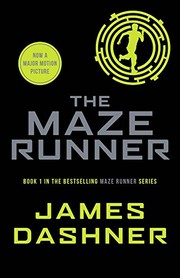
Thomas arrives in the Glade with no memory and a maze that changes every night. The starting point in every sense — the withholding of information is the book's entire engine, so nothing may come before it.
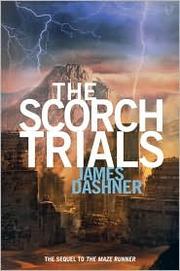
Second, moving the survivors into the sun-scorched wasteland and the next phase of the trials. It is where the scale widens from a walled maze to a ruined world.

Third and the conclusion of Thomas's story, resolving WICKED and the cure. Read it as the end of the series proper — the two prequels that follow do not continue from here.
The Prequels, After the Trilogy and Not Before
BeginnerGo back to the origins now that the mysteries have paid off, reading the two prequels in publication order.
▸ Study plan for this stage
Pace: Two weeks for 768 pages, and the two books are exactly the same length at 384 pages each, so the pace is identical to the trilogy. Read them in publication order — The Kill Order fourth and The Fever Code fifth — which is also the order they were written to be read in despite being set thirteen year
- The solar flares and the release of the Flare virus as the disaster underneath the whole series
- A prequel with a new cast, which is a different proposition from a prequel about characters you know
- The Fever Code as a true origin story — the maze being designed and built by people whose names you already have
- How a prequel can answer a question without diminishing it, and where these two succeed and fail at that
- Complicity: the children inside WICKED are shown participating in their own preparation
- Reading order versus internal chronology, with this series as the clearest case for publication order in modern young-adult fiction
- The Kill Order shares no characters with the trilogy. What does it gain by that, and what does it lose?
- Name three things The Fever Code explains. For each, was the mystery better before?
- Having read the prequels, reconstruct the sequence of events from the flares to Thomas waking in the box.
- The Fever Code shows the children cooperating with WICKED. How does that change your reading of Thomas in book one?
- Make the case for chronological order as strongly as you can, then say why publication order still wins.
- Build a single timeline from the solar flares to the end of The Death Cure, placing all five books on it; the timeline is the argument for the reading order in one page.
- Go back to the first chapter of The Maze Runner after finishing The Fever Code and mark every line that now reads differently.
- List what WICKED believed it was doing at each stage, using the prequels, and judge whether the trilogy's portrayal was fair to it.
- Write one paragraph you would give a friend who wants to start with The Kill Order, making the case without spoiling anything.
Next up: The next stage is a short one: a single book from Dashner's other series, as a test of whether you were following the author or the premise.
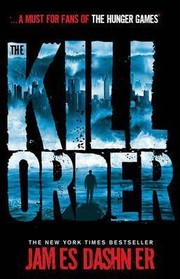
Set thirteen years before the Glade, on the solar flares and the release of the Flare virus, with an entirely new cast. Published fourth and best read fourth: as a prequel it explains a collapse you have already seen the consequences of, which is the only order in which the explanation is interesting.

The direct origin story — Thomas and the others as children inside WICKED, and the building of the maze. Fifth by publication and last of the prequels: it answers questions the trilogy raised, so it is worthless read first and satisfying read here.
Dashner Elsewhere
BeginnerSample the other Dashner series to see whether it is the author or the premise you are following.
▸ Study plan for this stage
Pace: Under a week for 320 pages, the shortest stage on the path and a single book. The Eye of Minds reads at the same speed as the Maze Runner novels and is the nearest thing in Dashner's other work to their puzzle-box structure, set inside a total-immersion virtual reality with a hacker antagonist. Read
- The puzzle-box structure transplanted from a physical maze to a virtual one
- Rules that can be rewritten: what changes when the environment is code rather than concrete
- Dashner's recurring shape — a protagonist inside a system run by adults with undisclosed purposes
- Pacing by physical peril, which is the same engine with a different setting
- Sampling an author's other series as a diagnostic, and what a single volume can and cannot tell you
- Where a series ends for a reader when later volumes are not available
- The virtual setting means the rules can change at any moment. Does that raise the stakes or lower them?
- What does Dashner do here that he also does in The Maze Runner? Name three specific techniques.
- The protagonist is again inside a system run by adults who will not explain it. Is the repetition a theme or a formula?
- Compare the opening chapter here with The Maze Runner's opening. Which does its job better?
- On this evidence, were you following Dashner or the Glade?
- List the rules of the virtual world as they are stated and mark each time one is broken or bent by the plot.
- Set the first ten pages of The Eye of Minds beside the first ten of The Maze Runner and mark the shared devices.
- Write a paragraph deciding whether to read the rest of the Mortality Doctrine, citing a specific scene either way.
Next up: The final stage reads the survival and children-under-experiment novels the Glade is assembled from, oldest first.
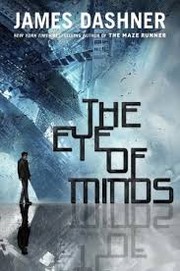
The first Mortality Doctrine book, set inside a total-immersion virtual reality with a hacker antagonist. The nearest thing to the Maze Runner's puzzle-box structure in his other work. Note that his later Maze Cutter sequel series has no record we could verify, so it is not on this path.
The Books the Glade Is Built Out Of
IntermediateRead the survival and children-under-experiment novels the series draws on, from the oldest to the closest contemporary.
▸ Study plan for this stage
Pace: Five to six weeks for 1,636 pages, and the four vary widely: Lord of the Flies is 243 pages, Ender's Game 330, Gone 567 and The 5th Wave 496. Read them oldest first. Lord of the Flies and Ender's Game are the two direct ancestors and the load-bearing books of the stage; Gone and The 5th Wave are con
- Improvised society and its collapse in Golding, which the Glade's Keepers, rules and banishments descend from directly
- Ender's Game's central cruelty — escalating tests run by adults who will not state the purpose — as the source of WICKED's premise
- The difference between a society that fails on its own (Golding) and one being deliberately stressed (Card, Dashner)
- Gone as the closest contemporary premise, an enclosed population of children with no adults, taken considerably further
- The 5th Wave's twist that the people training the survivor are the enemy, which is the trilogy's shape stated outright
- Reading an ancestor to see which parts of a modern book are inherited and which are its own
- Golding's boys build rules and then lose them. What does the Glade have that they do not, and does the Maze Runner earn it?
- Ender is told nothing about the purpose of his training. Compare the justification Card's adults give with WICKED's.
- Gone permits things the Maze Runner does not. Where is Dashner's line, and is it a judgement or a market constraint?
- The 5th Wave states its betrayal early. Does knowing it in advance make the book more or less effective than the trilogy's slow reveal?
- Which of these four is Dashner arguing with rather than borrowing from?
- List the Glade's rules and set each one beside its equivalent — or its absence — in Lord of the Flies.
- Read Ender's battle-school sequences and mark the points where the adults' explanation to each other differs from what Ender is told; the same gap runs the Maze Runner trilogy.
- Compare how Gone and The Maze Runner each handle the first death of a named child, and note the difference in what is shown.
- Write a closing paragraph naming which of these four you would recommend to someone who liked the Maze Runner and which you would not, with reasons drawn from specific scenes.
Next up: This is the end of the path: the trilogy in the order that preserves it, the prequels placed where they add rather than subtract, one sample of Dashner elsewhere and the four books the Glade was built from — from here, Golding and Card repay rereading more than another survival series will.
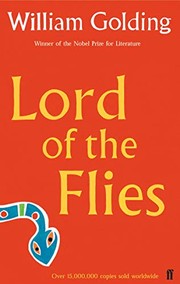
Boys alone, a rough society improvised out of nothing, and its collapse. Start here: the Glade's rules, its Keepers and its banishments are a direct descendant, and Golding is the book Dashner is arguing with.
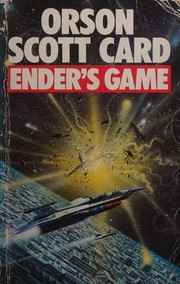
Children put through escalating tests by adults who will not explain the purpose. The other direct ancestor, and the source of the trilogy's central cruelty — that the trials are the point, and the subjects are not told.
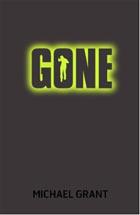
Everyone over fifteen vanishes from a Californian town enclosed by a barrier. Read third: it is the closest contemporary in premise, and much harsher than the Maze Runner in what it lets happen.

An alien invasion in waves, with a survivor learning that the people training her are the enemy. Last as the best-written of the contemporaries and a good place to leave the subgenre. Our record credits Richard Yancey, the author's full legal name.