Best Books on the Knights Templar, in Reading Order
The Templars attract more nonsense than almost any subject in medieval history, so this path is built to give you the real order first and inoculate you against the rest. You start with two modern narrative histories, place the order inside the crusades that created it, move to the scholarly standard works on how it actually operated, and finish with the trial records that ended it and the myths that outlived it.
Start with the narrative
BeginnerHold the whole arc in your head — foundation in Jerusalem around 1119, two centuries of war and banking, and the sudden arrests of 1307 — before any of the detail.
▸ Study plan for this stage
Pace: 6 weeks. The Templars by Dan Jones is 428 pages of fast narrative — three weeks at 20 pages a day. Haag's The Templars: The History and the Myth is 384 pages and splits roughly in half between history and legend; three weeks, and read the legend half attentively rather than as an appendix, because i
- The foundation story as the documents actually support it: around 1119, a small band under Hugh de Payns, quartered on the Temple Mount in Jerusalem, sworn to protect pilgrims on the road from Jaffa — and the crucial fact that they began as a handful of men, not as a secret organisation
- The Council of Troyes in 1129 and Bernard of Clairvaux's In Praise of the New Knighthood, which supplied the theological justification for a monk who kills. This was a genuine innovation and needed defending; understanding why is understanding the order
- The papal bull Omne datum optimum of 1139, which made the order answerable to the pope alone and exempt from local ecclesiastical authority and from tithes. Every later resentment of the Templars traces to this privilege
- The banking function and how it arose from the logistics of pilgrimage — deposits in Europe redeemable in the Levant, then loans, then the management of royal treasuries. The Templars did not set out to be bankers; the network made it possible
- The military catastrophes that decided the order's fate: Hattin in 1187 and the loss of Jerusalem, then the fall of Acre in 1291 which left a fighting order with no front to fight on
- The arrests of Friday 13 October 1307 across France on Philip IV's order, and the sequence to the dissolution at the Council of Vienne in 1312 and the burning of Jacques de Molay in 1314
- Haag's account of how the legend grew, which is the inoculation this stage is for: the eighteenth-century Masonic adoption of Templar imagery, the nineteenth-century romantic elaborations, and the twentieth-century Grail and bloodline literature — none of which has any medieval evidentiary basis
- The general rule Haag equips you with: ask of any Templar claim what medieval document supports it, and watch how quickly the sensational literature fails that question
- Why did a military religious order require theological justification, and what specifically did Bernard argue? A monk who kills was a novelty; state why
- What did Omne datum optimum grant, and name three later conflicts that follow directly from it
- How did the Templars come to hold and move money? Trace the mechanism from pilgrim deposits to royal treasuries
- What changed for the order after 1291, and why was that more dangerous to it than any military defeat?
- Take one popular Templar claim you have encountered and ask Haag's question of it: what medieval source supports it? Trace where the claim actually originates
- Build a timeline from 1119 to 1314 marking foundation, Troyes, the papal bulls, Hattin, Acre, the arrests, Vienne and de Molay's execution. Every later stage adds to this
- Write a 300-word account of the order's finances as Jones describes them: where the money came from, where it went, and who owed whom by 1300
- Take three claims from popular Templar literature — the Grail, the bloodline, the Masonic descent — and write one paragraph on each tracing when the claim first appears in print. Haag gives you the dates, and the dates are the refutation
- Draw a map of the Templars' European estates and their Levantine castles, and note what the first was for. The answer — funding the second — is the order's basic economic structure
Next up: You have the order's own arc; the next stage places it inside the two-century project that created it and whose collapse doomed it.

The best modern single-volume narrative: fast, scrupulous about its sources, and it never reaches for a conspiracy. Read it first so every later book has a timeline to hang on.
Haag pairs the history with a serious account of how the legend grew, which is the fastest way to see why the Holy-Blood-Holy-Grail shelf is not history. Read it second and you can safely ignore that entire genre.
The crusades that made them
BeginnerUnderstand the Templars as one institution inside a two-century military and religious project, rather than as a free-standing curiosity.
▸ Study plan for this stage
Pace: 10-11 weeks. The Crusades is 784 pages of campaign history — six weeks at 20 pages a day, and keep a map open throughout. Crusaders is 425 pages and lighter in structure; three to four weeks. Read Asbridge first for the Levantine narrative and Jones second for the wider European frame.
- The crusader states as the Templars' reason for existing: Jerusalem, Antioch, Edessa and Tripoli — small, chronically undermanned Latin polities dependent on seasonal reinforcement from Europe and therefore on permanent garrison forces
- Why a standing military order was the structural answer to that manpower problem: crusaders went home, and the orders did not. This is the single most important thing Asbridge's narrative explains about the Templars
- Hattin in 1187 in detail — the march to the Horns, the destruction of the field army, and Saladin's execution of the captured Templars and Hospitallers specifically, which tells you how the orders were regarded by their enemies
- The Third Crusade and Richard I's campaign, where the Templars appear as the professional core of a coalition army, and the strategic argument about Jerusalem versus Egypt that recurs for a century
- The later crusades' shift of target to Egypt, and Louis IX's campaigns, which show the orders as the standing expertise every expedition depended on and frequently ignored
- The fall of Acre in 1291 as the end of the Latin East, and the orders' divergent responses — the Hospitallers to Rhodes, the Teutonic Knights already committed to the Baltic, and the Templars with nowhere obvious to go. Their strategic homelessness is what stage 4's fall is built on
- Jones's wider frame: the Reconquista in Iberia, the Baltic crusades, the Fourth Crusade against Constantinople, and the Albigensian campaign in southern France — crusading as a general European institution, not a Levantine episode
- That military orders were a general phenomenon and not a Templar peculiarity: Hospitallers, Teutonic Knights, Calatrava, Santiago, Avis. This is the comparative baseline stage 3 will use
- Why did the crusader states need standing orders when crusading armies kept arriving? Answer with numbers and with the seasonality of reinforcement
- Reconstruct the decisions leading to Hattin. Where did the Templar leadership stand, and what does the episode show about the order's influence on strategy?
- Why did later crusades target Egypt rather than Jerusalem? What was the strategic logic, and did it work?
- After 1291, what were the realistic options for a military order with no front? Compare what each of the three great orders actually did
- Jones widens the frame to Iberia and the Baltic. What does that comparison show about what was and was not distinctive in the Levant?
- Extend your stage-1 timeline into a two-track document: crusade campaigns above the line, Templar institutional events below. The dependencies between the tracks are the argument of this stage
- Map the crusader states at their greatest extent and then at 1250 and 1290. Mark the Templar castles on all three. The third map explains 1307 better than any account of Philip IV's finances
- Take Hattin and write a 400-word after-action account: what the Latin field army did, what it should have done, and what the loss cost. Asbridge gives you enough to do this properly
- Make a table of the military orders — Templars, Hospitallers, Teutonic Knights, and two Iberian orders — with founding date, theatre, and what each was doing in 1300. You will use this table throughout stage 3
- Write 250 words on what a Templar commander in 1292 would have identified as the order's biggest problem. Getting this right predicts stage 4
Next up: With the strategic context established, you can move from what the order did to how it actually worked as an institution.
The order only makes sense inside the crusader states it was created to defend. Asbridge gives you the whole campaign history, including the defeats at Hattin and Acre that decided the Templars' fate.

A people-centred companion to Asbridge that widens the frame to Iberia, the Baltic and Byzantium. It shows that military orders were a general European phenomenon, not a one-off.
The scholarly account
IntermediateMove from narrative to institutional history: recruitment, the Rule, landholding, the banking network, and how the order compared with its rivals.
▸ Study plan for this stage
Pace: 10-12 weeks. The New Knighthood (463 pages) is the core and needs four to five weeks; it is an academic history built from charters, so read it more slowly than the narratives. The Knights Templar by Nicholson (278 pages) is three weeks. The Military Orders from the Twelfth to the Early Fourteenth C
- The Rule and its accretions — the primitive Rule from Troyes, then the hierarchical statutes and the retrais — and what they show about how an order of a few dozen men became a corporation with thousands of members and estates in every Latin kingdom
- The order's internal structure: the Grand Master, the provincial masters, the distinction between knights, sergeants and chaplains, and the fact that knights were always a minority of the membership. The popular image of an order composed of knights is simply wrong
- Recruitment and social composition — who joined, at what age, from what background, and how many joined late in life as a form of retirement. Nicholson is particularly good on this
- The European estates as an economic system: the preceptories in France, England, Iberia and Italy existed to generate the surplus that funded the Levantine garrisons. Nicholson's attention to this corrects any impression that the order was primarily a fighting force
- Women associated with the order, whom Nicholson recovers from the records — donors, associate members, and women on Templar estates — against an image of the order as hermetically male
- The banking and credit operations in institutional detail: deposits, transfers, loans to the French and English crowns, and the Paris Temple's role as a royal treasury. The scale of crown indebtedness is directly relevant to stage 4
- Forey's comparative frame: what the Templars shared with the Hospitallers and Teutonic Knights (structure, privileges, recruitment) and what genuinely distinguished them. Much of what popular accounts treat as uniquely Templar was common to all military orders
- The comparative question that matters most for the fall: the Hospitallers survived the same period with the same privileges and a similar record. Whatever explains the Templars' destruction has to explain that difference
- What proportion of the order were knights, and what did everyone else do? How does the answer change your picture of a preceptory?
- Trace the money: how did a manor in England fund a garrison in Syria? Name every step in the chain
- Using Forey, list three things commonly said to be distinctive about the Templars that were in fact shared with other orders
- The Hospitallers survived and the Templars did not. On the institutional evidence in these three books, what differed between them?
- Barber works from charters and Nicholson from the order's own records. Where do the two produce different pictures, and which questions is each source type better at answering?
- Diagram the order's hierarchy from the Grand Master down to a single preceptory, and mark where decisions were actually made. The gap between the formal chart and the practical one is worth a paragraph
- Read the primitive Rule itself — it is short and available in translation — and note every provision that would be impractical for an order of thousands. Then find how the later statutes handled each
- Take your stage-2 table of the military orders and add columns from Forey: privileges, recruitment, wealth, and reputation around 1300. The table should now show how ordinary the Templars were
- Reconstruct the annual cycle of a European preceptory from Nicholson: what was produced, what was remitted, what was kept. This is the order's actual daily existence and it involves very little fighting
- Write 400 words on what the order looked like in 1300 to a French bishop, a Parisian creditor and a Templar sergeant in Cyprus. Three vantage points on one institution is the best preparation for the trial
Next up: You now know what the order actually was, which is the only basis on which the charges of 1307 can be assessed.
The standard academic history of the order and the book every serious later work cites. Barber built it from charters and the Rule, so this is where the popular narratives you just read got their spine.

Nicholson works from the order's own records and is especially good on daily life, women associated with the order, and the European estates that funded the fighting. A useful corrective to Barber's more military emphasis.

Reads the Templars alongside the Hospitallers and the Teutonic Knights, which is the only way to judge what was distinctive about them. Take it after Barber and Nicholson so you have a baseline to compare against.
The fall, the trial, and the afterlife
BeginnerWork through the evidence of the 1307–1314 trial for yourself and understand exactly where the documented history stops and the invented history begins.
▸ Study plan for this stage
Pace: 9-10 weeks. The Trial of the Templars (382 pages) is the centrepiece and needs three to four weeks. Frale's The Templars (232 pages) is two weeks. Read's The Templars (368 pages) is three weeks and closes the path. Read Barber first, Frale second — her archival finding only means something once you
- The charges as they were actually framed — denial of Christ, spitting on the cross, obscene kissing, idol worship of a head called Baphomet, and sodomy — and the fact that these are a recycled formula used against other targets, not observations specific to the Templars
- What confessions extracted under torture are worth as evidence, which is the methodological core of Barber's book: the confessions are consistent where the interrogators' questions were consistent, and they collapse where the questions varied. Barber shows this systematically rather than asserting i
- Philip IV's motives as Barber assesses them: the crown's debts to the order, the precedent of his actions against the Lombards and the Jews, the earlier destruction of Boniface VIII's reputation, and the weakness of Clement V as an Avignon pope dependent on French support
- The distinction Barber maintains between France and elsewhere: outside French jurisdiction, where torture was not applied, Templars were largely acquitted or lightly treated. That geographic pattern is the strongest single argument about the charges' worth
- Frale's Chinon parchment: a document in the Vatican archives recording that Clement V absolved de Molay and the other leaders of heresy in 1308, which means the pope who dissolved the order had already found its leadership not guilty of the central charge
- How to read Frale: the archival finding and its transcription are the real contribution and are accepted; the surrounding interpretation and the publisher's sensational framing are separable from it. Take the document seriously and the packaging lightly
- The dissolution at Vienne in 1312 as an administrative act rather than a verdict — the order was suppressed by papal provision without a conviction, its property nominally transferred to the Hospitallers — which is a distinction popular accounts almost always miss
- Read's account of the afterlife: eighteenth-century Masonic ritual adopting Templar imagery some four centuries after the dissolution, nineteenth-century romanticism, and the twentieth-century Grail and bloodline literature. Each has a traceable date of invention
- What were the specific charges, and where had that list been used before? What does its reuse tell you about how it was generated?
- Templars were largely acquitted outside France. Why, and what does that pattern establish about the confessions obtained inside it?
- State Philip IV's motives as Barber assesses them, ranked by the evidence. Which is best supported, and which is most often asserted without support?
- What exactly does the Chinon parchment show, and what does it not show? Be careful to separate absolution of the leadership from any judgment on the order as a whole
- Take the strongest version of a claim that the Templars survived the suppression in some organised form. What would the evidence have to look like, and what actually exists?
- Take five of the confessions Barber quotes and compare their wording. Mark the phrases that repeat across depositions. That repetition is the evidence about how they were produced
- Build a comparative table: what happened to Templars in France, England, Iberia, Cyprus and Germany, with the legal outcome in each. One table settles more than any argument about the charges
- Write 400 words on the Chinon parchment for a reader who has only heard the sensational version — what the document is, where it was, what it establishes, and what it does not
- Complete your path-long timeline through 1314 and then extend it forward with a separate track for the legend: the date of each myth's first appearance in print. The gap between 1314 and the eighteenth century is the whole refutation, visible in one line
- Write 500 words answering the question this path was built for: what is actually known about the Knights Templar, and where does the record stop? Then take one popular claim and write the paragraph you would use to explain to someone why it fails
Next up: This is the end of the path: you can give a documented account of the order from 1119 to 1314, assess the trial evidence yourself, and date the invention of every claim that came afterwards.
The definitive study of the arrests, the confessions extracted under torture, and Philip IV's motives. This is the book that settles what the charges were actually worth.
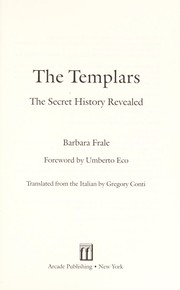
Frale is a Vatican Secret Archives palaeographer who rediscovered the Chinon parchment showing Clement V absolved the leadership. Ignore the sensational packaging — the archival argument is real and it changes the trial's ending.
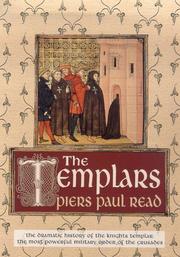
A readable full-length narrative that carries the story past 1314 into the Freemasonry and Grail claims, treating them as later inventions. A fitting close: you finish able to say precisely why those claims fail.
Discussion
Keep reading
Paths that share books, cover the same subject, or open a related topic.

