The Knights Templar have a problem no other medieval order has: the volume of invented history about them vastly exceeds the volume of real history, and the invented version sells better. Treasure, bloodlines, a secret survival into Freemasonry, the Holy Grail — none of it has documentary support, and all of it is easier to find in a bookshop than Malcolm Barber is.
That is why order matters here more than the subject would suggest. Read a good narrative history first so you have the actual chronology — foundation around 1119, two centuries of banking and warfare, arrest in 1307, suppression in 1312 — and the myths become obvious as additions to a story you already know. Read the myth books first and everything afterward feels like a cover-up, which is exactly the reaction they are constructed to produce.
A naming warning before you start: three books on this list are called The Templars, by Dan Jones, by Barbara Frale and by Piers Paul Read. They are different books with different arguments.
The narrative histories
The Templars by Dan Jones is the right first book. It is a proper narrative history by a writer who can pace one, it is built on the scholarship rather than around it, and it treats the myths briskly and dismissively without making a meal of them.
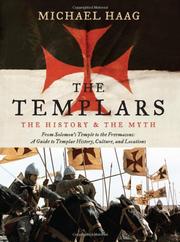
The Templars: The History and the Myth is Michael Haag doing the opposite, and doing it usefully — half the book is the order's history and half is an account of how the legends were manufactured, mostly in the eighteenth century and later, long after the last Templar was dead. Read it second and the modern conspiracy literature stops being interesting.
The crusading context
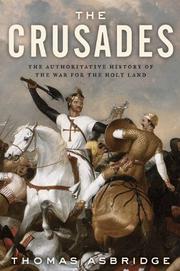
The Templars only make sense inside the crusades, and The Crusades by Thomas Asbridge is the best single-volume account, notable for taking the Muslim sources as seriously as the Latin ones. Crusaders is Dan Jones again, telling the same period through individual lives rather than campaigns; our catalogue record for it has a mangled author field, which is our data problem rather than anything wrong with the book.
The academic standards
The New Knighthood is Malcolm Barber's history of the order and the scholarly benchmark. It is where you go when you want to know what the evidence actually supports, and it is readable if unhurried.
The Knights Templar by Helen Nicholson is the more compact academic survey and the better introduction of the two if you want rigour without the length. Nicholson is particularly good on the order's day-to-day economic life, which is most of what the Templars actually did — running estates, moving money, managing property across Europe.
The military orders from the twelfth to the early fourteenth centuries widens the frame to the Hospitallers and the Teutonic Knights alongside the Templars. Alan Forey's point is that the Templars were one instance of a general institution, not a unique phenomenon, and that framing deflates a great deal of the mystique.
The trial
The trial of the Templars is Barber again and the essential book on the end. The arrests of 1307, the confessions extracted under torture, the political and financial motives of Philip IV of France, the suppression by Clement V. It is the closest thing to a definitive account.
The Templars by Barbara Frale is the book to read alongside it, with a caveat. Frale worked on the Chinon Parchment in the Vatican archives and argues it shows Clement V absolved the order's leaders of heresy before political pressure forced the suppression. Other medievalists read the same document more narrowly. The dispute is live and this path does not settle it for you.
The Templars by Piers Paul Read closes the sequence — a novelist's history, more readable than the academic works and correspondingly less rigorous, and it engages with the afterlife of the legend at some length.
Follow the full path below for the order.
Follow the full ordered path here: The Knights Templar: The Best Books, and the Myths to Skip.