The Iran-Contra affair: books to read, in order
Iran-Contra was two covert operations spliced together: arms sold to Iran to free American hostages in Lebanon, and the proceeds diverted to fund Nicaraguan rebels Congress had explicitly barred from receiving US aid. The path starts with the reported narrative and the hearings, moves to the definitive history and the declassified documents, hands the story to the participants in their own words, and closes with the Central American policy the whole thing was in service of. What Reagan knew and when is still genuinely unresolved, and the path is built to let you form your own view rather than be handed one.
What Happened
BeginnerGet the sequence straight — the Boland Amendments, the hostage-for-arms channel, the diversion, the November 1986 unravelling, the hearings — and understand why an ordinary policy dispute became a constitutional crisis.
▸ Study plan for this stage
Pace: 3 weeks for about 820 pages. Mayer and McManus's Landslide (468pp) in ten days — it is White House reporting and reads at speed. Cohen and Mitchell's Men of Zeal (350pp) in a week, and it is best read with a list of the hearing witnesses beside you.
- Two operations, spliced: arms sold to Iran through intermediaries in exchange for help freeing American hostages held in Lebanon, and the proceeds diverted to the Nicaraguan Contras at a time when Congress had barred US aid to them.
- The Boland Amendments are the legal hinge. There were several versions with different scope, and the question of whether the National Security Council staff was covered by them is the whole constitutional dispute in miniature.
- Landslide's contribution is atmosphere with reporting behind it — a second-term White House in which the chief of staff, the national security adviser and the President were operating with very different understandings of what was authorised.
- Men of Zeal is written by two senators who sat on the joint investigating committee, immediately after the hearings they ran. It is a participant account of an investigation, not a neutral history, and its framing choices are informative.
- The immunity grants to Oliver North and John Poindexter are why the hearings and the later prosecutions worked against each other, and why convictions were subsequently overturned.
- The unravelling in November 1986 — the Lebanese magazine report, the shredding, the Attorney General's inquiry finding the diversion memo — is the sequence to fix in order.
- The question that organises the entire literature: what did Reagan know, when, and did he authorise the diversion. Nothing you read on this path settles it.
- Lay out the sequence from the first arms shipment to the November 1986 press conference, dating at least six events.
- What did each version of the Boland Amendment actually prohibit, and who did the administration argue it did not cover?
- Why did the hostage-for-arms element contradict a stated Reagan policy, and how was that contradiction handled internally?
- What does Cohen and Mitchell's position on the committee let them see, and what does it stop them from saying?
- Where does Landslide rely on unnamed sources for its most consequential claims, and does that change your confidence in them?
- Build a one-page chronology with three parallel columns: the Iran channel, the Contra funding channel, and the public and congressional record. Seeing where the columns touch is the fastest way to grasp why the diversion was the scandal rather than either operation alone.
- Make a cast list — North, Poindexter, McFarlane, Casey, Secord, Hakim, Ghorbanifar, Meese, Shultz, Weinberger — with one line each on role and position. You will use it for the rest of the path.
- Take one factual claim from Landslide about what Reagan was told and note exactly what it is sourced to. You will check it against the documents in the next stage.
- Watch or read a transcript of one hour of North's testimony, then read what Cohen and Mitchell say about the same hour. Write a paragraph on what the senators think went wrong in that room.
Next up: You have the narrative and the hearings; now go to the historian and the documents that decide which parts of the narrative are actually established.

Mayer and Doyle McManus report Reagan's second term from inside the White House as the scandal breaks, and are unmatched on the atmosphere of a presidency in which nobody was quite in charge. The best narrative entry point.

Two senators on the joint investigating committee, writing immediately afterwards about the hearings they had just run. Read second: it shows you the evidence being contested in real time, and why the committees stopped short of where they might have gone.
The Definitive Account and the Documents
IntermediateMove from narrative to evidence: work with the standard scholarly history and then with the declassified primary record, and be able to say precisely which claims rest on documents and which on testimony.
▸ Study plan for this stage
Pace: 6 weeks and the hardest stage on the path. Draper's A Very Thin Line (690pp) is exhaustive and deliberately unhurried — three weeks at 30 pages a day. Byrne's Iran-Contra (464pp) in two weeks. Kornbluh and Byrne's The Iran-Contra Scandal: The Declassified History (412pp) is a documents reader and sh
- Draper's method is to build the account almost entirely from the documentary record and sworn testimony, and to say so whenever he is inferring. The title refers to the thin line between constitutional government and government by a small group operating outside it.
- Byrne, of the National Security Archive, writes with twenty years of further declassification behind him and argues considerably harder than Draper that Reagan was an engaged participant rather than a detached one.
- The difference between them is largely a difference in evidence base, not in temperament. Note which of Byrne's claims rest on documents Draper did not have.
- The documents reader is the point of this stage. Reading North's diversion memorandum, the Poindexter emails recovered from the PROF system, and the finding documents in their original form is a different experience from reading about them.
- The retroactive finding of January 1986 and the destroyed December 1985 finding are the sharpest test of the authorisation question, and the paper trail is genuinely incomplete.
- The 'off-the-shelf' capability — a self-financing covert operation outside congressional appropriation — is the constitutional stake, and Draper is clearest on why that, rather than the arms sales, is the real subject.
- Learn to say which claims rest on documents, which on testimony given under immunity, and which on inference. That distinction is the single most transferable thing this subject teaches.
- What does Draper conclude about Reagan's knowledge, and how does he mark the boundary of what the evidence supports?
- Name three documents released after Draper wrote that Byrne relies on, and say what each adds.
- What is a presidential finding, what does the retroactive one in January 1986 show, and what happened to the earlier one?
- Reading North's diversion memo directly: what does it say, whom is it addressed to, and what is missing from it?
- Draper's argument is constitutional rather than criminal. Restate it without using the word 'scandal'.
- Where do Draper and Byrne actually conflict, as opposed to differ in emphasis?
- Check a claim against the source it cites: take Landslide's account of what Reagan was told about the November 1985 HAWK shipment, find Draper's treatment of the same episode, and then read the underlying document in Kornbluh and Byrne. Write down what survives each step.
- Trace one claim across two authors who disagree: Draper's careful agnosticism about Reagan's role against Byrne's stronger attribution. Find where each states it, list what each cites, and decide which reading the documents support.
- Take the Poindexter PROF notes and read a run of them in sequence. Then write 200 words on what an internal electronic record shows that testimony cannot.
- Go through your stage-one chronology and mark each entry D, T or I — established by document, by testimony, or by inference. Anything marked I is where the arguments live.
- Find the section of the congressional report's minority views and read the constitutional argument it makes for broad executive latitude. Understanding the strongest version of that case is required for the rest of the path.
Next up: With the documentary record in hand, the participants' own accounts become readable as what they are — defences composed against evidence you now know.
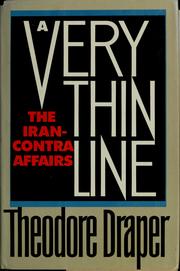
Still the most thorough and most rigorous account of the affair, built almost entirely from the documentary record and the testimony. Draper's title refers to the line between constitutional government and its opposite. The indispensable book on this path.
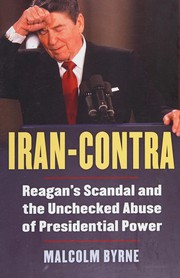
Byrne, of the National Security Archive, writes from twenty years of declassification that postdates Draper, and argues considerably harder that Reagan was engaged rather than detached. Read directly after Draper to see what new documents changed.
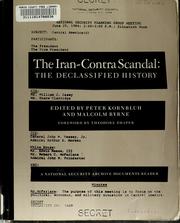
A documents reader: the memoranda, cables and diary entries themselves, with editorial apparatus. Use it alongside the two histories rather than straight through — reading North's own diversion memo is worth a chapter of commentary.
The Participants, In Their Own Words
IntermediateRead the principals' self-accounts against the documentary record you now know, and practise identifying what a memoir is defending — the single most useful skill this subject teaches.
▸ Study plan for this stage
Pace: 6 weeks for roughly 2,300 pages, which sounds worse than it is because all four are readable. North's Under Fire (446pp) in ten days, Walsh's Firewall (544pp) in two weeks, Woodward's Veil (543pp) in two weeks, and Reagan's diaries (767pp) dipped into by date rather than read through.
- North's Under Fire is the operation described by the man who ran it, written after his conviction was vacated on immunity grounds. It is the origin of the affair's political afterlife and should be read for what it is defending, not for what it establishes.
- Walsh's Firewall is the independent counsel's own narrative of a seven-year investigation, and his central claim is that the cover-up succeeded — culminating in President Bush's pardons of six defendants on Christmas Eve 1992, including Weinberger before his trial began.
- Walsh has an obvious institutional interest in the account he gives. Reading a prosecutor's memoir requires the same discipline as reading a defendant's.
- Woodward's Veil covers CIA covert action under William Casey and contains the famous hospital-bed interview, which Casey's family and others have disputed. Read the passage and read the objections to it, then decide what you think it is worth.
- Casey is the figure the documents cannot reach — he suffered a seizure the day before he was to testify and died in May 1987 — which is precisely why the disputed Woodward passage matters and why it cannot be relied on.
- The Reagan Diaries are the most direct evidence available about the question the whole affair turns on, and they are conspicuously thin at exactly the dates you most want them full.
- The skill this stage teaches is identifying what a memoir is defending. Every one of these four books has a client, including the two written by government officials.
- What is North defending in Under Fire, and which specific documentary findings does he decline to engage?
- Walsh argues the cover-up succeeded. What is his evidence, and what would count as evidence against him?
- What did the Christmas Eve 1992 pardons prevent from being established, and what did they establish instead?
- How much weight should the Casey deathbed passage in Veil carry, and what would change your answer?
- Read Reagan's entries for late November 1986. What is there, and what is not?
- Ranking these four by evidentiary value rather than by readability: what is your order, and why?
- Take three claims from Under Fire and check each against Draper or the documents reader. Write one line per claim on whether it is supported, contradicted or unaddressed.
- Read Reagan's diary entries for the whole of November 1986 alongside the chronology you built in stage one. Note every day on which something significant happened and the diary is silent or bland.
- Trace one claim across two authors who disagree: Walsh on the pardons as obstruction against the account North and his defenders give of a political prosecution. Set both out and write which case rests on the record.
- Find one substantive published objection to Woodward's Casey interview, read it, and then reread the passage. Write a paragraph on what you would need to see to accept or reject it.
- Pick any single episode — the Hasenfus shootdown, the Tehran trip with the cake and the Bible, the shredding party — and read all four participants' versions of it. The divergences on a single well-documented episode teach more about memoir than any amount of theory.
Next up: The self-accounts are done; the last stage supplies the Central American policy the diversion was serving and the longer argument about executive power the affair belongs to.
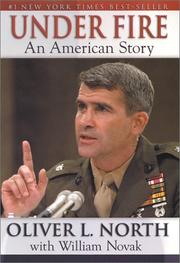
North's own account of the operation he ran, written after his conviction was overturned on immunity grounds. Read it because the affair's political afterlife runs through this book, and because its omissions are as informative as its claims.
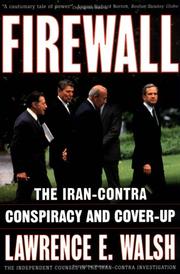
The independent counsel's own narrative of the seven-year investigation, and his argument that the cover-up succeeded — culminating in Bush's Christmas Eve 1992 pardons of six defendants. The prosecution's case, stated by the prosecutor.

Woodward's history of CIA covert action under William Casey, containing the famous and much-disputed deathbed interview. Read it for Casey, who is the figure the documents cannot reach, and read the disputed passage sceptically.
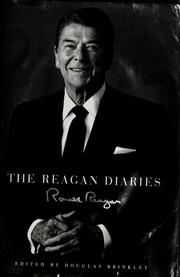
Reagan's own daily entries through the whole period. The most direct evidence available about the central unresolved question, and notably thin at exactly the moments you most want it to be full.
The Policy Behind It
IntermediateUnderstand the Central American commitment the diversion was serving, its Cold War precedents, and where Iran-Contra sits in the longer argument about executive power that outlived the Reagan administration.
▸ Study plan for this stage
Pace: 5 weeks for about 1,860 pages. Schlesinger and Kinzer's Bitter Fruit (320pp) in a week, Dillon's Comandos (393pp) in ten days, Bradlee's Guts and Glory (572pp) in two weeks, and Wilentz's The Age of Reagan (576pp) in two weeks. Comandos includes accounts of atrocities committed in the field during t
- Bitter Fruit is the 1954 CIA overthrow of Guatemala's Jacobo Arbenz, and it establishes the template — a covert operation, a commercial interest, a deniable government, a decades-long consequence — that the Contra programme sits inside.
- Dillon's Comandos reports the Contras themselves: recruitment, command structure, what the force actually was and what it did. It converts the recipients of the diverted money from an abstraction into an organisation with a record.
- Bradlee's Guts and Glory is the reported biography of North from Vietnam through the NSC basement, and it is the outside account of the life North narrates himself in the previous stage.
- Wilentz places the affair inside the whole Reagan presidency and the conservative ascendancy, and takes seriously the question of why Iran-Contra damaged Reagan so much less than Watergate damaged Nixon.
- The unitary-executive argument outlived the administration. Iran-Contra is one episode in a continuing dispute about war powers, covert action and congressional oversight, and several of its participants returned to government later.
- Reading Guatemala 1954 before Nicaragua 1985 is the whole design of this stage: the Contra programme is unintelligible as a novelty and entirely intelligible as a continuation.
- Wilentz is a sympathetic-but-critical historian of the period and his account of Reagan's survival is a claim about American politics, not only about the scandal.
- What happened in Guatemala in 1954, and which features of it recur in Nicaragua thirty years later?
- Who were the Contras, according to Dillon — how were they recruited, who commanded them, and what was their record in the field?
- How does Bradlee's account of North differ from North's own, and on which specific episodes?
- Why, on Wilentz's account, did Iran-Contra not destroy Reagan's presidency?
- Having finished the path: was Iran-Contra an aberration produced by a few zealots, or the predictable output of a covert-action apparatus? Defend one and say what your answer cannot explain.
- Write the opposing case in a paragraph: that the administration was pursuing a legitimate foreign policy against a Congress that had tied its hands, and that the constitutional violation was Congress's. Make it as strong as the minority views did. Then rebut it using Draper.
- Trace one claim across two authors who disagree: Bradlee's account of North's conduct and self-presentation against North's own in Under Fire. Pick one episode from Vietnam or from the NSC years and set the two versions in parallel.
- Check a claim against the record: take one figure Dillon gives for Contra strength or funding, find where it comes from, and compare it with what the congressional report established.
- Read the last chapter of Bitter Fruit and the Nicaragua sections of Wilentz back to back, and write 200 words on what thirty years of the same policy produced.
- Write 500 words for someone who has never heard of Iran-Contra: what happened, what remains unknown, and which single book you would give them first. Name at least four books from the path.
Next up: The path ends where the constitutional argument does — unresolved and still live, which is the reason the subject is worth the four stages it took.
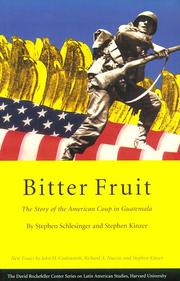
The 1954 CIA overthrow of Guatemala's Arbenz, and the template for three decades of American covert action in Central America. Start the stage here: the Contra programme is unintelligible without the precedent.

A reporter's account of the Contras themselves — who they were, how they were organised and what they did in the field. The book that makes the recipients of the diverted money concrete rather than abstract.
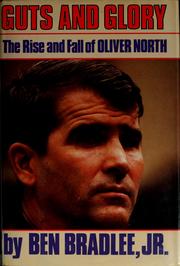
The fullest biography of Oliver North, tracking him from Vietnam to the NSC basement. Read it after Under Fire for the reported version of the life North narrates himself.
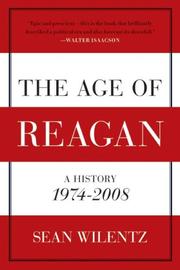
Places the scandal inside the whole Reagan presidency and the conservative ascendancy, and takes seriously the question of why it damaged Reagan so much less than Watergate damaged Nixon. The right closing book.