The Indus Valley Civilization: books to read, in order
South Asia's first urban civilization built cities with drainage systems and standardised weights across an area larger than Egypt and Mesopotamia combined, left a script nobody can read, and then dispersed. This path moves from a short accessible overview to the two standard scholarly syntheses, then to the script and the limits of what any of it can tell us, and finally to the genuinely contested questions about where the Indus people came from and what happened to them. That last stage is politically charged in India and the books there do not agree; they are included so you can see the disagreement rather than be handed a verdict.
The short way in
BeginnerKnow the geography, the main sites, the chronology of the Mature Harappan phase and what makes this civilization unusual — no palaces, no obvious temples, no monumental royal art.
▸ Study plan for this stage
Pace: Three weeks. Robinson's Indus is short and heavily illustrated and can be read in a weekend; read it twice, the second time with an atlas open. McIntosh is a thematic reference survey rather than a narrative, so give it two weeks and read it by theme rather than cover to cover.
- The geography: the Indus and the now-dry Ghaggar-Hakra system, and an extent larger than contemporary Egypt and Mesopotamia combined
- The main sites — Mohenjo-daro, Harappa, Dholavira, Rakhigarhi, Lothal — and the fact that the two best-known ones are several hundred miles apart
- The Mature Harappan phase and the Early and Late phases either side of it, which is the chronology every later book assumes
- The negative evidence that makes this civilization unusual: no identified palaces, no unambiguous temples, no monumental royal art, no royal burials
- Standardisation across the whole area — brick ratios, weights, seal forms — which implies coordination without implying a ruler
- The drainage and water infrastructure, including covered street drains and the Mohenjo-daro Great Bath, and how much of the interpretation of them is inference
- McIntosh's thematic organisation — settlement, craft, subsistence, trade — which makes her the volume to look things up in rather than to read straight through
- How large was the Indus zone relative to Egypt and Mesopotamia, and what does that scale imply about communication between sites?
- What is absent from the Indus record that is present in every other early urban civilization, and what are the possible explanations for the absence?
- Standardised weights and brick ratios across hundreds of miles: what does that actually prove, and what does it merely suggest?
- What is the Great Bath called that for, and on what evidence? Trace the name back to who gave it.
- Define the Mature Harappan phase in dates and in material terms. What marks its beginning and its end?
- Draw the map yourself: the two rivers, six named sites, and the approximate extent. Doing it by hand fixes the geography in a way that reading a map does not.
- Make a chronology card with the Early, Mature and Late phases and the approximate dates. Every later book will assume it and none will restate it.
- For three interpretive claims in Robinson — the Great Bath, the granary, the citadel — write down the physical evidence and the inference separately. This habit is what the rest of the path requires.
- Use McIntosh to look up craft production and trade, and write 200 words on what was made where. You are practising using her as a reference, which is what she is for.
Next up: With the sites, the chronology and the conspicuous absences in place, you can read the scholarly syntheses as arguments about what those absences mean rather than as description.

A short, current, well-illustrated introduction by a science writer who has also written seriously on undeciphered scripts. The fastest reliable orientation, and it is catalogued under the bare title Indus rather than its longer published form.
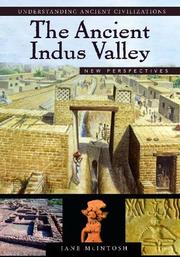
A reference-style survey organised thematically — settlement, craft, trade, subsistence — rather than as a narrative. Read second, as the place to look things up once Robinson has given you the shape.
The standard scholarly accounts
IntermediateWork through the archaeology in detail: excavation histories, regional variation, the water and sanitation engineering, craft specialisation and long-distance trade with Mesopotamia.
▸ Study plan for this stage
Pace: Ten to twelve weeks. Possehl is a large synthesis and deserves four weeks at twenty pages a day. Wright's Cambridge volume is denser and more current on environment; allow four. Lahiri's excavation history is the most readable of the three and takes two to three. Read them in the order given.
- Possehl's central argument that Indus society was organised without the centralised state apparatus visible in Egypt and Mesopotamia, and what he offers instead
- Regional variation: the Indus zone as several related regional traditions rather than one uniform culture, which Possehl documents site by site
- Craft specialisation and the evidence for it — bead-making, shell, faience, metallurgy — and what specialisation implies about social organisation
- Long-distance trade with Mesopotamia, including Indus seals found in Mesopotamian contexts and the Meluhha references, which supply the only external dating anchor
- Wright's environmental case: the river systems, monsoon variability and agricultural regimes, which is where the field has moved most since Possehl
- Wright's greater caution about social interpretation, and the fact that two leading syntheses of the same evidence differ in confidence rather than in data
- Lahiri on the rediscovery — Marshall, Banerji, the 1920s campaigns — and how the excavation methods and colonial context shaped what was recorded and what was not
- That the evidence base is a product of particular digs at particular moments, so the shape of the field partly reflects where people happened to dig
- What is Possehl's argument against a centralised Indus state? Give his evidence, then say what a sceptic would demand instead.
- Where do Possehl and Wright disagree — in the data, in the inference, or only in confidence? Find a specific case.
- What does the Mesopotamian trade evidence let us date, and what does it not?
- How much of the standard picture depends on Mohenjo-daro specifically? Consider what would change if Dholavira had been excavated first.
- From Lahiri, name two decisions made by the early excavators that constrain what can now be known.
- Build a table of five major sites with size, distinctive features and excavation date. It will make the regional-variation argument concrete rather than abstract.
- For Possehl's no-state argument, write the case in 300 words and the counter-case in 300 words. Wright supplies much of the second.
- Read Wright's environmental chapters and revise your chronology card with what the climate evidence adds. Note where she gives ranges rather than dates.
- After Lahiri, reread any interpretive passage in Possehl about Mohenjo-daro and write 200 words on how the excavation history bears on it.
Next up: Having seen how much of the picture is inferred from material remains, you are ready for the reason it must be — the script that would settle much of it is unread.

The major synthesis of the field by one of its leading figures, arguing that Indus society was organised without the centralised state apparatus other early civilizations show. Subtitled A Contemporary Perspective; academic in register but not technically forbidding.

The Cambridge World Archaeology volume, and the strongest treatment of urbanism, economy and the environment. Read after Possehl: it is more current on the environmental evidence and more cautious about social interpretation.

The history of the rediscovery itself — Marshall, Banerji, the 1920s excavations and the colonial politics around them. Placed here because knowing how the evidence was produced changes how you read the syntheses.
The script, and the limits of the evidence
IntermediateUnderstand why the Indus script remains unread, what the decipherment claims actually rest on, and how much of the standard picture is inference from material remains alone.
▸ Study plan for this stage
Pace: Six to seven weeks. Parpola's Deciphering the Indus Script is a substantial scholarly monograph and needs four weeks read slowly, with the sign tables kept open. Robinson's Lost Languages is comparative and much lighter — two weeks, and it is worth reading its Linear B and Maya chapters before you t
- The corpus itself: several thousand inscriptions, overwhelmingly short — most only a handful of signs — mostly on seals, sealings and small objects
- What a successful decipherment has historically required, as Robinson sets out through Linear B, Egyptian and Maya: a bilingual text, a known underlying language, or long inscriptions, and preferably more than one
- That the Indus corpus has none of the three, which is the structural reason the problem is hard rather than merely unsolved
- Parpola's case for a Dravidian language behind the signs, built on sign distribution, the later Dravidian languages of South Asia, and proposed rebus readings
- The rebus principle and its risks: a plausible reading of one sign is easy to produce and very hard to test against anything
- The open question of whether the script encodes language at all, which is a live minority position and not a fringe one
- The sign count as a line of argument, and why counting signs constrains the type of writing system without identifying it
- That Parpola's case is the most developed on offer and is still not accepted as proven — the correct way to read it is as a sustained argument
- What are the three things a decipherment usually needs, and which does the Indus corpus lack most decisively?
- State Parpola's argument for Dravidian in outline. Which step in it is doing the most work?
- If the script does not encode language, what else could the seals be doing? Set out that position at its strongest before rejecting it.
- Why does the shortness of the inscriptions matter so much? Answer in terms of what statistical methods can and cannot do with short strings.
- Compare Linear B's decipherment with the Indus problem as Robinson lays them out. What did Ventris have that nobody working on Indus has?
- Read Robinson's Linear B chapter before anything else in this stage. It gives you a worked example of success against which every Indus claim can be measured.
- Take five of Parpola's proposed readings and write down, for each, what evidence would count against it. Where nothing would, note that.
- Count the sign lengths in a sample of published inscriptions and plot the distribution. Seeing how short they really are does more than any argument about it.
- Write 400 words explaining to a general reader why the Indus script is unread, without using the word mysterious. Everything in this stage is aimed at making that possible.
Next up: Knowing exactly how much cannot be read is the right preparation for the final stage, where the disputes are sharpest precisely because the decisive evidence is missing.

The fullest scholarly attempt, arguing for a Dravidian language behind the signs. Parpola's case is the most developed on offer and is still not accepted as proven — read it as a sustained argument, not a solution.
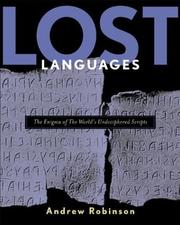
Sets the Indus problem beside Linear B, Egyptian and Maya to show what a successful decipherment normally requires — a bilingual text, a known language, long inscriptions — and why Indus has none of them. The clearest explanation of why the problem is hard.
Origins, endings, and the contested ground
IntermediateEngage the disputes over Indo-Aryan arrival, the Sarasvati identification and the decline, and be able to state which claims rest on genetics, which on archaeology and which on textual reconstruction.
▸ Study plan for this stage
Pace: Ten to twelve weeks. Joseph is a fast popular synthesis, two weeks. Parpola's The Roots of Hinduism is technical and needs three. Danino takes two to three. Thapar's survey is long and covers far more than the Indus; give it three to four weeks and read the early chapters closely. Keep the given ord
- Three distinct kinds of evidence in play — ancient DNA, archaeology, and linguistic reconstruction from texts — which support different kinds of claim and are routinely conflated in public argument
- The ancient-DNA results published from 2018 onward, which Joseph synthesises, and the steppe-ancestry migration into South Asia they are read as indicating, dated after the Indus decline
- What genetics can establish (population movement and admixture, with dates and error ranges) and what it cannot (language, culture, or the character of a migration)
- The collapse of the old invasion model: the mid-century picture of a violent Aryan conquest destroying the cities is rejected across the field, which is separate from the question of whether a migration occurred
- Decline rather than destruction — de-urbanisation, shifting river systems, changing monsoon patterns and continuity of village settlement, which is the mainstream reading of the ending
- Parpola's case for how Indus religion and incoming Indo-Aryan traditions combined, which takes a firm position where others hold the question open
- The Sarasvati identification: Danino's argument that the Ghaggar-Hakra bed is the Rigvedic river, and the continuity thesis that follows from it — a minority position associated with a nationalist reading of Indian prehistory, presented here in its own words rather than in summary
- That this is politically charged in India, that the disagreement runs through professional scholarship as well as public life, and that Thapar is included partly as a model of how a historian handles a politicised question
- Sort the major claims in this stage into three lists by evidence type — genetic, archaeological, textual. Which claims depend on more than one type, and what happens to them if one leg is removed?
- Joseph writes popular science into an active political argument and says so. Does that framing strengthen or weaken the book's usefulness as a summary of the DNA evidence?
- State Danino's Sarasvati argument in his own terms, as strongly as you can. Then state the mainstream objection to it as strongly as you can. Do not adjudicate in writing until you have written both.
- What is the difference between rejecting the invasion model and rejecting migration? Where does each of these four authors stand on the two questions separately?
- Thapar has argued publicly against Danino's position for decades. Reading her survey, what makes her account a historian's argument rather than a rebuttal — and where, if anywhere, does the distinction fail?
- Build a claims table: for each of six disputed propositions, note which of the four books asserts it, which denies it, and what evidence each cites. This is the exercise the stage exists for.
- Write 500 words on the end of the Indus cities using only archaeological and environmental evidence, with no reference to migration at all. Then note what the exercise showed you about how entangled the two questions usually are.
- Take one ancient-DNA result Joseph reports and read what he says it shows, then write down separately what it shows about population and what would additionally be needed to say anything about language.
- After Thapar, return to your notes on Possehl and Wright and write 300 words on how the Indus fits into the longer Indian sequence. Say plainly which questions you think are settled, which are open, and which you cannot judge.
Next up: This is the end of the path. The natural next step is the archaeology and texts of the following millennium — the Painted Grey Ware sites and the Vedic corpus read as evidence rather than as scripture — which is where every argument in this last stage is actually fought.

A journalist's synthesis of the ancient-DNA evidence published since 2018, which supports a second-millennium-BC steppe migration into South Asia after the Indus decline. Popular science, written into an active political argument, and it says so.

Parpola's archaeological and linguistic case for how Indus religion and incoming Indo-Aryan traditions combined. Technical, and it takes a firm position on a question others hold open.

Argues that the Ghaggar-Hakra riverbed is the Rigvedic Sarasvati and that Indus and Vedic culture are far more continuous than the mainstream account allows. This is a minority position associated with a nationalist reading of Indian prehistory, and it is here because you should read the case rather than a summary of it.
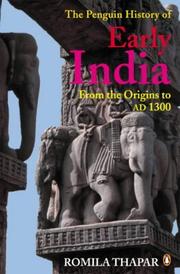
The standard scholarly survey of ancient India by a historian who has argued publicly against the Danino position for decades. The right closing book: it puts the Indus into the long Indian sequence and models how a professional historian handles a politicised question.