This subject rewards a careful order for an unusual reason: more than most ancient civilisations, what is written about the Indus depends heavily on positions taken about two unresolved questions — what the script is, and where the people of the subcontinent came from. Books that look like general introductions often carry a commitment on one or both.
So read the archaeology first. The cities, the standardised bricks, the drainage, the seals, the absence of palaces and obvious temples, the enormous geographic extent — these are the evidence everyone is arguing over, and knowing them makes the arguments legible instead of intimidating.
The overview
Indus by Andrew Robinson is the short, current, well-illustrated introduction, and it is honest about the size of the uncertainties. Read it in an evening and you have the shape of the whole subject.
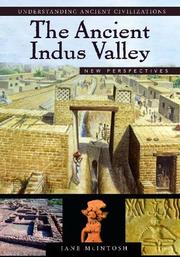
The Ancient Indus Valley by Jane McIntosh is the reference handbook — thematically organised, dense with detail on settlement, subsistence, craft and trade, and the book to keep beside you while reading the others.
The standard archaeological accounts
The Indus Civilization by Gregory L. Possehl was the standard synthesis for a generation and remains the fullest single treatment, though the excavation record has moved on since. The ancient Indus by Rita P. Wright is the more recent scholarly overview and the stronger of the two on urbanism, environment and how the cities actually worked.
Finding forgotten cities by Nayanjot Lahiri is a different kind of book and a very good one: the history of the discovery itself, from the reuse of Harappan brick for railway ballast through the excavations of the 1920s. It is also a quiet lesson in how much of what we think we know depends on where people happened to dig.
The script
Deciphering the Indus Script by Asko Parpola is the major work by the scholar most associated with the argument that the script encodes an early Dravidian language. It is thorough and it is a case, not a conclusion.
This is one of two live disputes on this path. A prominent counter-argument holds that the sign sequences are too short and too structurally odd to be writing at all, and that the seals may carry non-linguistic symbols. Neither side has convinced the other, no bilingual text has ever been found, and every claimed decipherment so far has failed to persuade specialists. Be sceptical of any book or documentary announcing that the script has been read.
Lost languages by Andrew Robinson is the wider survey of undeciphered and deciphered scripts, and it is the best way to understand what a successful decipherment actually requires — which in turn shows why this one has not happened.
The origins argument
Early Indians by Tony Joseph presents the case built on ancient DNA: successive population movements into the subcontinent, including a steppe-derived migration in the second millennium BC associated with Indo-Aryan languages, arriving after the Indus cities had declined.
The lost river by Michel Danino argues for identifying the Ghaggar-Hakra with the Sarasvati of the Rigveda, with implications that pull in a different direction about chronology and continuity.
These two books do not agree, and the disagreement is not merely academic — it is entangled with contemporary Indian politics, and both positions have partisans who overstate the certainty available. This path carries both deliberately. Read them together, notice where each is reporting evidence and where it is reasoning from it, and treat anyone who tells you the question is closed with caution.
The Roots of Hinduism is Parpola's related book on continuities between Indus material culture and later religion, which is a third contested question.
The wider frame
The Penguin History of Early India by Romila Thapar is the standard survey of the subcontinent from prehistory through the first millennium AD, and it puts the Indus in proportion — a beginning, not an isolated marvel. Thapar is herself a figure in the debates above, which is worth knowing rather than worrying about.
The full ordered path, with study notes for each stage, is below.
Follow the full ordered path here: The Indus Valley Civilization: Books to Read, in Order.