The Incal Reading Order: Where to Start Jodorowsky's Comics Universe
Alejandro Jodorowsky's Jodoverse is a sprawl of prequels, sequels and dynastic spin-offs drawn by different artists, and almost every new reader asks the same question: which one is the actual book. The answer is The Incal, with Moebius, and everything else is optional. This path reads it first, then lays out the connected series in the order that rewards rather than exhausts you, then separates out Moebius's own work and Jodorowsky's non-Jodoverse comics so you can tell which is which.
Start here, and possibly stop here
IntermediateRead the book the entire Jodoverse hangs off, and decide whether you want any more of it.
▸ Study plan for this stage
Pace: A week for one 309-page book, and that is not slack. The Incal collects six albums into a single volume, so the page count is European-album density rather than manga density: Moebius fills every panel, the colour is doing narrative work, and the story moves through more incident in twenty pages tha
- John Difool as an unheroic protagonist — a low-grade private detective who is given the universe by accident
- The Incal itself as an object that drives the plot without ever being explained in ordinary terms
- Moebius's page architecture: panel size, colour temperature and density used to control pace rather than decorate it
- Compression as method — six albums of incident in one volume, with transitions the reader is expected to jump
- Jodorowsky's mystical framework taken seriously by the book, whatever the reader makes of it
- A complete story: what the ending resolves, and why that makes the sequels optional
- What is the Incal, in the terms the book itself provides? Note where you are supplying explanation the text does not.
- Why is Difool the protagonist rather than a competent one, and what would the book lose with a hero?
- How does Moebius control pace — find three pages where panel size alone changes the reading speed.
- What does the ending resolve, and is anything left genuinely open rather than merely unexplained?
- Is the mysticism load-bearing or ornamental? Argue it from what happens rather than from what is said.
- Read the first thirty pages again immediately after finishing. The opening withholds a great deal and the reread is where the construction becomes visible.
- Take one double-page spread and describe how Moebius uses colour to separate planes and direct the eye. His colour is compositional, not naturalistic, and one spread demonstrates it.
- Write a one-paragraph summary of the plot, then note everything you had to leave out. The gap between the summary and the book is a measure of how compressed it is.
- Decide, in writing, whether you want more. This stage exists to make stopping here a legitimate outcome rather than a failure.
Next up: If you are continuing, the next stage takes the connected series in an order built around the cosmology you now have rather than around publication dates.
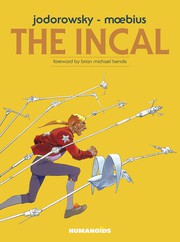
The only correct entry point: John Difool, the Incal, and Moebius drawing at the height of his powers. It is complete in itself, and a large number of readers should stop here — everything below is expansion, not continuation.
The Jodoverse proper
IntermediateRead the connected series in the order that makes the shared cosmology legible rather than repetitive.
▸ Study plan for this stage
Pace: Three to four weeks for 807 pages across four books of very unequal size. Before the Incal is 304 pages and Final Incal 215, both album collections at the same density as The Incal itself. The Metabarons Volume 1 is 136 pages and Technopriests 152 — single albums rather than collections, an evening
- Prequel read second: a backstory that functions as explanation rather than as introduction
- Janjetov's deliberate Moebius pastiche, and what changes when the same universe is drawn by a different hand imitating the first
- Final Incal as revision rather than continuation — an author reworking his own ending decades later
- The Metabarons as dynastic history, and the best-executed of the spin-offs by some distance
- Giménez's rendering against Moebius's line: two entirely different ways of drawing the same universe
- The Technopriests as the setting's religion and industry, which the other books assume rather than describe
- What does Before the Incal explain that improves The Incal, and what does it explain that would have been better left alone?
- How does Janjetov's pastiche differ from Moebius, and where does the imitation break down?
- What does Final Incal change, and does having read the original ending first make the revision more or less interesting?
- Why do the Metabarons work better than the other spin-offs? Answer in terms of structure rather than taste.
- What do the Technopriests tell you about the setting's economy and religion that The Incal only gestured at?
- Read Before the Incal and immediately reread the first twenty pages of The Incal. Judge whether Difool reads differently; if he does not, the prequel has failed at its one job.
- Set a Janjetov page beside a Moebius page of comparable content and list what the pastiche gets right and what it cannot reproduce.
- Make a list of what Final Incal overwrites. It is short and specific, and having it written down keeps the two endings separate in your memory.
- Compare a Giménez page from the Metabarons with a Moebius page. Two masters, one universe, no shared technique — describing the difference is the exercise.
Next up: With the main branches read you can recognise Jodorowsky's template, which is the condition under which the outer edges of the universe become interesting rather than repetitive.

Difool's backstory, drawn by Zoran Janjetov in a deliberate Moebius pastiche. Read after The Incal despite the title — as a first book it is merely a grubby noir, and as a second it explains a great deal.

Jodorowsky's late reworking of the ending, with Ladrönn. Read third and treat it as an alternative rather than a conclusion; it partly overwrites what you have already read.

The best of the spin-offs by some distance — the dynastic history of the Metabaron glimpsed in The Incal, drawn by Juan Giménez. Our catalogue holds this as a single Volume 1 record, so start there rather than looking for an omnibus.

The Jodoverse's other major branch, following Albino through the Techno-Techno order. Weaker than the Metabarons but the fullest picture of the setting's religion and industry.
The outer edges of the same universe
IntermediateRead the remaining connected work and the short piece that started the Jodorowsky-Moebius partnership.
▸ Study plan for this stage
Pace: Three or four evenings for 168 pages. Megalex is 112 pages and Eyes of the Cat is 56 — the shortest book on this path, and one that takes far longer to read than 56 pages implies, since it has almost no text and every page is a full-bleed image you are meant to stop on. Read Megalex first, once you
- Jodorowsky's recurring template — a degraded city, a chosen innocent, a corrupt priesthood — visible once you have four books to compare
- Megalex as a tonally identical dystopia outside the Jodoverse proper, and what that says about authorship
- Beltran's digital painting against Moebius's line, a third visual register for the same material
- Eyes of the Cat as the origin of a partnership, read after the fact
- Wordless comics and reading speed: 56 pages that take longer than 300
- Recognising a pattern as the point at which repetition becomes analysable rather than tiring
- State Jodorowsky's template in one sentence. How many of the books you have read does it fit without adjustment?
- Is Megalex part of the same universe or merely the same story? What would settle it?
- How does Beltran's painted art change the material compared with Moebius or Giménez?
- What does Eyes of the Cat do in 56 near-wordless pages, and how does it do it?
- Read as the partnership's origin, what does Eyes of the Cat show was there from the beginning?
- Write out the template as a numbered list of elements, then score each Jodoverse book against it. The scoring is the point; the pattern is unmistakable once tabulated.
- Time your reading of Eyes of the Cat's 56 pages. If it took as long as a hundred pages of The Incal, that is the wordless form doing its work.
- Pick one Megalex page and one Incal page with comparable content and describe what the painting adds and what the line does better.
- After Eyes of the Cat, write two sentences on what Moebius contributes when there is almost no script. It is the cleanest available test.
Next up: That question — what each man brought — is exactly what the next stage answers, by reading Moebius without Jodorowsky at all.

A separate but tonally identical dystopia with Fred Beltran, and the clearest demonstration of Jodorowsky's recurring template. Read it once you can recognise the pattern, so the repetition is interesting rather than tiring.

The first Jodorowsky and Moebius collaboration, from 1978 — a short, brutal piece with almost no text. Read it here as the origin of the partnership that produced The Incal.
Moebius on his own
IntermediateSeparate the artist from the writer and read the work that made The Incal look the way it does.
▸ Study plan for this stage
Pace: Two weeks. No page counts are recorded in our catalogue for Arzach or The Airtight Garage; The World of Edena is 350 pages. Read Arzach first: it is short, wordless and plotless, and it explains the visual vocabulary The Incal assumes without ever teaching. The Airtight Garage is the middle book and
- Arzach as pure visual vocabulary: no words, no plot, and the most influential European science-fiction comic there is
- Improvisation as method in The Airtight Garage — a story built forward with no plan, and what that produces
- Separating writer from artist: which qualities of The Incal survive when Jodorowsky is removed
- Edena as late long-form work, quieter and stranger, with its own preoccupations
- Moebius's line as a system — consistent weight, endless detail, no shading — and what it makes possible
- Influence traced backwards: where the images in The Incal were already invented
- What does Arzach establish visually that The Incal assumes rather than introduces?
- Where can you see The Airtight Garage being improvised, and does the lack of a plan hurt it?
- What does Moebius's own writing lack that Jodorowsky supplied, and what does it have that Jodorowsky's does not?
- What is Edena interested in, and how does that differ from everything else on this path?
- After these three, name the single element of The Incal you are confident is Moebius's rather than Jodorowsky's.
- Read Arzach before anything else in this stage and list the recurring images. Then find each one in The Incal. The overlap is larger than most readers expect.
- Mark the points in The Airtight Garage where the story changes direction. Improvisation leaves visible seams and finding them is the exercise.
- Read Edena's 350 pages across at least three sittings and note where the pace differs from The Incal's compression. Same artist, opposite tempo.
- Write two columns — what Moebius brought, what Jodorowsky brought — using only evidence from books on this path. It is the central question of the whole path and now answerable.
Next up: Having read the artist without the writer, the final stage does the reverse: Jodorowsky outside science fiction entirely.

Wordless, plotless and the single most influential piece of European science-fiction comics. Read it first among the Moebius books — it is short and it explains the visual vocabulary The Incal assumes.

Improvised chapter by chapter with no plan, and the closest Moebius came to writing a Jodorowsky story himself. The best evidence of what each man brought to the collaboration.
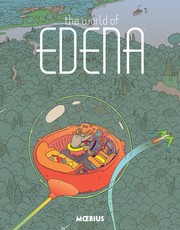
His late long-form work, calmer and stranger than The Incal, collected in one volume. A good final Moebius book because it is the one that least resembles anything Jodorowsky would write.
Jodorowsky outside the Jodoverse
IntermediateRead the non-science-fiction comics, where the same preoccupations turn up in westerns and religious history.
▸ Study plan for this stage
Pace: Two weeks for 458 pages across four books, none of them long. The White Lama is 160 pages, The Madwoman of the Sacred Heart 144, Bouncer 92 and Son of the Gun 62 — single albums, an evening each, though at European-album density that evening is a real one. Read them in the listed order, which runs f
- The same preoccupations relocated: reincarnation, chosen children and corrupt authority outside science fiction
- Bess's draughtsmanship on The White Lama, and sincerity as a register Jodorowsky can actually sustain
- Moebius and Jodorowsky in contemporary Paris, and comedy as a mode neither is known for
- Bouncer as proof that the excess elsewhere is a choice — the same writer plotting tightly with Boucq
- Son of the Gun as the far end of the same instinct, with nothing held back
- Range as evidence: what an author can do bears on how you read what he chose to do
- Which of Jodorowsky's Jodoverse preoccupations survive intact into The White Lama, and which required science fiction?
- What is Madwoman doing that nothing else here does, and does the Moebius collaboration read differently in a contemporary setting?
- How does Bouncer's plotting differ from The Incal's, concretely — in setups, payoffs and scene economy?
- Given Bouncer, is the excess in the Jodoverse a choice or a default? Argue it.
- Does Son of the Gun add anything to your reading of the others, or is it simply more? Answer honestly.
- Take the template list you built two stages ago and score The White Lama and Bouncer against it. A western and a Tibetan reincarnation story fitting the same template is the finding.
- Read Madwoman immediately after rereading twenty pages of The Incal. Same collaborators, opposite register; describe what changes in the drawing as well as the writing.
- Diagram Bouncer's plot as setups and payoffs. It is short enough to do completely and the discipline is visible once drawn.
- Decide before opening Son of the Gun whether you want to read it, and write down why. Treating that as a real decision is part of the path rather than a caveat on it.
Next up: This is the end of the path: the one book that matters read first and permitted to be the last, the connected series ordered so the cosmology accumulates, and both collaborators read separately so you can tell which is which.

With Georges Bess, and the most straightforwardly beautiful book Jodorowsky has written — Tibetan reincarnation played without irony. A good first step outside the Jodoverse.

Reunites him with Moebius on contemporary Paris rather than deep space, and is much funnier than his reputation suggests. Read for the range.
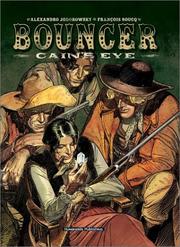
His western, with François Boucq, and the most disciplined plotting in his comics work. The clearest proof that the excess in The Incal is a choice.
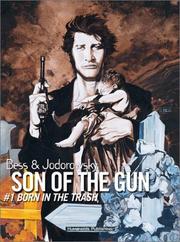
With Georges Bess again, and the most extreme thing on this path — a Mexican crime saga with no restraint whatsoever. Read last, if at all.