The In Death Series Reading Order: Where to Start with J.D. Robb
J.D. Robb — Nora Roberts writing under a pseudonym, which is why library records file these under her legal name — has published more than sixty In Death novels since 1995, and the sheer count is what stops most readers starting. The good news is that the series is built so a reader can join almost anywhere: each book is a self-contained murder investigation in a near-future New York. The bad news is that Eve Dallas's marriage, her partner Peabody, and the slow disclosure of Eve's childhood are a genuine arc, and a handful of books carry it. This path reads the first three in order because they are not optional, then names the specific later volumes that move the arc, so you can skip the rest without losing the thread.
The three that are not optional
BeginnerMeet Eve Dallas and Roarke, and get the relationship and the world established before the series settles into its case-of-the-book rhythm.
▸ Study plan for this stage
Pace: Two to three weeks. These are short books by series-fiction standards — Naked in Death 316 pages, Glory in Death 313, Immortal in Death 336, so 965 pages for the whole stage, which most readers clear at roughly a book a week without effort. Read them consecutively and do not leave a gap between them
- The setting: a 2058 New York with off-planet travel and licensed companions, sketched rather than explained, and never re-explained in later books
- Eve Dallas as a homicide lieutenant whose method is procedural rather than intuitive — the cases are worked, not solved by hunch
- Roarke's double position as suspect and love interest, which is the structural joke the whole series is built on
- The recurring cast arriving in a fixed order: Feeney and Mavis, then Nadine Furst, then Peabody
- Peabody's promotion to second lead, which happens quietly in the third book and is why it belongs in the compulsory block
- The romance and the investigation as one plot rather than two — the case is what makes the relationship possible each time
- What does Naked in Death actually establish about 2058 that you need, and what does it leave you to infer?
- At what point in Glory in Death does the Eve-and-Roarke relationship stop being a plot obstacle and start being the series' spine?
- Which member of the recurring cast arrives in which of the three books, and what job does each one do for the format?
- Immortal in Death is a self-contained case. What is it doing that makes it non-skippable anyway?
- How much of Eve's childhood have you been told by the end of these three books, and how much have you only been shown the effects of?
- Keep a one-page cast sheet — name, role, first appearance — and add to it as you read. By stage four you will be dropping into books published decades later and this sheet is what makes that painless.
- In Naked in Death, mark the point at which you knew Roarke was not the killer, then check how many pages Eve took to get there. The gap is the series' standard suspense engine.
- Write down every fact Eve states about her own past across the three books, in the order she states it. The list will be short. Keep it — the later stages are largely about that list growing.
- After Immortal in Death, decide whether you want sixty of these. If the answer is no, stop here: three books is a complete, coherent run and nothing later depends on your finishing it.
Next up: With the world, the marriage and the squad in place, the next three books show you the case-of-the-book template that the remaining fifty-odd volumes run on.
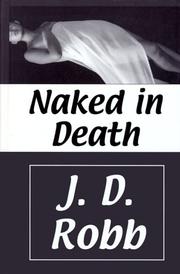
The first book, and the one place a reader genuinely cannot start elsewhere: it establishes 2058 New York, Eve as a lieutenant investigating a licensed-companion murder, and Roarke as both suspect and love interest. Every later book assumes this meeting.
Read second because it is where Eve and Roarke stop being a plot device and become the series' spine, and where Nadine Furst and the wider recurring cast arrive.
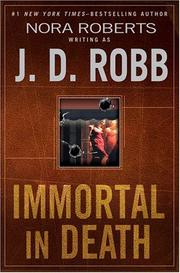
The third book brings Mavis and Peabody properly into the frame — Peabody in particular becomes the series' second lead — so it belongs in the compulsory opening block rather than in the skippable middle.
The formula settles
BeginnerSee the procedural template the series will run on for decades, and decide whether the rhythm is one you want sixty books of.
▸ Study plan for this stage
Pace: Three weeks, or one book a week — 320 pages for Rapture in Death, 333 for Ceremony in Death and 336 for Holiday in Death, so 989 pages, the same weight as the opening stage. Read these as a test rather than an obligation. This stage exists to answer one question: do you want this rhythm sixty times?
- The procedural template: body, scene, murder book, interviews, Feeney on the electronics, Roarke's resources deployed semi-legally, close
- The domestic plot as a subplot that advances a few inches per volume regardless of the case
- Eve versus her own department — Internal Affairs, chain of command, the friction the series returns to for the next fifty books
- The calendar and the recurring cast used as structure, which is how a series this long generates variety without changing anything
- Technology as a murder method, and the series' habit of inventing a device the case then turns on
- Eve's past beginning to press on the cases rather than sitting beside them
- Lay out the beats of Rapture in Death in order. How many of them recur in Ceremony in Death and Holiday in Death in the same position?
- What does Ceremony in Death establish about Eve's standing inside the department, and what does that cost her later?
- How much does the Eve-and-Roarke plot actually move across these three books, measured in events rather than pages?
- Holiday in Death uses Christmas as structure. What does the calendar give a series that has no natural act breaks?
- Having read six books, which of the three in this stage could be cut without any later volume noticing?
- Write out the shared beat sheet for the three cases side by side, one column each. Seeing the template on one page is the single most useful thing you can do before committing to a sixty-book series.
- Count the pages Rapture in Death spends on the investigation versus the household. Do the same for Holiday in Death and compare the ratio.
- Note every moment across the three books where Eve uses Roarke's resources in a way that would not survive a defence lawyer. The series is consistent about this and never resolves it.
- Decide your pace now and write it down — a book a week, two a month, one a month. A reader who does not pick a pace for this series either burns out at book twelve or never gets past six.
Next up: You now know the template well enough to recognise the books that break it, which is exactly what the next stage is made of.
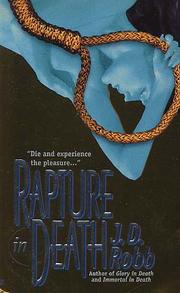
The first book that is purely a case rather than a piece of setup, and a fair test of the format: a technology-driven murder method, Eve's team working it, the domestic plot advancing quietly underneath.
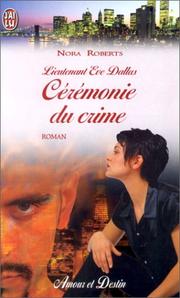
An Internal Affairs and occult-cult case that pushes Eve into conflict with her own department, which is the friction the series returns to for the next fifty books.

A Christmas-set serial-killer case, and the point where Robb starts using the calendar and the recurring cast as structure. It is also where Eve's own past begins pressing on the cases in earnest.
The books the long arc actually turns on
IntermediateRead the small number of volumes that move Eve's history, her marriage and her squad forward, so the rest of the series can be read in any order.
▸ Study plan for this stage
Pace: Two months at two books a month, which is the sustainable pace for a series of this size and the one that gets readers to book sixty. This is the longest stage on the path — Conspiracy in Death 382 pages, Loyalty in Death 368, Judgment in Death 362 and Betrayal in Death 380, so 1,492 pages in four v
- Consequence that carries: Eve losing her badge in Conspiracy in Death is the first event the series refuses to reset
- The scale shift in Loyalty in Death — Eve working something larger than a single homicide, which the series had not attempted before
- Police corruption as a sustained thread rather than a one-book villain, running through Judgment in Death
- Roarke's criminal past acquiring direct bearing on Eve's casework rather than being background colour
- The marriage tested rather than decorated: Betrayal in Death attacks the household directly
- Why these four are the arc: each changes a standing condition of the series, where the case-of-the-book volumes restore it
- The distinction between a book you must read and a book you will enjoy — these are the first category, and the series has surprisingly few
- What exactly changes in how Eve treats the department after Conspiracy in Death, and where do you first see the change take effect?
- Loyalty in Death is structurally unlike the six books before it. What does it give up in exchange for the larger canvas?
- How does Judgment in Death use Roarke's past differently from the way Naked in Death used it?
- By the end of Betrayal in Death, what is the marriage's stated position on Roarke's methods — and does Eve's practice match it?
- If you had to cut one of these four from a recommended list, which, and what would a reader miss?
- Treat Conspiracy in Death and Loyalty in Death as one 750-page unit and read them back to back — the second is written on the assumption you have just finished the first.
- Update the cast sheet with every character whose standing changes in these four books, not just those who appear. Several are absent and still altered.
- Go back to the list of facts about Eve's past you started in stage one and add what these four volumes contribute. Note how much of it arrives through other people rather than from Eve.
- Pick any one of the six books from stages one and two and reread its final chapter after Betrayal in Death. The series rewards this more than its reputation suggests.
- Write a two-sentence summary of each of the four for your own use. You will want them when you jump forward in the next stage.
Next up: The early arc is closed, which is what makes it safe to skip forward — the next stage jumps decades into the series and tests whether the skip actually works.
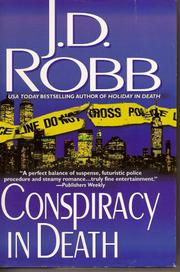
Eve loses her badge here. It is the first book where the consequences carry into the next several volumes rather than resetting, and it changes how she treats the department for good.
A terrorism plot on a much larger scale than the series usually attempts, and the book that establishes Eve working outside a single homicide. Read after Conspiracy, whose fallout it assumes.
A cop-killer case that puts Eve inside police corruption, deepening the departmental thread and giving Roarke's criminal past a direct bearing on her work.
The most direct assault on Roarke's world and the household, which makes it the volume where the marriage is tested rather than decorated. It closes the early-arc block.
Later peaks, and where a new reader can rejoin
IntermediateSample the mature series and confirm the claim that you can drop in decades later without reading the intervening thirty books.
▸ Study plan for this stage
Pace: Two to three months at one to two books a month, and this stage is deliberately not consecutive — you are skipping intervening volumes on purpose. Reunion in Death is 376 pages, Divided in Death 382, Memory in Death 361 and New York to Dallas 472, so 1,591 pages across four books drawn from across t
- Paying off history without requiring it — Reunion in Death brings back a killer from Eve's past and still works for a reader who has not met him
- The mid-series crisis: Divided in Death sets Roarke's history against a federal investigation and nearly ends the marriage
- Memory in Death as the clearest single volume on the foster-care years the series had been circling since the first book
- New York to Dallas as a deliberate culmination, structurally different from the case-of-the-book volumes around it
- The drop-in test: what a reader actually loses by skipping twenty volumes, and what turns out not to matter
- How Robb signals which books carry the arc — length, title, and whether the case is personal to Eve
- Reunion in Death depends on a book you have not read. How does it supply what you need, and where can you feel the seam?
- What does Divided in Death do to the marriage that Betrayal in Death did not, and why does it need the extra twenty volumes of history to land?
- After Memory in Death, how much of Eve's childhood do you know, and what is still being withheld for New York to Dallas?
- New York to Dallas is longer than every other book here. What is the extra hundred pages doing?
- Having skipped freely, name one thing you clearly missed. Was it worth the twenty books it would have cost?
- Before starting Reunion in Death, read only its jacket copy and write what you expect to be lost by skipping. Check the guess afterwards — this is the whole argument of the path, tested on yourself.
- Finish the fact list on Eve's past. It began as a short list in stage one; compare the two versions side by side and note which volume supplied each line.
- Pick one intervening book you skipped, read a synopsis of it, and decide whether it belongs in this stage. The path's claim is that most do not, and it should survive your checking it.
- After New York to Dallas, reread the opening chapter of Naked in Death. Fourteen books' worth of information now sits behind three hundred pages you read first.
- Decide where you go next: straight through from book seven, cherry-picking forward from here, or stopping. All three are legitimate endings to this path, and picking one deliberately is what keeps a sixty-book series readable.
Next up: This is the end of the path: you have the compulsory opening, the template, the arc volumes and the proof that everything else can be read in any order or not at all.
A returning killer from Eve's own past, and the best demonstration of how Robb pays off history without requiring it. Note that the catalogue record for this one carries the series number in its display title — it is the standard novel, not a boxed edition.
Roarke's history collides with a federal investigation and nearly ends the marriage. Of the mid-series books, this is the one whose consequences readers most often say they wish they had not skipped.
Someone from Eve's foster-care years walks back into her life, making this the clearest single volume on the childhood the series has been circling since book one.

The thirty-third book and the deliberate culmination of the Eve-Dallas-and-her-past thread, taking her back to the city she is named after. Read it last: it is the payoff, and it is also the proof that a reader who joined at book thirty can still follow the arc.
Discussion
Keep reading
Paths that share books, cover the same subject, or open a related topic.