Nora Roberts books in order: where to start
Nora Roberts has published more than two hundred novels under her own name and around sixty more as J.D. Robb, and there is no single order to read them in — but there is a structure, and understanding it is most of the problem. Almost everything she writes falls into one of three shapes: a linked trilogy or quartet, usually about siblings or friends, where each book pairs off one of them; a standalone romantic suspense novel; or an In Death book, the long-running futuristic police procedural she writes as J.D. Robb. The pen name is not a secret and never really was — Roberts adopted it in 1995 so her publisher could release more than the market would take under one byline, and Open Library files those books under Roberts, which is correct rather than a mistake. This path takes one trilogy, one quartet, the best of the suspense standalones, and the opening of the In Death sequence, so you can find out which of the three shapes you actually want.
Start With a Trilogy: The Born In Books
BeginnerLearn the trilogy formula that most of her output uses — three siblings, three books, one romance each and a shared thread across all three.
▸ Study plan for this stage
Pace: About three weeks for the three, or a long weekend each if they take. Born in Fire is 403 pages, Born in Ice 388 and Born in Shame 357 - roughly 1,150 pages total, and they read fast because the chapter structure is short and the prose is unornamented. Read them strictly in order: each book resolves
- The linked-trilogy formula: three siblings or friends, one book each, one romance resolved per volume and one shared plot advanced across all three
- How Roberts introduces the whole cast in book one and then rotates the viewpoint - the sister who was a supporting character becomes the protagonist next time, with everything you already know about her now working as backstory
- Occupation as characterisation: Maggie's glassblowing in Born in Fire is the engine of the first book's conflict, not decoration, and this holds throughout her catalogue
- Setting as a fourth character - the Clare countryside and the Dublin gallery world, and how much of the mood is carried by weather and landscape
- The romance genre's structural promise: the couple will end together, so the tension has to come from what has to change in them for that to be bearable
- Roberts's pacing habit of a late separation before reconciliation, and how she varies its cause across the three books
- What is the family secret the three books share, and at what point in each volume does it advance?
- Which of the three sisters is the hardest to like on first appearance, and what does Roberts do in her own book to change that?
- How does the second book's tone differ from the first, and is the difference in the heroine, the hero, or the setting?
- The romance ending is guaranteed by the genre. Where, then, does the suspense in Born in Fire actually come from?
- Having finished all three, could you have read them in a different order without loss? Say exactly what would have been spoiled.
- Chart the formula as you go. One line per book: the heroine's profession, the obstacle between the couple, the chapter where the family plot advances, and the chapter where the couple separates before the ending. By the third book you should be able to predict the beats before they land - and predicting them correctly is what tells you whether the pleasure survives the pattern.
- Reread the first chapter of Born in Fire immediately after finishing Born in Shame. Every sister is present in it, and half the third book's revelations are already sitting in that chapter in plain sight. Mark what you missed.
- Take one supporting character who appears in all three books and write down what each volume adds to them. Roberts builds ensembles by accretion rather than by exposition, and tracing one minor figure is the fastest way to see the technique.
- Write a one-paragraph pitch for a fourth Born In book, with a heroine, a profession and an obstacle. If you can produce one that feels right, you have learned the shape, which is exactly what stage two tests.
Next up: You now know the linked-trilogy form from a compact example; the next stage takes the same machine at four volumes and at the top of Roberts's technique.
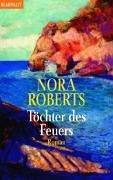
The best single starting point in her catalogue: a glassblower in Ireland, a Dublin gallery owner, and the family secret that runs through all three books. Short, self-contained as a romance, and the clearest demonstration of what she does well.
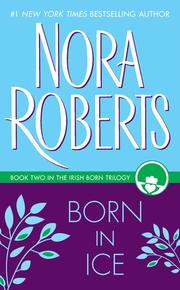
The second Concannon sister, running a bed and breakfast, and the quietest book of the three. Read in order — the shared plot advances between them, and half the pleasure is watching the sisters from each other's point of view.
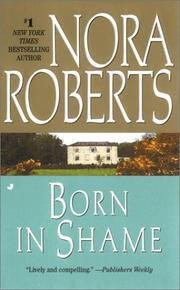
The half-sister from America, and the resolution of the thread the first two set up. Finish here before deciding whether the trilogy shape suits you; there are dozens more built exactly like this.
The Trilogy Machine at Full Speed: The Bride Quartet
BeginnerRead the most-recommended of the linked sets and see the formula in its most polished form.
▸ Study plan for this stage
Pace: Four weeks for about 1,500 pages - Vision in White is 352, Bed of Roses 414, Savor the Moment 381 and Happy Ever After 368. Read them in order, because the quartet is chronological across a single wedding season and one of its four romances is a slow burn planted in volume one and paid off in volume
- Four friends running one business, one book each: the same architecture as the Born In trilogy with an extra volume and a workplace instead of a family
- The long-planted romance - the friends-to-lovers thread running quietly under volumes one and two before becoming the plot of volume three - and why it only works in sequence
- The wedding business as a structural device: every book has a job of work in it, with weddings supplying deadlines, disasters and a natural set piece per chapter
- Female friendship as the load-bearing relationship, and the second volume's decision to let the group rather than the couple carry the emotional weight
- How the quartet reuses the Born In rotation of viewpoint but with much more overlap - all four women appear substantially in all four books
- The finale problem in a linked series, and what Roberts does in Happy Ever After to close four romances and a friendship at once
- Which of the four romances is set up earliest and paid off latest, and what does the delay buy?
- In Bed of Roses the friendship rather than the romance carries the weight. Point to the scene where that becomes true.
- How does the wedding-business setting solve a problem that the Born In trilogy solved with a family secret?
- The quartet has four heroines and four heroes. Which of the men is most distinct from the others, and by what means?
- Compare the closing chapter of Happy Ever After with that of Born in Shame. What does the extra volume let Roberts do at the end?
- Run the same chart you built for the Born In books across all four volumes and lay the two charts side by side. The comparison is the point of this stage: the beats are the same, the execution is not, and having both on one page tells you precisely what Roberts learned in the fifteen or so years between them.
- Track the friends-to-lovers thread from its first appearance. Note the page in Vision in White where it is planted, every scene in Bed of Roses that advances it, and how much of Savor the Moment is spent on ground already prepared. This is the clearest demonstration in her catalogue of writing a subplot across volumes.
- Pick one wedding depicted in the quartet and list everything the scene is doing at once - romance beat, business crisis, friendship note, comic set piece. Roberts routinely runs four jobs through one scene, and counting them is how you see it.
- Read the opening chapter of Vision in White and the closing chapter of Happy Ever After back to back, and write a paragraph on what has changed for each of the four women. The quartet is a single arc, and the two chapters are its endpoints.
Next up: Two linked series in, you know the shape she is best known for; the next stage shows what she does when there is no series and the plot has to carry a book on its own.
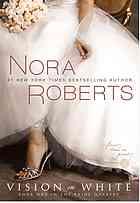
Four friends who run a wedding business together, one book each. This is the photographer's, and it is the entry point most Roberts readers name when asked where a newcomer should start instead of the Born In books.
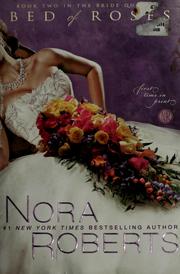
The florist's book, and the one where the friendship group rather than the romance carries the weight. Read second; the quartet is chronological.
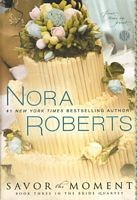
The baker's book, and a friends-to-lovers plot that has been running quietly since the first volume. The payoff only works in sequence.

The planner's book and the quartet's close. Read this and the Born In trilogy and you have seen the linked-series form as well as it gets done.
The Standalone Suspense Novels
BeginnerRead the single-volume thrillers, which are where Roberts writes her best plots and where a reader who does not like romance series often finds she works anyway.
▸ Study plan for this stage
Pace: Five to six weeks for about 2,000 pages - The Witness is 520, Montana Sky 456, Northern Lights 520 and Divine Evil 567. Unlike the previous two stages there is no required order, and each of these can be read with no knowledge of anything else Roberts has written; the order given moves from her most
- The romantic suspense form: two plots - a crime and a relationship - engineered so that each keeps forcing the other forward
- What a standalone has to do in its first fifty pages that a trilogy volume does not, since there is no established cast to inherit
- Isolation as her preferred suspense engine - the Ozarks, an Alaskan town, a Montana ranch - and how remoteness does the work a locked room would do elsewhere
- Montana Sky as a hybrid: three estranged half-sisters forced together for a year, which is the linked-siblings structure compressed into one volume with a killer added
- Register as a deliberate choice, visible when Divine Evil is set beside The Witness - the same writer at very different levels of restraint
- The competence plot: Roberts's protagonists are almost always good at a specific job, and in the suspense novels that competence is what saves them
- The Witness spends a long time on its heroine before the suspense plot resumes. What is that stretch doing, and would the ending work without it?
- In Montana Sky, how does the inheritance condition force the three sisters into the same structure a trilogy would have given three separate books?
- Northern Lights is the closest of the four to a straight crime novel. What specifically makes it so - the plot, the point of view, or the proportion of the book given to the investigation?
- Divine Evil is the earliest and the darkest. What is she doing there that she stops doing in the later books, and is the restraint a gain or a loss?
- Across all four, when does the reader learn the killer's identity relative to the heroine? Is the pattern consistent?
- Diagram the two-strand structure for any one of the four: on a single sheet, plot the crime beats along the top and the relationship beats along the bottom, connected wherever one causes the other. Do it for The Witness first, then for Divine Evil, and compare how tightly the strands are coupled in the later book.
- Read the first chapter of all four novels in one sitting, back to back, before reading any of them through. Each has to establish a world, a threat and a protagonist from nothing, and reading four openings consecutively is the fastest lesson in what a standalone costs a writer.
- Take Montana Sky and rewrite its premise as a three-book trilogy in outline - one sister per volume. Then say what the compressed version gains. This is the exercise that shows you why she keeps both formats in use.
- Set Divine Evil beside Born in Fire and mark, chapter by chapter, where the two books' registers diverge most. They are recognisably the same author; the exercise is finding the seam.
Next up: One more shape remains, and it is the largest: the sixty-odd police procedurals she writes under another name, which behave unlike anything in the first three stages.
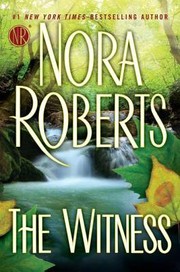
The one to try first: a teenage girl witnesses a Russian mob killing, vanishes, and is found twelve years later living under a new name in the Ozarks. Widely considered her best standalone, and it can be read with no knowledge of anything else she has written.
Three half-sisters inherit a ranch on the condition they live there together for a year, with a killer in the background. A hybrid of the linked-siblings shape and the suspense shape, in one volume.

A Baltimore cop takes a job as police chief in a tiny Alaskan town and a body comes out of the ice. The most atmospheric of the standalones and the closest her own-name work gets to a straight crime novel.

An early, much darker book — small-town occult murders — and useful for showing how far the suspense strand goes when she is not restraining it. Read it last of the four if you like the register.
The Other Name: J.D. Robb and the In Death Books
IntermediateStart the sixty-plus-book police procedural series written under the pen name, and understand why it is the one series she writes in strict order.
▸ Study plan for this stage
Pace: Three weeks for the opening three - Naked in Death is 316 pages, Glory in Death 313 and Immortal in Death 336, all short by her standards and quick to read. The pen name is the thing to be clear about before you start, because it is the commonest source of confusion in her catalogue: Roberts adopted
- The In Death premise: Eve Dallas, a New York homicide lieutenant in the 2050s, and a near-future setting that is deliberately light on technology and heavy on police procedure
- The series contract - a self-contained murder case per volume, plus a continuing relationship and a continuing supporting cast that never resets
- Why this is the one Roberts sequence where reading order is not optional: the ensemble grows book by book and later volumes assume every earlier one
- How the procedural form changes her pacing - the investigation supplies structure that the romance plots in the earlier stages had to generate themselves
- The three shapes of her catalogue, now all visible: linked trilogy or quartet, standalone romantic suspense, and the long-running In Death procedural
- What the pen name is for commercially - a separate publishing schedule and a separate shelf identity for the same writer, which is a fact about the industry rather than about the books
- What does the 2050s setting actually change about the police work in Naked in Death, and what does it leave exactly as it is?
- By the end of Glory in Death, what has settled into the pattern the series keeps - name the recurring elements you would expect in book twenty?
- How does the case-of-the-book plot interact with the continuing relationship? Does one ever resolve the other?
- Compare the opening of Naked in Death with the opening of The Witness. What is the same writer doing differently under a different name?
- Having sampled all three shapes: which of them do you actually want more of, and what would you read next in that shape?
- Keep a running cast list from the first page of Naked in Death, adding every named recurring character and one line on their role. By the end of book three it will be a page long, which is the concrete demonstration of why this series cannot be started in the middle.
- Build the navigation chart this whole path is for: a single page with three columns headed linked series, standalone suspense, and In Death. Put the eleven books you have read in the right columns with their reading-order constraints noted - strict order, loose order, or none - and add the note that Robb and Roberts are one author. That page is the thing to keep.
- Read the murder investigation in Immortal in Death purely as procedure, ignoring the relationship material: list the steps of the case in order. Then do the same for the crime plot in Northern Lights. Comparing the two lists shows you how much of the In Death form is genuinely police procedural and how much is her suspense technique in a uniform.
- Write yourself a one-paragraph decision rule: given the three shapes and what you now know you like, what is the next Roberts book you should buy and why. There are more than two hundred to choose among, and the rule is more useful than any recommendation.
Next up: This is the last stage, and it completes the map: all three of the shapes Roberts writes in, the pen name explained, and enough of each to know which of the remaining two hundred books are for you.
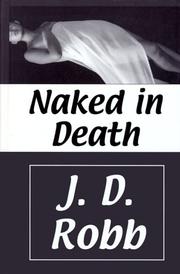
Book one of In Death, and the only correct place to start that series: Eve Dallas, a New York homicide lieutenant in the 2050s, and the suspect she should not be sleeping with. Catalogued under Nora Roberts rather than the pen name, which is the same person and not an error.
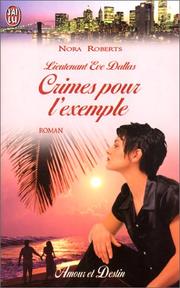
The second, and the book where the ongoing relationship and the case-of-the-book structure settle into the pattern the rest of the series keeps. Unlike her trilogies, In Death genuinely rewards reading in order — the cast accumulates.
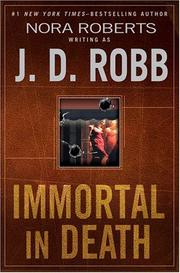
The third, and a fair place to judge the series: by now you know whether you want another sixty. If you do, keep counting; if not, the standalones in the previous stage are the better use of your time.
Discussion
Keep reading
Paths that share books, cover the same subject, or open a related topic.