The history of Zimbabwe: books to read, in order
Zimbabwe's history is argued over by people who are still alive and still in the fight, so this path is built to let you hear the argument rather than settle it for you. It moves from the pre-colonial and early-colonial ground up through settler rule and UDI, into the liberation war read from three incompatible angles at once, and then into the two subjects that split the country's historiography down the middle: the Gukurahundi massacres in Matabeleland and the land seizures of 2000. Every stage pairs a scholarly account with someone who was there.
The ground and the first risings
BeginnerUnderstand how the territory became Southern Rhodesia, why the 1896-97 risings matter so much to later nationalist memory, and what African nationalism sounded like in its own words before the war began. Note as you read that Ranger's argument that the risings were coordinated by spirit mediums has been heavily contested by later historians — you are reading the founding text of a debate, not its conclusion.
▸ Study plan for this stage
Pace: Three books, 876 pages. Alois Mlambo's A history of Zimbabwe is 277 pages and goes first: the best single-volume modern survey, running from the pre-colonial states to the 2000s, and the only book on this path that gives you the whole shape before you start taking sides. Terence O. Ranger's Revolt i
- The pre-colonial states and the societies the British South Africa Company found
- Company rule, the occupation and how the territory became Southern Rhodesia
- The 1896-97 Ndebele and Shona risings and their suppression
- Ranger's coordination thesis and the later scholarship that disputes it
- The first chimurenga as a political idea constructed retrospectively
- Land alienation and the reserves as the foundation of the settler economy
- Early African nationalism in its own words, before armed struggle
- Sithole's marginalisation, and what it shows about how liberation histories get written
- How did the territory come under British South Africa Company control, and on what legal pretext?
- What caused the 1896-97 risings, and how were they put down?
- State Ranger's thesis about spirit mediums and coordination, and the main objection to it.
- Why did the nationalists of the 1970s want the risings to have been a first chimurenga?
- What is Sithole arguing for, and to whom is he addressing the argument?
- What had land policy already done to African society before nationalism organised?
- From Mlambo, build a chronology from the occupation to 1960 and keep it for the whole path.
- Read Ranger's evidence for medium coordination and write down what would have to be true for the thesis to hold. Then note how much of it he can show.
- Take Sithole's argument and identify which of his claims later ZANU historiography kept and which it dropped.
- Map the land divisions of early Southern Rhodesia and mark what proportion of the territory was reserved for whom.
Next up: Nationalism has been introduced in its own voice; the next stage does the same for the settler society it was arguing against.
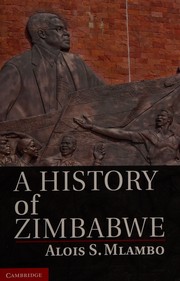
The best single-volume modern survey, running from the pre-colonial states to the 2000s, and the only book here that gives you the whole shape before you start taking sides. Read it first so every later book has somewhere to attach.

The classic study of the 1896-97 Ndebele and Shona risings, and the book that made 'the first chimurenga' a usable political idea. It is here early because the liberation movements of the 1970s consciously wrote themselves as its sequel.

A founding nationalist making the case in 1959, before the armed struggle, before the splits, and before he was written out of the story by the movement he helped start. A primary source that reads nothing like the retrospective accounts.
Settler Rhodesia and UDI
BeginnerWork out what white Rhodesian society actually was — how large, how recently arrived, how internally divided — and then hear its case for the 1965 Unilateral Declaration of Independence stated by the man who made it. The point of this stage is that the settler position is a historical object to be examined, not a caricature.
▸ Study plan for this stage
Pace: Two books, 842 pages, and the second is testimony rather than history. Peter Godwin and Ian Hancock's Rhodesians never die is 400 pages, a study of white Rhodesian society under siege in the 1970s — demography, politics, emigration, denial — and it is cool and evidential where the memoirs are hot, w
- The size, recency and internal divisions of the white Rhodesian population
- The Central African Federation and its dissolution
- The 1965 Unilateral Declaration of Independence and the constitutional question it raised
- Sanctions, sanctions-busting and the economy that sustained UDI
- Emigration rates as a running measure of settler confidence
- The settler case as its leadership stated it — gradualism, standards, communism
- Denial as a documented social phenomenon rather than a rhetorical charge
- Reading a self-justifying memoir usefully: what it establishes about its author
- How large was the white population, and how recently had most of it arrived?
- What did UDI actually declare, and against whom?
- How did the economy survive sanctions, and who helped?
- State Smith's case for UDI as he makes it. Where is it factually wrong, and where is it merely self-serving?
- What does Godwin and Hancock's evidence show about how white Rhodesians understood their own position by the late 1970s?
- What did emigration figures reveal that public statements did not?
- Chart white population and emigration figures across the 1970s from Godwin and Hancock, and mark the war's major events on the same axis.
- List Smith's principal factual claims about African political opinion and check each against the previous stage's material.
- Identify the divisions within white Rhodesian society that Godwin and Hancock document, and note which Smith acknowledges.
- Write a paragraph stating the settler case at its strongest, then a paragraph on why it failed on its own terms.
Next up: You have now heard nationalism and settler rule each in its own voice, which is the preparation for a stage in which four books describe the same war and barely overlap.
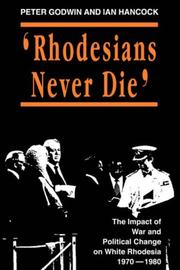
Godwin and Ian Hancock's study of white Rhodesian society under siege between 1970 and 1980 — demography, politics, emigration, denial. Cool and evidential where the memoirs are hot, which is why it comes before them.

The last prime minister of Rhodesia defending UDI and everything after it. Read it as testimony about how the settler leadership understood itself, not as an account of what happened; it is unreliable in exactly the ways that make it worth reading. Smith's earlier and largely overlapping memoir was published as The Great Betrayal, so you need only one of the two.
The liberation war, from three sides
IntermediateRead the chimurenga of the 1970s as a nationalist triumph, as a peasant negotiation, as a religious event and as a white childhood — four books that describe the same war and barely overlap. By the end you should be able to say what each account can see that the others structurally cannot.
▸ Study plan for this stage
Pace: Four books, 1,424 pages, and the stage works only if you read them in order. David Martin's The struggle for Zimbabwe, written with Phyllis Johnson, is 378 pages, the movement's own narrative of the war written with close access to ZANU and published at the moment of victory — indispensable and open
- ZANU and ZAPU, their armed wings and their external backers
- The movement's own account of the war and what a victory narrative needs to be true
- Ranger's negotiated relationship: peasant grievance, guerrilla dependence, and the terms between them
- Spirit mediums, ancestors and the ritual authority the guerrillas borrowed
- The protected villages and the Rhodesian counterinsurgency
- Conscription and the white experience of a war fought in the same country
- What each of these four accounts can see, and what each structurally cannot
- The Lancaster House settlement and what the war actually delivered
- What does Martin and Johnson's narrative require to be true about the relationship between guerrillas and peasants?
- How does Ranger complicate that, and on what evidence?
- What did the spirit mediums provide, in Lan's account, that the guerrillas could not supply themselves?
- What does Godwin's account show about the Rhodesian forces that the nationalist narrative cannot?
- For each of the four books, name one thing it can see that the other three cannot.
- What did the war settle at Lancaster House, and what did it leave for later?
- Take one district or campaign covered by more than one book and write out each account of it in parallel. The non-overlap is the exercise.
- From Lan, list the specific ritual acts by which mediums legitimated guerrillas, and then find whether Martin and Johnson mention any of them.
- Read Godwin's account of an atrocity and note how he handles his own position in relation to it.
- Score Martin and Johnson's narrative against Ranger's evidence on three specific claims, marking each supported, unsupported or contradicted.
- Write a one-page account of the war that uses all four, and mark in the margin which book each sentence came from.
Next up: The war ends in a settlement and a new government; the next stage is about what that government did in Matabeleland within three years of taking power.

Martin and Phyllis Johnson's narrative of the war, written with close access to ZANU and published in 1981. It is the movement's own version at the moment of victory — indispensable, and openly partisan.

The counterweight: Ranger argues the war was won through a negotiated relationship with a peasantry that had its own grievances and its own terms. Read straight after Martin to see the guerrilla-and-peasant relationship stop being automatic.
An anthropologist's study of how Shona spirit mediums in the Dande legitimated the guerrillas, and how the guerrillas in turn adopted the ancestors. The book that explains why a materialist account of this war is incomplete.
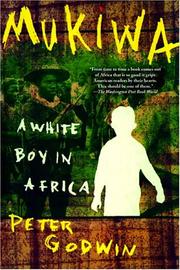
A white boy's childhood in the eastern highlands and, later, his conscription into the war he grew up beside. Placed last in the stage so you meet the settler experience after you already understand what it was fighting.
Independence, Gukurahundi and the making of the Mugabe state
IntermediateFollow the 1980 settlement into the Fifth Brigade campaign in Matabeleland between 1983 and 1987, in which an estimated twenty thousand Ndebele civilians were killed, and into the one-party state built afterwards. This is contested ground: figures, intent and command responsibility are all still disputed, and the fullest documentation — the Catholic Commission's Breaking the Silence report — has no catalogue record we can link. Read these two together and note where each is careful and where eac
▸ Study plan for this stage
Pace: Two books, 534 pages, the shortest stage on this path and the most contested ground on it. Brian Raftopoulos and Alois Mlambo's Becoming Zimbabwe is 278 pages, a collection by Zimbabwean historians and the first serious attempt to write a national history that includes Gukurahundi rather than filing
- The 1980 settlement and the government it produced
- The ZANU-ZAPU rivalry carried over from the war into independence
- The Fifth Brigade: its training, its command, and its deployment in Matabeleland
- The estimated death toll and why the figure remains disputed
- The 1987 Unity Accord and what it settled and suppressed
- The one-party state and the concentration of authority
- The absence of Gukurahundi from Zimbabwean national history for decades, and what ended that silence
- Structural adjustment in the 1990s and the discontent it produced
- What was the Fifth Brigade, who commanded it, and where was it deployed?
- What is disputed about Gukurahundi — the figures, the intent, the chain of command, or all three?
- What did the Unity Accord achieve, and what did it cost?
- Why was this episode absent from Zimbabwean national history for so long?
- How does Meredith explain the transition from liberation government to personal rule, and does Becoming Zimbabwe agree?
- What did structural adjustment do to the political situation by the late 1990s?
- Write out what each book states about the death toll and the source it attributes the figure to. Where they diverge, note whether it is the estimate or the source that differs.
- Build a chronology of the 1980s with the political events and the Matabeleland operations on parallel lines.
- Identify the passages in each book where the evidence is thinnest, and say what would be needed to firm them up.
- Trace the ZANU-ZAPU rivalry from the war stage into this one and mark where it becomes state violence.
Next up: The machinery built in the 1980s is the thing that acts in the final stage, which is why the land argument cannot be read as a purely economic one.

The Raftopoulos and Mlambo collection, and the first serious attempt by Zimbabwean historians to write a national history that includes Gukurahundi rather than filing it away. The chapters on the 1980s are the reason it is here.
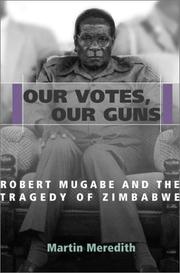
Meredith's account of how liberation government became personal rule, covering the 1980s violence, the unity accord and the slide into the 2000 crisis. It was also published as Mugabe: Power, Plunder and the Struggle for Zimbabwe, so you may find it under either title.
Land, collapse and the aftermath
IntermediateTake on the hardest argument in the field: whether the fast-track land reform after 2000 was a catastrophe, a belated correction of colonial theft, or both at once. Scoones's evidence directly contradicts the account most Western reporting settled on, and the two journalists here are working from the receiving end of state violence. Hold the disagreement open rather than resolving it.
▸ Study plan for this stage
Pace: Three books, and we hold a page count for only one of them: Christina Lamb's House of stone is 305 pages, while our records give no length for Ian Scoones's Zimbabwe's Land Reform or for Peter Godwin's The fear, so plan those two as full-length works rather than around numbers we cannot supply. Read
- The land question inherited from settler rule and the willing-buyer arrangements of the 1980s and 1990s
- Fast-track resettlement after 2000: how it was carried out and by whom
- Scoones's Masvingo findings — who received land, what they produced, and how they financed it
- The collapse narrative and the evidence it rests on
- Hyperinflation and the destruction of the currency
- The 2008 election, its aftermath, and the organised violence that followed
- The continuity between the 1980s state apparatus and post-2000 repression
- Holding two well-evidenced accounts open when they disagree, rather than choosing the congenial one
- What does Scoones's Masvingo data actually show, and what does he explicitly not claim?
- What is the collapse narrative, and what evidence supports it?
- Where do Scoones and Lamb disagree about fact, and where are they simply describing different things?
- What happened after the 2008 election, and who carried it out?
- How does the apparatus Godwin describes connect to the Fifth Brigade era?
- Was fast-track land reform a catastrophe, a correction, or both? Answer with the evidence you would cite for each part.
- Extract Scoones's headline findings as a short list of claims, and beside each note what Lamb's or Godwin's material would say.
- Follow the two lives in House of stone across the same years and mark where the reform helped one and harmed the other.
- From Godwin, list the institutions and units involved in the post-2008 violence, and check which appear in the Gukurahundi stage.
- Write two pages: one arguing the reform was a correction, one arguing it was a catastrophe, each using at least two books from this path.
- Return to the land maps you drew in the first stage and mark what post-2000 resettlement changed.
Next up: This closes the path: every stage has paired an argument with a witness, and the country's central disputes — the risings, the war, Matabeleland and the land — are now ones you can state from more than one side.

A decade of field data from Masvingo, arguing that fast-track resettlement produced far more viable smallholder farming than the collapse narrative allows. The single most important revisionist book on the period, and the one most often argued with.
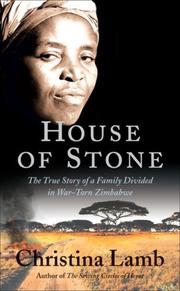
The land seizures told through a white farmer and his black housekeeper, whose lives the reform pulls apart in opposite directions. Reads as the human case that Scoones's aggregate data cannot deliver, and vice versa.
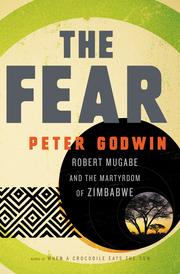
Godwin's reporting on the state terror that followed the 2008 election, gathered largely from survivors and hospital wards. The end of the path because it shows what the machinery built in the 1980s does when the vote goes against it.