Zimbabwe's history is argued over by people who are still alive and still in the fight, so this reading order is built to let you hear the argument rather than settle it. It runs from the pre-colonial ground through settler rule and UDI into the liberation war read from incompatible angles, and then into the two subjects that split the field: the Gukurahundi massacres in Matabeleland and the land seizures after 2000.
Start with the survey. Almost every other book here is a partisan in some dispute, and they need somewhere to attach.
The ground and the first risings
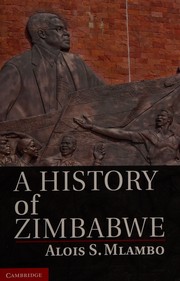
Alois Mlambo's A history of Zimbabwe is the best single-volume modern survey, from the pre-colonial states to the 2000s, and the only book here that gives you the whole shape before you start taking sides. Terence Ranger's Revolt in Southern Rhodesia, 1896-97 is the classic study of the Ndebele and Shona risings and the book that made the first chimurenga a usable political idea; its central claim, that the risings were coordinated through spirit mediums, has been heavily contested by later historians, so read it as the founding text of a debate rather than its conclusion. Ndabaningi Sithole's African Nationalism is a founding nationalist making his case in 1959, before the armed struggle, before the splits, and before he was written out of the story by the movement he helped start.
Settler Rhodesia and UDI
Rhodesians never die, by Peter Godwin and Ian Hancock, studies white Rhodesian society under siege between 1970 and 1980 — demography, politics, emigration, denial. It is cool and evidential, which is why it comes before the memoir.
Ian Smith's Bitter harvest is the last prime minister of Rhodesia defending the 1965 Unilateral Declaration of Independence and everything after it. He is an interested party writing his own defence, and the book is testimony about how the settler leadership understood itself rather than an account of what happened. A practical note: his earlier and largely overlapping memoir was published as The Great Betrayal, and the two circulate as though they were separate works. You need only one of them.
The liberation war, from several sides
Four books describe the same war and barely overlap. David Martin and Phyllis Johnson's The struggle for Zimbabwe, published in 1981 with close access to ZANU, is the movement's own version at the moment of victory — indispensable and openly partisan. Ranger's Peasant consciousness and guerrilla war in Zimbabwe is the counterweight, arguing the war was won through a negotiated relationship with a peasantry that had its own grievances and its own terms. David Lan's Guns and rain shows how Shona spirit mediums in the Dande legitimated the guerrillas and how the guerrillas adopted the ancestors in return, which is why a purely materialist account of this war is incomplete. Peter Godwin's Mukiwa is a white childhood in the eastern highlands and a conscription into the war he grew up beside, placed last so you meet the settler experience after you understand what it was fighting.
Independence, Gukurahundi and the state that followed
Between 1983 and 1987 the Fifth Brigade conducted a campaign in Matabeleland in which an estimated twenty thousand Ndebele civilians were killed. That mass killing is documented, not alleged; what remains disputed is the precise toll, the intent behind it and where command responsibility lies. The fullest documentation, the Catholic Commission for Justice and Peace report Breaking the Silence, has no catalogue record we can link to, which is a real gap in this list.
Becoming Zimbabwe, edited by Brian Raftopoulos and Alois Mlambo, is the first serious attempt by Zimbabwean historians to write a national history that includes Gukurahundi rather than filing it away; the chapters on the 1980s are the reason it is here. Martin Meredith's Our votes, our guns covers the 1980s violence, the unity accord and the slide into the 2000 crisis. It was also published as Mugabe: Power, Plunder and the Struggle for Zimbabwe, so you may meet the same book under either title.
Land, collapse and the aftermath
The hardest argument in the field is whether the fast-track land reform after 2000 was a catastrophe, a belated correction of colonial land seizure, or both at once. Ian Scoones's Zimbabwe's Land Reform is a decade of field data from Masvingo and directly contradicts the collapse narrative most Western reporting settled on, arguing that resettlement produced far more viable smallholder farming than that account allows. It is the most argued-with book on the subject. The question is genuinely open, and this guide does not close it.
Christina Lamb's House of stone tells the seizures through a white farmer and his black housekeeper, whose lives the reform pulls in opposite directions, and delivers what aggregate data cannot. Peter Godwin's The fear reports the state terror that followed the 2008 election, gathered largely from survivors and hospital wards, and shows what the machinery built in the 1980s does when a vote goes the wrong way. Godwin's name is on three books in this path — the co-authored study, the childhood memoir and the reporting — and they are doing three different jobs.
The whole sequence, with a study plan per stage, is the history of Zimbabwe reading path.