The history of the European Union: books to read, in order
There is no neutral history of European integration, because the central question — whether the EU is a federation in slow construction or an arrangement that member states built to strengthen themselves — is also the central political dispute. This path is built to make that argument visible rather than to settle it. It starts with a factual grounding and Monnet's own account, then sets the federalist reading against Alan Milward's flat denial of it, then works through how the Union actually decides, then the euro and the crisis that tested it, and ends with three critics from the left, from monetary economics and from Brexit. Each entry says where its author is standing.
The ground floor
BeginnerKnow the sequence — ECSC, Rome, the empty chair crisis, the Single European Act, Maastricht, enlargement, Lisbon — and be able to distinguish the Commission, Council, Parliament and Court and say which of them anyone actually elects.
▸ Study plan for this stage
Pace: Four weeks, and only two of the three books have a recorded length. Pinder and Usherwood's The European Union is 224 pages and is the fastest way to acquire the institutional vocabulary the rest of this path assumes — a week, read for the machinery rather than the framing, since Pinder is a committe
- The sequence, which you should be able to recite: the Schuman Declaration and the Coal and Steel Community, the Treaty of Rome, the empty chair crisis and the Luxembourg compromise, the Single European Act, Maastricht, the enlargements, Lisbon.
- The four institutions and who elects whom: a Commission that proposes and is appointed, a Council of national ministers, a directly elected Parliament, and a Court whose judgments bind. Only one of them faces voters directly, and that fact is the whole democratic-deficit argument in embryo.
- The distinction between the European Council of heads of government and the Council of the European Union of ministers — routinely confused, and the difference matters enormously in the crisis chapters later on.
- Supranational against intergovernmental as the basic axis of the subject: which decisions are taken by an institution above the states and which by the states bargaining, and how the balance has shifted by treaty and by practice.
- The Monnet method, in his own words: functional integration by small binding steps in technical areas, each creating the conditions for the next, with the political destination left deliberately unnamed.
- The coal and steel plan as an instrument rather than a symbol — pooling the industries of war under a common authority so that a Franco-German war becomes materially difficult, which is a specific mechanism and not a sentiment.
- That Monnet held no elected office at any point, which is either the most impressive or the most damning fact about him depending on which of the next stage's books you end up agreeing with.
- Give the treaty sequence in order with one sentence on what each treaty changed institutionally.
- Which EU institution does a voter influence, and how directly? Trace the chain from a national election to a Commission decision.
- Explain the empty chair crisis and the Luxembourg compromise. What did it establish about the limits of supranational authority, and was that settled by law or by practice?
- State the Monnet method in his own terms. What does it assume about the relationship between technical cooperation and political union?
- Where does Pinder's federalism show? Find a passage where the framing carries an argument the facts do not require.
- Draw the legislative process — proposal, co-decision, adoption — as a flowchart from Pinder, marking at each step who is elected and by whom.
- Build a treaty timeline from Dinan with three columns: what was agreed, what was left out, and what crisis prompted it. Every book in the later stages argues about entries in the third column.
- Read Monnet's account of the coal and steel plan and mark every point where he presents a decision as inevitable. Keep the marks; Milward will contest most of them.
- Write half a page on the difference between the two Councils, with a real example of a decision each has taken. If you cannot, go back to Pinder before continuing.
Next up: You now have the founder's account of the founding, which is exactly the account the next stage is built to test.
The fastest way to acquire the institutional vocabulary the rest of this path assumes. Pinder is a committed European federalist, which shows in the framing rather than in the facts — read it for the machinery and hold the interpretation lightly. Catalogued under the short title The European Union.
The standard scholarly history of integration from the Schuman Declaration onward, organised by period and admirably even-handed. This is the reference narrative against which every argumentative book here registers as a departure — read it before them, not after.

The founder's own account, and a primary source of the first importance: the coal and steel plan, the method of small binding steps toward an unnamed destination. Monnet is also an unreliable narrator about his own centrality, which is exactly why the Milward argument two stages later lands so hard. Catalogued simply as Memoirs.
The founding argument: idealism or national self-interest?
IntermediateState the federalist account and Milward's rebuttal in their strongest forms, and be able to say what evidence would distinguish them — this is the oldest and most consequential disagreement in the field.
▸ Study plan for this stage
Pace: Six to seven weeks. Duchene's Jean Monnet is 478 pages and is the fullest English account of how a man holding no elected office arranged so much of postwar Europe; Duchene worked for Monnet and the book is sympathetic in the specific sense that it accepts the method as genuinely transformative. Two
- The federalist account in its strongest form: integration as a deliberate project by a small group who understood that the nation-state had failed catastrophically, pursued by binding steps that would in time make reversal impossible.
- Milward's flat contradiction: governments pooled sovereignty precisely in order to deliver the welfare states and economic recovery their voters demanded, so integration was an instrument of national governments and strengthened rather than dissolved the nation-state.
- Milward's evidence base and why it is hard to answer — national archives, trade statistics and the actual negotiating positions of governments, against a founding narrative built substantially from the memoirs of the founders.
- The agricultural policy as Milward's decisive case: an arrangement explicable almost entirely by the domestic political needs of specific member governments and not at all by federalist idealism.
- What evidence would distinguish the two accounts. This is the useful question, and the answer is largely about whether governments' internal reasoning matches their public justification.
- Patel's deflation: the EU's real achievements are narrower and more contingent than either its champions or its enemies claim, and much of postwar Europe's success — growth, peace, welfare — had other causes that the Union gets credited with.
- The counterfactual problem running under all three books: any claim that integration caused European peace requires a view about what would have happened otherwise, and none of these authors can observe it.
- That Duchene's proximity to his subject is both his credential and his limitation, which is the same problem the Monnet memoir has and is worth stating plainly.
- State Milward's thesis in four sentences without using the word myth. What is the positive claim, not the denial?
- Take the Common Agricultural Policy and explain it first as a federalist achievement and then as Milward explains it. Which account needs fewer assumptions?
- What would count as evidence that integration was driven by idealism rather than by national interest? Would any archive contain it?
- Duchene worked for Monnet. Identify a passage where that shows, and say whether it damages the book's evidence or only its emphasis.
- Patel argues the EU is credited with achievements that had other causes. Name two, and give the alternative causes.
- After all three: is the founding-myth question decidable, or is it a dispute about which description of the same actions we prefer?
- Go back to the marks you made in Monnet's Memoirs and set each against Milward's account of the same episode. Two columns. This is the central exercise of the path and it takes an afternoon.
- Work through one of Milward's statistical chapters properly — follow the tables rather than the summary sentences — and write a paragraph on what the data actually show and what he infers from them.
- Construct the strongest federalist reply to Milward that his own evidence permits. If you cannot construct one, say why the evidence forecloses it.
- Write two accounts of the Schuman Declaration, one in each idiom, using only facts both authors accept. The difference between the two pages is the subject of this stage.
Next up: Having argued about why the Union was built, the next stage is about how the thing that was built actually reaches a decision.
Duchene worked for Monnet, and this biography is SYMPATHETIC in the specific sense that it accepts the Monnet method as genuinely transformative. The fullest account in English of how a man who held no elected office arranged so much of postwar Europe, and the best statement of the case the next book demolishes.

The most important revisionist book on the subject, and a flat contradiction of the founding myth: Milward's archival case is that governments pooled sovereignty precisely to secure the welfare states and economic recovery their voters demanded, so integration strengthened the nation-state rather than dissolving it. Dense economic history and worth the effort — nothing since has displaced it.

The modern synthesis, written for the EU's sixtieth anniversary and deliberately deflationary: Patel argues the EU's real achievements are narrower and more contingent than either its champions or its enemies claim, and that much of postwar Europe's success had other causes. Read it third, as the settlement of the previous two.
How the Union actually decides
IntermediateUnderstand the difference between the rule-making machinery and the crisis politics of the European Council, and be able to explain what the democratic-deficit argument is actually claiming rather than the slogan version.
▸ Study plan for this stage
Pace: Four to five weeks for 905 pages, but only one of these is a straight read. Van Middelaar's The Passage to Europe is 372 pages and is the best book on this path at explaining how the EU works in practice — written by someone who worked inside the European Council, and original enough to be worth rea
- Van Middelaar's three spheres: the Europe of rules (the treaties and the institutions), the Europe of states (heads of government bargaining), and the Europe of citizens (the missing public). Almost every confusion about the EU is a confusion between the first two.
- That crises are resolved in the second sphere — by heads of government in rooms, at speed, often outside the treaty procedure — and that the first sphere then codifies the result afterwards.
- Why this is not simply cheating: van Middelaar's argument is that a polity without a demos has to improvise its politics somewhere, and the European Council is where the improvisation happens.
- The co-decision procedure and the Parliament's acquisition of real legislative power, which is the strongest evidence against the crudest version of the democratic-deficit claim.
- What the democratic-deficit argument actually claims, in its serious form: not that nobody is elected, but that the electoral connection is too attenuated to discipline policy, and that key economic decisions have been removed from contestation entirely.
- The counter-argument that the deficit is a feature of the member states' own choices — governments export unpopular decisions to Brussels and then campaign against them — which is a Milward-shaped answer to a constitutional question.
- Budget politics as the place where member-state interest is least disguised, and therefore the most honest window on how the Union weighs its members.
- The distinction between what the treaties permit and what has become normal practice, which is the single most useful thing Dinan's textbook lets you check.
- Explain van Middelaar's three spheres with one real decision located in each.
- Take a crisis decision and describe how it was actually reached, then what treaty basis was found for it afterwards. Van Middelaar supplies several.
- State the democratic-deficit argument in the form a serious constitutional lawyer would make it, not the slogan version. Then state the strongest reply.
- How did the Parliament acquire its powers? Trace the sequence through Dinan and say what each treaty added.
- Where does the formal procedure in Dinan differ from the practice van Middelaar describes? Give two specific cases.
- Take one piece of EU legislation and follow it through the co-decision procedure using Dinan as the map. Note every point at which a national government could have stopped it.
- For three crisis decisions van Middelaar describes, write down the sphere it was taken in, who was in the room, and what treaty article was invoked afterwards. The pattern is his argument.
- Write a page answering the democratic-deficit charge as a Commission official would, then a page pressing it as a national parliamentarian would. Both must be accurate about the procedure.
- Return to your treaty timeline from stage one and mark, against each treaty, whether it moved authority toward the rules sphere or the states sphere. The line is not monotonic, which is the finding.
Next up: The improvised crisis politics van Middelaar describes had its severest test in the currency, which is what the next stage is entirely about.

The best book on this list at explaining how the EU works in practice: van Middelaar, who worked inside the European Council, distinguishes the Europe of rules, of states and of citizens, and shows how crises are resolved by heads of government in rooms rather than by the institutional procedure. Original and genuinely illuminating.

Dinan's institutional textbook, the companion to his history: the Commission's role, the co-decision procedure, budget politics, how the Parliament acquired real powers. Use it as a reference alongside van Middelaar rather than reading it through — the point is to be able to check what the formal rules say when a narrative tells you they were bypassed.
The euro, and the crisis that tested it
IntermediateBe able to state the competing diagnoses of the eurozone crisis — a design flaw in a currency union without fiscal union, a national-fiscal-irresponsibility problem, or a policy failure by the creditor states — and identify which one each of these books assumes.
▸ Study plan for this stage
Pace: Six weeks for 1,356 pages, and the order is designed to give you both frameworks before you meet advocates of either. The Euro and the Battle of Ideas is 452 pages and is the analytical account — the crisis read as a collision between German ordoliberal economic philosophy and French discretionary t
- The three competing diagnoses you must be able to state and tell apart: a design flaw in a currency union without fiscal union, a problem of national fiscal irresponsibility in the periphery, and a policy failure by the creditor states and the central bank.
- The ordoliberal framework: rules, price stability, no bailouts, moral hazard as the central danger — and why on that view the crisis response was largely correct.
- The French discretionary tradition: policy as judgement exercised by responsible authorities, solidarity between members, and flexibility in a crisis — and why on that view the response was too slow and too punitive.
- That Brunnermeier, James and Landau treat the institutional outcomes as products of that clash rather than of villainy, which is what makes the book usable regardless of which diagnosis you favour.
- Sandbu's contrarian claim: the currency was not the problem and the policy responses were, so the euro could have worked with different decisions — directly opposed to the standard flawed-by-design reading and the strongest available version of that minority position.
- The specific policy choices Sandbu identifies as the real failures, above all the protection of creditors and the timing and design of debt restructuring.
- What the Greek negotiations show about the Union's decision-making as van Middelaar described it: the Eurogroup as an informal body with enormous power and almost no treaty definition.
- How to read a partisan primary source: Varoufakis is the best available account of the room and the worst available account of whether he was right, and separating the two is the skill.
- State the three diagnoses and assign each of these three books to one. Where a book resists assignment, say why.
- Explain ordoliberalism to someone who thinks it just means austerity. What is the positive doctrine?
- Sandbu says the euro was not the problem. What is his evidence, and what would falsify it?
- What is the Eurogroup, formally? Compare the answer with the power it exercised in the Greek negotiations.
- Where is Varoufakis's account most reliable, and where least? Distinguish claims about what was said from claims about what was intended.
- Did the crisis vindicate the design-flaw thesis? Answer using evidence from at least two of these books.
- Write the three diagnoses as three short causal chains, from cause to crisis. Then mark which links each book contests.
- Take one Eurogroup meeting Varoufakis describes and reconstruct what happened, then find the corresponding account in the other two books. The gap is the exercise.
- Work through the currency union's design as Brunnermeier, James and Landau set it out and list what a fiscal union would have added. Then say honestly whether the members would have agreed to it.
- Apply van Middelaar's three spheres to the crisis response. Which sphere did the decisions come from, and what happened to the third?
- Write half a page on what a Greek voter could have done, at any point in this story, to change the outcome. The answer is the democratic-deficit argument in concrete form.
Next up: Having seen the Union under maximum stress, the final stage assembles the three incompatible cases against it.

The best analytical account, and unusually fair: the crisis read as a collision between German ordoliberal economic philosophy and French discretionary tradition, with the institutional outcomes traced to that clash rather than to villains. Start the stage here — it gives you both frameworks before you meet advocates of either.

The CONTRARIAN case, argued by a Financial Times economics commentator: that the euro was not the problem and the austerity and creditor-protection policy responses were, so the currency could have worked with different decisions. Directly opposed to the standard 'flawed by design' reading — read it as the strongest version of that minority position.
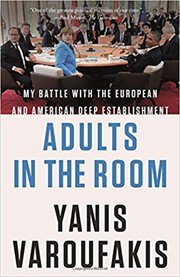
A PARTISAN PRIMARY SOURCE and a compelling one: Greece's finance minister during the 2015 negotiations, recording the Eurogroup meetings from inside. Self-serving in places and disputed by other participants; read it for what the process felt like to a member state that lost, not as a neutral record.
The critics: left, monetarist and Brexit
IntermediateBe able to make the case against the Union in three incompatible forms — as a technocratic constraint on democratic politics, as a monetary project that was always going to fail, and as a sovereignty question — and to say which criticisms the sympathetic books above concede.
▸ Study plan for this stage
Pace: Six weeks for 1,271 pages, and the three critiques do not agree with each other about anything except the verdict. Anderson's The New Old World is 561 pages, the longest and by some way the finest prose on this path — long essays on France, Germany, Italy, Cyprus and Turkey framed by a reading of th
- Anderson's charge: that the Union has insulated economic policy from electorates by constitutionalising it, so that elections cannot change the substance of policy — an argument about the structure of the polity, not about any particular decision.
- Why Anderson's critique is not the populist one. He objects to the removal of economic questions from democratic contestation; the sovereigntist objects to the removal of national decision-making. The two share a target and almost nothing else.
- Connolly's position and its unusual authority: he supervised the monetary system he attacks, and his prediction that monetary union without political union would produce a crisis of exactly the shape you studied in the previous stage was made well in advance.
- The difference between being right and being reliable. Connolly's central prediction was borne out; the book is also intemperate, and holding both judgements at once is the reading skill this stage teaches.
- O'Toole's diagnosis of Brexit as a psychological rather than a policy phenomenon — the fantasy of oppression, the appetite for heroic defeat, the imperial afterlife — and what such an explanation can and cannot establish.
- That O'Toole is criticising the Leave argument, not defending the Union, which is why he does not answer either Anderson or Connolly and should not be read as if he did.
- Which criticisms the sympathetic books earlier on this path actually concede: van Middelaar concedes the missing demos, Brunnermeier and colleagues concede the design gap, Patel concedes the overclaiming, and Milward concedes nothing because he was never claiming it.
- That three incompatible critiques of the same institution can each be strong, and that assembling a case against something is not the same as having a coherent alternative to it.
- State Anderson's critique in its strongest form. What would have to change institutionally for it to be answered?
- How does Anderson's objection differ from the sovereigntist one? Give an issue on which the two would demand opposite things.
- What did Connolly predict, and by what reasoning? Check the reasoning against the crisis accounts from the previous stage.
- Connolly is both partly vindicated and intemperate. How should a reader weigh a prediction that was right against a book that overreaches elsewhere?
- State O'Toole's diagnosis. What kind of evidence supports a psychological explanation of a political outcome, and how much weight can it carry?
- Take one criticism from each of these three and say which book earlier on this path concedes it, and in what terms.
- Read one of Anderson's country essays and write a page on what his method — literary, historical, biographical — lets him see that a political science account would miss.
- Extract Connolly's prediction and its reasoning as a numbered argument, then check each step against Brunnermeier, James and Landau. Mark the steps that held.
- Build a three-column grid of the critiques: what each says is wrong, what each would want instead, and what the others would say about that alternative. The empty and contradictory cells are the finding.
- Return to the two accounts of the Schuman Declaration you wrote in stage two and read them again after Anderson. Write a paragraph on whether anything in his argument changes which one you now find more persuasive.
- Write a final page stating the case for the Union that survives all three critiques, sourced only to books on this path. Note what you had to give up.
Next up: The path ends with the argument intact rather than settled, which is the honest position on a question that is still being decided politically.

The CRITIQUE FROM THE LEFT, and the most formidable prose on this list. Anderson reads the Union as an oligarchic construction that has insulated economic policy from electorates, with long essays on France, Germany, Italy, Cyprus and Turkey. Hostile, extraordinarily well read, and not to be confused with the populist objection.

The CRITIQUE FROM WITHIN THE MACHINE: Connolly ran the Commission unit overseeing the European Monetary System and was dismissed for writing this in 1995. He predicted that monetary union without political union would produce exactly the crisis of 2010-12. Intemperate and partly vindicated — an unusual combination worth reading for itself.

Brexit explained not as a policy dispute but as an English psychological condition — self-pity, imperial nostalgia, the fantasy of oppression. CRITICAL OF THE LEAVE ARGUMENT rather than of the EU, and included as the sharpest account of the Union's first exit. Tim Shipman's All Out War is the blow-by-blow campaign narrative if you want the events rather than the diagnosis.
Discussion
Keep reading
Paths that share books, cover the same subject, or open a related topic.