The history of Switzerland: books to read, in order
Switzerland is the European state hardest to explain by the usual rules: no common language, no founding nation, no monarch, no empire, and a habit of not fighting the wars going on around it. This path builds the country up in the order that actually explains it — the confederation and the religious split that nearly broke it, then the machinery of federalism, direct democracy and the citizen army that holds four language groups together, and finally the argument the country still has with itself about what armed neutrality bought and what it cost other people between 1939 and 1945.
The country in one volume
BeginnerGet the whole span — the old Confederacy from 1291, the Reformation split, the Napoleonic interlude, the brief Sonderbund civil war of 1847 and the federal constitution of 1848 that came straight out of it — and then read the classic attempt to answer why a country assembled from such unlike parts holds at all.
▸ Study plan for this stage
Pace: Two to three weeks. Church and Head's A Concise History of Switzerland comes first and is the chronological spine almost every other book on this path assumes; our catalogue does not record its length, but it is a Cambridge concise history and reads at the pace of one, dense per page and organised b
- The old Confederacy from 1291 as an alliance of communities rather than the founding of a nation
- The Reformation split as the fault line that divided the Confederation internally, not a foreign quarrel
- The Napoleonic interlude and what a centralised imposed state revealed about what the Swiss would not accept
- The Sonderbund war of 1847 as a civil war measured in weeks and casualties in the hundreds, and its outsized constitutional consequence
- The federal constitution of 1848 as the settlement that emerged directly from that war
- Steinberg's puzzle: what holds a country together with no common language, no founding nation and no monarch
- Multilingualism as an ordinary administrative fact rather than a permanent crisis
- What were the cantons actually agreeing to in the early confederal pacts, and what were they explicitly not agreeing to?
- Why did the Sonderbund war end so quickly and with so little destruction, and how did that shape the constitution that followed?
- What is Steinberg's answer to his own title question, stated in one paragraph?
- Which of Steinberg's explanatory factors does Church's narrative support, and which does it complicate?
- How much of what makes Switzerland unusual is deliberate design and how much is accumulated accident?
- Build a one-page timeline from Church covering 1291 to 1848 and keep it beside you for the rest of the path; every later stage will send you back to it.
- Write out Steinberg's argument as a list of factors, then rank them by how much explanatory weight you think each carries, with a sentence of justification for the top and bottom entries.
- Take one canton and trace it through Church from its entry into the Confederation to 1848, noting what it kept and what it surrendered at each step.
- After both books, write a paragraph explaining Switzerland to someone who assumes every European state is a nation-state, using no more than three facts.
Next up: Church's chronology will have named the confessional split as the deepest division in Swiss history, and the next stage goes into it directly, because it is the fault line that produced 1847 and therefore 1848.
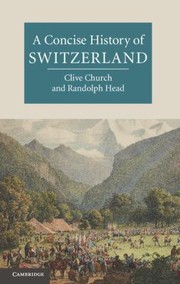
Church and Randolph Head's Cambridge concise history, the current standard survey in English from the medieval cantons to the present. Read it first; almost every other book here assumes its chronology.
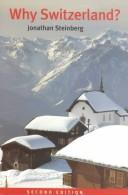
The famous essay-length answer to the question in its title, working through language, federalism, neutrality and money. Older than Church's book and better on the puzzle rather than the timeline, which is why it comes second.
The Reformation and the split that nearly ended it
IntermediateUnderstand that Switzerland's deepest fault line was confessional long before it was linguistic. Zurich under Zwingli and Geneva under Calvin made the Confederation a headquarters of the Reformation while the forest cantons stayed Catholic, and the resulting division ran directly into the Sonderbund war of 1847. These are books about theologians, but read them for the politics.
▸ Study plan for this stage
Pace: Three weeks for 579 pages, and the imbalance between the two books is the thing to plan around. Stephens's Zwingli is 181 pages, the shortest book on the path, a clear introduction to the Zurich reformer and readable in a week; Gordon's Calvin is 398 pages, more than twice as long, a full scholarly
- Zwingli's Zurich as a reformed city-state in which religious and civic authority were deliberately fused
- Calvin's Geneva as an international centre whose influence far exceeded its size
- The forest cantons remaining Catholic, and the Confederation therefore containing its own confessional opposition
- Confessional division as prior to and deeper than the linguistic divisions that later get more attention
- The line from the Reformation settlement through two centuries to the Sonderbund war
- Geneva's separate status until 1815, and what that means for calling Calvin a Swiss figure
- How did Zwingli's arrangement of church and city government differ from Calvin's, and which left more room for lay authority?
- What did the Confederation do institutionally to survive containing two confessions, and why did those arrangements eventually fail?
- Why does Calvin loom larger internationally while Zwingli matters more to Swiss political culture?
- What does Gordon show about Geneva's own politics that a purely doctrinal biography would omit?
- Is the confessional fault line still visible in the modern institutions you will meet in the next stage?
- Draw the governing structure of Zwingli's Zurich and Calvin's Geneva side by side from the two books, marking who could remove whom from office.
- Map the Confederation's cantons by confession as of the later sixteenth century, then set that map beside the Sonderbund alignment of 1847 from Church and see how much it moved.
- Take one dispute in Gordon where Geneva's council overruled or resisted Calvin and write out what it establishes about where power actually sat.
- Write half a page on what a reformed city-state assumes about the relationship between citizenship and church membership, using Stephens, then ask what happens to that assumption in a modern federal state.
Next up: The confessional settlement and the war it eventually produced gave Switzerland the constitution of 1848, and the next stage takes apart the machinery that constitution created and that the country still runs on.

A short, clear introduction to the Zurich reformer whose city-state model of a reformed polity is the ancestor of a great deal of Swiss political culture. The right entry point because Zwingli is the more Swiss of the two figures and the less written about.

Gordon's biography of the Frenchman who made Geneva into a European capital of Protestantism, and unusually good on the city's politics rather than only the doctrine. Note Geneva did not actually join the Confederation until 1815.
How it actually works
IntermediateLearn the machinery, because in Switzerland the machinery is the history: the collegial executive with a rotating presidency nobody can name, the referendum and popular initiative, cantonal sovereignty, and a militia army in which the rifle goes home with the soldier. Come out able to explain why direct democracy is both the country's proudest institution and the reason women in one half-canton could not vote in local elections until 1990.
▸ Study plan for this stage
Pace: Three weeks for 645 pages, and the stage is arranged from analysis to description to reportage. Linder's Swiss Democracy (210 pages) is the analytical anchor and the densest reading here: a Swiss political scientist's account of consensus government, federalism and direct democracy, explicitly frame
- The collegial executive and rotating presidency, and why Swiss heads of state are internationally anonymous by design
- The referendum and the popular initiative as routine instruments of ordinary legislation rather than exceptional events
- Cantonal sovereignty and the presumption that powers not given to the federation remain with the cantons
- Consensus government and proportional inclusion of parties in the executive, and what that does to opposition
- The militia army and the rifle at home as a civic institution rather than only a defence arrangement
- The cost of direct democracy: that a majority electorate delayed women's suffrage, in one half-canton for local elections until 1990
- Linder's argument that these arrangements are exportable, and the conditions he attaches to it
- How does a popular initiative actually proceed from signature collection to constitutional text, and where can it be stopped?
- What does consensus government do to accountability when everyone is in the executive?
- Why did women's suffrage arrive so late, and what does the answer reveal about who direct democracy empowers?
- What is the militia system for beyond defence, and what does McPhee suggest it does socially?
- Which of Linder's conditions for exportability does Switzerland itself satisfy only because of its history?
- Pick a real Swiss referendum, look up its wording and result, and trace it through the procedure Church describes step by step.
- Write out who holds each of the main federal competences and who holds the rest, then check your list against Linder and note what you got wrong.
- Read McPhee's account of the bridge demolition charges and write a paragraph on what it implies about how the country understood its own neutrality; carry that paragraph into the next stage.
- Construct the strongest argument that Swiss direct democracy is a brake on minority rights, then the strongest reply, using Linder's evidence on both sides.
Next up: You now know how the machinery works and what a militia army meant in practice, which is the necessary background for the next stage, where the argument is whether that machinery kept Switzerland safe in the Second World War or whether something else did.
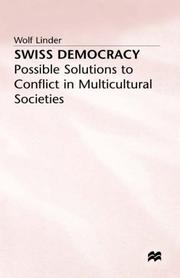
The standard scholarly account of consensus government, federalism and direct democracy, written by a Swiss political scientist and explicitly framed as a possible model for other multicultural societies.
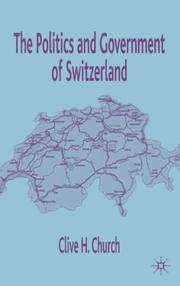
Church again, this time on the institutions in operation rather than on their history. Pairs with Linder as the descriptive half to his analytical one.
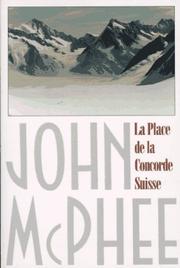
McPhee attaches himself to a Swiss army unit and comes back with the best short explanation of the militia system, the demolition charges built into the country's own bridges, and how national defence works when everyone is a soldier. The catalogue truncates the title mid-word; the book is McPhee's 1984 account of the Swiss army.
Neutrality, the war, and the gold
IntermediateThis is the live argument, and it is genuinely unresolved. Halbrook's case is that armed neutrality and a mobilised militia deterred a German invasion; Bower and Ziegler's is that Switzerland bought its safety by laundering looted Nazi gold, turning away Jewish refugees and trading with the Reich, and that the banks then sat on murdered depositors' accounts for fifty years. Kreis represents the official Swiss reckoning that followed the 1990s scandal. Read all four and notice which questions eac
▸ Study plan for this stage
Pace: Five weeks for 1,433 pages, the heaviest stage on the path and the only one where the books are in direct conflict. Read all four and read them in order. Halbrook's Target Switzerland (320 pages) makes the deterrence case: universal service, the Alpine redoubt, and German invasion plans drawn up and
- Armed neutrality as a doctrine: what Switzerland claimed it was and what it required in practice
- The Alpine redoubt strategy, and the difference between deterring an invasion and being not worth invading
- German invasion planning as a documented fact, and the separate question of how close it came to execution
- Trade with the Reich, the transit agreements and the Swiss National Bank's gold transactions
- Refugee policy at the border, and the decisions taken about who would be admitted
- Dormant accounts and the banks' handling of survivors' claims over the following five decades
- The commission of inquiry as a state examining itself, and what such a body can and cannot conclude
- That an economic explanation and a military explanation of Swiss survival are not mutually exclusive
- What is the actual evidence that deterrence worked, and what would evidence against it look like?
- What did the Swiss National Bank know about the provenance of the gold it accepted, and when?
- Which questions does Halbrook decline to ask, and which does Ziegler decline to ask?
- What did Swiss refugee policy admit and refuse, and on whose authority were those criteria set?
- What did the official commission conclude, and where does Kreis's collection show its members disagreeing?
- Could both the deterrence case and the collaboration case be substantially true at once, and if so, what does that do to the moral question?
- Make a single chronology of 1939 to 1945 from all four books, marking each entry with which of them reports it. Entries reported by only one author are where the argument lives.
- Take Halbrook's central claim and list every fact he offers in support, then check each against Kreis's collection and note which are confirmed, which are qualified and which go unmentioned.
- Read Bower and Ziegler on the same episode in the banking story and write out the two versions in parallel, separating the facts they share from the characterisations they do not.
- Write the case for the defence of Swiss wartime conduct using only material from Bower and Ziegler, then the case for the prosecution using only Halbrook and Kreis. The exercise is to find out how much of the disagreement is evidence and how much is framing.
- Return to your McPhee paragraph from the previous stage and reassess it now that you have read all four books.
Next up: Having seen the argument about how Switzerland came through the war and the money that came with it, the final stage looks at the country that argument left behind and at the economy that is not only a banking story.
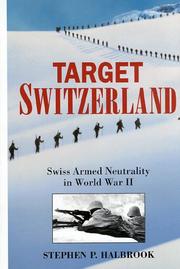
The strongest statement of the deterrence case: universal military service, the Alpine redoubt, and German invasion plans that were drawn up and never executed. Halbrook is an American gun-rights lawyer as well as a historian and the argument has an agenda; read it knowing that. He later expanded the material as The Swiss and the Nazis.
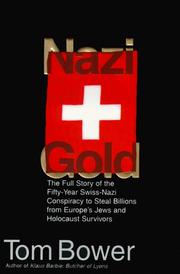
The investigative account that broke the dormant-accounts scandal into the open in 1997, tracing looted gold through the Swiss National Bank and the commercial banks' treatment of Holocaust survivors' claims. The book that forced the reckoning.
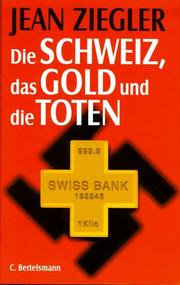
The prosecution case made from inside — Ziegler was a Swiss MP, and this book was received at home as something close to treason. Polemical and factually challenged in places, and indispensable for understanding the domestic fight.
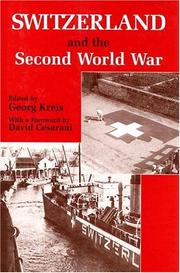
A scholarly collection, edited by the historian who chaired Switzerland's own commission of inquiry, covering refugee policy, economic collaboration and the postwar memory. The measured counterweight to both Halbrook and Ziegler, and the right book to end the stage on.
The modern country
IntermediateFinish with the Switzerland that exists now: a small landlocked economy that produces a wildly disproportionate share of the world's pharmaceuticals, machinery and private banking, stayed out of the UN until 2002 and is still not in the EU. One serious book on the economy, one funny one on the society, one on the mountains that shaped both.
▸ Study plan for this stage
Pace: Four weeks for 1,128 pages, and the three books get progressively lighter. Breiding's Swiss Made is 493 pages, easily the longest book in the stage and nearly half of it, working sector by sector through how a country with no raw materials produced Nestle, Novartis, Swatch and UBS; it is organised a
- A small landlocked economy producing a disproportionate share of the world's pharmaceuticals, machinery and private banking
- Breiding's explanation for that: skills, apprenticeship, niche specialisation and export orientation rather than natural endowment
- The relationship between the banking sector's reputation and the industrial economy's much larger reality
- Staying out of the UN until 2002 and remaining outside the EU, and what each decision was actually about
- Everyday social norms and the density of rules as the lived form of the institutions in stage three
- The Alps as an economic and strategic fact rather than scenery, from transit routes to the redoubt of the previous stage
- What does Breiding identify as the common ingredient across sectors, and is the explanation the same for Nestle and for Swatch?
- How much of Swiss prosperity is attributable to banking, on Breiding's own figures?
- Why did a country so integrated economically stay out of the UN until 2002 and out of the EU altogether?
- What does Bewes notice about daily life that connects directly to the referendum system you studied in stage three?
- How do the Alpine passes explain both Switzerland's medieval origins and its twentieth-century strategic position?
- Pick two sectors from Swiss Made and write out what each depended on that a larger economy could have supplied domestically, then ask what the constraint forced.
- List the arguments made for and against UN membership as these books report them, and check which of them the referendum system from stage three would amplify.
- Read O'Shea on the passes and then reread your stage one timeline; write down every point in Swiss history where a pass is doing the causal work.
- Write a final page explaining Switzerland to a reader who knows nothing about it, using only the fourteen books on this path, and mark the places where your sources genuinely disagreed. The wartime stage should account for most of the marks.
Next up: This closes the path: from a medieval alliance of communities through the confessional split, the machinery of 1848, the unresolved argument about the war and the gold, to the modern economy and the mountains that shaped all of it.

How a country with no raw materials produced Nestle, Novartis, Swatch and UBS — sector by sector, and the best available answer to why Swiss prosperity is not just a banking story.
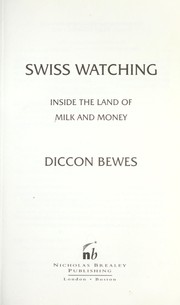
An English resident's affectionate and sharp tour of Swiss society, useful precisely where the scholarly books go quiet: the referendums, the rules, the reticence and the money.

A traverse of the whole range, which puts back the geography that every institution in this path was built around. Not a Swiss history as such, but the closing perspective the political books cannot give you.
Discussion
Keep reading
Paths that share books, cover the same subject, or open a related topic.


