The history of Puerto Rico: books to read, in order
Puerto Rico has been a colony of Spain and then of the United States without an intervening period of independence, and its historiography is shaped by an argument that is still live: whether the island is a nation held in an unresolved colonial relationship, a US territory whose people chose their status, or something the existing vocabulary does not fit. This path moves from a general survey through 1898 and the legal architecture built after it, then the nationalist movement and Operation Bootstrap, migration and identity, and finally the debt crisis and Hurricane Maria. The books are chosen so that the disagreement is visible: a polemic sits beside a legal history beside an anthropology, and the stage goals name where they part company.
The island before and after 1898
BeginnerAcquire the basic chronology from Spanish rule through the 1898 invasion, and understand that Puerto Rico's status question is not a recent controversy but the founding condition of the American period.
▸ Study plan for this stage
Pace: Four weeks, 999 pages, and a deliberately uneven three. Fernando Pico's History of Puerto Rico is 351 pages covering four centuries, so it moves quickly over the periods the rest of the path ignores — read it first, in about ten days, for the chronology rather than for detail. Jorge Duany's Puerto R
- Four centuries of Spanish rule ending in 1898 with no intervening period of independence — the fact the whole status argument rests on
- The Grito de Lares, the 1897 Carta Autonomica, and how much self-government Puerto Rico had actually won from Spain immediately before the American invasion
- The sugar economy and the transformation of land tenure after 1898, which is Ayala and Bernabe's economic spine
- The Jones Act of 1917 and the imposition of US citizenship on a population with no vote in Congress
- The status question as the founding condition of the American period rather than a late controversy
- Duany's framing of the island as a nation without a state, which the later stages either extend or dispute
- What powers did the 1897 autonomy charter grant, and how does knowing that change how you read 1898?
- How do Ayala and Bernabe explain the transformation of the coffee and sugar economies after the invasion, and who lost land?
- Why is US citizenship in 1917 not straightforwardly a benefit in these accounts, and what did it enable?
- Where does Pico's four-century narrative disagree in emphasis with Duany's present-tense answers about the same island?
- What does Ayala and Bernabe's book assume you already know that Pico is supplying?
- Make a two-column chronology, Spanish period and American period, and mark on it every date Ayala and Bernabe treat as a turning point. This spine is assumed by all three later stages.
- Read Duany's answers on status and migration before his answers on culture, then write which of his cultural claims depend on the political ones.
- In Pico, find the three episodes of nineteenth-century resistance he treats most seriously and check what Ayala and Bernabe do with each.
- Write a definition of 'colony' that would let you say honestly whether it applies here, then test it against the 1897 charter, 1917 citizenship and the 1952 Commonwealth.
Next up: The chronology in place, you can now read the legal stage as an argument about what the arrangement you just watched being built actually is.
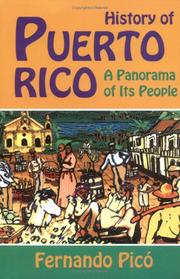
Pico's panorama is the standard general survey by an Puerto Rican historian, running from the indigenous and Spanish periods forward. Start here for the long chronology the American-century books take as given.

The most efficient orientation to the present-day island — status, economy, migration, culture — in question-and-answer form by an anthropologist who has written on all of them. Read alongside Pico as the modern half of the map.

Ayala and Bernabe's history from 1898 to the present is the scholarly spine of this path and the book everything later here argues with. Placed third because it moves fast, and it is far more useful once you have the pre-1898 background.
The legal architecture of an unincorporated territory
IntermediateUnderstand the Insular Cases, the Jones Act and citizenship-without-representation as a deliberate legal construction — and see the two main readings of it: Trias Monge's 'oldest colony in the world' against the constitutional-law scholarship that treats the category as contested rather than settled.
▸ Study plan for this stage
Pace: Five weeks, 1,016 pages, and much slower going than the count suggests because two of the three are legal scholarship. Jose Trias Monge's Puerto Rico is 245 pages and reads clearly — it is written by a former Chief Justice of the island's Supreme Court and a drafter of the Commonwealth constitution,
- The Insular Cases and the invention of the 'unincorporated territory' — a place belonging to but not part of the United States
- Trias Monge's verdict that this is the oldest colony in the world, and what makes it weighty coming from him specifically
- The 1952 Commonwealth (Estado Libre Asociado) and the argument over whether it changed the underlying relationship or only its name
- Citizenship without congressional representation or a presidential vote, and the constitutional reasoning that permits it
- Rodriguez-Silva's claim that racial silencing was itself a political achievement, produced across the Spanish-to-American transition rather than inherited
- The difference between a legal category being settled and being merely unchallenged
- What exactly did the Insular Cases decide, and which of their assumptions do the contributors to Foreign in a Domestic Sense treat as still binding?
- Trias Monge helped draft the Commonwealth constitution. How does his account handle his own role, and does that strengthen or weaken his conclusion?
- Which contributors to Foreign in a Domestic Sense argue against Trias Monge's framing, and on what grounds?
- How, in Rodriguez-Silva's account, did racial hierarchy become unspeakable in Puerto Rican politics without ceasing to operate?
- Could the constitutional position be changed without Congress, and what do these books say about why it has not been?
- Write a one-page brief of Downes v. Bidwell from the essays in Foreign in a Domestic Sense — holding, reasoning, dissent — without consulting anything outside these books.
- Set Trias Monge's account of the 1952 Commonwealth beside Ayala and Bernabe's from the previous stage and list where they differ on what changed.
- Take one archival episode from Rodriguez-Silva and write how it would appear in a purely constitutional history. What disappears?
- Draft the strongest case that the Commonwealth is not colonial, using only material from these three books. Then note which book supplies the rebuttal to each of your points.
Next up: With the legal category understood as constructed rather than natural, the nationalist movement's claim that it was worth armed resistance becomes a question you can actually assess.
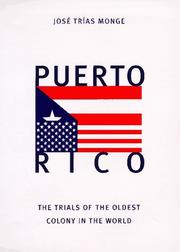
Written by a former Chief Justice of Puerto Rico's Supreme Court and a drafter of the Commonwealth constitution, which is what makes its conclusion — that the arrangement he helped build is colonial — carry weight. The Open Library record displays only as the bare title Puerto Rico; the published work is the one subtitled The Trials of the Oldest Colony in the World.

The essential collection on the Insular Cases, the Supreme Court decisions that invented the 'unincorporated territory' and the phrase in the title. Read after Trias Monge so you can see legal scholars pulling his verdict apart and defending it.

On how race was made unspeakable in Puerto Rican politics across the Spanish-to-American transition — the strand the constitutional and economic histories mostly leave out. Placed here because the legal category and the racial one were built together.
Nationalism, Bootstrap and the great migration
IntermediateCover the Nationalist Party and Albizu Campos, the Ponce massacre and the Gag Law, then Operation Bootstrap's industrialisation and the mass migration to the mainland. The stage deliberately pairs a combative popular account with two scholarly ones, because the nationalist period is where partisan and academic histories diverge most sharply.
▸ Study plan for this stage
Pace: Six weeks and 1,281 pages, the longest stage on the path, but the reading is mostly narrative. Nelson Denis's War against all Puerto Ricans is 379 pages and reads fastest of the four; it is advocacy rather than neutral history, it has been criticised by historians over its handling of evidence, and
- Pedro Albizu Campos and the Nationalist Party's turn from electoral politics to armed action
- The Ponce massacre and the Gag Law (La Mordaza), which criminalised advocating independence and even displaying the flag
- Operation Bootstrap: tax-driven industrialisation, the collapse of agricultural employment, and the migration it presupposed
- The great migration to New York and the mainland as policy outcome rather than accident
- Duany's 'nation on the move' — a national community constituted by circular movement rather than by territory
- Grosfoguel's comparative claim that Puerto Rico is a variant of Caribbean colonial modernity, not an exception to it
- The gap between a partisan and a scholarly account of the same decade, which this stage exists to make visible
- Where specifically do Denis and Fernandez disagree about the nationalist period — on facts, on emphasis, or on judgement?
- What did Operation Bootstrap actually do to employment, and who benefited at each stage?
- How does Duany's evidence for circular migration work, and what would count against his thesis?
- Grosfoguel compares Puerto Rico with Martinique and other cases. What does the comparison buy him that a single-island study cannot get?
- After Ponce and the Gag Law, what remained of legal political expression for the independence position?
- Take three specific factual claims from Denis and try to corroborate each from Fernandez or from Ayala and Bernabe. Record which hold, which are unsupported, and which you cannot check from these books at all.
- Chart Bootstrap: for each decade, the policy instrument, the employment effect, and the migration figure, drawn from Fernandez and Duany.
- Use Duany's framework on a specific family or community he describes, and write what a territorial definition of the nation would have to say about them.
- Place Grosfoguel's comparison beside Trias Monge's legal argument from the last stage and write which one better explains why the status has not changed.
Next up: Migration, industrialisation and a suppressed independence movement are the three inheritances the final stage's crises land on top of.

A deliberately polemical account of Albizu Campos, the Ponce massacre and FBI surveillance, and the most widely read book on the nationalist period. It is advocacy, not neutral history, and has been criticised by historians for its handling of evidence — read it for the story it recovers and check it against Ayala and Bernabe.
A full narrative of Puerto Rico in the twentieth century that gives the nationalist movement and the Commonwealth's creation sustained scholarly treatment. The steadier companion to Denis, covering the same events at lower temperature.

Duany's argument that Puerto Rico is a nation on the move — constituted as much by circular migration between island and mainland as by territory. The book that makes migration a subject rather than an aftermath, and the bridge to the culture stage.

A comparative reading of Puerto Rico against other Caribbean colonial situations, arguing that its position is not exceptional but a variant. Placed last in the stage as the widest lens on everything preceding it.
Identity, debt and disaster
IntermediateTake the story to the present: how Puerto Rican identity has been produced and marketed, how a US$70bn debt crisis produced the unelected PROMESA fiscal board, and what Hurricane Maria exposed. The status argument is unresolved at the end of this stage and should be — statehood, independence and enhanced commonwealth all have serious advocates on the island.
▸ Study plan for this stage
Pace: Five weeks. Frances Negron-Muntaner's Boricua pop is 337 pages of cultural criticism and the most academic prose in the stage — ten days. Ed Morales's Fantasy Island is 352 pages, the core book here and the clearest single account of debt, PROMESA and Maria as one story; read it second, over about a
- The US$70bn+ debt, how it accumulated under triple tax exemption, and who held the bonds
- PROMESA and the fiscal oversight board — an unelected body with authority over the elected government, and what it demonstrates about the status question
- Hurricane Maria in September 2017 and the gap between the official and the estimated death tolls
- Disaster capitalism as Klein applies it here, against community-led reconstruction as the alternative she reports
- Negron-Muntaner on Puerto Rican identity as produced and consumed in American popular culture, from West Side Story onward
- The 2019 protests that removed a governor, as the point where Bonilla and LeBron's contributors locate agency
- Statehood, independence and enhanced commonwealth as three positions with serious advocates, none of which these books settle
- How did the debt become unpayable, and which decisions in the earlier stages made that possible?
- What does PROMESA reveal about sovereignty that a century of case law had left ambiguous?
- Morales and Klein both write as advocates. Where do their arguments actually differ, and where is one simply shorter?
- What does the collection Aftershocks of Disaster do that a single-author account of Maria cannot?
- Having read the whole path, which status option can you now state the strongest version of — and can you state the strongest version of the other two?
- Write the debt story as a timeline from Morales, marking where each earlier stage's material is doing causal work.
- Read two contributions to Aftershocks of Disaster that disagree with each other and write a paragraph on what each thinks the other has missed.
- Take one image or figure Negron-Muntaner analyses and write what Duany's migration framework from the previous stage would add to her reading.
- Klein's book is short and argues hard. List the claims in it you can support from Morales, and the claims you would need evidence outside this path to check.
- Write the closing argument for each of the three status options in 200 words each, citing books from at least three of the four stages.
Next up: This is the end of the path, and it ends unresolved on purpose: you now hold the legal, economic and cultural material the status argument is actually made of.
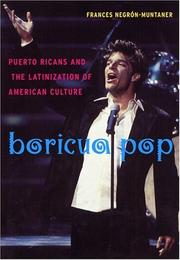
On Puerto Rican identity as it has been made and consumed in American popular culture, from West Side Story onward. The cultural counterpart to Duany, and a reminder that the status question is fought in images as much as in law.

The clearest single account of the debt crisis, PROMESA and Maria as one connected story, written from an explicitly pro-decolonisation position. The core book of this stage; read before the two that follow.
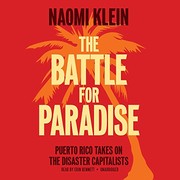
A short, urgent piece of reporting on post-Maria Puerto Rico as a contest between disaster capitalism and community-led reconstruction. Brief and partisan by design — read it as an argument, with Morales supplying the fuller context.

Bonilla and LeBron's edited collection of Puerto Rican scholars, writers and activists responding to Maria, and the best final book here because it hands the argument back to a range of island voices rather than closing it.