Puerto Rico has been a colony of Spain and then of the United States without an intervening period of independence, and its historiography is shaped by an argument that is still live. The order below runs from a general survey through 1898 and the legal architecture built after it, then the nationalist movement and Operation Bootstrap, then migration and identity, and finally the debt crisis and Hurricane Maria. Start with History of Puerto Rico.
The disagreement worth naming up front is about status. Some of these authors treat the island as a nation held in an unresolved colonial relationship; others treat it as a territory whose people have repeatedly been asked and have not settled the question; a third position is that the available vocabulary does not fit the case. Statehood, independence and an enhanced commonwealth all have serious advocates on the island today. This list is arranged so those positions sit next to each other — a polemic beside a legal history beside an anthropology — rather than being reconciled.
The island before and after 1898
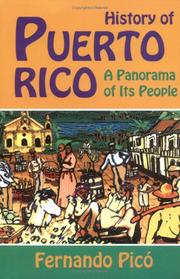
History of Puerto Rico is Fernando Pico's panorama and the standard general survey, running from the indigenous and Spanish periods forward. It supplies the long chronology that the American-century books take as given. Puerto Rico: What Everyone Needs to Know® is Jorge Duany's question-and-answer orientation to the present-day island — status, economy, migration, culture — and works well read alongside Pico as the modern half of the map.
Puerto Rico in the American century is the scholarly spine of everything that follows, covering 1898 to the present. Our record credits César Ayala alone; the book is co-written with Rafael Bernabé. It moves fast, which is why it sits third rather than first.
The legal architecture
Puerto Rico — that bare title is how the Open Library record for it appears in our catalogue — is José Trías Monge's book, published as Puerto Rico: The Trials of the Oldest Colony in the World. He was a Chief Justice of Puerto Rico's Supreme Court and a drafter of the Commonwealth constitution, which is what gives weight to his conclusion that the arrangement he helped build is colonial.
Foreign in a Domestic Sense is the essential collection on the Insular Cases, the Supreme Court decisions that invented the category of the unincorporated territory and supplied the phrase in the title. Read it after Trías Monge to watch constitutional scholars pull his verdict apart and defend it. Silencing Race covers the strand the legal and economic histories mostly leave out: how race was made unspeakable in Puerto Rican politics across the Spanish-to-American transition. The legal category and the racial one were built together.
Nationalism, Bootstrap and the great migration
War against all Puerto Ricans is the most widely read book on the nationalist period — Pedro Albizu Campos, the 1937 Ponce massacre, the Gag Law, FBI surveillance. It is advocacy rather than neutral history, Nelson Denis says so, and historians have criticised its handling of evidence. Read it for the story it recovers and check it against Ayala and Bernabé.
The disenchanted island is the steadier companion, a full twentieth-century narrative giving the nationalist movement and the Commonwealth's creation sustained scholarly treatment at lower temperature. The Puerto Rican Nation on the Move is Duany's argument that Puerto Rico is constituted as much by circular migration between island and mainland as by territory — the book that makes migration a subject rather than an aftermath. Colonial Subjects widens the lens, reading Puerto Rico comparatively against other Caribbean colonial situations and arguing its position is a variant rather than an exception.
Identity, debt and disaster
Boricua pop is on Puerto Rican identity as made and consumed in American popular culture, from West Side Story onward — a reminder that the status question is fought in images as much as in law. Fantasy Island is the core book of this stage and the clearest single account of the debt crisis, the PROMESA fiscal board and Maria as one connected story; Ed Morales writes from an explicitly pro-decolonisation position.
The Battle for paradise is short, urgent reporting on post-Maria reconstruction as a contest between disaster capitalism and community-led alternatives — partisan by design, and best read with Morales supplying context. Our record for it carries no page count and lists two additional names alongside Naomi Klein. Finish with Aftershocks of Disaster, an edited collection of Puerto Rican scholars, writers and activists responding to Maria, which hands the argument back to a range of island voices rather than closing it.
That is the right note to end on, because the status question is not resolved by this reading and should not appear to be.
The full ordered list is on the Puerto Rico path.