The history of Peru: books to read, in order
Peru is usually read backwards from the Incas, which is the least useful way to approach it. The five centuries since the conquest contain a colonial silver economy that ran on forced Andean labour, the largest indigenous rebellion in the Americas, an independence that most Peruvians did not fight for, a guano boom that made and unmade a national fortune, an intellectual movement that tried to build a nation on indigenous foundations, and a twenty-year internal war that killed nearly seventy thousand people, the majority of them Quechua-speaking peasants, and that neither the Shining Path nor the state has fully answered for. The through-line is that Peruvian history has been written mostly from Lima about a country that is mostly not Lima. This path is built to keep the Andes in view: it starts with the conquest as prologue, works through the colonial and republican centuries, and gives the Sendero war its own two stages, because that is where the best writing is and where the arguments are still live.
Foundations
BeginnerAcquire the long arc and the conquest that begins it. By the end you should be able to explain how a few hundred Spaniards took an empire of ten million, what the encomienda and the Potosi mita were, and why the colonial Andes are better understood as a negotiated order than as a simple imposition.
▸ Study plan for this stage
Pace: Three books, 1,443 pages, and the stage runs about six weeks. John Hemming's The conquest of the Incas is 641 pages and is the long one — still the standard narrative of the conquest and of the forty years of resistance that followed, including the neo-Inca state at Vilcabamba. Read it first and rea
- How a few hundred Spaniards took an empire of roughly ten million — civil war, disease, alliance and hostage-taking
- The neo-Inca state at Vilcabamba and the four decades of resistance after Cajamarca
- The encomienda: a grant of labour and tribute, not of land, and why the distinction matters
- The Potosi mita, its rotation system, and the mortality it produced
- Silver as the engine of the colonial economy and of Spain's imperial finances
- Indigenous elites, caciques and the negotiated character of colonial rule
- The reducciones and the resettlement of Andean communities
- Lima as an administrative capital oriented toward Spain rather than toward the sierra
- Explain the conquest without using the word inevitable. What made it possible, in order?
- What was the difference between the encomienda and the mita, and how did each extract labour?
- Why is the colonial Andes better described as a negotiated order than as a simple imposition? Give two pieces of evidence.
- What did the Potosi mita cost the communities subject to it, in people and in obligations?
- How did indigenous elites survive and function inside the colonial system?
- Where does Andrien correct the impression Hemming's narrative leaves?
- Map the mita catchment area from Andrien and mark which communities owed rotations to Potosi. The geography explains a great deal of later Andean politics.
- Build a chronology of the conquest and its aftermath from Hemming, then check each entry against Klaren's much shorter treatment and note what a synthesis drops.
- Follow one indigenous community through Andrien from the conquest to the eighteenth century and write down what changed and what did not.
- Keep a running list of Quechua and Spanish administrative terms — mita, encomienda, cacique, reduccion, corregidor — with a one-line definition each. You will need them in every later stage.
Next up: You now understand the extractive order the colony ran on, which is the necessary background to the rebellion that tried to overturn it.
Still the standard narrative of the conquest and the forty years of resistance that followed, including the neo-Inca state at Vilcabamba. Read it as the prologue: everything after depends on knowing that Andean society was defeated but not erased.

The best single-volume history of Peru in English, running from the pre-Columbian period to the 1990s. Our catalogue displays it under the bare title Peru. This is the spine of the path; keep it to hand throughout.
The colonial period proper — indigenous society, economy and politics under Spanish rule from 1532 to 1825. It is the corrective to reading the colony as three centuries of nothing happening between the conquest and independence.
Rebellion and Independence
IntermediateUnderstand the great rebellion of 1780-83 and the strange independence that followed forty years later. You should be able to explain what Tupac Amaru II demanded and why the rebellion failed, and why Peru's independence was largely delivered by foreign armies to a colonial elite that had good reasons to fear it.
▸ Study plan for this stage
Pace: Two books by Charles F. Walker, 699 pages, almost evenly split. The Tupac Amaru rebellion is 347 pages and is the definitive modern account of the largest indigenous uprising in colonial Latin America — and it is clear-eyed about how mixed the rebellion's own coalition and aims actually were, which
- The Bourbon reforms and the fiscal pressure that triggered the revolt
- What Tupac Amaru II actually demanded, and how his stated aims shifted
- The rebellion's coalition — creoles, mestizos and indigenous communities — and where it broke
- The repression, the executions, and the campaign against Inca symbols and dress that followed
- Why the memory of 1780-83 made Peruvian creoles wary of independence
- San Martin, Bolivar and independence arriving substantially from outside
- The caudillo republic and the weakness of the early Peruvian state
- Continuity of the tribute and labour systems across the supposed break of independence
- What did Tupac Amaru II demand at the start of the rebellion, and what was he demanding by the end?
- Why did the rebellion's coalition fracture, and along what lines?
- What did the Spanish do after the defeat, beyond executing the leaders?
- Why were Peruvian creoles slower to seek independence than their counterparts elsewhere in South America?
- What changed for Andean communities at independence, and what did not?
- How does Smoldering Ashes revise the picture the rebellion book leaves you with?
- Draw the rebellion's geography and mark where support was strongest and where it collapsed. Compare with the mita map from the last stage.
- List the colonial institutions in place in 1780 and mark, from Smoldering Ashes, which still existed in 1850. The survivals are the argument.
- Take Walker's account of the executions and note what the Spanish were trying to destroy beyond the men themselves.
- Write a paragraph explaining Peruvian independence to someone who assumes it was a national liberation movement, and correct each assumption in turn.
Next up: Political narrative has taken you to the republic; the next stage goes underneath it, to the texture of a country that its own histories have mostly described from the capital.

The definitive modern account of the largest indigenous uprising in colonial Latin America, and clear-eyed about how mixed the rebellion's own coalition and aims were. The single best book on eighteenth-century Peru.

Walker's earlier study, running from the rebellion through independence to the caudillo republic in Cuzco. It answers the question the previous book raises: what did the defeat of 1783 mean for the Andes over the next seventy years.
Reading Peru From the Inside
IntermediateGet past political narrative to the texture of the country — the guano age and its collapse, indigenismo, migration to the coast, and the gulf between Lima and the sierra. You should be able to explain why 'the Andean problem' was a phrase in Peruvian politics for a century, and what indigenista intellectuals proposed to do about it.
▸ Study plan for this stage
Pace: Three books, 1,172 pages, and two of them are anthologies you should not read straight through. The Peru reader, edited by Orin Starn and Carlos Iván Degregori with Robin Kirk, is 531 pages of essays, fiction, testimony, journalism and political manifestos running from the conquest to the present; r
- The guano boom, what it financed, and how a national fortune was consumed
- The War of the Pacific and the loss it left in Peruvian political memory
- Indigenismo — what its intellectuals proposed, and the distance between advocacy and Andean communities themselves
- 'The Andean problem' as a phrase in Peruvian politics, and what it assumed
- Migration from the sierra to the coast and the transformation of Lima
- The informal city and the settlements that built most of modern Lima
- Indigenous organisation after the war: NGOs, international funding and their incentives
- Reading testimony and fiction as historical evidence alongside monographs
- What did guano revenue pay for, and why did it leave so little behind?
- What did indigenista intellectuals actually propose, and who was proposing it?
- What did 'the Andean problem' mean to the people who used the phrase, and what did it take for granted?
- How did Lima come to hold a third of the country's population, and what did the migrants build?
- In Andolina's account, what did international development funding do to indigenous political organisation — and at what cost?
- Pick one piece of testimony from either reader and say what it establishes that a narrative history could not.
- Go through The Peru reader's contents and assign each section to a stage of this path. Then read the sections for the stages you have already finished.
- From The Lima Reader, trace the growth of one district or settlement and write down who built it and on what terms.
- Take an indigenista text from the reader and set it beside Andolina's account of later indigenous organisations. Note who is speaking for whom in each case.
- Write one page on the guano age as a fiscal story — revenue in, expenditure out, debt at the end — using Klaren's figures.
- List the ways the readers' Peruvian voices contradict the historians you have read so far, and keep the list for the final stages.
Next up: The gulf between Lima and the sierra that this stage documents is the precondition for the war that follows, and for the decade it took Lima to notice it.

The best entry point to Peruvian voices: essays, fiction, testimony, journalism and political manifestos from the conquest to the present, edited with Carlos Ivan Degregori and Robin Kirk. Read it in fragments alongside the narrative histories rather than straight through.

The same treatment for the capital, edited with Charles Walker. Included because roughly a third of Peruvians now live in Lima and most histories of the country treat the city as a vantage point rather than a subject.

How indigenous movements, NGOs and the World Bank reshaped Andean politics in the late twentieth century, across Peru, Ecuador and Bolivia. The most useful book here on what happened to indigenous political organisation after the war.
The Shining Path War
IntermediateTake on the internal armed conflict of 1980-2000 and the historiographical argument about it. You should be able to explain how a provincial Maoist faction from Ayacucho became a national insurgency, what the Truth and Reconciliation Commission found about who did the killing, and why the fact that the majority of the dead were rural Quechua speakers was invisible in Lima for a decade.
▸ Study plan for this stage
Pace: Three books, 1,231 pages, and two of them display under the same title, so keep the authors attached to them at every step. Gustavo Gorriti's The Shining Path is 319 pages, the Peruvian journalist's account of the war's first years, written from inside the country while it was happening and still th
- Sendero Luminoso's origins in Ayacucho university politics and Guzman's ideological project
- Why a provincial Maoist faction was able to become a national insurgency
- The rondas campesinas and peasant communities acting for themselves rather than being acted upon
- The armed forces' counterinsurgency and the disappearances attributed to it
- The Truth and Reconciliation Commission: its mandate, its method and its finding on who did the killing
- The racial and linguistic pattern of the dead, and why Lima did not register it for a decade
- Fujimori's counterinsurgency, the capture of Guzman, and the argument about the cost of the victory
- Reporting from inside a conflict against scholarship written afterwards — what each can establish
- How did Sendero Luminoso begin, and what was distinctive about Guzman's version of Maoism?
- What did the Truth and Reconciliation Commission find about the division of responsibility for the deaths?
- Why were the majority of the dead rural Quechua speakers, and why was that invisible in Lima for so long?
- What is Stern's collection arguing against, and what evidence does it use?
- Where does Starn and La Serna's account revise Gorriti's, given what was unknown when Gorriti wrote?
- How should Fujimori's counterinsurgency be judged — by its outcome, its methods, or both? State your criterion first.
- Build a timeline of the war from Gorriti and then extend it to 2000 from Starn and La Serna, marking which entries Gorriti could not have known.
- From Stern's essays on Ayacucho, write down three things peasant communities did that neither armed side intended.
- Tabulate the Truth Commission's attribution of deaths by perpetrator and set it against the version of the war held in Lima at the time.
- Take one massacre covered by more than one of the three books and compare the accounts. Note where they differ on responsibility.
- Return to your list of contradictions from the readers stage and check whether the war material supports or undercuts each.
- Write a paragraph on why a twenty-year war gets as much space on this path as three colonial centuries, using what you now know about where the best evidence and the live arguments sit.
Next up: This closes the path: five centuries read with the Andes rather than Lima at the centre, ending with the war whose accounting is still incomplete.
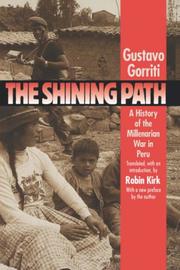
The Peruvian journalist's account of the war's first years, written from inside the country as it happened and still the best reconstruction of Sendero's origins and Abimael Guzman's project. Note that our catalogue holds two distinct books displaying as The Shining Path; this is Gorriti's, first published in Spanish in 1990.
The major scholarly collection on the war, and the one that established that peasant communities were not passive between the two armed forces. Dense; read the introduction and the essays on Ayacucho if you read nothing else.

The most recent narrative history of the war, written with Miguel La Serna and published in 2019, incorporating the Truth Commission's findings and the long argument about Fujimori's counterinsurgency. This is the other book of that title; read it after Gorriti, as the account written once the whole shape of the conflict was known.
Discussion
Keep reading
Paths that share books, cover the same subject, or open a related topic.