The history of Morocco: books to read, in order
Morocco is the one North African state that was never Ottoman and never fully broken by colonisation, and its history is best read as a long argument between a dynastic centre and the tribes, mountains and cities it never quite governed. The path starts with two overviews of different lengths, then works through the pre-colonial makhzen, the French and Spanish protectorates, independence and the repression of the Years of Lead, and finishes on the two questions the monarchy would rather not be asked: political Islam and Western Sahara.
Two surveys, short then long
BeginnerGet the shape of thirteen centuries — the Idrisids, the Almoravid and Almohad empires, the Saadians, the Alaouites who still reign — before any specialist book can disorient you. You should come out able to explain what the makhzen was and why 'Morocco' and 'the sultan's authority' were never the same map.
▸ Study plan for this stage
Pace: Three to four weeks for 983 pages, and the order matters more than the pace. Pennell's Morocco is only 222 pages and is deliberately first: a short general history covering thirteen centuries at speed, which you can finish in four or five sittings and which will keep you from being disoriented by ev
- The dynastic sequence as a skeleton: Idrisids, Almoravids, Almohads, Saadians, Alaouites, and the fact that the last of them still reigns
- The makhzen as an institution rather than a metaphor, and what it collected, commanded and could not reach
- The difference between the map of Morocco and the map of the sultan's effective authority
- Morocco as the North African state that was neither Ottoman nor wholly broken by colonisation, and what that exception explains
- Why the Maghrib is the right comparative unit, and where Morocco diverges from Algeria, Tunisia and Libya
- The sultan's religious authority as a distinct source of legitimacy from his fiscal or military reach
- What was the makhzen, concretely, and how did it raise revenue and enforce decisions?
- Where would you draw the boundary between taxed lands and lands beyond effective control at various points, and what determined it?
- Which of the great dynasties expanded outward from Morocco and which turned inward, and what accounts for the difference?
- On Abun-Nasr's evidence, why did Morocco escape Ottoman incorporation when its neighbours did not?
- What does Miller identify as the sources of the monarchy's durability, and which of them predate the nineteenth century?
- Build a single dynastic timeline from Pennell, then overlay Abun-Nasr's Algerian and Tunisian chronology beside it and mark every point where the trajectories part.
- Write one paragraph defining the makhzen using only Pennell, then revise it after Miller and note precisely what changed.
- Take Miller's account of one nineteenth-century crisis and check what Pennell's short history said about the same episode in a sentence or two. That comparison shows you what a survey has to leave out.
- Draw two rough maps for a single century, one of claimed territory and one of taxed territory, and keep them; the next stage is about the space between them.
Next up: You now have the dynastic skeleton and the concept of the makhzen; the next stage goes into the space the makhzen never governed, which is where the mountains, the Berber-speaking polities and the southern lords actually lived.

Pennell's short general history, the fastest reliable route into the whole span from the Arab conquest to the present. Start here; the catalogue files it simply as Morocco.
The standard modern scholarly survey, beginning in the early nineteenth century and running to the Arab Spring. It is the book the rest of this path is measured against, and the best single account of how the monarchy survived everything.
The regional frame. Morocco only makes sense beside Algeria, Tunisia and Libya, and Abun-Nasr is where you see why Morocco's trajectory diverged from all three.
Before the protectorate: tribes, mountains and the makhzen
IntermediateUnderstand the pre-colonial order on its own terms — the distinction between the taxed lands and the lands of dissidence, the Berber-speaking mountain polities, and the great southern lords whom the French later used as instruments. Two of these three books are by Europeans writing inside the colonial moment, so read them for what they saw and against what they assumed.
▸ Study plan for this stage
Pace: About three weeks for 999 pages, and the stage divides cleanly into one scholarly book and two period pieces. Brett and Fentress's The Berbers (350 pages) is the academic one and the slow one: it runs from antiquity forward, covers the whole of North Africa, and assumes you will tolerate a fairly co
- The distinction between the lands of taxation and the lands of dissidence as an organising fact of pre-colonial Morocco
- Amazigh history on its own terms rather than as a footnote to Arab dynastic history
- The great southern lords, above all the Glaoua, as autonomous powers the makhzen bargained with rather than commanded
- How local strongmen became the instrument through which the protectorate later governed
- The difference between a primary source and an authority, and how to extract the first from a text that presents itself as the second
- Tangier and the diplomatic scramble as the outside pressure that the pre-colonial order failed to absorb
- What did the distinction between taxed and dissident lands mean in daily practice for a mountain community?
- How did the Glaoua accumulate power, and what did the sultan gain by recognising them?
- Where does Brett and Fentress's account of Amazigh political forms contradict the picture you would get from a dynastic history alone?
- What does Harris consistently fail to see, and how would you know it from the text itself?
- Maxwell writes the Glaoua as gothic drama. Which of his claims would you want a scholarly source to confirm before repeating?
- Keep a two-column log while reading Harris: what he reports having witnessed on one side, what he concludes from it on the other. The gap between the columns is what makes him usable.
- Take one Glaoua episode from Lords of the Atlas and write down what evidence Maxwell offers for it. Where he offers none, mark it and carry the mark forward.
- Using The Berbers, write a half page on Amazigh political organisation, then reread the passages in Maxwell and Harris where Berber-speaking communities appear and note how differently they are characterised.
- Return to the two maps you drew in stage one and redraw the dissident lands using what these three books say. Note where they disagree with each other.
Next up: Having seen the strongmen and the ungoverned mountains, you can now watch France build a protectorate on exactly those foundations, which is the argument of the next stage.

Brett and Elizabeth Fentress on the Amazigh peoples from antiquity onward — the necessary corrective to a history told only through Arab dynasties and Atlantic diplomacy.
The rise and fall of the Glaoua of Marrakesh, the mountain dynasty that ruled the south into the 1950s. Vivid, partisan and gothic, but the standard English account of how the protectorate actually governed through local strongmen.
The Times correspondent in Tangier from the 1880s, writing about a sultanate he watched being dismembered. A primary source of the first order and an unembarrassed imperial one; treat every judgement in it as evidence about Harris.
Conquest and the colonial century
IntermediateFollow how a sovereign state was manoeuvred into partition between France and Spain by 1912, what Lyautey's protectorate did and did not change, and how the nationalist movement grew out of it. By the end you should understand why independence in 1956 restored a sultan rather than replacing him.
▸ Study plan for this stage
Pace: Three to four weeks, 999 pages, and once again one book carries most of the weight. Porch's The Conquest of Morocco (335 pages) is narrative history of how France took the country between 1900 and 1912, told through the soldiers and adventurers involved, and it reads fast; it is the natural sequel t
- How a sovereign state was manoeuvred into partition between France and Spain rather than simply conquered
- The protectorate fiction: nominal sultanic sovereignty with French administrative control, and what that arrangement made possible
- Lyautey's programme of preservation and separation, and what it changed and deliberately did not
- Indirect rule through southern lords as the practical continuation of the pre-colonial pattern from stage two
- The nationalist movement's emergence from within protectorate institutions rather than against them from outside
- Why independence restored a sultan instead of replacing him, and what that fact set up for the next stage
- Colonial travel writing as a genre that documents the coloniser's self-image more reliably than the country
- What sequence of diplomatic bargains between European powers made 1912 possible, and where could it have gone differently?
- What did the protectorate actually administer, and what was left in Moroccan hands in name or in fact?
- How did the nationalist movement recruit, and from which social groups?
- Why was the monarchy the beneficiary of independence rather than its casualty?
- What does Wharton praise, and what does the praise reveal about what she was shown and not shown?
- Read Wharton's description of a place, then find Pennell's account of what protectorate administration was doing in that region at that period, and write the two side by side.
- Draw the administrative structure of the protectorate from Pennell as an organisation chart, marking which boxes contained Moroccans.
- Trace one southern lord from Lords of the Atlas into Porch and Pennell and write down how his position changed at each stage of the conquest.
- List the nationalist movement's stated demands as Pennell gives them and mark which were met at independence.
- Write a paragraph on how Porch's narrative would read if it were told from the side of the communities being conquered, noting what evidence you would need.
Next up: Independence restored a monarchy with a colonial administrative machine intact behind it, and the next stage is about what that combination did to Moroccans for the following three decades.
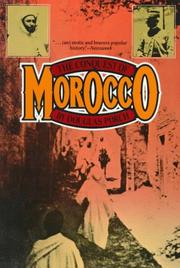
The narrative of how France took Morocco between 1900 and 1912, told through the soldiers and adventurers who did it. The most readable account of the diplomacy and the fighting, and the natural sequel to Harris.

Pennell's full-length scholarly history, far denser than his short one in the first stage, and the best English treatment of the protectorate's administration and the rise of nationalism. Read it here, where you need the detail.

Wharton travelling as Lyautey's guest in 1917, producing the most articulate statement of what the protectorate wanted to believe about itself. Short, beautifully written, and an exhibit rather than an authority.
Independence and the Years of Lead
IntermediateConfront Hassan II's Morocco: the coup attempts, the secret prisons at Tazmamart and Kelaat M'Gouna, the disappearances, and the way a modernising monarchy sustained all of it for three decades. Two of these are testimony from the inside of that system and are extremely hard to read; Hammoudi supplies the analytic argument about why the authority survived.
▸ Study plan for this stage
Pace: Three to four weeks, 908 pages, and this is the hardest stage on the path in both senses. Two of the three books are testimony from inside the repression. Oufkir and Fitoussi's Stolen Lives (294 pages) is the memoir of a woman held with her family in desert prisons for twenty years from the age of n
- The Years of Lead as a sustained system of secret detention and disappearance rather than a series of incidents
- The 1972 coup attempt and its consequences for the families of those involved
- Tazmamart and Kelaat M'Gouna as institutions with a bureaucracy behind them
- Hammoudi's thesis that the master-disciple relation supplies the cultural grammar of obedience to the throne
- How a monarchy presented itself as modernising while running that system, and why the two were not in tension for its supporters
- Testimony and fiction as different kinds of evidence, and the specific dispute over Ben Jelloun's use of his source
- Why explaining the survival of authority requires more than describing its instruments
- What does Hammoudi's argument predict that a purely political explanation of Moroccan authoritarianism would not?
- How did the 1972 coup attempt change the relationship between the palace and the army?
- What made international attention arrive when it did rather than earlier?
- Ben Jelloun's book is a novel drawn from one survivor's account. What does the novel form let him do that testimony cannot, and what is the criticism of that choice?
- Where does Hammoudi's cultural explanation risk excusing what it explains, and does he address that risk?
- Write out Hammoudi's argument as a chain of claims, then test it against a specific episode in Stolen Lives and note whether it illuminates that episode or floats above it.
- Compare how Oufkir and Ben Jelloun each render the passage of time in confinement, and write a paragraph on what each technique achieves.
- Read up on the dispute over Ben Jelloun's use of his source, then reread the novel's opening twenty pages and decide for yourself what the book owes its source. Write down your position and your reasons.
- Return to Miller's survey chapters on this period and note what a scholarly overview conveys about the Years of Lead compared with what the two testimonies convey.
Next up: The system these books describe was formally acknowledged by a later truth commission, and the final stage picks up there, with the two questions the Moroccan state still has not settled.
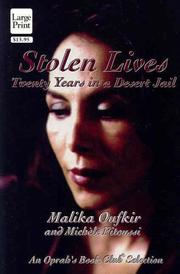
The daughter of the general who tried to kill the king in 1972, held with her family in desert prisons for twenty years from the age of nineteen. The book that broke the Years of Lead into international view.
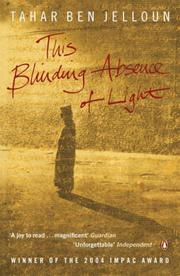
A novel built directly on a Tazmamart survivor's account of eighteen years in an underground cell. Fiction that is closer to documentary than most reporting, and it drew criticism for how it used its source — worth knowing before you read it.
A Moroccan anthropologist arguing that the country's authoritarianism draws its cultural form from the Sufi master-disciple relationship. The theoretical spine of the stage and the answer to why obedience held.
The unfinished arguments
IntermediateEnd on the two live questions. Political Islam in Morocco has been managed rather than defeated, and Western Sahara — occupied since the 1975 Green March and still without the promised referendum — is the subject on which the state permits the least dissent. Neither book is neutral, and both say so.
▸ Study plan for this stage
Pace: Two to three weeks for 772 pages, and neither book is neutral, which is the point of ending here. Howe's Morocco is 432 pages, by a journalist who covered the country from the 1950s and returned to assess Mohammed VI's early reign, the truth commission and the Islamist parties; it is reported rather
- Political Islam in Morocco as managed and incorporated rather than defeated or excluded
- The truth commission as a partial reckoning, and what it was permitted to name and to leave unnamed
- The 1975 Green March and the legal status of Western Sahara since
- Why the promised referendum has not happened, and what each party gains from the deadlock
- The monarchy's technique of reform without concession of ultimate authority
- Reading an openly committed book usefully: separating its evidence from its advocacy
- How did the monarchy absorb Islamist parties into the political system, and what did each side give up?
- What did the truth commission establish, and what remained outside its remit?
- What is the legal basis for the Moroccan claim to Western Sahara, as Zunes and Mundy present it before rejecting it, and is their presentation of it fair?
- Why has no referendum been held, and what would have to change for one to be?
- Which continuities between Hassan II's Morocco and Mohammed VI's does Howe identify, and which does she treat as genuinely broken?
- List every claim in Western Sahara that turns on a legal instrument, then check the instrument the authors cite and note what it actually says.
- Write the strongest version of the Moroccan sovereignty case using only material Zunes and Mundy themselves report, then mark where you had to go beyond them. That gap is the shape of the book's commitment.
- Take Howe's account of the truth commission and set it against Stolen Lives, then write a paragraph on what the commission's remit meant for someone with Oufkir's history.
- Write a one-page account of Morocco from the makhzen to the present using only the fourteen books on this path, and mark every point where you had to rely on a partisan source. Those marks are the honest limits of the path.
Next up: This closes the path: from dynastic foundations through the makhzen and the ungoverned mountains, into partition, independence, three decades of repression and the two arguments the Moroccan state has still not settled.
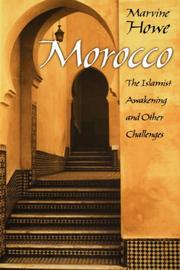
A journalist who covered Morocco from the 1950s returning to assess Mohammed VI's early reign, the truth commission and the Islamist parties. The best English bridge from Hassan II's era into the present.

Zunes and Jacob Mundy on the conflict, the Polisario, the referendum that never happened and the international law of it. Sympathetic to Sahrawi self-determination and open about that — read it knowing the Moroccan case is argued elsewhere.