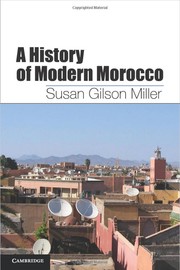
Read C. R. Pennell's short Morocco first — 222 pages, the fastest reliable route across thirteen centuries from the Arab conquest to the present. Then Susan Gilson Miller's A history of modern Morocco, the standard modern scholarly survey, beginning in the early nineteenth century and running to the Arab Spring; it is the book the rest of this path is measured against and the best account of how the monarchy survived everything.
Three books here are catalogued with the word Morocco doing most of the work, so buy by author: Pennell's short survey, his much denser Morocco since 1830 in the colonial stage, and a third book simply titled Morocco by the journalist Marvine Howe at the end. They are not interchangeable.
The organising idea is that Morocco is the one North African state never Ottoman and never fully broken by colonisation, so its history reads best as a long argument between a dynastic centre and the tribes, mountains and cities it never quite governed.
The regional frame
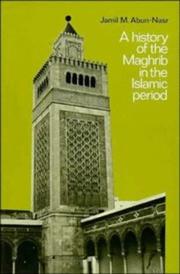
Jamil M. Abun-Nasr's A history of the Maghrib in the Islamic period is where Morocco stops looking exceptional by assertion and starts looking exceptional by comparison. Morocco only makes sense beside Algeria, Tunisia and Libya, and this is where you see why its trajectory diverged from all three. One curation note in the same spirit: a book on the Emir Abd el-Kader was considered for this path and dropped, because he led the resistance to the French in Algeria. The two histories touch — the sultan's army was defeated at Isly in 1844 after backing him — but he belongs on an Algerian list.
Before the protectorate
The Berbers, by Michael Brett and Elizabeth Fentress, covers the Amazigh peoples from antiquity onward, and is the necessary corrective to a history told only through Arab dynasties and Atlantic diplomacy.
The next two are Europeans writing inside the colonial moment, so read them for what they saw and against what they assumed. Gavin Maxwell's Lords of the Atlas tells the rise and fall of the Glaoua of Marrakesh, the mountain dynasty that ruled the south into the 1950s — vivid, partisan and gothic, and still the standard English account of how the protectorate governed through local strongmen. Walter Harris's Morocco that was is by the Times correspondent in Tangier from the 1880s, writing about a sultanate he watched being dismembered: a first-order primary source and an unembarrassed imperial one, whose every judgement is evidence about Harris.
Conquest and the colonial century
Douglas Porch's The conquest of Morocco narrates how France took the country between 1900 and 1912, through the soldiers and adventurers who did it, and is the natural sequel to Harris. Pennell's Morocco since 1830 is the full-length scholarly history and the best English treatment of the protectorate's administration and the rise of nationalism; this is the stage where you want that detail rather than the short survey's summary.
Edith Wharton's In Morocco is short, beautifully written, and an exhibit rather than an authority: she travelled as Lyautey's guest in 1917 and produced the most articulate statement of what the protectorate wanted to believe about itself.
Independence and the Years of Lead
Hassan II's Morocco means the coup attempts, the secret prisons at Tazmamart and Kelaat M'Gouna, the disappearances, and a modernising monarchy that sustained all of it for three decades. Two of the three books here are testimony from inside that system and are extremely hard reading.
Stolen Lives is Malika Oufkir's account, written with Michele Fitoussi: the daughter of the general who tried to kill the king in 1972, held with her family in desert prisons for twenty years from the age of nineteen. It is the book that broke the Years of Lead into international view. Our record is untidy — the translator Ros Schwartz sits in the author field, alongside a single string concatenating all three names — so expect the listing to look wrong even when the book is right.
Tahar Ben Jelloun's This Blinding Absence of Light is a novel built directly on a Tazmamart survivor's account of eighteen years in an underground cell. It reads closer to documentary than most reporting, and it drew criticism over how it used its source, which is worth knowing before you open it. Abdellah Hammoudi's Master and disciple supplies the analytic argument of the stage: a Moroccan anthropologist contending that the country's authoritarianism draws its cultural form from the Sufi master-disciple relationship.
The unfinished arguments
Marvine Howe's Morocco is a journalist who covered the country from the 1950s returning to assess Mohammed VI's early reign, the truth commission and the Islamist parties — the best English bridge from Hassan II into the present. Finish with Stephen Zunes and Jacob Mundy's Western Sahara, on the territory occupied since the 1975 Green March and still without the promised referendum. The authors are sympathetic to Sahrawi self-determination and say so openly; the Moroccan sovereignty case is argued elsewhere, and this list does not carry a book making it. The full ordered path is at /paths/pt_ai_the-history-of-morocco.