The history of Ghana: books to read, in order
Ghana was the first sub-Saharan colony to win independence, and its history is read across the world as a test case — of African state formation before Europe, of the Atlantic slave trade at its densest point, and of what independence could and could not deliver. This path builds the Akan and Asante world first, then the coast and the slave castles, then the British conquest, and gives Nkrumah a stage of his own in his own words before turning to what came after him and to what the return of the diaspora actually finds there.
Akan states and the Asante empire
BeginnerUnderstand that the territory had large, wealthy, administratively sophisticated states long before Britain arrived, and how gold and the forest shaped them. By the end you should be able to describe how Asante was governed, why the Golden Stool mattered constitutionally and not just symbolically, and how the coastal Ewe and Ga worlds differed from the forest interior.
▸ Study plan for this stage
Pace: Four to five weeks, and the stage that decides whether the rest of the path works. Note what this path does not have: a general one-volume survey of Ghana. The standard survey did not resolve, so you are assembling the picture from specialist monographs rather than following a narrative someone else
- Akan state formation as an act of forest clearance, with gold and labour as the constraints Wilks builds everything else on
- How Asante was actually administered: office-holding, appointment, and the road network radiating from Kumasi
- The Golden Stool as a constitutional object rather than a piece of regalia
- Asante state finance and how an inland empire paid for itself
- Factional politics inside Kumasi, and why Asante policy was never a single mind making a single decision
- The Anlo Ewe littoral as a separate trajectory with its own ecology, livelihoods and Atlantic relationship
- That 'Ghana' as a single unit is a retrospective frame: forest interior and coast were distinct worlds
- How was the Asante state governed in practice, and by what means did Kumasi transmit a decision to a province?
- What does Wilks gain by treating the clearing of the forest as an economic and political act rather than a background condition?
- In what sense was the Golden Stool constitutional, and what would its capture have meant in Asante terms rather than British ones?
- How did the Anlo coast in Akyeampong differ from the forest interior in ecology, livelihood and contact with the Atlantic?
- What kinds of evidence is Wilks working from, and where does he signal that he is inferring rather than reporting?
- Keep a running one-page glossary of the Akan political terms Wilks leaves untranslated in Forests of Gold; you will need it to get through Asante in the Nineteenth Century without stalling every few pages.
- Sketch the road system out of Kumasi as Wilks describes it, marking what each route carried, then ask what an empire held together by roads can and cannot do quickly.
- Take one chapter of Asante in the Nineteenth Century on office-holding and write a half-page summary in your own words before going on. At 800 pages, passive reading will not survive the book.
- After Akyeampong, list three things true of the Anlo coast that are false of Asante, and check whether anything in Wilks would have led you to predict them.
Next up: You now know who was inland and who was on the coast before Europe mattered, which is exactly what the next stage requires, because the slave trade on this coastline is a story about African polities trading and not only about European forts.
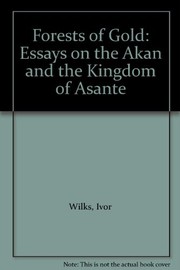
Wilks's essays on Akan state formation, the clearing of the forest, gold and labour — the shortest route into how these polities were actually built. Read it before his big book, which assumes most of it.
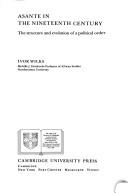
The monumental study of the Asante state at its height: its bureaucracy, roads, finances and factional politics. Long and demanding, and still the book everything else on Asante argues with.

An eco-social history of the Anlo Ewe coast from the sixteenth century onward. It is here to stop the path becoming an Asante story only — the littoral had its own trajectory and its own relationship to the Atlantic.
The Atlantic coast and the slave trade
IntermediateWork out how the Gold Coast became one of the most heavily fortified stretches of coastline on earth, what the castles were actually for, and how coastal African polities participated in and profited from the trade. The books here deliberately refuse the comfortable version in which Europeans acted and Africans only suffered.
▸ Study plan for this stage
Pace: About three weeks for 811 pages, and here the reading order is the argument rather than a convenience. Shumway's The Fante and the Transatlantic Slave Trade (244 pages) comes first because it establishes the case that the Fante coalition was itself produced by the trade, which is the claim the other
- That the Fante coalition was constituted by the slave trade rather than merely participating in it
- The forts and castles as commercial installations with accounts, staff and running costs, not simply as prisons
- The Royal African Company archive as an administrative record that documents an atrocity in the register of routine business
- The distinction between establishing African agency in the trade and using agency as exoneration, which Shumway holds carefully apart
- Smallwood's method of reading a commercial archive against itself to recover the people it recorded as cargo
- The Gold Coast's exceptional fort density, and what that concentration of European capital implies about the trade's scale here
- By what mechanism does Shumway argue the trade created the Fante coalition, and what would count as evidence against her?
- What was Cape Coast Castle for, on the evidence of its own records, and how much of its operation was storage, defence or commerce?
- How does Smallwood extract experience from documents whose authors were trying to record only quantities?
- Where do Shumway's coastal polities and Wilks's Asante meet, and who was supplying whom?
- Is there a version of this history in which Europeans act and Africans only suffer, and what specifically in these three books makes it untenable?
- Pick one document quoted in The Door of No Return, ideally an inventory or a ledger page, and write out what it records and what it silently omits. Then find the point in Saltwater Slavery where Smallwood works on the same class of document and compare her reading with yours.
- Trace one voyage or consignment as far as the three books between them allow, from the interior supply chain through the castle to the ship, noting exactly where the evidence gives out.
- Write a paragraph stating Shumway's argument about Fante agency in the strongest form you can, then a second paragraph stating what that argument does not license anyone to conclude.
- Return to your stage-one notes on Asante and mark which of its institutions look different once you have read this stage.
Next up: With the coast and the interior both in view as commercial powers, you are ready to watch Britain move from trading at the shoreline to conquering the interior, which is the whole subject of the next stage.

How the Fante coalition on the coast was itself made by the slave trade — a study of African agency in the eighteenth-century trade that is careful never to turn agency into exoneration.
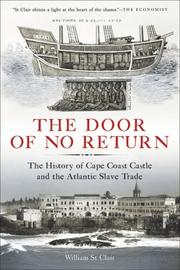
A documentary history of Cape Coast Castle built from the Royal African Company's own meticulous records. The administrative banality of the paperwork is the point.
Follows the captives from the Gold Coast forts through the Middle Passage, reconstructing the experience from the same commercial archives that tried to record only cargo. Read it directly after St Clair to see the ledgers from the other side.
Conquest and the colonial Gold Coast
IntermediateFollow the Anglo-Asante wars to the 1900 War of the Golden Stool and the annexation that followed, then see what colonial rule made of the territory — cocoa, migration, urban life and the new social forms that came with them.
▸ Study plan for this stage
Pace: Two to three weeks, 494 pages, and the two books are opposites in kind. Edgerton's The Fall of the Asante Empire (293 pages) is trade narrative military history, pacy and readable, and will go quickly; it carries the hundred-year confrontation through to Yaa Asantewaa's war in 1900 and the annexatio
- The Anglo-Asante wars as a long confrontation with a fluctuating balance of advantage rather than a foregone conquest
- The 1900 War of the Golden Stool, and why a demand to sit on the stool was a constitutional provocation and not merely an insult
- Annexation and indirect rule: what the British kept of Asante institutions and what they hollowed out
- Alcohol as a colonial revenue instrument, and taxation as the practical form colonial authority took
- Generational and gendered conflict over drink as a proxy for conflict over chiefly authority
- The gap between a military narrative and a social history, and what each can and cannot tell you about the same decades
- What actually decided the Anglo-Asante wars, and how much of the outcome was technological rather than political?
- Why did the demand for the Golden Stool provoke the response it did, and how does stage one help you answer that?
- How did colonial revenue depend on the very consumption the colonial state also tried to regulate?
- Whose authority did drink regulation contest, and what does that tell you about where power actually sat in colonial society?
- Where does Edgerton assert a motive that Wilks or Akyeampong would have argued for instead, and does the assertion hold?
- List every claim Edgerton makes about why Asante acted as it did, and check each against Asante in the Nineteenth Century. Note which survive, which are unsupported and which are contradicted.
- Build a two-column timeline for 1800 to 1900, with the military events from Edgerton on one side and the social and fiscal changes from Akyeampong on the other, and look at where the columns fail to line up.
- Take one episode of drink regulation in Akyeampong and write out who benefited, who paid and who lost authority, naming all three.
- Write a paragraph on what a reader who had only the Edgerton would believe about colonial Ghana, and what specifically Akyeampong corrects.
Next up: The colonial state you have just watched being built is the one Nkrumah inherited and intended to transform, so the next stage puts his own account of that project in front of you before anyone else's verdict on it.
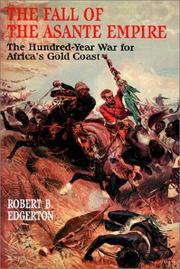
A narrative military history of the hundred-year confrontation between Asante and Britain, ending with Yaa Asantewaa's war in 1900. Accessible and pacy; take its judgements as journalism rather than as Wilks-grade scholarship.

A social history of alcohol in Ghana from the 1800s to recent decades — which turns out to be a history of chiefly authority, colonial revenue, youth, gender and protest. The best single window into everyday colonial society here.
Nkrumah, 1957, and the case for African unity
IntermediateRead the independence generation in its own words before you read anyone's verdict on it. Nkrumah's autobiography was published in 1957 to coincide with independence and is a political act as much as a memoir; Africa Must Unite and Neo-Colonialism are the programme he was actually trying to execute, and the reason he made enemies well beyond Ghana.
▸ Study plan for this stage
Pace: Four weeks for 1,044 pages, three of the four books written by Nkrumah himself. Treat those three, totalling 819 pages, as primary sources and political acts rather than as history: an autobiography written to appear on independence day, a pan-African programme, and an analysis of continued economic
- The independence-day autobiography as a founding self-portrait and a deliberate political intervention
- Pan-Africanism as an operational programme with institutional demands, not a sentiment
- The neo-colonialism thesis: formal sovereignty coexisting with continued external economic control
- Why a continental ambition made enemies both abroad and inside Ghana
- Davidson's position as a sympathetic contemporary, and what a friendly biographer will and will not press on
- The difference between what Nkrumah's programme promised and what a newly independent state could actually finance
- The 1957 moment itself: first sub-Saharan colony to independence, and what that made Ghana to the rest of the continent
- What is Nkrumah's argument in Neo-Colonialism, stated as a mechanism rather than a slogan, and what evidence does he offer for it?
- What does the autobiography claim about the road to independence, and where does Davidson's account of the same events differ in emphasis?
- Why does Africa Must Unite treat continental political union as urgent rather than aspirational?
- Which of Nkrumah's opponents at home would have read Africa Must Unite as a threat, and on what grounds?
- Where is Davidson's sympathy visible in what he chooses not to dwell on?
- Read the autobiography's account of one episode, then Davidson's account of the same episode, and write down every difference in emphasis, omission or motive attributed. This is the cheapest way to see how a memoir works.
- Extract Neo-Colonialism's central claim as a numbered chain of steps, then mark which steps rest on figures Nkrumah supplies and which rest on assertion.
- List the concrete institutions Africa Must Unite proposes, and next to each write what it would have cost and who would have had to give up authority for it to exist.
- Write half a page on how a British colonial official reading Neo-Colonialism in the mid-1960s would have responded, using only what is in the book.
Next up: You have the case in Nkrumah's own words and a friendly biographer's frame around it; the final stage brings the critique and then asks what any of this history means to the descendants of the people shipped out of the castles in stage two.

Written to appear on independence day, 6 March 1957 — the founding self-portrait of the first leader of an independent sub-Saharan state. Read it as a manifesto in memoir form.
Davidson knew Nkrumah personally and wrote this in 1973, a year after his death, as a sympathetic but not uncritical account of the whole career. The best narrative frame for the primary texts on either side of it.
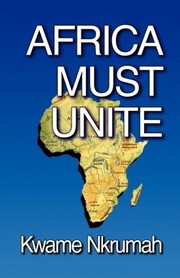
The pan-African argument at full strength, published in 1963 as the Organisation of African Unity was founded. Essential for understanding why Nkrumah's ambitions were continental and why that cost him at home.
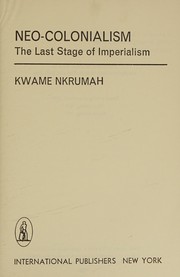
The 1965 analysis of how formal independence can coexist with continued economic control — the book that reportedly provoked a formal US protest, published the year before he was overthrown. His most influential text outside Ghana.
After Nkrumah, and the return
IntermediateClose with a retrospective assessment of Nkrumah's rule and its collapse in the 1966 coup, and then with a book that asks what Ghana is to the descendants of the people shipped out of its castles. Note that English-language scholarship on Ghana thins out sharply after 1966 — the coup years, Rawlings and the return to civilian rule are covered here mainly through these books rather than by dedicated ones.
▸ Study plan for this stage
Pace: Two weeks, 430 pages, and both books are short enough to read closely. Birmingham's Kwame Nkrumah is 142 pages, the shortest book on this path, and it is a compressed sceptical biography that weighs the achievements of the Nkrumah state against what it suppressed. Its brevity is not ease: it assumes
- The case against the Nkrumah state as Birmingham puts it: one-party consolidation, detention, and economic overreach set against real achievements
- Why a sceptical short biography reads differently after the subject's own books than before them
- The 1966 coup as the end of a project rather than merely a change of government
- Hartman's refusal of the return narrative, and what she argues the slave route offers a descendant instead
- The castles as sites of tourism and memory, and the gap between what visitors are told and what stage two established
- That this path leaves the post-1966 decades thinly covered, and that the gap is in the available literature rather than in the events
- Which of Birmingham's criticisms would Nkrumah himself have accepted, on the evidence of his own four books?
- What did the Nkrumah state build that survived it, and what collapsed with it?
- What does Hartman find at the castles that the histories in stage two did not prepare her for, and why?
- Why does Hartman reject the language of homecoming, and what does she put in its place?
- Given how little post-1966 material this path holds, what would you need to read next to close that gap honestly?
- Write two lists from Birmingham, one of achievements and one of suppressions, then annotate each entry with whether Nkrumah's own books mention it at all.
- Take the passages in Lose Your Mother set at Cape Coast or Elmina and read them directly against the corresponding pages of The Door of No Return. Note what the documentary history cannot say and what Hartman can.
- Write a one-page account of Ghana from the Asante state to the present using only the fourteen books on this path, and mark every place where you had to guess. Those marks are the shape of what this path does not cover.
- Name the specific decades and topics where you found yourself with no book, and start a short list of what you would read next.
Next up: This is the end of the path: you have gone from forest states through the Atlantic trade and colonial rule to independence, its collapse, and what the whole sequence means to the descendants of those who were shipped out, with the post-1966 decades honestly marked as unfinished business.
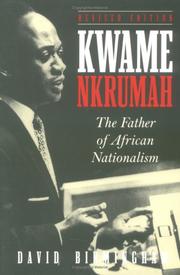
A short, sceptical biography written from outside the tradition, weighing what the Nkrumah state achieved against what it suppressed. Deliberately placed after Nkrumah's own books so you meet the critique with the case already in mind.

Hartman walks the Ghanaian slave routes as an African American historian and refuses the homecoming narrative she was offered. The hardest and best book here on what the history in the earlier stages means now, and the right place to end.
Discussion
Keep reading
Paths that share books, cover the same subject, or open a related topic.