The history of Colombia: books to read, in order
Colombia has held elections almost continuously since the nineteenth century and has been at war with itself for most of that time, which is the paradox every serious book about it tries to explain. The country produced a two-party system so entrenched that its rivalry became hereditary and then homicidal; a decade of killing in the 1940s and 1950s so total that Colombians simply call it La Violencia; a power-sharing pact that ended that war by closing politics to everyone outside the two parties; Marxist guerrillas who outlasted the Cold War that produced them; paramilitary armies raised by landowners and drug traffickers that killed more civilians than the guerrillas did; the world's most profitable cocaine industry; and a 2016 peace agreement that a national referendum narrowly rejected before congress passed it anyway. This path works through that in order — the long institutional history first, then La Violencia and the National Front, then the war and the drug economy at ground level, then the peace and its critics.
The Long View
BeginnerGet two centuries of Colombian institutional history straight before touching the violence. By the end you should be able to explain the origins of the Liberal and Conservative parties, why the country's geography made central authority weak, what the War of a Thousand Days and the loss of Panama did, and how coffee shaped the economy.
▸ Study plan for this stage
Pace: Three books. David Bushnell's The making of modern Colombia is 365 pages and Frank Safford's volume, catalogued under the bare display title Colombia and written with Marco Palacios, is 404 — 769 pages between the two we hold lengths for. Michael J. LaRosa and Pamela Murray's Colombia: a concise con
- The origins of the Liberal and Conservative parties and why the division became hereditary
- Geography as a political constraint — three cordilleras, no natural centre, and the weakness of central authority that follows
- The nineteenth-century civil wars and the constitutions that followed each
- The War of a Thousand Days and the loss of Panama
- Coffee: smallholder production, its regional base, and what it did to the economy and the parties
- Regional elites and clientelism as the working substance of Colombian politics
- Continuous elections alongside continuous armed conflict — the paradox stated precisely
- Why writing about Colombia from outside tends to begin with cocaine, and what that framing hides
- Where did the Liberal and Conservative parties come from, and what did they actually disagree about?
- How did Colombia's geography weaken central authority? Give the mechanism, not the metaphor.
- What did the War of a Thousand Days settle, and what did the loss of Panama do to Colombian politics?
- How did coffee shape the economy and the regional balance of power?
- State the paradox of elections plus war in your own words, and give the first explanation you find persuasive.
- Draw Colombia's three cordilleras and the main regional centres, and mark travel times between them as they were before air travel. Safford and Palacios's argument becomes obvious once it is on a map.
- Build a chronology of the nineteenth-century civil wars and constitutions from Bushnell, and note who won and what each constitution changed.
- Take one department and follow it through all three books — who dominated it politically, what it produced, how it voted.
- Write two paragraphs on Colombia that never mention drugs or guerrillas. If you cannot, go back to LaRosa and Murray.
Next up: With the institutional history in place, the mid-century collapse reads as the failure of a specific party system rather than as a national temperament.

The shortest reliable overview, written with Pamela Murray and deliberately resistant to the drugs-and-violence framing that dominates foreign writing about Colombia. Start here for the map.
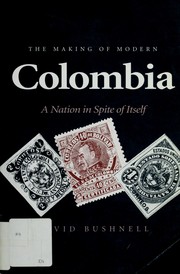
The standard English-language history, subtitled A Nation in Spite of Itself, running from independence to about 1990. Bushnell is dry and reliable, and this is the book the rest of the field assumes you have read.

Safford and Marco Palacios on how regional fragmentation shaped everything — the clearest treatment of geography as a political fact. Catalogued under the bare display title Colombia. Read it third, as the structural explanation for what Bushnell narrates.
La Violencia and the National Front
IntermediateUnderstand the mid-century catastrophe and the settlement that followed. You should be able to explain the Bogotazo of 1948, why partisan violence became rural civil war, what the 1958 National Front pact traded away, and how that closure created the guerrillas of the 1960s.
▸ Study plan for this stage
Pace: Three books, 862 pages, and they disagree with each other on purpose. Marco Palacios's Between legitimacy and violence is 310 pages and is the intellectual centre of this path: the best single interpretation of the whole modern period by a Colombian historian, arguing that the state has been permane
- The Bogotazo of 1948 and the riot that followed Gaitán's assassination
- How partisan identity became a licence for rural killing, village by village
- La Violencia's death toll and the fact that it was fought largely outside the cities
- The 1958 National Front pact: alternating presidencies, divided offices, and politics closed to everyone outside the two parties
- How that closure created the conditions for the guerrillas of the 1960s
- Palacios's semi-legitimate state — violence as politics rather than as its failure
- Hylton's continuity thesis linking mid-century violence to later paramilitarism
- Karl's counter-case: real peacemaking in the early 1960s, and the danger of reading backwards from what followed
- What happened in Bogotá in 1948, and why did the killing spread to the countryside rather than staying in the capital?
- How did partisan violence become rural civil war? Describe the mechanism at village level.
- What did the National Front trade away, and who was excluded by the trade?
- State Palacios's thesis about the Colombian state, and say what would count as evidence against it.
- Where exactly do Hylton and Karl disagree — on fact, on periodisation, or on interpretation?
- Was the guerrilla movement of the 1960s a consequence of the National Front, or would it have appeared anyway?
- Map the regions worst affected by La Violencia and compare them with the coffee zones and the party strongholds you identified in the last stage.
- Write the National Front pact out as a set of rules — who governs when, who gets which ministries, who is excluded — and then list which political actors had nowhere to go.
- Set Hylton's continuity argument and Karl's revision in two columns, listing the evidence each uses. Mark the rows where they are using the same evidence differently.
- Take one episode from the late 1950s that Karl treats as genuine peacemaking and check how Hylton handles it, or whether he does.
Next up: The interpretive frameworks are now in place; the next stage tests them against what the war did to people who had no stake in either of them.

The best single interpretation of the whole modern period by a Colombian historian: the state as permanently semi-legitimate, and violence as a form of politics rather than its breakdown. The intellectual centre of this path.

A short, hard-edged history from the left, strongest on La Violencia and on the continuity between mid-century partisan killing and the paramilitarism of the 1990s. Argumentative and worth arguing with.

The most important recent revision: Karl recovers the genuine peacemaking of the late 1950s and early 1960s, and argues that the standard account has read the failure of that moment backwards into inevitability. Read it directly after Hylton.
The War at Ground Level
IntermediateGet past the acronyms to what the conflict did to people. You should be able to distinguish the FARC, the ELN and the AUC in origin and method, explain how paramilitaries and the state were entangled, and describe how displacement rather than battlefield death became the war's characteristic harm.
▸ Study plan for this stage
Pace: Four books, 982 pages, none of them long and all of them close to the ground. Robin Kirk's More Terrible Than Death is 317 pages, a human rights researcher's account built on years of fieldwork with victims on every side, treating the drug war and the dirty war as one thing; read it first, before an
- The FARC, the ELN and the AUC distinguished by origin, base and method
- Paramilitarism as a project of landowners, cattle ranchers and traffickers, and its entanglement with state forces
- The Unión Patriótica and what its annihilation taught the guerrillas about laying down arms
- Displacement rather than battlefield death as the war's characteristic harm, and its scale
- Kidnapping and extortion as guerrilla finance, and coca taxation alongside them
- Limpieza — social cleansing — as a local practice with its own logic
- Land as the war's underlying subject, from the mid-century onward
- Reading a partisan account usefully: what Leech establishes and where his sympathies do the work
- Distinguish the FARC, the ELN and the AUC in one sentence each, by origin and by method.
- How were paramilitary groups and state forces entangled? Give the concrete forms the relationship took.
- What happened to the Unión Patriótica, and what did it teach both sides?
- Why is displacement the right measure of this war's harm rather than combat deaths?
- Where is Leech's sympathy visible, and does it damage his account of the FARC's structure and finance?
- What does Taussig's two weeks show that a national history cannot?
- Build a table of the armed actors — FARC, ELN, AUC, army — with columns for origin, base region, finance and principal victims, filled from all four books.
- Trace the Unión Patriótica from founding to destruction as a chronology, and note who was killed and by whom at each stage.
- From Kirk and Taussig, write down what a displaced family actually loses. Then find the national displacement figure and multiply the loss by it.
- Read Leech alongside one hostile account of the FARC and list the factual claims both accept.
- Return to Palacios's thesis about violence as politics and test it against Taussig's town.
Next up: You now know the war from the ground; the final stage supplies the economy that funded it and the settlement that was supposed to end it.
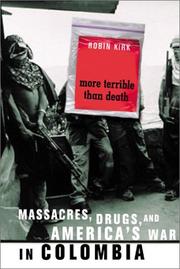
A human rights researcher's account of the drug war and the dirty war as one thing, built on years of fieldwork with victims on every side. The most humane book on this list and the right one to read before the analytical treatments.

The destruction of the Union Patriotica — the FARC's attempt at a legal political party, some three thousand of whose members were murdered — and what that annihilation taught the guerrillas about disarming. Essential background to why the 2016 agreement was so hard to sell.

A short, sympathetic-but-not-uncritical history of the guerrilla organisation itself, useful precisely because most accounts describe the FARC only from outside. Read it knowing Leech's politics are on the page.
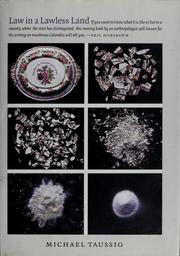
Taussig's diary of two weeks in a Cauca town during a paramilitary limpieza. Anthropology written as testimony, and the closest thing here to what the war felt like from inside a small town.
Cocaine, and the Peace
IntermediateTake up the drug economy and the 2016 agreement. You should be able to explain how the cartels of the 1980s differed from the trafficking structures that replaced them, why Plan Colombia is judged so differently inside and outside the country, and what the peace accord conceded on transitional justice and why that provoked the referendum defeat.
▸ Study plan for this stage
Pace: Three books, 1,324 pages, and the last of them is a reference to keep rather than a book to finish. Mark Bowden's Killing Pablo is 372 pages on the hunt for Pablo Escobar and is the most readable account of the Medellín cartel era; read it for the events and treat its American framing with caution,
- The Medellín and Cali cartels as vertically integrated organisations, and how they differed from each other
- What replaced them: smaller, fragmented trafficking structures less visible and no less productive
- Narco-terrorism against the Colombian state, and extradition as the issue it turned on
- Plan Colombia — its funding, its aerial eradication component, and why it is judged so differently inside and outside the country
- Coca cultivation as a peasant livelihood decision, and what substitution programmes have to overcome
- The 2016 agreement's transitional justice provisions and the objections to them
- The referendum defeat and the congressional passage that followed
- Why the Unión Patriótica's fate hung over every disarmament negotiation
- How did the cartels of the 1980s differ structurally from the trafficking organisations that replaced them?
- Why did extradition become the central political issue of the cartel war?
- How is Plan Colombia assessed inside Colombia, and how outside? Account for the difference.
- What did the 2016 accord concede on transitional justice, and what did its opponents object to?
- Why did the referendum fail, and what does it say that congress passed the agreement anyway?
- Having finished the path, answer the question the first stage posed: how has Colombia held elections continuously while at war with itself?
- Diagram the Medellín cartel's operation from Bowden — production, transport, distribution, finance — and then mark which functions survived Escobar's death.
- Read the peace-process documents in The Colombia reader and write the transitional justice provisions out in plain language, then list the objections to each.
- From García Márquez, note who was kidnapped and what each hostage was worth politically. The list is an X-ray of Colombian power.
- Trace coca cultivation figures across the Plan Colombia years and set them beside the programme's stated objectives.
- Write a one-page answer to the paradox from stage one, citing at least one book from each stage of this path.
Next up: This closes the path: two centuries of institutions, a mid-century collapse, a war fought at village level, and a peace that a country could not quite bring itself to vote for.

The hunt for Pablo Escobar, and the most readable account of the Medellin cartel era. Popular narrative with an American frame; read it for the events and take its politics with caution.

Garcia Marquez's reportage on the Escobar-era kidnappings of prominent Colombians, written as journalism rather than fiction. It conveys what the cartel war did to Bogota's political class better than any history.

The Duke reader, edited with Marco Palacios and Ana Maria Gomez Lopez — documents, testimony, fiction and images across the whole national history, including material from the peace process. The right book to finish with, and to keep.