The history of Bangladesh: books to read, in order
Bangladesh has been partitioned twice in a single lifetime — out of India in 1947 and out of Pakistan in 1971 — and almost everything contested about it descends from those two cuts. This path builds the Bengal background first, then reads 1971 as an international crisis, then spends a whole stage on the thing no survey can settle: what happened during the nine months of the liberation war, how many died, how many women were raped, and whether the word genocide applies. The books in that stage contradict each other on purpose.
Bengal before Bangladesh
BeginnerUnderstand the delta as a region with its own long history — the Islamisation of the eastern frontier, the Permanent Settlement, the Hindu-Muslim demographics of the countryside — and then watch it get cut in 1947. You should finish able to explain why the Muslim League's Bengal and Jinnah's Pakistan were never the same project.
▸ Study plan for this stage
Pace: Four weeks for 1,111 pages, and all three books are academic history, so plan for a steady 35 to 40 pages a session rather than a sprint. Van Schendel's A History of Bangladesh (400 pages) goes first because it is the only survey on the path and the rest of the reading hangs off it; it is written fo
- The delta as an agrarian and ecological region with a history independent of the imperial capitals that governed it
- Eaton's account of Islamisation on the eastern frontier as agrarian settlement rather than conquest or forced conversion
- The Permanent Settlement and the landholding structure it froze into place
- The rural Hindu-Muslim demographic pattern, and why the countryside and the cities pulled different ways
- Chatterji's case that bhadralok politics actively sought partition in Bengal
- Why the Muslim League's Bengal and Jinnah's Pakistan were never the same project
- The 1947 cut as an event with a long causal tail rather than a beginning
- What is Eaton's mechanism for Islamisation, and what evidence would falsify it?
- How did the Permanent Settlement shape who owned land and who worked it, and along which lines did that fall?
- Whose interests did partition in Bengal serve, on Chatterji's account, and what does she offer as evidence for intent rather than consequence?
- In what specific ways did Bengali Muslim political aims diverge from the all-India Muslim League project?
- Where does van Schendel's survey narrative disagree with Chatterji, and does he acknowledge the disagreement?
- Summarise Eaton's argument in five sentences without using the word conversion, then check your summary against his own conclusions.
- Take one district Eaton discusses and follow it through van Schendel into 1947, writing down what changed and what did not.
- Write the standard account of Bengal's partition in one paragraph, then Chatterji's, then list the specific pieces of evidence that would decide between them.
- Build a timeline from 1204 to 1947 with Eaton's agrarian frontier on one line and political events from van Schendel on another, and mark where they move together.
Next up: You now know why the eastern delta was Muslim-majority and how it came to be cut off in 1947, which is exactly the starting position for the next stage, where a majority province discovers what its new state intends to do with it.

The standard one-volume history in English, and unusually good on the deep background: the delta, the peasantry and the region's economy, not just the political crises. Read it first and the rest of the path has a spine.

The classic explanation of why eastern Bengal became Muslim-majority at all — agrarian expansion and frontier settlement rather than conquest or conversion by the sword. The foundation for everything that happens in 1947.
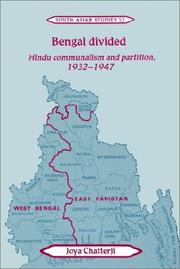
Chatterji's argument that partition in Bengal was driven substantially by Hindu bhadralok politics, not simply imposed by Muslim separatism. It reverses the intuitive story, which is why it comes before the 1947 narrative rather than after.
East Pakistan, 1947 to 1970
IntermediateFollow the twenty-four years in which a majority province became an internal colony: the language movement of 1952, the economic transfer westward, the Six Point programme, the 1970 cyclone and the election Pakistan refused to honour. Read the founding leader's own account against the scholarship and note what he leaves out.
▸ Study plan for this stage
Pace: Three weeks for 674 pages, the shortest reading load on the path, but do not let that make it a light stage. Chatterji's The Spoils of Partition (351 pages) is a dense scholarly monograph on what partition did on the ground over the following two decades, working through borders, refugee movement, p
- The 1952 language movement as the first assertion that Bengali identity was not negotiable inside Pakistan
- The economic transfer westward: how export earnings from the east financed development in the west
- The Six Point programme as a demand for autonomy that Islamabad read as secession
- The 1970 cyclone and the response that discredited the central state before the election even happened
- The 1970 election result and the refusal to honour it as the immediate trigger for what follows
- Partition's long administrative aftermath in Chatterji: borders, refugees, property and contested citizenship
- Reading a founding leader's own memoir as evidence about the leader as well as about the events
- By what specific mechanisms was wealth moved from East to West Pakistan, and how visible was the transfer at the time?
- Why did language become the first flashpoint rather than economics or representation?
- What did the Six Points actually demand, and what would Pakistan have looked like had they been granted?
- Where does The Unfinished Memoirs stop, and what does its endpoint let it avoid explaining?
- What does Chatterji show about how ordinary people experienced the border in the decades after it was drawn?
- List the Six Points in your own words and, for each, write down what power it would have taken from the centre.
- Read the memoir's account of the early 1950s alongside van Schendel's chapters on the same years and write down every event Mujib does not mention.
- Take one category of dispute from The Spoils of Partition, such as property or citizenship, and trace a single case through the book, noting who adjudicated it.
- Write a one-page brief that a Pakistani official might have written in 1970 arguing that the east had no legitimate grievance, using only the facts these two books supply, then mark every point where the brief has to distort something.
Next up: With the grievances accumulated and an election result set aside, the next stage takes what followed and reads it not as a domestic collapse but as an international crisis with Washington, Delhi, Moscow and Beijing all inside it.
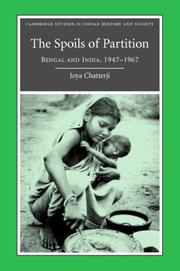
What partition actually did to Bengal on the ground over the following two decades — borders, refugees, property, citizenship. The bridge between the 1947 settlement and the grievances that produced 1971.

Bangladesh's founder writing in prison about the years up to the early 1950s, published from recovered notebooks decades after his assassination. A primary source and a national foundation document at the same time; read it as both.
1971: the war as an international event
IntermediateSee the liberation war from three vantage points at once — the global diplomatic system, the reporter who broke the story, and the White House that knew and backed Islamabad anyway. By the end you should be able to explain why Indian intervention was overdetermined and why Washington's position is documented rather than inferred.
▸ Study plan for this stage
Pace: Four weeks for 1,017 pages, and the three books could not be less alike in weight. Raghavan's 1971 (368 pages) is the modern scholarly account, built on multi-archival diplomatic history and deliberately treating the war as a global crisis rather than a South Asian one; it assumes you can hold sever
- 1971 as a crisis of the international system involving India, Pakistan, the United States, China and the Soviet Union simultaneously
- Why Indian intervention was overdetermined rather than opportunistic, in Raghavan's account
- The refugee movement as the mechanism that converted a Pakistani internal crisis into an Indian national one
- The Blood telegram itself: dissent inside a diplomatic service and what happened to the dissenters
- That the Nixon and Kissinger position is documented from their own recordings rather than inferred from behaviour
- The China opening as the strategic reason Washington needed Pakistan, and what it was willing to overlook for it
- Contemporaneous journalism as an actor in the crisis rather than a record of it
- What made Indian intervention effectively unavoidable by late 1971, and at what point did it become so?
- How did the United States weigh Pakistan against the humanitarian evidence, and in whose words is that weighing recorded?
- What did Mascarenhas report that others had not, and why did his account carry weight that other reporting did not?
- How did Soviet and Chinese positions constrain what India and the United States could do?
- Where does Bass's narrative go beyond what the tapes and cables establish, and does he flag it when he does?
- Build a month-by-month timeline for 1971 with three parallel rows: events in East Pakistan, Indian decisions, and American decisions. The gaps between rows are the argument of the stage.
- Find a specific episode reported by Mascarenhas and locate the corresponding passage in Bass and in Raghavan, then write down what each of the three does with the same event.
- Take one White House exchange Bass quotes and write out what it shows the participants knew and when they knew it, citing only the quoted words.
- State Raghavan's case for overdetermination as a numbered list of conditions, then ask which single condition, if removed, would have changed the outcome.
Next up: You now have the war as diplomacy, as reporting and as documented complicity, which is the only responsible preparation for the next stage, where the question stops being who did what internationally and becomes how many people died and how anyone can know.

The best modern scholarly account, deliberately treating the war as a global crisis involving India, Pakistan, the United States, China and the Soviet Union rather than a purely South Asian story.

The Pakistani journalist who fled to London and published the eyewitness account of the army's campaign in the Sunday Times in June 1971, then expanded it into this book. Contemporaneous testimony that changed international opinion while the killing was still going on.
Nixon and Kissinger's support for the crackdown, reconstructed from the White House tapes and the dissent cable sent by US consul Archer Blood from Dhaka. The catalogue record carries a wrong publication year; the book appeared in 2013.
Whose 1971? Testimony, numbers and the genocide question
IntermediateThis stage exists because the scale of 1971 is genuinely disputed and the dispute is bitter. Bangladesh's official figure is three million dead and roughly two hundred thousand women raped; Sarmila Bose's field research argues for numbers an order of magnitude lower and was attacked, sometimes on method and sometimes not. Read Imam and Saikia and Salik first, then Bose, and form a view about evidence rather than accepting or rejecting her wholesale.
▸ Study plan for this stage
Pace: Four to five weeks for 1,103 pages, and this stage's reading order is not a suggestion. The scale of 1971 is genuinely disputed: Bangladesh's official figure is three million dead and roughly two hundred thousand women raped, while Sarmila Bose's Dead Reckoning (288 pages) argues from field intervie
- The disputed casualty range, and the difference between a figure's political function and its evidentiary basis
- Diary and memoir as evidence of experience rather than of scale, and why conflating the two is the core error in this debate
- Saikia's method of interviewing across the border and including perpetrators, and what that design can establish that a body count cannot
- The birangona as a category created by the state, honoured in rhetoric and abandoned in practice
- Salik's position as a serving officer in the command responsible, and how to read candour and self-justification in the same text
- The specific methodological criticisms of Dead Reckoning: sampling, source selection, and reliance on military testimony
- Why the genocide question is a legal and definitional argument as well as a numerical one
- What would count as good evidence for a casualty figure in a war of this kind, and which of these four books comes closest to supplying it?
- What does Saikia's interviewing design let her establish that a survey of casualties could not?
- Where is Salik candid about the army's conduct and where does he deflect, and can you tell the difference from the text alone?
- What are the specific methodological objections to Bose's work, and which of them would change her conclusions if sustained?
- Does the genocide characterisation depend on the total, or on the pattern of who was targeted, and how do these books differ on that?
- Having read all four, what do you actually believe about the scale, and what would change your mind?
- Write down, before opening Bose, exactly what the standard account rests on: which sources, which methods, which inferences. Then read her and mark which of those supports she attacks and which she leaves untouched.
- Find at least two published academic responses to Dead Reckoning, read them against the chapters they criticise, and write half a page on whether the criticism is methodological or political in each case.
- Take one incident that appears in both Salik and one of the Bangladeshi accounts and set the two descriptions side by side, listing every factual difference and every difference of framing.
- From Saikia, write out what happened to the birangona after 1971 as a sequence of official acts, and note at each step who benefited from the designation.
- Write two paragraphs stating what you think can be established beyond dispute about 1971 and what remains genuinely open, and keep it; the final stage is about that question refusing to close.
Next up: Having seen why 1971 cannot be settled by agreement, the final stage shows the same dispute being carried forward through assassination, military rule and a set of trials held four decades later.

A Dhaka mother's diary of the nine months, including the loss of her son to the fighting. The most widely read Bangladeshi account of the war and the emotional register the statistical arguments are conducted over.
The Pakistan Army's public relations officer in Dhaka, later a prisoner of war, describing the campaign from inside the command that ran it. Self-serving in places and unusually candid in others.

Interviews with survivors of sexual violence on both sides of the border, including perpetrators, arguing that the birangona were honoured rhetorically and abandoned in practice. The book that puts women's testimony at the centre rather than in a chapter.

The most contested book on this list: Bose's interview-based revision of the casualty and atrocity record, widely rejected in Bangladesh and criticised by historians for its sampling and its handling of Pakistani military sources. Included because you cannot assess the standard account without reading its strongest challenge — and you should read the criticism alongside it.
The republic and what followed
IntermediateTrace the country from independence through the 1975 assassination of Mujib and his family, the military decades, and the long unfinished reckoning with 1971 collaborators that runs through the war crimes tribunals of the 2010s. The point of the stage is that the war never actually closed as a political question.
▸ Study plan for this stage
Pace: Two to three weeks for 581 pages, the lightest stage on the path in volume and the most political in temperature. Mascarenhas's Bangladesh is 186 pages, the shorter of his two books here, and covers the coups and assassinations between 1975 and 1981 from interviews with officers who took part; it re
- The 1975 assassination of Mujib and his family as the point at which the founding settlement collapsed
- The military decades and the pattern of coup, counter-coup and legitimation that followed
- Collaborators of 1971 and the long refusal or inability of the state to settle their status
- The war crimes tribunals of the 2010s as a legal proceeding with unmistakable partisan uses
- The politics of memory: how 1971 is invoked by each side of a later political division
- That the war never closed as a political question, which is what distinguishes Bangladesh's reckoning from a completed transition
- Who carried out the 1975 killings, on Mascarenhas's evidence, and what did they say they wanted?
- How did successive military governments position themselves in relation to 1971 and to Mujib's legacy?
- What did the war crimes tribunals establish, and what were the principal objections to their procedure?
- How does the dispute over numbers from stage four surface inside the later trials and the politics around them?
- What would closing the question of 1971 politically actually require, and is any party positioned to do it?
- Build a timeline from 1972 to the present marking every occasion on which a government revised the official account of 1971, and note what else was happening politically at each point.
- Take the officers Mascarenhas interviewed and write out their stated justifications, then compare them with what Tripathi's colonel says decades later.
- Read the tribunal chapters in Tripathi against your stage four notes on evidence and write half a page on whether the trials answered the evidentiary questions or bypassed them.
- Write a one-page history of Bangladesh using only the fourteen books on this path, marking every point where the sources conflict rather than smoothing it over. The marks are the honest state of the subject.
Next up: This ends the path: from the agrarian delta and the 1947 cut, through East Pakistan's twenty-four years, the international crisis of 1971, the unresolved argument about what happened in it, and the republic still litigating that argument today.

Mascarenhas again, this time on the coups and assassinations of 1975 to 1981, based on interviews with the officers involved. The catalogue lists it under the bare title Bangladesh.
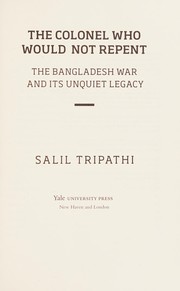
A reported history that carries the story of 1971 forward into the war crimes trials and the politics of memory, built around one of Mujib's unrepentant killers. The right book to end on because it shows the past still being litigated.