Willem van Schendel's A history of Bangladesh is the place to start: the standard one-volume history in English, written for a general reader, and unusually strong on the delta, the peasantry and the economy rather than only the political crises. It is the spine the rest of the reading hangs from.
Bangladesh has been partitioned twice in a single lifetime — out of India in 1947 and out of Pakistan in 1971 — and almost everything contested about the country descends from those two cuts. This list builds the Bengal background first, reads 1971 as an international crisis second, and then spends a whole stage on what no survey can settle: what happened during the nine months of the liberation war, how many died, how many women were raped, and whether the word genocide applies. The books in that stage disagree with each other on purpose.
Bengal before Bangladesh
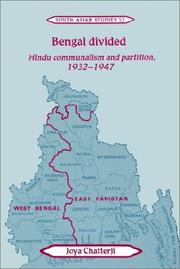
Richard M. Eaton's Rise of Islam and the Bengal Frontier, 1204-1760 is the most demanding book on the list and the foundation for everything after it: a scholarly monograph arguing that eastern Bengal became Muslim-majority through agrarian expansion and frontier settlement rather than through conquest, worked out from land grants, revenue records and settlement patterns. Joya Chatterji's Bengal Divided comes third and is the argumentative one, holding that partition in Bengal was substantially driven by Hindu bhadralok politics rather than simply imposed by Muslim separatism. Reading it after Eaton means you meet its reversal of the intuitive story already knowing how the demographics it depends on came about.
Chatterji's The spoils of Partition then follows what partition actually did on the ground over the next two decades — borders, refugees, property claims, citizenship. Sheikh Mujibur Rahman's The unfinished memoirs, written in prison and published from recovered notebooks long after his assassination, is a primary source and a national foundation document at once. It stops well before the crisis it is usually read to explain, so fill the gap to 1970 — the Six Point programme, the cyclone, the election Pakistan refused to honour — from van Schendel.
1971 as an international event
Srinath Raghavan's history of the year, titled simply 1971, is the best modern scholarly account, deliberately treating the war as a global crisis involving India, Pakistan, the United States, China and the Soviet Union. Anthony Mascarenhas's The Rape of Bangladesh is the contemporaneous counterweight: the Pakistani journalist who left the country to publish an eyewitness account of the army's campaign while the killing was still going on. Gary J. Bass's The Blood telegram reconstructs Nixon and Kissinger's support for the crackdown from the White House tapes and the dissent cable sent by the US consul in Dhaka. Our catalogue record for it carries an incorrect publication year, so do not take a date from the listing — and as a general rule, take publication years on this subject from the book in your hand rather than from any catalogue entry.
The numbers, and the dispute about them
Bangladesh's official figures are three million dead and roughly two hundred thousand women raped. Sarmila Bose's Dead reckoning argues from field interviews for numbers an order of magnitude lower. The book was widely rejected in Bangladesh and has been criticised by historians over its sampling and its handling of Pakistani military sources; it is included here with that published criticism attached, because you cannot assess the standard account without reading its strongest challenge, and you cannot assess the challenge without the responses to it. Neither the official figure nor Bose's revision is presented on this list as settled.
Read the other three first. Jahanara Imam's Of Blood and Fire is a Dhaka mother's diary of the nine months, including the loss of her son — the most widely read Bangladeshi account, and evidence of experience rather than of scale. Siddiq Salik's Witness to Surrender is the view from inside the command that ran the campaign, by the Pakistan Army's public relations officer in Dhaka, later a prisoner of war: self-serving in places and unusually candid in others. Yasmin Saikia's Women, war, and the making of Bangladesh is the most methodologically careful, built from interviews with survivors of sexual violence on both sides of the border and with perpetrators, and arguing that the birangona were honoured rhetorically and abandoned in practice. All four deal in detail with mass killing and sexual violence.
The path closes with Mascarenhas's second book, catalogued under the bare title Bangladesh, on the coups and assassinations of the following decade, and Salil Tripathi's Colonel Who Would Not Repent, which carries 1971 forward into the war crimes tribunals of the 2010s. The war never closed as a political question.
The full sequence with study plans is at /paths/pt_ai_the-history-of-bangladesh.