The Grishaverse Reading Order: Where to Start
The question people actually ask about the Grishaverse is whether they can skip the Shadow and Bone trilogy and go straight to Six of Crows, because that is the duology everyone recommends. You can — Six of Crows is designed to be readable cold — but you shouldn't. Leigh Bardugo's first trilogy is the weaker writing and the better groundwork: it establishes what Grisha are, what the Fold is, and, crucially, who the Darkling is, and Six of Crows spends its political capital on assuming you know. Read in publication order, which is also chronological order, and treat the first trilogy as a hundred pages of setup that happens to be three books long. King of Scars then requires both, and the illustrated side books can be read whenever.
Start Here: The Shadow and Bone Trilogy
BeginnerLearn the world — Grisha orders, the Fold, Ravka's politics — and meet the antagonist every later series is measured against.
▸ Study plan for this stage
Pace: 3 weeks, one book a week. Shadow and Bone is 352 pages, Siege and Storm 431, Ruin and Rising 427 — all fast YA fantasy that an adult reads in three or four evenings each. Push through book one even if the prose feels thin; it is the shortest of the three and the one carrying the most world-building
- The Grisha orders and the Small Science: Corporalki (Heartrenders and Healers), Etherealki (Squallers, Inferni, Tidemakers) and Materialki (Durasts and Alkemi), plus the amplifier system that lets a Grisha exceed her natural limit
- The Shadow Fold as both a physical barrier splitting Ravka and the plot device that makes a Sun Summoner the most valuable person alive
- Ravka's geopolitics — the First and Second Armies, the throne, and the borders with Fjerda, Shu Han and Kerch — all of which Six of Crows will refer to without explaining
- The Darkling: the antagonist every later book measures itself against, and the reason reading the trilogy first matters more than any plot point in it
- Alina Starkov as an unusually passive protagonist for the first book, and the way Bardugo's handling of her changes across the three
- Sturmhond's arrival in book two, which is the single most consequential thing in the trilogy for later reading — his identity reveal is the setup for a whole later duology
- The Saints and their relics, which read as decorative here and become structurally important in King of Scars
- Publication order equals chronological order for the main line, which makes the sequencing question simpler than in most fantasy series
- Name the three Grisha orders and their sub-types. Which order does Alina belong to, and why is that unprecedented?
- What is an amplifier, what does using one cost, and what rule about amplifiers is established in book one and broken later?
- Who is Sturmhond, and at what point in Siege and Storm does the book tell you? Why is that reveal the reason nobody should skip book two?
- The Darkling's stated goal is to unify and protect Ravka. Where does the trilogy show that motive as sincere, and where as pretext?
- The love triangle is widely called the weakest element of the trilogy. What is it doing structurally, and does the ending justify it?
- Draw the map of Ravka and its neighbours from the descriptions in the trilogy: the Fold, Os Alta, Novokribirsk, the True Sea, Fjerda, Shu Han, Kerch and Novyi Zem. You will need the same map for Six of Crows and King of Scars, so make it a reference sheet.
- Build a character sheet as you read: name, Grisha order, allegiance, and status at the end of the trilogy. Add a column for 'appears again in' and leave it blank for now.
- Write 300 words on the rules of the Small Science as the trilogy establishes them — what a Grisha can do, what she cannot, and what it costs. Then check that list against Six of Crows and note every rule the later books bend.
- After finishing Ruin and Rising, write a 200-word summary of Ravka's political situation as of the last page. Keep it: Six of Crows opens with that situation already assumed.
Next up: You now know what Grisha are, who the Darkling was, and what state Ravka is in — which is precisely the knowledge Six of Crows spends none of its pages establishing.

Book one and the right starting point despite its reputation. An orphan mapmaker turns out to be the Sun Summoner and is taken to court. The prose is plainer than the later books and the love triangle is the least interesting thing in it — read it for the world, which every other Grishaverse book charges you for later.

Second, and a big improvement: Sturmhond arrives and takes over the book, which matters enormously for King of Scars. Second, non-negotiably — the identity reveal here is the trilogy's best.
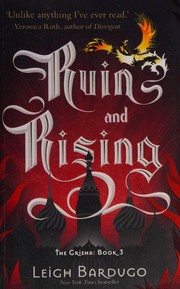
Third, closing the trilogy and settling the Darkling. Third: King of Scars is unreadable without its ending, and Six of Crows quietly assumes the political situation it leaves behind.
Six of Crows
IntermediateRead the duology the series is famous for, with the world knowledge that lets its heist plot move at full speed.
▸ Study plan for this stage
Pace: 2–3 weeks. Six of Crows is 512 pages and Crooked Kingdom 584, and they are one story split across two volumes — do not stop between them or leave a gap. Both are denser than the trilogy and reward slower reading; the heist plotting rewards paying attention to what each POV character is not telling y
- Six points of view — Kaz, Inej, Jesper, Nina, Matthias, Wylan — with the withheld-information structure that makes the heist work: Bardugo shows you a character's actions before their reasoning
- Ketterdam and Kerch as a mercantile setting entirely unlike Ravka: the Barrel, the gangs, the Merchant Council, and money rather than magic as the operating force
- Jurda parem as the plot engine and the escalation of the magic system — a drug that multiplies Grisha power and destroys the user, which changes the strategic value of every Grisha alive
- The Ice Court as a heist target and the structural pleasure of a plan revealed in reverse
- Nina and Matthias as the Grisha–drüskelle pairing that carries the Fjerdan material, and why their conflict only lands if you know what Grisha are from the trilogy
- Kaz Brekker as a protagonist built on withheld backstory, and the way Crooked Kingdom pays it out
- The Ravkan politics the duology name-drops — the Second Army, the throne, the Fold's aftermath — which are references rather than explanations
- Crooked Kingdom's returning trilogy characters, whose appearances are cameos to a cold reader and payoffs to one who read in order
- How does Bardugo structure the reveal of the heist plan? Find a point where she shows you an action whose purpose is withheld, and identify the chapter where it pays off.
- What does jurda parem do, and why does its existence change the geopolitical value of every Grisha in the world?
- Nina and Matthias begin as enemies for reasons rooted in Fjerdan doctrine. What is the drüskelle order, and what does the trilogy tell you about it that this duology assumes?
- Which characters from the Shadow and Bone trilogy appear in Crooked Kingdom, and what does each appearance mean to a reader who has read the trilogy versus one who has not?
- Six of Crows is frequently recommended as a standalone entry point. Make the strongest case for that, then the strongest case against, using specific passages.
- Reconstruct the Ice Court heist as a plan document: objective, team, roles, the sequence of steps, and the three contingencies. Then mark which steps the reader was told about in advance and which were withheld.
- Keep a per-chapter POV log for Six of Crows: whose head, what they know that the reader does not, and what the reader knows that they do not. The pattern is the book's technique.
- Add every Crows character to the character sheet you started in stage one, and fill in the 'appears again in' column for the trilogy characters now.
- Write 400 words on the difference between Ravka and Ketterdam as settings — economy, government, attitude to Grisha — and what Bardugo gains by moving the series to a mercantile city.
Next up: Both casts are now established, which is the exact precondition for the duology that merges them.
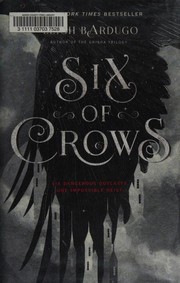
Fourth by publication and the best book in the Grishaverse: six criminals, an impossible prison break, and six points of view that all earn their place. It can be read first, but it name-drops Ravkan politics and Grisha orders as though you already know them — because after three books you do.

Fifth, and the direct conclusion — one story split across two volumes, so do not stop between them. It also brings characters from the first trilogy back in a way that only pays off if you read that trilogy.
King of Scars
IntermediateRead the duology that merges both casts and closes the Grishaverse's main line.
▸ Study plan for this stage
Pace: 3 weeks. King of Scars is 528 pages and Rule of Wolves 616 — the longest and most crowded books in the Grishaverse. Reread your Ravkan political summary from stage one before starting; King of Scars picks up threads from Ruin and Rising that have been dormant for two books.
- Nikolai Lantsov as king, and the consequence of the trilogy's ending that he has been carrying since — the reason this duology could not have been written before it
- The three-strand structure: Nikolai and Zoya in Ravka, Nina undercover in Fjerda, and the interleaving that only converges late
- Zoya Nazyalensky promoted from a secondary antagonist in the trilogy to a co-protagonist, which is the clearest reward for having read the earlier books
- The Saints, the Sun Summoner cult and in-world religion moving from set dressing to plot mechanism — this is where The Lives of Saints becomes genuinely useful
- Nina's Fjerdan storyline as the direct continuation of the Crows material, so that skipping the duology leaves half of King of Scars unmotivated
- The Fjerdan war and Shu Han's Grisha experimentation, escalating jurda parem's consequences from Six of Crows
- Rule of Wolves resolving threads from all six preceding novels, which is why it is crowded and why it does not work as an entry point under any circumstances
- The deliberate merging of the two casts, and how Bardugo handles readers who came in through only one of them
- What is Nikolai carrying at the start of King of Scars, where did it come from, and which earlier book do you need to have read to understand it?
- Zoya is unlikeable in the trilogy and a co-lead here. What does Bardugo change, and what does she leave intact?
- Trace Nina's arc from Six of Crows through Crooked Kingdom into King of Scars. What would a reader who skipped the Crows duology be missing?
- How do the three narrative strands converge, and at what point? Is the convergence earned or engineered?
- Rule of Wolves resolves threads from six novels. Pick three and say which book each originated in.
- Build a thread-tracking table before you start: list every unresolved plot thread from the trilogy and from the Crows duology, then tick each off as Rule of Wolves addresses it. The blank rows at the end are as informative as the ticked ones.
- Write 400 words on Zoya as she appears in Shadow and Bone and as she appears in Rule of Wolves, citing a scene from each. This is the single best demonstration of what reading in order buys you.
- Map Nina's Fjerdan chapters onto your Ravka map, marking the locations and the war's front line as it moves.
- After finishing, write a 500-word answer to the question the path opened with: could you have read Six of Crows first? Now that you have read everything, argue it from evidence rather than from advice.
Next up: The main line is complete; what remains is the illustrated material, which is optional and reads best knowing everything you now know.
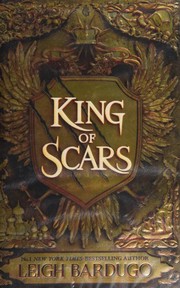
Sixth, following Nikolai after the first trilogy with a subplot carried over from the Crows. This is the book that makes reading everything in order worthwhile — it is written for a reader who has done both.

Seventh, the direct conclusion, and the most crowded book Bardugo has written. Seventh and last in the main line — it resolves threads from all six previous novels.
Side Reading
IntermediatePick up the illustrated companions, none of which are required and all of which read better late.
▸ Study plan for this stage
Pace: A week, in any order, and genuinely optional. The Language of Thorns is 304 illustrated pages, The Lives of Saints 128, and Demon in the Wood 112 as a graphic novel. All three are short, physically handsome and worth owning in print rather than digitally — the marginal illustration in Thorns is part
- The Language of Thorns as in-world folklore: six fairy tales the characters in the novels would have grown up on, which retroactively deepens the cultural background
- The Too-Clever Fox as the clearest case for reading late — it turns on a character from the Crows material and is a joke told to someone who has met him
- Bardugo's fairy-tale mode, which is closer to Angela Carter than to the novels' prose and shows a register the main line does not use
- The Lives of Saints as a hagiography of the saints invoked casually throughout the novels, and its direct usefulness alongside King of Scars where the Saints become plot-relevant
- The unreliability built into The Lives of Saints — it is an in-world religious text, not an authorial statement of fact, and reading it as canon misses the point
- Demon in the Wood as a graphic-novel prequel about the Darkling as a boy, whose entire effect depends on the reader's settled feelings about him
- The illustration in all three as part of the text rather than decoration, particularly Thorns's borders which change as each story progresses
- Read The Too-Clever Fox and identify the character it is about. What is the story doing that only works for a reader who has finished Crooked Kingdom?
- Which stories in The Language of Thorns are retellings of tales you recognise, and what does Bardugo change in each?
- The Lives of Saints is written as an in-world devotional text. Where can you see it being unreliable, and how does that unreliability pay off in King of Scars?
- Does Demon in the Wood change your reading of the Darkling? Should a prequel be able to, and does that depend on when you read it?
- Read The Language of Thorns once for the stories and once watching the illustrated borders, which change as each tale progresses. Write 200 words on what the second reading added.
- Cross-reference The Lives of Saints against King of Scars: for each saint invoked in the novel, find the entry and note where the two accounts differ.
- Write your own short in-world folk tale, 500 words, set in Ravka or Fjerda and consistent with the rules of the Small Science you catalogued in stage one. It is the fastest way to find out how carefully Bardugo built the system.
- Complete your character sheet from stage one across all nine books, then write a one-page recommended reading order for the next person, with your own reasoning for each placement.
Next up: The Grishaverse is finished; the obvious next moves are Bardugo's adult fantasy in Ninth House, or other heist-shaped fantasy in the vein of Six of Crows.
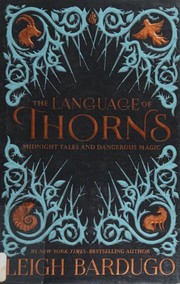
Six fairy tales from inside the world, illustrated in the margins. Genuinely optional, but read The Too-Clever Fox after Six of Crows rather than before — it is doing a joke about a character you have not met yet.

A short in-world hagiography of the saints named all over the novels. Purely a companion piece; best used as a reference alongside King of Scars.
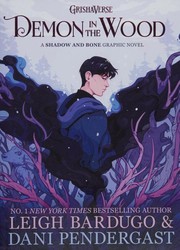
A graphic novel prequel about the Darkling as a boy. Read it after Ruin and Rising at the earliest — it is entirely dependent on how you feel about him by then.