The Folk of the Air Reading Order: Where to Start with Holly Black
The Folk of the Air is three novels — The Cruel Prince, The Wicked King, The Queen of Nothing — and reading them in order is not negotiable, because each ends on a reversal the next opens by paying off. What actually confuses people is everything around the trilogy. There are two novellas, one of which spoils the second book if read early and one of which is a coda that spoils the third; there is a later duology set in the same Elfhame after the trilogy ends; and there is an entirely separate, much older Holly Black faerie sequence from the early 2000s that shares the world's logic but not its characters. This path takes the trilogy first, places the novellas and the duology correctly around it, and only then goes back to the Modern Faerie Tales, which are darker, grubbier and written for a different decade.
The trilogy, in order
BeginnerRead the three core novels in the only order they work in, and understand why each ending forces the next book
▸ Study plan for this stage
Pace: Three to four weeks for 1,038 pages — The Cruel Prince at 370, The Wicked King at 332, The Queen of Nothing at 336. These are fast books with short chapters and a great deal of dialogue; 70 to 80 pages an evening is normal, and many readers finish each in three or four sittings. The order is not neg
- Three novels, publication order, no alternatives: The Cruel Prince, The Wicked King, The Queen of Nothing. Everything that confuses readers about this series is the material around it rather than the trilogy itself.
- The premise: a human girl raised in the High Court of Faerie by the man who murdered her parents sets out to make herself indispensable to a people who despise her and cannot be legally harmed by her.
- The Folk cannot lie. That single rule generates most of the plotting in all three books — every threat, promise and insult is technically true, so the reading skill the series teaches is listening for what a true sentence is being used to conceal.
- Jude's mortality is her disadvantage and her weapon. She can lie, she can be killed easily, and she ages; the trilogy is an extended argument about which of those matters most.
- The last thirty pages of The Cruel Prince contain the reversal the whole trilogy is built on. Going in unspoiled is worth more here than on almost any comparable series.
- The Wicked King is the shortest and fastest of the three and covers a year and a day of Jude holding power she cannot publicly claim. The time limit is the plot.
- The Queen of Nothing resolves the exile and the crown in the shortest space of the three, which some readers find abrupt. Knowing that in advance makes it read better.
- Cardan is not a redemption arc in the usual shape. Black withholds his interiority almost entirely across the trilogy, which is why the novellas exist and why one of them is placed where it is.
- The Folk cannot lie. Find three places where a character deceives someone anyway, and describe the mechanism each time.
- What does Jude actually want in The Cruel Prince — safety, power, or belonging? Does the book think she knows?
- What is the reversal at the end of the first book, and what did you miss on first reading that made it possible?
- Why a year and a day? What does the deadline do to the structure of The Wicked King?
- Madoc raised Jude and murdered her parents. How does the trilogy handle that without either excusing him or discarding him?
- Is the resolution of The Queen of Nothing earned, given how little space it takes? Point to what does the work.
- For the first hundred pages, write down every promise or oath a faerie character makes and its exact wording. By the second book you will be catching the loopholes before Jude does.
- After the reversal at the end of The Cruel Prince, go back to three earlier scenes and reread them. Black plays fair; the evidence is there and finding it is the pleasure the series is designed for.
- Track what Cardan does versus what he says across all three books. He is the case study in how the no-lying rule can be used to hide everything that matters.
- Keep a note of the Courts and their allegiances as they appear. The political map is what the sequel duology later runs on.
- Write a one-sentence prediction after The Wicked King's last page. Comparing it with what happens is the cleanest measure of how well Black has trained you to read her.
Next up: The trilogy leaves two large gaps on purpose — Taryn's side and Cardan's interior — and the two novellas fill exactly those, if they are read in the right places.

The starting point. A human girl raised in the High Court of Faerie by the man who murdered her parents decides to make herself indispensable to a people who despise her. Its last thirty pages contain the reversal the whole trilogy is built on — go in unspoiled and read it first.
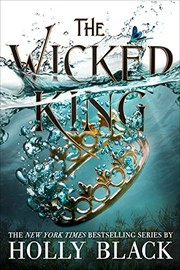
Second, and the shortest and fastest of the three: Jude holding power she cannot admit to, for a year and a day. It ends on the series' most-discussed betrayal, so read it directly before the third rather than leaving a gap.
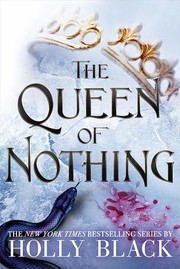
The conclusion, which resolves the exile and the crown in about two hundred and fifty pages. Read it immediately after The Wicked King; it assumes the sting of that ending is still fresh.
The two novellas, placed correctly
BeginnerFit the short companion volumes in without spoiling either the second or third novel
▸ Study plan for this stage
Pace: Two sittings, and the two pieces are nothing alike in size. The Lost Sisters is 26 pages — twenty minutes, read in one go — and it belongs between The Cruel Prince and The Wicked King, not before and not after. How the King of Elfhame Learned to Hate Stories is 200 pages of illustrated vignettes, wh
- The Lost Sisters is Taryn's account of the events of The Cruel Prince, written as a letter to Jude. At 26 pages it is a single sustained act of self-justification.
- Its position is doing real work. Read after The Cruel Prince, it recontextualises a betrayal you have just experienced from the inside; read before, it simply announces that the betrayal is coming.
- It is also the series' clearest demonstration of an unreliable narrator who is not lying — Taryn is human and can lie, but the interest is in how much she manages without it.
- How the King of Elfhame Learned to Hate Stories collects vignettes from Cardan's childhood, illustrated throughout, plus one scene set after the trilogy's end.
- That final scene is why it is a coda rather than a companion. Reading it before The Queen of Nothing gives away the state of things at the end of the trilogy.
- The childhood material is the only sustained access to Cardan's interiority in the whole sequence, which is precisely what the trilogy withholds. It is optional and it is the single largest addition to the reading experience available.
- Illustrated pages read at a different rate from prose pages. A 200-page illustrated collection is an evening, not a week, and budgeting it as a novel is a common mistake.
- What does Taryn's letter ask of Jude, and does the text think she is entitled to ask it?
- Taryn is human and can lie. Where in The Lost Sisters do you think she does, and what tells you?
- How does reading Taryn's version change the first book's central betrayal? Does it make her sympathetic, or only legible?
- What do the Cardan vignettes explain about his behaviour in The Cruel Prince, and does explanation make him easier to read or harder?
- The final scene is set after the trilogy. What exactly would it have spoiled if read early?
- Are either of these necessary? Make the case for and against each.
- Read The Lost Sisters in one sitting the day you finish The Cruel Prince. Twenty minutes in the right place is worth more than an hour in the wrong one.
- Underline every sentence in the letter that could be true and misleading at once. Taryn's rhetoric is the human counterpart to the Folk's technical honesty.
- In the illustrated collection, read one vignette, then find the scene in the trilogy it explains. Doing this three or four times is the whole value of the volume.
- Note how Cai's illustrations handle Cardan's face across the collection. The visual arc is doing narrative work the prose deliberately does not.
Next up: With the trilogy and its two satellites complete, the story continues eight years on with the characters the earlier books kept in the background.
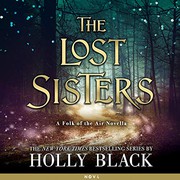
Taryn's side of the first book, written as a letter to Jude. Read it between The Cruel Prince and The Wicked King and it recontextualises a betrayal you have just experienced; read it any earlier and it simply gives that betrayal away.
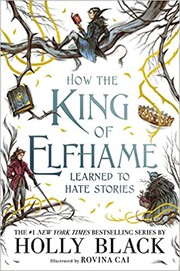
An illustrated collection of vignettes from Cardan's childhood plus a scene after the trilogy's end. That last section is the reason it must come after The Queen of Nothing — it is a coda, not a companion.
The Elfhame duology that follows
BeginnerContinue into the sequel series set in the same court with a new pair of protagonists
▸ Study plan for this stage
Pace: Two to three weeks for 726 pages — The Stolen Heir at 368 and The Prisoner's Throne at 358 — at the same fast pace as the trilogy, so about ten days each. The one scheduling rule here is blunt: these two are one book split in half. The Stolen Heir ends on a cliffhanger and hands the point of view to
- The duology is set eight years after the trilogy and follows Suren, the child queen of the Court of Teeth glimpsed in the earlier books, and Oak, Jude's younger brother.
- It is a genuine sequel rather than a spin-off. The political settlement reached at the end of the trilogy is the situation these books are about, so it depends on the trilogy in a way the novellas do not.
- The two volumes split the point of view: Suren narrates The Stolen Heir, Oak narrates The Prisoner's Throne. The second is deliberately a re-reading of the first from the other side.
- That structure is why the cliffhanger works. What looks like a reversal at the end of the first book turns out to be a scene you had only half of.
- Suren's situation is the darkest material in the sequence — a queen made and unmade by her parents as an instrument — and Black treats it as damage rather than as backstory.
- Oak's charm functions the way Cardan's cruelty did: as a surface the reader is invited to mistake for the person. Black is running the same trick with the opposite affect.
- Reading these makes the trilogy retrospectively larger, because the Court of Teeth material that felt like set dressing turns out to have been a second story running alongside.
- What does the eight-year gap let Black do that a direct continuation could not?
- How is Suren's relationship to power different from Jude's? Both are outsiders in Elfhame — what kind of outsider is each?
- The point of view switches between the volumes. Name one scene that reads completely differently the second time you have it.
- Oak is charming and Cardan was cruel. What is Black doing with each surface, and which is harder for a reader to see through?
- Does the duology need the trilogy? Test it: what would a reader starting here fail to understand?
- Before starting, write down the political settlement at the end of The Queen of Nothing — who rules what, and who was left unresolved. The duology assumes all of it.
- After The Prisoner's Throne, go back to the cliffhanger of The Stolen Heir and read the corresponding chapter of the second book against it. That pairing is the duology's central trick.
- Track every mention of the Court of Teeth in the original trilogy. It is a short list and it turns out to be the seed of two more novels.
- Compare Suren's first chapter with Jude's first chapter in The Cruel Prince. Both are children in danger and the two voices are constructed very differently.
Next up: Elfhame is Black's second faerie world; the earlier one is harsher, contemporary and where the logic of the Courts was worked out.

Eight years after the trilogy, following Suren — the child queen of the Court of Teeth glimpsed in the earlier books — and Oak. It reads as a genuine sequel rather than a spin-off, and it depends on knowing how the trilogy ended, so take it fifth.

The second half of the duology, told from Oak's point of view and picking up directly from The Stolen Heir's cliffhanger. The two are one book split in half; do not start the first unless you intend to read this one.
The earlier Faerie books
IntermediateGo back to Black's first faerie sequence and see the harsher, contemporary version of the same world
▸ Study plan for this stage
Pace: Five to six weeks for 1,322 pages — Tithe at 320, Valiant at 320, Ironside at 330 and The Darkest Part of the Forest at 352. They read a little slower than Elfhame, partly because the early prose is denser and partly because the contemporary settings do less hand-holding, so 50 to 60 pages an evenin
- Tithe, from 2002, is Black's debut and the book that established the ruthless-Courts logic Elfhame inherits: a sixteen-year-old drifting around the New Jersey shore discovers she is a changeling being lined up as a sacrifice.
- The contemporary setting is the difference that matters. These faeries operate in car parks, diners and squats, and the collision with ordinary life is the source of the horror rather than court politics.
- The tone is markedly harsher than Elfhame. Elfhame is dangerous and glamorous; the Modern Faerie Tales are dangerous and grubby, and the human characters have far less power.
- Valiant is a near-standalone about a runaway living in the New York subway and serving a troll, and it is the strongest of the three on its own terms. Its characters reappear in Ironside.
- Ironside returns to Kaye and resolves the quest set up at the end of Tithe, which is why the three read best in this order despite Valiant's independence.
- The Darkest Part of the Forest is the bridge between Black's two faerie worlds: a town that has learned to live beside the Folk, a boy asleep in a glass coffin, and a courtly cruelty that is recognisably Elfhame's.
- Reading these makes the trilogy look less like an invention and more like a refinement. Almost every rule Elfhame runs on is present here in rougher form.
- What is the tithe, and what does making the sacrifice a changeling let Black do that a human sacrifice would not?
- How does the contemporary setting change the balance of power between human and faerie characters compared with Elfhame?
- Valiant is the least connected of the three and often called the best. What does its independence buy it?
- What does The Darkest Part of the Forest share with The Cruel Prince — setting, structure, or attitude?
- Which rules of Faerie are constant across all of Black's books, and which did she change for Elfhame?
- The Modern Faerie Tales are considerably grimmer. Is that a difference of audience, of period, or of intent?
- Make a list of Faerie's rules as Tithe states them, then check each against the trilogy. The overlap is large and the three or four changes are deliberate.
- Read the opening chapter of Tithe and the opening chapter of The Cruel Prince consecutively. Twenty years of a writer's development are visible in the space of ten pages.
- Note where Valiant is set and how much of its danger is not faerie at all. Black is working two threats at once and the human one is often worse.
- After The Darkest Part of the Forest, write down three things that later became Elfhame. This is the exercise that makes the whole stage worth the five weeks.
Next up: Faerie is Black's home ground; the last stage is what she does when she leaves it, including her first book written for adults.
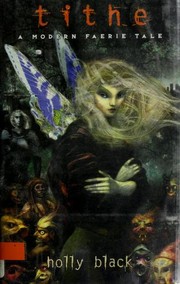
Her 2002 debut and the opening of the Modern Faerie Tales: a sixteen-year-old drifting round the New Jersey shore discovers she is a changeling being lined up as a sacrifice. Far grimmer and more contemporary than Elfhame, and the book that established the ruthless-Courts logic the later trilogy inherits.
A near-standalone second volume about a runaway living in the New York subway and serving a troll, and the strongest of the three on its own terms. Read it second; its characters reappear in Ironside.
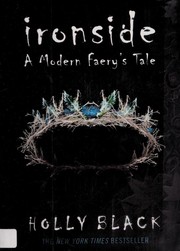
The conclusion of the Modern Faerie Tales, returning to Kaye and resolving the quest set at the end of Tithe. The three are usually sold as one omnibus, but they resolve individually, so read them in this order.

The bridge between the two faerie sequences — a town that has learned to live beside the Folk, a boy in a glass coffin, and the courtly cruelty that would become Elfhame. Read it last of this stage; it is the closest in tone to The Cruel Prince.
Black outside Faerie
IntermediateRead the three books that show what she does with other material, including her first novel for adults
▸ Study plan for this stage
Pace: Four to five weeks for 1,063 pages, and the three books here are pitched at three different readers, so the pace varies more than on any other stage. The Coldest Girl in Coldtown is 419 pages of fast, propulsive horror at 70 pages an evening. Doll Bones is 244 pages of middle-grade prose and can be
- The Coldest Girl in Coldtown is her best standalone: vampires quarantined in walled cities that livestream their own parties, which turns infection into a media spectacle.
- It is a complete tonal departure from Faerie and the right first stop for a reader who wants Black's ruthlessness without the Courts.
- Doll Bones is a Newbery Honor middle-grade novel about three friends on a road trip with a bone-china doll that may be haunted, and about the precise age at which pretending stops being socially permitted.
- It is much younger than everything else on this path and the most quietly serious thing on it — the horror is real, and the subject underneath it is the end of childhood play.
- Book of Night is her first adult novel: a con artist in a world where shadows can be detached, altered and sold. The scheming-protagonist instinct from Elfhame with the age of the reader raised.
- The shadow conceit is doing what the no-lying rule did in Elfhame — a single hard magical constraint that generates the plotting rather than decorating it.
- Across all three, the constant is a protagonist who survives by managing other people's perception of her. That is the same subject as Jude, in three different genres.
- The range is the point of this stage: middle-grade, young adult horror and adult fantasy, and the sentence-level voice is recognisably one writer in all three.
- What does making vampirism a livestreamed spectacle add to a story that a private infection would not?
- Doll Bones is about children who are being told to stop playing. How does the ghost plot carry that argument rather than just accompanying it?
- How do the rules of shadow magic in Book of Night constrain the plot? Name a scene that only works because of a limit.
- Compare Charlie in Book of Night with Jude. What has changed now that the reader is assumed to be an adult?
- Which of these three is furthest from her faerie work, and what has still carried over?
- Read Doll Bones in a single sitting and then write down what frightened you. Most readers find it was not the doll.
- For each of the three, write the one hard rule its world runs on — infection, the doll's provenance, the shadows. Black always has one, and listing them across her whole catalogue is the sharpest way to see her method.
- Take a paragraph of Doll Bones and a paragraph of Book of Night. The vocabulary changes completely and the sentence rhythm barely moves, which is what a voice is.
- Having finished the path, write a three-sentence recommendation covering where to start, what order the Elfhame material goes in, and which single non-Faerie book to add. That is the practical product of the whole reading.
Next up: That closes the path — the trilogy read unspoiled, its satellites placed where they belong, and Black's other worlds read against it.

Vampires quarantined in walled cities that livestream their own parties — the best standalone she has written and a complete tonal departure. A good first stop after Elfhame if you want more of the ruthlessness and none of the faeries.

A Newbery Honor middle-grade novel about three friends on a road trip with a bone-china doll that may be haunted, and about the exact age at which pretending stops being allowed. Much younger than the rest of this path and the most quietly serious thing on it.
Her first adult novel — a con artist in a world where shadows can be altered and sold. Read it last: it is where the Elfhame instinct for scheming protagonists goes when the reader is assumed to be an adult, and it is the least like everything else here.
Discussion
Keep reading
Paths that share books, cover the same subject, or open a related topic.