Holly Black books in order: where to start with The Folk of the Air
Holly Black has written at least four separate faerie universes and readers routinely start in the wrong one. The Folk of the Air is the series people mean when they say Holly Black now, and The Cruel Prince is genuinely the right first book — but the older Modern Faerie Tales, the standalone vampire novel and the Curse Workers trilogy are all separate worlds that share only a sensibility. This path reads Elfhame in order first, then works outward, and says at each point how the worlds do and do not connect.
Start Here: The Folk of the Air
BeginnerRead the trilogy that made her a bestseller, in publication order, and meet Elfhame — the setting that every later book of hers now assumes.
▸ Study plan for this stage
Pace: 3-4 weeks. The Cruel Prince 370pp, The Wicked King 332pp, The Queen of Nothing 336pp and How the King of Elfhame Learned to Hate Stories 200pp — about 1,240 pages of fast young-adult fantasy, and most readers do a book in two or three sittings. Read the trilogy consecutively; The Wicked King ends on
- Elfhame's rules: the High Court, the gentry, and the mortal's position inside a faerie hierarchy
- Faeries cannot lie, which is the constraint every plot in the series is built to exploit
- Jude as a mortal with no magic in a world of it, and power gained through mortality rather than despite it
- Enemies-to-lovers as structure rather than flavour — the antagonism is the plot, not a delay before the romance
- World-building delivered through action rather than exposition, which is why this trilogy works as an entry point
- Cardan's perspective withheld until the companion volume, and what that withholding does to the trilogy
- The trilogy as a complete story: everything after it is expansion, not resolution
- How does the rule that faeries cannot lie generate plot rather than merely constrain it? Find three scenes that depend on it.
- What does Jude actually have that the faerie court does not, and when does she first use it deliberately?
- How does Black deliver Elfhame's political structure without a single expository passage — what carries the information instead?
- Why does How the King of Elfhame Learned to Hate Stories only work after the trilogy, and what specifically would it spoil?
- The Queen of Nothing closes the story. What is left genuinely open, and is any of it load-bearing?
- Keep a list of every statement a faerie makes that is technically true and functionally a lie. By book three the list is long enough to read as a technique manual.
- Track Cardan across all three books noting only his actions, ignoring what Jude thinks of him. Then read the companion volume and compare; the gap between the two readings is the trilogy's central trick.
- Mark the exact point in The Cruel Prince where you understood the court's political structure, then go back and find the scenes that taught it to you. None of them stop the story to explain.
- Reread The Cruel Prince's opening chapter after finishing The Queen of Nothing. It reads as a different book, and identifying why is the best possible summary of the arc.
Next up: The duology returns to Elfhame years later with a character the trilogy left in the background, so the emotional weight is entirely borrowed from what you have just read.

A mortal girl raised in the faerie court by the man who murdered her parents. This is the correct first Holly Black for almost everyone: the world-building is delivered through plot rather than exposition, and it establishes Elfhame, which the next five books all sit inside.
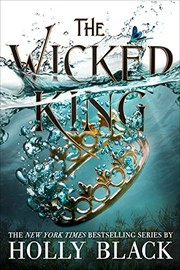
The middle book, and the one that turns the series from court intrigue into a genuinely tense power struggle. Read it immediately — it ends on the sharpest cliffhanger of the three.
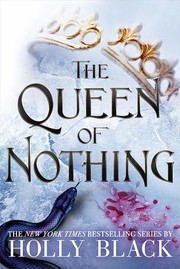
Closes the original trilogy. Stop here and you have a complete story; everything after this is optional expansion rather than unfinished business.
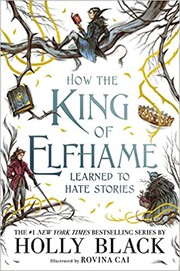
An illustrated companion of short pieces from Cardan's point of view, filling in his childhood. Read it after the trilogy, never before — several of the stories only land if you already know how he turns out.
Staying in Elfhame
BeginnerFollow the sequel duology and see how the same world reads with a different protagonist and a lower-court setting.
▸ Study plan for this stage
Pace: 1-2 weeks. The Stolen Heir 368pp and The Prisoner's Throne 358pp, and they must be read back to back — they are one story split in two, and the first ends without resolving. Set eight years after the trilogy, in the lower courts rather than the High Court.
- Suren as protagonist: the changeling queen from the first trilogy, and what her history makes the book about
- The lower and wild courts as a different register from the High Court's political intrigue
- Dual-perspective duology structure — Suren's book and then Oak's, covering overlapping ground from opposite sides
- Oak grown up, and how the trilogy's minor characters carry the sequels
- Whether a sequel series can function as an entry point in theory but not in effect, which is the case here
- Neglect and captivity in Suren's backstory as the emotional engine, established in the earlier books rather than here
- What does the reader know about Suren from the trilogy that The Stolen Heir assumes rather than restates?
- How does the switch to Oak's perspective in the second book change your reading of events you have already seen?
- What does the wild-court setting allow that the High Court did not?
- The Stolen Heir is marketed as a possible entry point. Argue against that from specific scenes.
- How does Black handle a protagonist who is not Jude — what carries over in the voice, and what does not?
- Before starting The Prisoner's Throne, write down what you believe Oak's motives were in the first book. Checking that against his narration is the whole design of the duology.
- List every reference in The Stolen Heir to events from the original trilogy and note which are explained and which are not. The unexplained ones are the argument for reading order.
- Compare Suren's narrative voice with Jude's over ten pages each. Black is doing something deliberately different and it is easy to miss while reading fast.
- After both books, decide whether the duology adds to the trilogy or merely extends it, and defend the answer with two scenes.
Next up: Elfhame is now complete, and the older faerie books show where its tone came from — a separate universe with much rougher edges.

Set eight years later and centred on Suren, the changeling queen from the first trilogy. It works as an entry point in theory, but the emotional weight of who Suren is depends entirely on the earlier books, so read it fifth.

The second half of the duology, told from Oak's side. The two books are one story split in two, so read them back to back.
The Older, Meaner Faerie Books
IntermediateRead the Modern Faerie Tales, the early-2000s urban-faerie sequence that established the tone Elfhame later refined, and understand why it feels different.
▸ Study plan for this stage
Pace: 2-3 weeks. Tithe 320pp, Valiant 320pp and Ironside 330pp — about 970 pages, all fast. Read Tithe, then Valiant, then Ironside; Valiant sits sideways to the other two and Ironside is Tithe's direct sequel. These are early-2000s urban fantasy and are noticeably harsher than the Elfhame books: Valiant
- The Modern Faerie Tales as a separate universe from Elfhame, sharing faerie logic and nothing else
- Urban faerie: the Folk in New Jersey and New York rather than in a court, which changes the power dynamics entirely
- The Seelie and Unseelie courts as Black used them before inventing Elfhame's structure
- Early-2000s young-adult fiction's willingness to be grimy, and how the moment shows on the page
- Kaye as changeling — the same mortal-among-faeries premise handled with less control than in The Cruel Prince
- Valiant as the strongest of the three on its own terms despite being the least connected
- Reading a debut as the raw version of a sensibility later refined
- What does Tithe do with the changeling premise that The Cruel Prince does differently, and which is more effective?
- How does the urban setting change what faeries can threaten and what they can offer?
- Why is Valiant the strongest of the three, and what does it gain from being loosely attached to the others?
- What plot does Ironside resolve that Valiant sidesteps, and does the sequence work?
- These books are twenty years older than Elfhame. Which of the differences are the author maturing and which are the publishing moment?
- Put the opening chapter of Tithe beside the opening chapter of The Cruel Prince. Same premise, sixteen years apart; list five specific craft differences.
- Track how each of the three books handles exposition about faerie rules. Black gets much better at this over her career and the improvement is visible within this trilogy alone.
- Read Valiant on its own terms without referring back to Tithe, then note where the connections actually mattered. The answer is: rarely, which is the point of its placement.
- Identify the tonal register Tithe establishes that survives into Elfhame — the cruelty, the bargains, the unsentimental Folk — and find its clearest instance in each series.
Next up: With two faerie universes read, the standalones show what Black does when she is not building a world to return to.
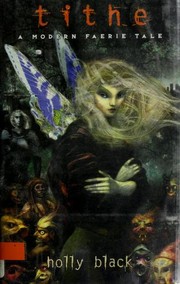
Her 2002 debut, and a separate universe from Elfhame despite the shared faerie logic. Grittier and much more of its moment — read it as the raw first draft of the sensibility The Cruel Prince perfects.
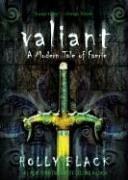
A companion novel with a new protagonist in the New York faerie underground, connected to Tithe only glancingly. Second because it is the strongest of the three on its own terms.
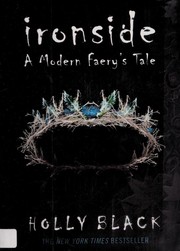
The direct sequel to Tithe and the closing volume of the sequence. Read it last of the three; it resolves the plot Valiant deliberately sidesteps.
The Standalones
BeginnerTry the two books that need no series commitment at all, either as an alternative starting point or as a palate cleanser between sequences.
▸ Study plan for this stage
Pace: 1-2 weeks. The Darkest Part of the Forest 352pp and The Coldest Girl in Coldtown 419pp. Neither requires anything else and they can be read in either order or singly. The Coldest Girl in Coldtown is the darker of the two, opening in the aftermath of a massacre, and it deals throughout with infection
- The self-contained faerie novel: Fairfold's uneasy coexistence with the Folk, resolved within one book
- A town that has learned to live beside the Folk, which inverts the outsider-enters-faerie premise of everything else here
- Vampires quarantined in walled Coldtowns that livestream their own decadence — a different mythology entirely
- Infection as narrative structure, and the countdown it imposes on the protagonist
- Black's voice separable from her worlds, which is exactly what these two books test
- Standalone pacing: a complete arc in one volume rather than an arc distributed across three
- What does Fairfold's arrangement with the Folk allow that a faerie court cannot, dramatically?
- How does Coldtown's media-saturated setting function as more than a gimmick?
- Tana's infection gives the plot a clock. How does Black use it structurally, chapter by chapter?
- Reading these two, what is recognisably Black regardless of the mythology?
- Which would you hand to someone who liked The Cruel Prince, and which to someone who did not?
- Read The Darkest Part of the Forest immediately after Ironside and note how much better controlled the same material is. This is the clearest single before-and-after on the path.
- In Coldtown, mark the interstitial chapters and diary fragments and work out what each is doing to the pacing. Black uses a structural device here she does not use elsewhere.
- List the elements common to both standalones despite the different mythologies — the bargains, the unreliable beautiful figure, the sibling bond. The overlap is Black's actual signature.
- Write a paragraph on whether you like her voice or only her world. These two books are placed here precisely as that test.
Next up: Having established that the voice travels, the last stage removes the faeries entirely and puts her in a con-artist crime novel.

A self-contained faerie novel set in a town that has learned to live beside the Folk. The best single-volume way into her faerie writing if you do not want to start a trilogy, and it shares no continuity with Elfhame.

Vampires rather than faeries, quarantined in walled cities that stream their parties online. Entirely disconnected from everything else she has written, which is exactly why it is a good test of whether you like her voice or only her world.
The Curse Workers
IntermediateFinish with the con-artist trilogy that shows her working in a completely different register, and see the range her faerie books hide.
▸ Study plan for this stage
Pace: 2-3 weeks. White Cat 310pp, Black Heart 304pp, and Red Glove between them (the catalogue record for Red Glove carries no page count; it is comparable in length). Read them consecutively and closely — the con-trick structure depends on holding details from earlier books, and skimming defeats the plot
- Curse work as illegal magic in an alternate America, and organised crime built on it
- Magic with hard rules and a cost — every curse has blowback — which is a different design from faerie bargains
- The con narrative: the reader is being played alongside the characters, and the structure depends on it
- Cassel as an unreliable narrator whose unreliability is partly imposed on him
- Memory alteration and consent as the trilogy's real subject beneath the heist plotting
- Family as criminal organisation, which is the register faerie court politics translates into here
- Black's range: the same interest in bargains and coercion, worked in a genre with entirely different furniture
- How do the rules of curse work generate plot, and how does the blowback mechanic constrain what characters will do?
- Where in White Cat does the con turn on the reader rather than on a character, and did you catch it?
- Red Glove turns the series into a murder investigation. What does that structural shift do to the con framework?
- What is the trilogy actually about once you strip out the heists?
- Having read all five sequences, what is constant in Black's work regardless of genre?
- Reread White Cat's first chapter after finishing it. Everything you need is there and almost none of it is legible on a first pass; this is the standard test of a con narrative and Black passes it.
- Keep a list of every curse worker's specialty as it is introduced, since the plots turn on who can do what. The books assume you are tracking this.
- For each book, write down what Cassel believes at the start and what turns out to be true. The three-book pattern is the trilogy's shape in miniature.
- Compare a bargain scene from The Cruel Prince with a curse-work deal in Black Heart. Same author, same preoccupation, different rules — and the comparison is the best answer to what Holly Black actually writes about.
- If this register suits you better than Elfhame, Black's adult debut Book of Night is the natural next step and can be read straight on from here.
Next up: This is the end of the path: the faerie universes, the standalones and the crime trilogy are all in place, and her adult novels are the obvious next move.
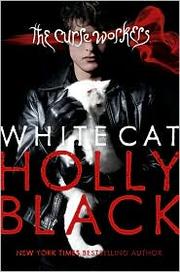
An alternate America where curse work is illegal and organised crime runs on it, narrated by a teenage grifter. Save it until you know her faerie books, because the pleasure is discovering how different she is when the magic has rules and a mob attached.

The middle book, which turns the series into a murder investigation. Read straight on from White Cat; the con-trick structure depends on remembering the details.

Closes the trilogy. Her adult debut Book of Night, another crime-adjacent magic novel, is the natural next step from here if this register suits you better than Elfhame.
Discussion
Keep reading
Paths that share books, cover the same subject, or open a related topic.