Dragonlance Reading Order: Where to Start
Dragonlance is roughly 190 novels by dozens of authors, and that number is the reason most people never start. The answer is simpler than the shelf suggests: there is a spine, and it is six books by Margaret Weis and Tracy Hickman — the Chronicles trilogy, which is the story of the War of the Lance, and the Legends trilogy, which is Raistlin Majere's, and which almost everyone considers the better half. Read those six and you have read Dragonlance; everything else is optional. This path takes that spine first, then adds the small number of Weis and Hickman books that genuinely extend it — Raistlin's own early life, the immediate aftermath of the war, the later Chronicles retold from the gaps — and deliberately leaves the shared-world spin-offs alone.
Chronicles: the War of the Lance
BeginnerRead the founding trilogy and meet the Companions, who are the reference point for every other Dragonlance book ever written.
▸ Study plan for this stage
Pace: Five to six weeks for 1,231 pages — Dragons of Autumn Twilight 447, Dragons of Winter Night 400, Dragons of Spring Dawning 384 — at a fortnight a book, and they read faster than that once the party is assembled. Read them consecutively; this is one continuous war story and the volumes do not stand a
- The Companions as the setting's fixed reference point — every one of the hundreds of later Dragonlance books assumes them
- The War of the Lance as the founding event the whole shared world dates itself against
- Tabletop origins visible in the structure: episodic quests, a party that splits, set-piece locations
- The party fracturing in the middle volume, which is where the trilogy stops being a game and starts being a story
- Raistlin Majere moving from sidekick to centre of gravity, the single most important development in the six-book spine
- Dragons and the lost gods of Krynn as a setting premise rather than set dressing
- Why roughly 190 Dragonlance novels do not mean 190 books to read
- What can you tell about the tabletop campaign from the first hundred pages, and does knowing that help or hurt the reading?
- Where does the party fracture in Dragons of Winter Night, and what has each member chosen?
- At what point does Raistlin become the most interesting person in the book, and what does Weis do to make that happen?
- The war is won by the end. What has it cost, and does the trilogy count the cost honestly?
- If someone read only Dragons of Autumn Twilight and stopped, what would they have wrongly concluded about the series?
- Keep a Companions sheet: name, race, allegiance and where each one is at the end of every volume. Six books and a wider shelf of spin-offs all key off this cast, and the sheet is what makes any of it navigable.
- Mark the chapters that read like game sessions and the chapters that do not. The proportion shifts across the trilogy and watching it shift is the most interesting thing about Chronicles as a book.
- Track every reference to Huma, the Knight of Solamnia the Chronicles keep invoking. You will read his own novel in stage three and the list is what makes it land.
- After Dragons of Spring Dawning, write one line on what you think Raistlin wants. Keep it — the next trilogy is the answer.
Next up: The Companions are established and Raistlin has become the reason to keep reading, which is exactly the position the Legends trilogy needs you in.
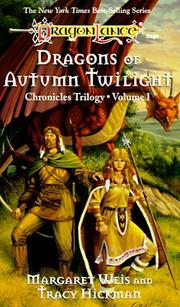
The 1984 novel that launched the entire setting, written with Tracy Hickman from a tabletop campaign — which is visible in its structure and is part of its charm. It is the only correct starting point, and the friends who reunite in its first chapter carry the next five books.
The middle volume, where the war turns serious and the party fractures. Read it second; it is where Raistlin stops being a sidekick and starts becoming the reason to keep going.

The conclusion of the war and of the Chronicles. The catalogue record for this one credits an audio narrator and a comics adapter alongside Weis and Hickman and carries a junk year; it is the 1985 novel.
Legends: the better trilogy
BeginnerRead the three books most Dragonlance readers name as the reason the setting is remembered at all.
▸ Study plan for this stage
Pace: Five to six weeks for 1,256 pages — Time of the Twins 456, War of the Twins 400, Test of the Twins 400. Read them straight through and read them directly after Chronicles: this trilogy requires the first one and repays it immediately, and it is where the writing gets good. It is also the natural sto
- Raistlin's bid to become a god, and a plot in which the protagonist's success would be the catastrophe
- Time travel used for moral argument rather than for adventure — Istar before the Cataclysm as a place the reader knows is doomed
- Caramon as the trilogy's actual centre: the brother whose dependence is the story's real subject
- A protagonist you are asked to follow rather than to like, committed to fully in the middle volume
- The Cataclysm and the absent gods, explained by being witnessed instead of narrated
- What Legends proves the setting was capable of, against its tie-in origins
- Why this is a stopping point: the ending the whole shared world is built around
- What does Raistlin actually want, and how close is it to what you wrote down after Chronicles?
- Whose trilogy is this — Raistlin's or Caramon's? Point to the structural evidence rather than the title.
- Istar is doomed before the characters arrive. What does that foreknowledge do to the tension?
- Where does War of the Twins ask you to stop rooting for Raistlin, and did you?
- Test of the Twins is called the setting's best ending. What makes an ending good in a shared world designed never to end?
- Read all three with no other book between them. Legends was written as one arc and its middle volume is the weakest thing in it if read in isolation.
- Update the Companions sheet — several of them are barely present here, and noticing who Legends drops is part of understanding what it is doing.
- Compare a page of Time of the Twins with a page of Dragons of Autumn Twilight. The same authors, and a visible difference in control; being able to name the difference is worth more than any review.
- After Test of the Twins, decide deliberately whether to continue. Stopping at six books is the recommended ending of this path and everything after it is genuinely optional.
Next up: With Raistlin's ending known, the books about his beginning can do the only thing they were written to do — be read by someone who already knows how it turns out.
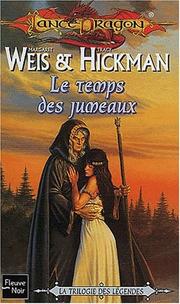
Raistlin's bid to become a god, and a time-travel plot that puts him and his brother Caramon in Istar before the Cataclysm. It requires Chronicles and repays it immediately — this is where the writing gets good.
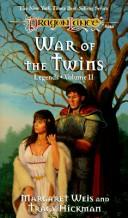
The middle book, and the one that commits fully to Raistlin as a protagonist you are asked to follow rather than to like. Read it directly after Time of the Twins.
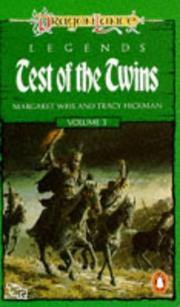
The ending the whole setting is built around, and the book that makes the case that Dragonlance was capable of more than its tie-in origins suggest. It is the natural stopping point if you read nothing else.
Before the Chronicles
IntermediateFill in Raistlin's early life and the deep history of Krynn, which is where the setting's best non-Chronicles books live.
▸ Study plan for this stage
Pace: Six to eight weeks for 1,190 pages: The Soulforge 352, Brothers in Arms 456 and The Legend of Huma 382. Read the two Raistlin books first and in that order — The Soulforge covers his childhood and the Test in the Tower of High Sorcery, and Brothers in Arms is its direct sequel, with the twins as you
- The Test in the Tower of High Sorcery as the event Chronicles never explains and this book exists to show
- A prequel written for readers who know the ending, and what that permits it to leave unsaid
- The twins as young mercenaries, and the origin of a dependence the Legends trilogy turns into its subject
- Huma and the deep history of Krynn: the legend the Chronicles constantly cite without narrating
- A different author in the same world — how the shared world reads when it is not Weis and Hickman
- How to sample 190 novels: one representative book chosen for a reason rather than a reading list
- What does The Soulforge explain about Raistlin, and does the explanation diminish him?
- Brothers in Arms shows the twins before the Chronicles. Which of their later dynamics is already fixed and which is not?
- Having read The Legend of Huma, what were the Chronicles actually invoking every time they named him?
- How does Knaak's Krynn differ from Weis and Hickman's, and is the difference authorial or structural?
- Do the prequels make Legends better or merely longer? Answer for each of the two.
- Check the Huma references you listed in stage one against the novel. Watching a running allusion turn into a book is the best reason to read this one here.
- Read the Test sequence in The Soulforge and then reread the corresponding hints in Dragons of Autumn Twilight. The prequel is answering specific lines.
- After The Legend of Huma, decide whether you want more of the shared world. If the answer is no, you have lost nothing — that is the question this book was placed here to settle.
- Add the young twins to the Companions sheet as a separate column. The distance between the two versions of Caramon is the whole path in one comparison.
Next up: Raistlin's story is now complete in both directions, which is the position from which the post-war books and the retold gaps can be judged on their own merits.
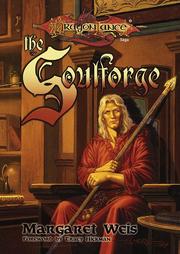
Raistlin's childhood and the Test in the Tower of High Sorcery, written a decade after Legends and squarely for readers who already know how he ends. Read it after Legends, never before.
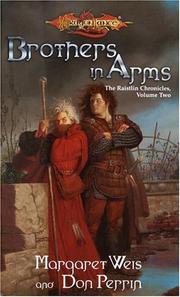
Raistlin and Caramon as young mercenaries, written by Weis with Don Perrin, and the direct sequel to The Soulforge. The catalogue display title is truncated mid-series-tag; it is the 1999 novel.

The one book outside the Weis and Hickman line that a spine reader should not skip: the Knight of Solamnia whose story the Chronicles constantly invoke, set centuries earlier. It is also a fair sample of what the wider shared world is like at its best.
After the war, and the Chronicles retold
IntermediateSee how the setting continued, and read the late books that go back and fill the gaps the original trilogy skipped.
▸ Study plan for this stage
Pace: Two and a half to three months for 2,228 pages, the longest stage on the path, and it is a sampler rather than an obligation. Read in this order. The Second Generation is a 352-page story collection following the Companions' children and works as a hinge — short, and it sets up what follows. Dragons
- A generation on: the Companions' children as the setting's attempt to continue past its own ending
- Deliberately breaking a shared world, and why Dragons of Summer Flame divides readers who agree on everything else
- The changed Krynn of the War of Souls, and what a setting loses when its founding conditions are removed
- Retroactive gap-filling: books written to sit inside a trilogy published decades earlier
- The missing stretch of Dragons of Spring Dawning, and what Raistlin was doing in it
- Closing the loop on the character the whole spine belongs to, which is why the Lost Chronicles come last here
- How to leave a 190-book setting: at a character's ending rather than at the shelf's
- What does The Second Generation establish that Dragons of Summer Flame then requires?
- Dragons of Summer Flame breaks the world on purpose. Was the break necessary, or was it a way out of a setting with nowhere left to go?
- Is the War of Souls' Krynn recognisably the same place as the Chronicles'? Name what survived.
- The Lost Chronicles were written long after the books they sit inside. Do they read as continuous with them, or as commentary on them?
- Dragons of the Hourglass Mage fills a gap you did not know was there. Was it a gap, or a silence that worked?
- Having read the whole path, what would you now tell someone who says Dragonlance is 190 books?
- Read Dragons of the Hourglass Mage with Dragons of Spring Dawning open beside you and line up the two timelines. It is the only book on the path that requires a second book in front of you, and it is the payoff of the whole stage.
- Close the Companions sheet after The Second Generation and read it from the beginning. Six books plus the extensions on one page is the arc, and no single volume shows it.
- Before committing to the rest of the War of Souls, finish Dragons of a Fallen Sun and write two lines on whether you want the changed world. This stage was built so that decision gets made deliberately.
- Write the recommendation you would now give a newcomer: which books, in what order, and where to stop. That short list is the deliverable of this path, and it should be much shorter than the shelf.
- Pick the book in this stage you would cut and say why. A setting this size needs readers who can prune it.
Next up: This is the end of the path: the six-book spine is read, its genuine extensions are placed, and the hundreds of shared-world spin-offs have been left alone on purpose.
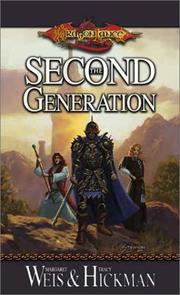
A story collection bridging Legends and what comes after, following the Companions' children. Read it here as the hinge — it is short, and it sets up Dragons of Summer Flame.
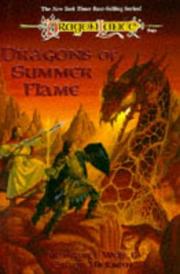
The book that ends the age, and the most divisive thing Weis and Hickman wrote for the setting. Read it knowing that it deliberately breaks Krynn, which is why the novels after it feel like a different world.

The opening of the War of Souls trilogy, set in the changed world after Summer Flame and generally judged the last strong Weis and Hickman sequence. Read it to decide whether to continue into the two books that follow it.
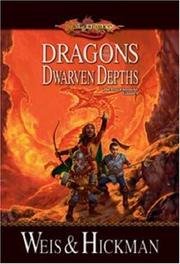
The first of the Lost Chronicles, written twenty years later to fill a gap the original Chronicles skipped over. The record carries the Lost Chronicles volume tag in its display title. Read it only after Chronicles, whose events it sits inside.

The Lost Chronicles volume covering what Raistlin was doing during the missing stretch of Dragons of Spring Dawning, which makes it the most worthwhile of the three. A good final book: it closes the loop on the character the whole spine belongs to.