The Deed of Paksenarrion Reading Order: Where to Start
Elizabeth Moon's Paksenarrion books are usually sold as a single fat omnibus called The Deed of Paksenarrion, which is why new readers are unsure whether they are picking up one book or three. They are three: Sheepfarmer's Daughter, Divided Allegiance and Oath of Gold, published in 1988 and 1989 and collected shortly after. Read in order they are one continuous story of a sheepfarmer's daughter who runs off to join a mercenary company and ends up something else entirely, and the first book's long, unglamorous stretch of drill and marching is the thing that makes the rest work — Moon served in the Marine Corps and it shows. This path reads the trilogy first, then places the Gird prequels and the five-book sequence Moon returned to twenty years later.
The trilogy itself
IntermediateRead the three novels that make up the Deed, in order, and understand why the slow military opening is load-bearing rather than a hurdle.
▸ Study plan for this stage
Pace: Two to two and a half months for 1,535 pages — Sheepfarmer's Daughter 512, Divided Allegiance 522 and Oath of Gold 501, three almost identically sized novels, so three weeks each is an even pace. Buy once and read carefully: these three are usually sold as a single fat omnibus called The Deed of Pak
- Military routine written from the inside — drill, marching, logistics, pay — and why the trilogy needs it before it needs any magic
- A mercenary company as an institution with rules, and the difference between a soldier and an adventurer
- Paks's move from soldier to something else, which the trilogy earns rather than announces
- Gods, granges and paladins as a working religious infrastructure rather than a backdrop
- The failure at the end of Divided Allegiance, and a trilogy structured so that its middle book breaks its protagonist
- Oath of Gold as an answer to a specific question the second book asked, which is why it makes no sense alone
- Competence and endurance as the trilogy's real subjects, against a genre that usually prefers talent
- What does the long training section actually teach you about Paks that a summary of it would not?
- How does the mercenary company function as an institution — pay, discipline, contracts — and how does that change what a battle means?
- Where does Divided Allegiance stop being a story about a soldier?
- What exactly fails at the end of the second book, and what does Oath of Gold have to do to answer it?
- Paks is not conspicuously gifted. What makes her the protagonist?
- Read the first hundred pages without skipping the routine. If you find yourself skimming a march, stop and note what the passage is doing — this is the trilogy's most misunderstood section and its foundation.
- Keep a note of every rule the company operates by. When Paks leaves it in book two, that list is what she is measured against.
- Do not pause between Divided Allegiance and Oath of Gold. If you must, write down first what you expect the third book to fix — and check the guess afterwards.
- Check what you are buying. The omnibus and the three separate volumes are the same 1,535 pages, and confusing them is the most common purchasing mistake with this trilogy.
Next up: The religion Paks lives inside has been treated throughout as settled scripture, which is precisely what makes the books about the man behind it work as revelation rather than exposition.
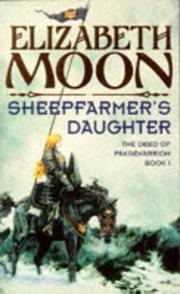
The first book, and the only place to start. It is famously unhurried — recruit training, marches, camp routine, pay parades — and that accumulated ordinariness is exactly what gives the later books their weight. If you buy the omnibus edition, this is where it begins.
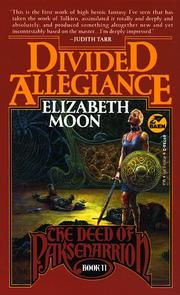
Paks leaves the company and the book widens into a world of gods, granges and paladins. It is also the volume that goes darkest, and it ends in a failure the third book has to answer. Read it second, without a gap.
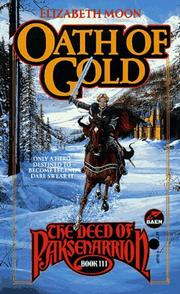
The conclusion, and the reason the trilogy has the reputation it does. It resolves what happened at the end of Divided Allegiance and contains the sequence readers remember decades later; it makes no sense read alone.
The prequels — read second, not first
IntermediateFill in the history the trilogy treats as scripture, in the position where it works as revelation rather than exposition.
▸ Study plan for this stage
Pace: Six to eight weeks for 976 pages: Surrender None 505 and Liar's Oath 471, read in that order. Chronologically they come first by centuries — Surrender None is the life of Gird, the peasant revolutionary the trilogy's whole religion is built on — and that is exactly why they belong fourth and fifth.
- Gird as a man rather than a saint, and the distance between a life and the liturgy made out of it
- A peasant revolution with its economics visible: who eats, who is taxed, what a rising actually costs
- Luap's compromise as the sequel's subject — what happens to a movement after the founder
- Hagiography as a process the reader watches happen, having already read its finished product
- Why chronological order would destroy the effect these books were built for
- The difference between a prequel that explains and one that reframes
- Packaging traps: one pair of novels, two names on the shelf
- Which specific element of the trilogy's religion do you now read differently, and what did Gird actually do?
- What does Surrender None show about the rising that the trilogy's version of it leaves out?
- Is Luap a villain, a realist or a failure? Liar's Oath declines to settle it — say where you land and why.
- What would a reader who took these first have missed, precisely?
- How does a movement's founding story get simplified? Point to the mechanism in these two books.
- Before starting Surrender None, write out everything the trilogy told you about Gird. Then read the novel with the list beside you and mark each item as confirmed, distorted or invented.
- Track one liturgical phrase or rule from the trilogy back to its origin in Gird's life. Finding the moment a practical decision became scripture is what this stage is for.
- Read Liar's Oath immediately after Surrender None. Luap's book depends on your still being warm to Gird.
- Write a paragraph on what the granges of the trilogy would look like to Gird himself. The question has no answer in the text and it is the most productive one these two books raise.
Next up: With both the trilogy and its founding history in hand, the later sequence can be read for what it actually is — a continuation of the world rather than of Paks.
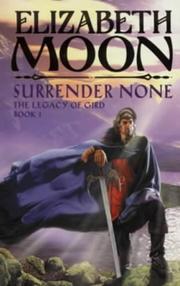
The life of Gird, the peasant revolutionary the trilogy's whole religion is built on. Chronologically it is first by centuries; read it fourth, because the entire point is recognising the man behind the liturgy Paks has been reciting.
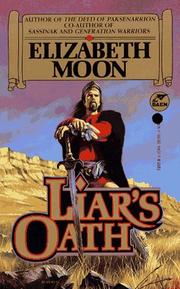
The direct sequel, following Gird's successor Luap into the aftermath and the long compromise, and a much less comfortable book than Surrender None. The two are sometimes packaged together as The Legacy of Gird; that is the same pair of novels.
Paladin's Legacy — the return, twenty years on
IntermediateContinue into the five-book sequence Moon wrote from 2010, which picks up the trilogy's world rather than its protagonist.
▸ Study plan for this stage
Pace: Four to five months at a book a month, and set that pace deliberately: this is a five-book sequence and it is where a reader who has already finished five novels is most likely to drift off. Oath of Fealty is 471 pages and Crown of Renewal 503; no reliable length is recorded here for Kings of the No
- A sequel to a world rather than to a protagonist, and what that asks of a reader who came for Paks
- Kieri Phelan and Dorrin Verrakai as leads, both of whom the trilogy established as supporting figures
- The northern kingdoms and elven politics, gestured at in the trilogy and made structural here
- Deep history stopping being background: Echoes of Betrayal is the volume that most rewards the Gird prequels
- Suppressed magic returning across the whole map, and a world changing its own rules
- The bridging-volume problem, and how to read a book that is mostly an approach to another one
- Threads left hanging since Oath of Gold, and what it means for a sequence to tie off someone else's ending
- Does the change of lead work? Say what Kieri and Dorrin can carry that Paks could not.
- Which moment in Echoes of Betrayal would be inert to a reader who skipped Surrender None and Liar's Oath?
- What returns in Limits of Power, and why had the world suppressed it?
- Crown of Renewal closes threads from the original trilogy. Are the resolutions consistent with how Oath of Gold left them?
- Having read all ten books, is Paladin's Legacy a continuation or a different series in the same place?
- Where would you tell a reader to stop if they only wanted the essential Paksenarrion?
- Set a monthly pace before starting and write it down. Five books after five books is where readers of this world stop, and naming the risk is most of the fix.
- Keep a character sheet of everyone carried over from the trilogy, with what each was doing at the end of Oath of Gold. The sequence assumes it and does not restate it.
- Read Limits of Power and Crown of Renewal with no gap. A bridging volume punishes a pause more than any other kind of book.
- After Crown of Renewal, go back to the list of company rules you kept in stage one and see how many still hold. It is a long way from a pay parade to a crown.
- Write the reading advice you would give a newcomer: the trilogy alone, the trilogy plus Gird, or all ten. That recommendation is the deliverable of this path.
Next up: This is the end of the path: the trilogy, its founding history and the full later sequence are read in the order that makes each one land, and there is no further published book in this world.
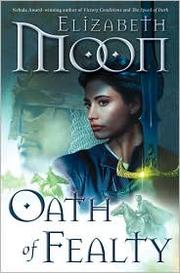
Opens immediately after Oath of Gold, with Kieri Phelan and Dorrin Verrakai rather than Paks at the centre. Read it knowing the change of lead is permanent — this is a sequel to the world, not to the character.
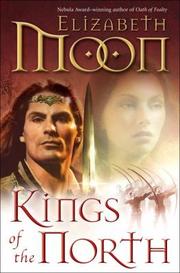
Second, widening to the northern kingdoms and the elven politics the trilogy only gestured at. It is where the new sequence establishes its own concerns rather than servicing the old ones.
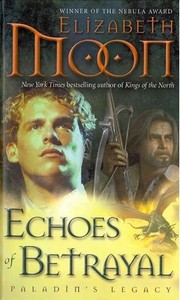
The middle book, and the one that most rewards having read the Gird prequels — the deep history stops being background here. Third in order.

Fourth, and the volume where the magic the earlier books suppressed comes back across the whole map. Read it directly before the finale; it is largely a long approach to it.
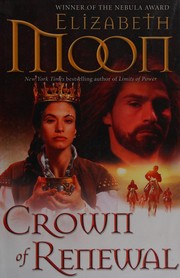
The end of Paladin's Legacy and of the published world, tying off both the new sequence and several threads left hanging since Oath of Gold. It is the last book on this path and the last one there is.