Best Books on the Dead Sea Scrolls, in Reading Order
The Dead Sea Scrolls are a small, technical field with an outsized popular literature, much of it unreliable, so this path stays with working scholars throughout. You begin with an orientation to what was found and how the seventy-year publication fight unfolded, then read the texts themselves in translation, then take up the two live controversies — who actually wrote the scrolls, and what they did to our picture of the Hebrew Bible. Where specialists disagree, the path gives you the competing cases rather than picking one.
What was found, and what happened next
BeginnerKnow what the eleven caves actually contained, how the scrolls were dated, and why the story of their publication is inseparable from the story of their interpretation.
▸ Study plan for this stage
Pace: Three to four weeks. The Dead Sea Scrolls Today is 224 pages and should be read straight through in about two weeks — it is the baseline everything else is tested against. A Short History is only 128 pages and takes two or three evenings. The Complete World of the Dead Sea Scrolls is a 216-page illu
- The sigla system, which VanderKam explains early and which you must be fluent in before stage two: 1QS is scroll S from Cave 1 at Qumran, 4Q246 is manuscript 246 from Cave 4, 11QT is the Temple Scroll from Cave 11. Every book in this path assumes it
- What the eleven caves actually held — roughly 900 manuscripts, of which about a quarter are biblical, and the enormous asymmetry between Cave 1's near-intact scrolls and Cave 4's fifteen thousand fragments. That asymmetry drove seventy years of scholarship
- The three independent dating lines VanderKam sets out: palaeography, carbon-14 and the archaeology of the settlement. They converge on roughly the third century BCE to 68 CE, and knowing that they are independent is what makes the date defensible
- The publication scandal, which Fields documents from the team's own archives: a small international editorial team, Cave 4 fragments assigned to individuals, decades of delay, and the 1991 break when Wacholder and Abegg reconstructed texts from the concordance and the Huntington Library released its
- Why that history is not gossip: who held which fragment for how long determines which theses got tested, and Fields shows the fragmentation of access producing a fragmentation of scholarship
- The physical site as the illustrated volume presents it — the so-called scriptorium, the ritual baths, the cemetery, the pottery. Look at these photographs now, because stage three is an argument about what they mean
- The distinction between a scroll found in a cave and a scroll written at Qumran, which is assumed in almost all popular writing and is precisely the point in dispute
- How many manuscripts came from the caves, roughly, and what proportion are biblical? What does that ratio suggest about the collection's purpose?
- Name the three dating methods VanderKam relies on and state one weakness of each. Why does their convergence matter more than any one of them?
- What broke the publication monopoly in 1991, and what were the two mechanisms — one scholarly, one institutional?
- Using the illustrated volume, describe what de Vaux identified as a scriptorium and what specifically was found in that room
- Fields writes from the scrolls team's own archives. What does that access give him, and what would you expect it to make him soft on?
- Make yourself a one-page siglum key — cave number, Q, and the standard abbreviations for the major texts (1QS, 1QM, 1QpHab, 1QIsa, CD, 11QT, 4QMMT). Tape it inside the front cover of the Vermes translation before you start stage two. Nothing else will save you as much time.
- Draw a timeline from 1947 to 1991 marking discovery, excavation, editorial assignment and publication for the major texts, using Fields. The gaps are the argument of his book stated visually.
- From the illustrated volume, copy the plan of the Qumran settlement onto a sheet of paper and label the rooms de Vaux named. Keep it — you will annotate it again with Hirschfeld's readings in stage three.
- Write 200 words summarising the standard account of who wrote the scrolls as VanderKam presents it in 1994. Date the page. Stage three is designed to take it apart and you want your starting position on record.
Next up: With the collection, the chronology and the publication history in place, you can read the texts themselves without mistaking somebody's thesis for the evidence.
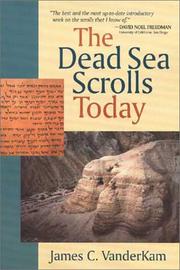
The standard first book: a working scholar's plain account of the finds, the dating evidence, the contents of the collection and the main scholarly positions, with none of the conspiracy framing that dominates the popular shelf. Start here so you have a reliable baseline to test everything else against.
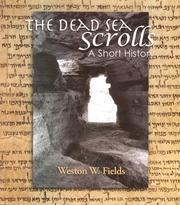
A documented history of the discovery, the acquisitions and the decades-long delay in publication, drawn from the archives of the scrolls team. Read it second, because knowing who held which fragment for how long explains a great deal about why the field developed as it did.

An illustrated reference volume covering the site, the caves, the manuscripts and the surrounding history. Keep it beside you as a visual and factual companion for the rest of the path rather than reading it straight through.
The texts themselves
IntermediateRead the non-biblical scrolls in translation — the Community Rule, the War Scroll, the pesharim, the Temple Scroll — and form your own first impressions before absorbing anyone's thesis about them.
▸ Study plan for this stage
Pace: Eight to twelve weeks, and this is the stage that decides whether you actually know the field. Vermes runs to 648 pages, but it is a collection of independent documents with short introductions, not a continuous book — read it document by document, ten to twenty pages a sitting. A workable order if
- The Community Rule (1QS): admission procedure, the annual review of rank, the property arrangements, the penal code with its remarkably specific penalties, and the Two Spirits discourse in columns three and four which is the sect's theology in compressed form
- The Damascus Document (CD), which was known from the Cairo Genizah half a century before Qumran and turned up in the caves — it describes camps of members with wives and children, which does not match the celibate-monastery picture and is the textual seed of stage three's whole dispute
- The pesharim, above all the Habakkuk Pesher (1QpHab): a verse-by-verse method that reads prophetic text as coded prediction of the sect's own recent history, giving us the Teacher of Righteousness, the Wicked Priest and the Man of the Lie — figures never named, which is why identifying them has occu
- The War Scroll (1QM): a liturgical battle plan for a final war of the Sons of Light against the Sons of Darkness, with trumpet inscriptions, standard texts and a seven-lot structure. Note how much is ritual choreography and how little is tactics
- The Temple Scroll (11QT): God speaking in the first person, a temple plan larger than anything ever built, and a legal code that rewrites Deuteronomy rather than commenting on it. Vermes's introduction flags the question of whether it is even sectarian
- MMT (Some Works of the Torah), a letter setting out roughly two dozen points of legal disagreement with the addressee. Read it carefully — Schiffman's entire thesis in the next stage rests on the character of those halakhic positions
- The Hodayot (Thanksgiving Hymns) as the sect's interior voice: extreme self-abasement combined with claimed revealed knowledge, and the recurring question of how many are the Teacher's own
- The Copper Scroll (3Q15) as the anomaly nobody has explained — an inventory of buried treasure, in a different script and medium, which does not fit any theory of the collection
- Set the Community Rule beside the Damascus Document. Which describes celibate communal life and which describes camps with wives and children? How would you reconcile them, and does Vermes's introduction attempt to?
- How does pesher work as a method? Take one passage of 1QpHab and state the Habakkuk verse, the interpretation given, and what historical event the interpreter appears to have in mind
- In the Two Spirits discourse, is a person assigned to the lot of light by choice or by predestination? Quote the passage that settles it — or shows it cannot be settled
- What kind of document is the War Scroll: a plan, a liturgy, or a vision? What in the text itself decides your answer?
- MMT lists points of legal dispute. Are those positions stricter or more lenient than what we know of Pharisaic practice, and how confident can you be from the text alone?
- Which of these documents, on internal evidence alone, would you say were written by the same community? Which read like inherited material the community merely kept?
- Read the Community Rule and the Damascus Document back to back in one sitting and write a one-page comparison of the community each describes — membership, property, marriage, discipline, leadership. This single page is the foundation for everything in stage three.
- Take the Habakkuk Pesher and make a two-column table: biblical lemma on the left, the sect's interpretation on the right. Doing thirty verses by hand teaches you pesher method better than any description of it.
- Write 200 words identifying who you think the Teacher of Righteousness and the Wicked Priest were, using only the pesharim and the historical framework from stage one. Seal it. You are about to read three scholars who disagree with each other and with you.
- Choose any five penalties from the Community Rule's penal code and rank them by severity. The ordering is not the one a modern reader expects, and working out why is a direct route into the community's values.
- Keep a running list of every text you read that shows no sectarian markers at all. It will be longer than you expect, and it is the evidence base for the argument that this was a library rather than a sect's own writing.
Next up: Having formed your own reading of the Rule, the Damascus Document and MMT, you are equipped to judge three scholars who build incompatible theories on exactly those texts.
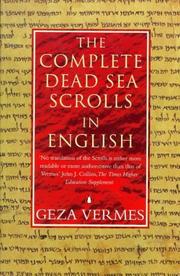
Vermes's translation is the standard one-volume English edition, with short introductions to each text. Reading the primary material at this point is what separates a real grasp of the field from a summary of other people's conclusions — the arguments in the next stage all turn on how you read these documents.
Who wrote them? The authorship controversy
IntermediateUnderstand why the once-standard 'Essenes at Qumran' consensus fractured, and be able to state the archaeological and textual cases for each of the main alternatives.
▸ Study plan for this stage
Pace: Ten to twelve weeks. Reclaiming the Dead Sea Scrolls is 529 pages and argumentative rather than introductory; give it four to five weeks. Beyond the Qumran Community is shorter but denser and demands that you keep the primary texts open beside it; three weeks. Qumran in Context is 300 pages of archa
- Schiffman's central move: the scrolls are documents of Second Temple Judaism first, and only incidentally background to Christianity. A generation of scholarship had read them the other way round, and the change of frame is more consequential than any single conclusion
- His Sadducean or Zadokite argument, resting on MMT: the halakhic positions in that letter align with rulings the rabbinic sources attribute to Sadducees, which is hard to explain if the authors were Essenes as conventionally understood
- The counter-consideration you should hold onto: legal agreement on specific rulings is not the same as sectarian identity, and Schiffman is arguing from a partial and much-reconstructed text
- Collins's target in Beyond the Qumran Community is the equation of the yahad with the settlement at Qumran. He argues from the Rule texts themselves that the yahad was an association of multiple communities across Judaea, of which Qumran was at most one
- Collins on celibacy: the Damascus Document's camps and the cemetery's female burials are handled by the standard picture as exceptions. His argument is that once you stop assuming a single site, they stop needing to be exceptions
- Collins's methodological discipline is the thing to learn here even more than his conclusion — he is consistently explicit about which parts of the received picture the evidence supports and which are inherited assumption
- Hirschfeld's archaeological dissent: read the site as a fortified estate or manor of a type found elsewhere in Judaea, and the scriptorium, the ritual baths and the pottery stop being distinctively sectarian. If he is right, the scrolls need not have been written at Qumran at all
- Why Hirschfeld belongs in the path despite being a minority position: he forces the separation of two claims that are habitually run together — what the dig shows, and what the texts say. Nothing in the archaeology names the Essenes
- State Schiffman's MMT argument in three sentences. What exactly would have to be true about the rabbinic attributions for it to hold?
- What is the yahad, and what is Collins's evidence that it was not coextensive with the settlement at Qumran?
- How does the standard picture explain the female burials in the cemetery, and how does Collins's account explain them differently?
- Hirschfeld reinterprets specific rooms and features at the site. Take two of them — the scriptorium and the ritual baths — and give his reading and the conventional one
- Which of these three positions requires the fewest assumptions not present in the evidence? That is a different question from which is most likely true, and both are worth answering
- Open the sealed page from stage two. Having read all three, would you still identify the Teacher of Righteousness the same way, and if not, which argument changed your mind?
- Take your one-page Community Rule versus Damascus Document comparison from stage two and annotate it three times in different colours — how Schiffman accounts for each difference, how Collins does, how the standard picture does. One page will then hold the entire controversy.
- Reread MMT in Vermes after finishing Schiffman, and mark every ruling he cites. Judge for yourself whether the text bears the weight he puts on it. This is the single most useful thing you can do in this stage.
- Redraw your Qumran site plan from stage one and label it twice: de Vaux's interpretation of each space, then Hirschfeld's. The two labelled plans side by side make the archaeological dispute concrete in a way the prose does not.
- Write 500 words setting out the strongest case against Hirschfeld, using Collins and Schiffman. He is a minority voice and steelmanning the majority against him is how you find out whether the majority has arguments or only numbers.
- List every claim about the scrolls' authorship that all three authors accept without dispute. It is a short list, and it is the actual state of secure knowledge in the field.
Next up: Authorship is the question the public asks; the next stage takes up the one that changed scholarship most, which is what the biblical manuscripts did to the history of the text.

Schiffman argues the scrolls are fundamentally Jewish documents with Sadducean or Zadokite legal roots, against a generation of scholarship that read them primarily as background to Christianity. Whether or not you accept his thesis, it reset the field's centre of gravity.

Collins takes apart the assumption that the sect described in the scrolls was one celibate community living at the site, arguing instead for a wider movement with settlements across Judaea. He is scrupulous about which parts of the standard picture the evidence actually supports.

The archaeologist's dissent: Hirschfeld reads the physical site as a fortified estate rather than a sectarian monastery, and denies the scrolls need have been written there at all. His case is a minority position and has been vigorously contested, which is exactly why it belongs here — it forces you to separate what the dig shows from what the texts say.
What the scrolls changed about the Bible
IntermediateSee why the biblical manuscripts from the caves — a thousand years older than anything previously known — rewrote the history of the Hebrew Bible's text and canon.
▸ Study plan for this stage
Pace: Ten to twelve weeks. The Dead Sea Scrolls and the Bible is 188 pages and deliberately accessible — two to three weeks, and do not skip it even if you feel ready for Ulrich, who assumes exactly this ground. The Dead Sea Scrolls and the Origins of the Bible is 310 technical pages built from previously
- The basic fact that reframed the discipline: before 1947 the oldest substantial Hebrew biblical manuscripts were medieval. The Qumran manuscripts are a thousand years older, so every previous argument about the text's transmission was made in the dark
- The Great Isaiah Scroll as the reassuring result — remarkably close to the medieval Masoretic text — and why that finding is regularly overstated into a claim about the whole Bible
- Textual plurality, which is the real discovery: some Qumran manuscripts are proto-Masoretic, some align with the Hebrew that lay behind the Septuagint, some with the Samaritan Pentateuch, and some with none of the three. VanderKam sets this out plainly before Ulrich theorises it
- The specific cases that carry the argument: the short Hebrew Jeremiah agreeing with the Septuagint against the Masoretic text, and the Samuel manuscripts from Cave 4 differing from the received text at points where the Septuagint had long been suspected of preserving something better
- Ulrich's thesis of multiple literary editions: books circulated in successive revised forms, and more than one form was in use simultaneously into the first century. There was no single original text sitting behind the variants, waiting to be recovered
- What that does to the concept of an original: if a book existed in parallel authoritative editions, the text critic's traditional goal has to be redescribed rather than merely made harder
- Canon as a question the scrolls unsettle from a second direction: the Psalms scroll from Cave 11 has a different order and additional compositions, and books like Jubilees and Enoch appear in numbers that suggest authority
- VanderKam and Flint's synthesis brings the biblical question back together with the sectarian one, including the relationship to early Christianity — which the path has deliberately postponed until you could judge it
- State in one sentence what the biblical manuscripts from Qumran showed that could not have been known before 1947
- Take the Jeremiah case: what is the difference between the two forms of the book, and why does a Hebrew manuscript agreeing with the Septuagint matter so much?
- What does Ulrich mean by a variant literary edition, and how is it different from a manuscript with many variant readings?
- If several editions of a book were simultaneously authoritative, what is textual criticism now trying to reconstruct? Ulrich has an answer — is it satisfying?
- What does the Cave 11 Psalms scroll suggest about the canon's boundaries in the first century, and what are the alternative explanations for its arrangement?
- Ulrich was an editor of these very manuscripts. Where does that give his argument authority, and where should it make you cautious?
- Choose one passage where a Qumran manuscript, the Masoretic text and the Septuagint differ — the Samuel material is the richest ground — and lay all three out in parallel columns from the readings VanderKam and Ulrich provide. Working one case by hand does more than reading twenty described.
- Write 200 words explaining textual plurality to someone who believes the Bible was transmitted unchanged. Then write 200 words explaining to someone who believes the scrolls proved it unreliable why that is also wrong. Both errors are common and the corrective is the same evidence.
- Make a list of the non-Masoretic text types represented at Qumran with one manuscript example each. Keep it short and factual — it is the skeleton of Ulrich's argument.
- After VanderKam and Flint, return to the 200-word summary of the standard account you wrote in stage one and mark everything you would now qualify. The density of your own annotations is the measure of the path.
- Compare how VanderKam handles the relationship between the scrolls and early Christianity with how Schiffman framed the same question in stage three. Write a paragraph on where they genuinely differ.
Next up: With the biblical implications settled, the last stage places the scrolls back among the apocalyptic literature and the Judaean politics that produced them.
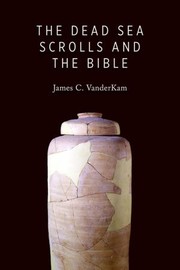
The most accessible route into the textual question: what the Qumran biblical manuscripts look like, how they differ from the received Masoretic text and the Septuagint, and what that plurality implies. Read it before Ulrich, who assumes this ground.
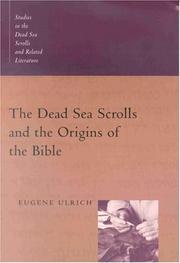
Ulrich, an editor of the biblical scrolls themselves, makes the strong case that scripture existed in multiple parallel editions well into the first century, which unsettles any simple notion of an original text. Technical, and the payoff for the effort is high.

VanderKam and Flint's fuller synthesis, covering both the biblical implications and the relationship to early Judaism and Christianity. It works well as the consolidating read once you have the specialist arguments in hand.
Specialist ground
IntermediateWork with the scrolls as historians of Second Temple Judaism do — situating them among apocalyptic literature and within the political and religious world of Judaea.
▸ Study plan for this stage
Pace: Six to eight weeks. Apocalypticism in the Dead Sea Scrolls is only 204 pages but it is compressed argument and assumes both the primary texts and Collins's earlier work — three weeks, with Vermes open beside it throughout. The Dead Sea Scrolls in Their Historical Context is 320 pages of independent
- Collins's framing question: how far was the sect's worldview genuinely apocalyptic, as opposed to using apocalyptic language for other purposes? Almost everything about how you read the War Scroll follows from the answer
- Apocalypticism as a defined category rather than a mood — periodised history, angelic mediation, a determined outcome, revealed knowledge — and Collins's care about which of these the sectarian texts actually exhibit
- The dualism of the Two Spirits discourse read against Persian and Jewish precedents, and the question of whether it is cosmic dualism or a psychological account of the human condition
- Messianism in the scrolls, which is plural: the expectation of messiahs of Aaron and of Israel, the prophet, and the difficulty of assembling one doctrine out of texts written across two centuries
- The hardest specialist texts — Melchizedek from Cave 11 and the Aramaic Son of God text from Cave 4 — and why both are constantly conscripted into arguments about Christian origins that the fragments themselves cannot settle
- Collins's insistence on the community's realised element: members believed they already shared the lot of the angels, which sits oddly beside an expectation of a future war and is a genuine tension rather than a contradiction to be resolved
- Lim's collection puts the scrolls in Hasmonean and Herodian politics, which is the corrective to reading them as a purely religious phenomenon — the sect's founding disputes are also disputes about who legitimately controlled the temple
- The other Judaean Desert documents — Bar Kokhba material, Nahal Hever, Masada finds — which give a comparative picture of what ordinary Judaean manuscript survival looks like and thus how unusual Qumran is
- Give Collins's definition of apocalypticism and test the War Scroll against each element. Which does it satisfy and which does it not?
- Is the Two Spirits discourse describing a cosmic conflict or an internal one? Argue both readings from the text, then say which Collins prefers and why
- Why are there two messiahs in some scrolls texts and how do scholars account for the variation across documents?
- What does the Melchizedek text claim about its central figure, and what specifically stops it from settling any question about Christian origins?
- Using Lim's collection, state the political situation in Judaea at the time the sect appears to have formed. How much of the sect's self-understanding is explained by it?
- Having finished the path, what would you now say the Dead Sea Scrolls changed — and what popular claim about them do you now know to be false?
- Reread the War Scroll in Vermes with Collins's criteria in hand and annotate the margins where each apocalyptic element does or does not appear. This is the exercise Collins's book is really asking for.
- Assemble every messianic reference you can find across the Vermes volume into a single table — text, siglum, figure named, function. The incoherence of the resulting table is the actual state of the evidence.
- Pick one essay in Lim's collection that bears on a question you formed in an earlier stage and write 500 words on whether it settles it. By this point you should be able to disagree with a specialist on stated grounds.
- Write a final one-page statement of what you believe about who wrote the scrolls and where, with your reasons. Compare it to the sealed page from stage two and the dated summary from stage one. Three documents, one field, and a visible record of what reading the primary texts actually did.
- List three questions in the field you now consider genuinely open. Being able to name them precisely is the difference between having read about the scrolls and knowing the subject.
Next up: This is the end of the path: you have the texts, the publication history, both live controversies and the specialist literature, and can read new work in the field on its own terms.

Collins is the leading authority on Jewish apocalyptic, and here he asks how far the sect's worldview was genuinely apocalyptic — a question that determines how you read the War Scroll and the messianic texts. Short, dense and best attempted last.

A collection of specialist studies placing the scrolls against the Hasmonean and Herodian background, including the archaeology and the surrounding Judaean documents. It is where the field's working conversation happens, and by this point you can follow it.