The Buru Quartet Reading Order: Where to Start with Pramoedya Ananta Toer
Pramoedya Ananta Toer composed the Buru Quartet as spoken stories for his fellow prisoners on Buru island, where he was held without trial for fourteen years and denied writing materials for most of them. The four novels — This Earth of Mankind, Child of All Nations, Footsteps, House of Glass — must be read in that order, because they are a single continuous history of how an Indonesian national consciousness came into being between roughly 1898 and 1918. The first three follow Minke, a Javanese aristocrat's son educated in Dutch schools; the fourth switches to the police official assigned to destroy him, which is the quartet's great structural move and is meaningless out of sequence. Read them straight through in Max Lane's translations. This path then adds Pramoedya's prison memoir, his earlier fiction, and the Indonesian history the novels assume you do not have.
The quartet, in order
IntermediateRead the four novels in sequence and follow the birth of Indonesian national consciousness through one life
▸ Study plan for this stage
Pace: Four to five months, and the page count understates the work substantially. Three of the four have recorded lengths — This Earth of Mankind at 367, Child of All Nation at 285, House of Glass at 359, together 1,011 pages — and our catalogue holds no page count for Footsteps, which is a full-length no
- Pramoedya composed the quartet orally, as stories told to fellow prisoners on Buru island, where he was held without trial for fourteen years and denied writing materials for most of them.
- The four novels — This Earth of Mankind, Child of All Nation, Footsteps, House of Glass — are one continuous history of how an Indonesian national consciousness came into existence, and they must be read in that order.
- This Earth of Mankind is the most widely read Indonesian novel in the world: Minke, the only Javanese boy in a Dutch colonial school, meets Nyai Ontosoroh, a concubine who has made herself the real manager of a Dutch estate, and discovers what colonial law will and will not permit.
- Nyai Ontosoroh is the quartet's greatest creation. She was sold as a child, has no legal standing whatever, and is nonetheless the most capable and formidable person in the book — the whole colonial arrangement stated in one character.
- The court case at the end of the first novel is the structural hinge of the whole quartet: it demonstrates that competence, decency and even Dutch law itself are irrelevant when the law is written by one side.
- Child of All Nation forces Minke out of the Dutch-language world he was trained to admire and into the villages. It is the book where his education stops being European. The catalogue record uses the singular Child of All Nation.
- Footsteps is the most political: Minke in Batavia, training as a doctor, then abandoning it to found the first native-language newspaper and the first modern Indonesian organisations. A personal education becomes a national one.
- House of Glass is narrated by Pangemanann, the mixed-race police official assigned to surveil and dismantle everything Minke built, and who despises himself for doing it well. It is the reason the quartet is a masterpiece and it only works last.
- What does the court case in This Earth of Mankind establish about colonial law, and why is losing it more useful to the quartet than winning would have been?
- Nyai Ontosoroh has no legal standing and enormous practical power. How does Pramoedya use that contradiction, and what does it say about the colony?
- Minke writes in Dutch at the start and in Malay by the end. Trace that change and say what each language costs and buys him.
- In Footsteps, why does Minke abandon medicine? What does the novel think a newspaper can do that a doctor cannot?
- Pangemanann narrates the fourth novel. What does giving the last word to the man who destroyed Minke achieve that a fourth Minke volume could not?
- The quartet is about the invention of a nation. At what point in the four books does Indonesia first exist as an idea, and who has it?
- Keep a note of every institution Minke founds or joins from Footsteps onward — newspapers, associations, unions. The list is the birth of a national movement and Pramoedya expects you to hold it.
- Track the languages: Javanese, Malay, Dutch, and who speaks which to whom. Language choice is a political act on nearly every page and it is the easiest thread to follow.
- After the first novel, write down what you think will happen to Nyai Ontosoroh. Check it at the end of the quartet.
- In House of Glass, mark every point where Pangemanann admires the man he is destroying. The frequency is the book's whole moral argument.
- Read the last chapter of Footsteps and the first chapter of House of Glass consecutively. The handover of narration is the sharpest thing in the quartet.
Next up: The quartet was told aloud in a prison camp before it was ever written down, and the memoir is the account of the conditions that made that necessary.

The starting point and the most widely read Indonesian novel in the world. Minke, the only Javanese boy in a Dutch colonial school, meets Nyai Ontosoroh — a concubine who has made herself the real manager of a Dutch estate — and discovers what colonial law will and will not permit. Banned in Indonesia for over thirty years.
Second, and the book where Minke is forced out of the Dutch-language world he has been trained to admire and into the villages. It picks up in the immediate aftermath of the first novel's court case; the catalogue record uses the singular Child of All Nation.
Third: Minke in Batavia, becoming a doctor, then abandoning it to found the first native-language newspaper and the first modern Indonesian organisations. The most political of the four and the one that turns a personal education into a national one.
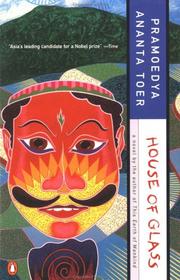
The fourth and the reason the quartet is a masterpiece rather than a trilogy with an appendix: it is narrated by Pangemanann, the mixed-race police official assigned to surveil and dismantle everything Minke built, and who despises himself for doing it well. It only works last.
Pramoedya on his own life
IntermediateRead the prison memoir and the late novel that explain how and why the quartet was composed
▸ Study plan for this stage
Pace: Six to seven weeks. The Mute's Soliloquy is 400 pages and our catalogue holds no page count for The Girl from the Coast, which is a short novel — considerably shorter than anything in the quartet. The memoir is not a continuous narrative but letters to his children that he was never permitted to sen
- The Mute's Soliloquy is the Buru memoir: letters to his children that were never sent, together with notes on the camp and on the other prisoners.
- It is the account of the conditions under which the quartet was first told aloud — no paper, no certainty of survival, and an audience of fellow prisoners who became the work's first custodians.
- Read after the novels, it makes the achievement legible in a way no critical account does. The quartet was a feat of memory and of collective transmission before it was a book.
- It is also a record of the 1965 killings and their aftermath, which is the political fact underneath everything on this path: hundreds of thousands killed, and a much larger number imprisoned without trial.
- The Girl from the Coast is based on his own grandmother, taken as a practice wife by a Javanese aristocrat and discarded when he married.
- It is the surviving first volume of a trilogy whose other two parts the army destroyed. That fact is part of what you are reading and it should not be smoothed over.
- The subject is Nyai Ontosoroh's, told without the quartet's political scaffolding — the same arrangement, seen only as it is experienced.
- Read together, the two books show the two sources of the quartet: a personal inheritance of that particular injustice, and a life spent imprisoned by three successive regimes for saying so.
- What were the conditions on Buru, and what specifically made writing impossible?
- The letters were never sent. What does Pramoedya do with a form whose recipient will not receive it?
- How does the memoir describe the composition of the quartet, and what role did the other prisoners play?
- In The Girl from the Coast, what is a practice wife, and how does the novel present the arrangement — as an aberration or as a system?
- The other two volumes were destroyed by the army. How does knowing that change your reading of the surviving one?
- What does the memoir add to the quartet, and does the quartet need it?
- Read the memoir in short stretches over several weeks rather than continuously. It is not structured as a narrative and reading it as one flattens it.
- Find the passages about telling stories to other prisoners and mark them. They are the primary evidence for how the quartet came to exist.
- Put The Girl from the Coast beside Nyai Ontosoroh's account of her own sale in This Earth of Mankind. One is political and one is not, and the comparison is the point.
- Write one paragraph on what is lost when two volumes of a trilogy are destroyed. Resist filling the gap with speculation about what they contained.
Next up: Buru is the middle of a career, not the start of one; the earlier fiction shows the writer before the quartet and before the prison that produced it.
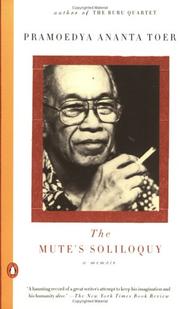
The Buru memoir — letters to his children he was never permitted to send, plus notes on the camp. Read it after the quartet: it is the account of the conditions under which those four novels were first told aloud, and it makes the achievement legible.
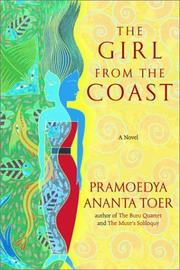
Based on his own grandmother, taken as a practice wife by a Javanese aristocrat and discarded — the surviving first volume of a trilogy whose other two parts the army destroyed. The same subject as Nyai Ontosoroh, told without the quartet's political scaffolding.
The earlier fiction
IntermediateRead the work written before Buru, including the novel composed in a Dutch prison a decade earlier
▸ Study plan for this stage
Pace: Four to five weeks, and this stage comes with an honest caveat: our catalogue records no page count for any of these four books. They are all short — The Fugitive, All That Is Gone, Tales from Djakarta and It's Not an All Night Fair are a novel, two story collections and a novella respectively, none
- The Fugitive was written in a Dutch colonial prison in 1949, when Pramoedya was in his twenties — a fact worth holding, because it means the quartet was his second body of work composed in captivity.
- It covers one day and night at the end of the Japanese occupation, as a hunted man returns to his village in disguise. It is tight, dramatic and structured almost like a play.
- All That Is Gone is autobiographical stories of a Blora childhood, including the long title piece about his father's decline. It is the gentlest thing he wrote.
- Much of Minke's family background comes from here. Reading it makes clear how much of the quartet's Javanese domestic detail is remembered rather than researched.
- Tales from Djakarta records the capital in the years just after independence — prostitutes, clerks, revolutionaries and profiteers — and it is the record of his disillusionment with what the republic became.
- That disillusionment is the shadow the quartet's optimism is written against. Pramoedya knew exactly what the movement Minke helps found would turn into, and wrote the founding anyway.
- It's Not an All Night Fair is a short novel of a son returning to Blora as his father dies during the revolution, and it is the most personal of the pre-Buru books.
- Across all four, the constant is the small town of Blora and the family in it. The quartet's national canvas grows out of a very local one.
- The Fugitive covers a single day and night. What does the compression achieve, and what does it exclude?
- How does the father figure in All That Is Gone compare with the fathers in It's Not an All Night Fair and in the quartet?
- What is Tales from Djakarta disillusioned about, specifically? Name the target rather than the mood.
- Given that disillusionment, why write the quartet's account of the movement's founding as sympathetically as he does?
- What is present in the pre-Buru work that the quartet does not have, and what is absent that the quartet needed?
- Read The Fugitive in one or two sittings. It is built for that and its tension dissipates over a week.
- List the Blora details that recur across All That Is Gone and It's Not an All Night Fair, then look for them in the quartet. Several are there.
- For each of the Tales from Djakarta, write down the character's occupation. The resulting list is a social map of the young republic.
- Write one sentence on what changed in Pramoedya's writing between 1949 and Buru. The pre-Buru books are the only evidence available for that question.
Next up: The fiction assumes a history most readers do not have; the last stage supplies it, from the colonial period the quartet dramatises to the regime that banned it.
Written in a Dutch colonial prison in 1949, when Pramoedya was in his twenties: one day and night at the end of the Japanese occupation, as a hunted man returns to his village in disguise. The earliest work here and the natural first stop in this stage.
Autobiographical stories of a Blora childhood, including the long title piece about his father's decline. The gentlest thing he wrote, and the source of much of what later became Minke's family background.
Stories of the capital in the years just after independence — sketches of prostitutes, clerks, revolutionaries and profiteers. Read it third: it is the record of his disillusionment with what the republic became, which is the shadow the quartet's optimism is written against.

A short novel of a son returning to Blora as his father dies during the revolution, written in the mid-1950s. The most personal of the pre-Buru books and a good place to stop in this stage before turning to the history.
The history the quartet assumes
IntermediateGet the Indonesian history behind the novels — the Ethical Policy, the nationalist awakening, and the 1965 catastrophe that put Pramoedya on Buru
▸ Study plan for this stage
Pace: Four to five months for 1,553 pages, and it splits into two very different halves. Adrian Vickers's A History of Modern Indonesia at 306 pages is the accessible one-volume history and the best first stop — it opens with Pramoedya himself as a route into the twentieth century, which makes it unusuall
- Vickers is the right first history for this path because it uses Pramoedya's life as its spine, so the events of the quartet and the events of the author's imprisonment sit on one chronology.
- The Ethical Policy is the colonial reform programme that produced Minke's education — a Dutch decision to give a small Javanese elite a European schooling, whose entirely unintended consequence was a nationalist generation.
- That irony is the quartet's historical foundation: the colony trained the people who would end it, because it needed clerks and could not stop them reading.
- Ricklefs is analysis and reference where Vickers is narrative. Use him for the colonial administration, the early nationalist organisations and the sequence of the independence struggle set out properly.
- 1965 is the event that connects the novels to their author: an attempted coup, a mass killing of at least several hundred thousand people, and the imprisonment without trial of Pramoedya and many thousands of others.
- The quartet was banned in Indonesia for over thirty years under the regime that came out of 1965. The books' publication history is itself part of the political history.
- Lloyd Parry reports the collapse of that regime in 1998, which is the closing bracket on the story the quartet opens. He was present for much of what he describes and writes as a participant-observer rather than a historian.
- Pisani asks what actually holds this improbable country together, travelling the archipelago a century after Minke's generation invented the idea of it — which is the quartet's question put to the present.
- What was the Ethical Policy for, and what did it actually produce?
- Using Vickers, place the four novels on a real chronology. What years does each cover?
- What does Ricklefs add about the early nationalist organisations that the novels dramatise but do not explain?
- What happened in 1965, and how much of it does any account claim to be able to establish? Note where the historians say the evidence is contested rather than settling it yourself.
- Lloyd Parry writes as a witness. What does that give his account, and what should a reader be careful about?
- Pisani asks what holds Indonesia together. Would Minke recognise her answer as the thing he was inventing?
- Read Vickers's opening on Pramoedya before anything else in this stage. It is the best single bridge from the fiction to the history.
- Build a two-column timeline: what happens to Minke, and what was happening in the Indies. The novels' compressions become visible immediately.
- Use Ricklefs's index rather than reading it through on a first pass — take the Ethical Policy, Budi Utomo, and Sarekat Islam. That is the efficient route at 495 pages.
- Note every place where a historian flags that the record of 1965 is incomplete or disputed. That list matters more than any conclusion you could draw from it.
- After Pisani, write one paragraph answering the quartet's own question: what makes a nation out of an archipelago? That paragraph is what this whole path was for.
Next up: That closes the path — the quartet read whole and in order, the prison that produced it, the career around it, and the century it both describes and belongs to.
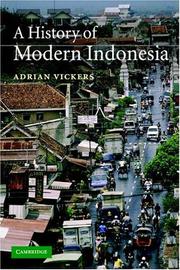
The most accessible one-volume history and the best first stop — it opens with Pramoedya himself as a way into the twentieth century, which makes it unusually well matched to this path.
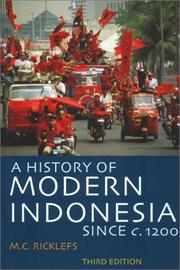
The standard scholarly history, catalogued under its full title as a history of modern Indonesia since c. 1200. Read it after Vickers when you want the colonial period the quartet dramatises set out properly rather than narrated.

A reporter's account of Indonesia during the collapse of the Suharto regime — the same regime that jailed Pramoedya and banned his books. Read it last: it is the closing bracket on the political history the quartet opens.

A journey through the archipelago asking what actually holds this improbable country together, a century after Minke's generation invented the idea of it. The natural final book, because it puts the quartet's question to the present day.
Discussion
Keep reading
Paths that share books, cover the same subject, or open a related topic.