The Bridgerton Books Reading Order: Where to Start
Julia Quinn's Bridgerton novels are eight books for eight siblings, named Anthony through Hyacinth in birth order, and published in that same order between 2000 and 2006 — so for once publication order and internal order agree completely. What does not agree is Netflix, which gave Daphne the first season, Anthony the second and Colin the fourth, skipping Benedict entirely. This path reads the books as written, then adds the epilogue collection, the Rokesby prequels and the Queen Charlotte crossover.
The First Four, in Birth Order
BeginnerRead the first half of the family, oldest sibling first. ORDER CHOSEN: publication order, which here is identical to the siblings' birth order and to internal chronology — Quinn wrote them straight down the family. This is NOT the order the Netflix adaptation used: the show gave season one to Daphne (book one), season two to Anthony (book two), season three to Colin (book four) and has not adapted Benedict's book, so a viewer following the seasons will skip An Offer From a Gentleman entirely.
▸ Study plan for this stage
Pace: Four to five weeks for 1,620 pages — The Duke and I 432, The Viscount Who Loved Me 392, An Offer from a Gentleman 400, Romancing Mister Bridgerton 396. The four are almost identical in length and all are fast, dialogue-heavy reads, so a book a week is comfortable and a book in three evenings is comm
- Lady Whistledown's gossip sheet as the device that links all eight books and supplies each with its plot pressure
- One sibling per book with the family recurring throughout, which is the structural contract of a family romance series
- The Regency season as a marriage market with rules, and how each novel uses a different rule as its obstacle
- Quinn's use of an existing romance plot per book — the false courtship, the enemies-to-lovers, the Cinderella variation
- Why the fourth book resolves the series-long thread rather than the eighth
- Where the adaptation diverges from the novels, and which book a viewer will not have met
- Lady Whistledown appears in every book. What does the device actually do for the plots, beyond exposition?
- Each novel takes a familiar romance shape. Name the shape of each of these four and say which Quinn executes best.
- The Viscount Who Loved Me is widely considered the best of the eight. On what grounds — plot, hero, heroine, or comedy?
- Romancing Mister Bridgerton resolves the Whistledown thread in book four. What does that leave the last four books to do?
- Compare a scene you know from the adaptation with the same scene in the novel. What was changed, and what did the change fix or cost?
- Keep a Bridgerton family chart with each sibling's birth position and book number; the alphabetical naming makes the order easy to recover and the chart makes the later books much easier to follow.
- Track every Whistledown column excerpt in one novel and note what each one sets up; the columns are load-bearing rather than decorative.
- After Romancing Mister Bridgerton, go back to the first Whistledown excerpt in The Duke and I and check whether the identity was fairly signalled.
- List the specific social rule each of these four novels uses as its obstacle, and rank them by how much plot each actually generates.
Next up: The next stage finishes the family with the four younger siblings, where Quinn starts alternating tone deliberately from book to book.
Daphne, the fourth child and eldest daughter, and Simon Basset. Book one and the right place to start even though Daphne is not the eldest sibling — it establishes Lady Whistledown, the family dynamic and the season structure that all seven others rely on.
Anthony, the eldest Bridgerton, and Kate Sheffield. Second by publication and widely considered the best of the eight; the Netflix second season adapts it.

Benedict, the second son, in Quinn's Cinderella variation. Third — and the one book of the eight the television series has passed over, which makes it the volume viewers most often miss.

Colin, the third son, and Penelope Featherington. Fourth, and the book that resolves the Lady Whistledown thread running through all three before it — so it genuinely needs them read first.
The Second Four
BeginnerFinish the family with the four younger siblings, continuing in birth and publication order.
▸ Study plan for this stage
Pace: Four to five weeks for 1,554 pages — To Sir Phillip, With Love 384, When He Was Wicked 400, It's in His Kiss 368, On the Way to the Wedding 402 — the same even sizing and the same pace as the first half. Continue in birth and publication order. Two of these are tonal outliers and worth knowing about
- Tonal alternation as a deliberate series-level choice — a dark book followed by a light one
- Leaving the ballroom: what a Regency romance loses and gains when it moves to the country
- Grief inside a romance, and how When He Was Wicked manages a heroine whose first marriage was happy
- Epistolary courtship in To Sir Phillip, With Love, where the couple meet on paper before they meet at all
- The treasure-hunt plot of It's in His Kiss as an external engine, which most of the eight do not have
- Closing a family series: what the last book has to do that the middle books do not
- To Sir Phillip, With Love moves out of London. What does the season structure supply in the other seven that has to be replaced here?
- When He Was Wicked opens with a death. How does Quinn make a second love story work without diminishing the first marriage?
- It's in His Kiss follows the darkest book with the lightest. Is the contrast effective, or does it undercut the previous book?
- Eloise and Hyacinth are the two most outspoken siblings. Do their books make the same use of that, or different uses?
- On the Way to the Wedding is the last of the eight. What does it resolve at the family level rather than the couple level?
- Note the tone of each of the eight books in one word on your family chart; the alternation is visible only laid out as a sequence.
- In To Sir Phillip, With Love, mark what the letters establish before the couple meet and judge how much work they save the novel.
- Compare the widowing chapter of When He Was Wicked with a comic set piece from It's in His Kiss and describe, concretely, what changes in the prose.
- Write down which sibling's book you would recommend first to someone who has never read a Regency romance, and why not the actual first book.
Next up: With the family complete, the next stage is the collection Quinn wrote to answer readers who wanted to know what happened next to each couple.

Eloise, the second daughter, answering an advertisement by letter. Fifth, and a change of setting — most of it happens away from London, which makes it the odd one out of the eight.
Francesca, the sixth child, and the darkest book in the series: it opens with a widowing. Sixth by publication and the one that most rewards having grown fond of the family first.
Hyacinth, the youngest daughter, and a treasure hunt through a diary. Seventh, and much lighter than the book before it — Quinn alternates tone deliberately.
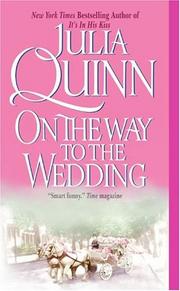
Gregory, the youngest son, and the last of the eight. Read it last of the main series; it closes the family off and sets up the epilogues.
The Epilogues
BeginnerRead the collection Quinn wrote to answer readers who wanted to know what happened next to each couple.
▸ Study plan for this stage
Pace: A few evenings. There is one book in this stage and we hold no page count for our record of it, so budget by pieces instead: it is a collection of second epilogues for all eight couples plus a novella about Violet, the mother, so a piece or two a sitting is the natural unit and each one takes as lon
- The second epilogue as a form invented in response to readers rather than to a plot need
- What a happy ending looks like extended by ten or twenty years, and the risk that carries
- Violet as the character the eight novels are built around without ever centring, finally given her own novella
- Supplementary material that assumes eight prior books, and how that constrains what it can be
- Reading fan-driven material with its origins visible
- Recognising an optional volume and deciding honestly whether you want it
- Each second epilogue extends an ending that was already complete. Which couple's addition works best, and why that one?
- Do any of the epilogues undercut the ending of their own novel? Find the closest case.
- Violet is present in every book and central to none. What does her novella reveal that the eight novels had implied?
- These were written because readers asked. Can you tell, from the pieces themselves, which requests they were answering?
- Is the collection part of the series or an appendix to it? Argue from a specific piece.
- Read one novel's second epilogue immediately after rereading that novel's final chapter, and note whether the addition improves the close.
- List what Violet does across the eight novels from memory, then read her novella and check the list against it.
- Pick the epilogue you found least necessary and write one sentence on what it added; if you cannot, that is a finding about the form.
Next up: The next stage goes back a generation to the Rokesby prequels, set thirty years before the family you have just finished.

Second epilogues for all eight couples plus a novella about Violet, the mother. It only works after the eight novels — each piece assumes its own book — so it belongs exactly here and nowhere earlier.
The Rokesbys: the Prequel Quartet
IntermediateRead the four-book prequel series set a generation earlier, about the family next door to the Bridgertons, in publication order.
▸ Study plan for this stage
Pace: Three to four weeks for 1,281 pages. Because of Miss Bridgerton is 304 pages, The Girl with the Make-Believe Husband 384 and The Other Miss Bridgerton 400; our record for First Comes Scandal gives 193 pages, which is markedly shorter than the other three and shorter than any Quinn novel here, so it
- A prequel series written for existing readers, and how that changes what it can assume
- The Rokesbys as the family next door, which lets Quinn use the Bridgerton name without competing with the eight
- Wartime setting in the second book, and what a Regency-adjacent romance does with an actual war
- Adventure plotting in the third — kidnapping and a privateer — against the ballroom obstacles of the main series
- Generational recognition: spotting the ancestors of characters you know
- How a prequel line closes when the main series is already finished
- These are set thirty years before The Duke and I. What in them is written specifically for a reader who knows the later books?
- The Girl with the Make-Believe Husband leaves England for a war. Does the romance survive the change of setting, or does the setting take over?
- The Other Miss Bridgerton is the most plot-driven. Does more plot make a better Quinn novel?
- Which of the Bridgertons you know can you find the ancestor of here, and what has been inherited?
- Is this quartet a prequel or a spin-off? The distinction matters for what it owed the reader.
- Extend your family chart back a generation with the Rokesbys and the earlier Bridgertons; the connections are the point of the quartet and are easy to lose.
- Note every reference in the prequels to a character or place from the main eight, and mark whether each would mean anything to a reader starting here.
- Compare the obstacle in Because of Miss Bridgerton with the obstacle in The Duke and I; thirty years apart, the social rules are meant to differ.
- Check the length of your edition of First Comes Scandal against the other three — our record's figure is much lower and worth confirming before you buy.
Next up: The last stage is the single book that exists only because of the television adaptation, and understanding how it relates to the novels is the point of placing it at the end.
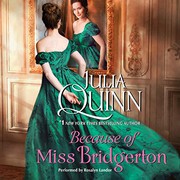
Billie Bridgerton and George Rokesby, set roughly thirty years before The Duke and I. First of the prequels — read the main eight before it, since it is written for readers who already know the later family.

Edward Rokesby in New York during the American Revolution. Second of the quartet and the furthest the series ever gets from a London ballroom.

Poppy Bridgerton kidnapped aboard a privateer. Third, and the most plot-driven of the prequels.

Georgiana Bridgerton and Nicholas Rokesby. Fourth and last of the Rokesbys, closing the prequel line. Our catalogue record carries the series tag, First Comes Scandal (Rokesbys #4).
The Netflix Crossover
IntermediateFinish with the one book that exists because of the adaptation, and understand how it relates to the novels.
▸ Study plan for this stage
Pace: A week to ten days for 448 pages, one book and the end of the path. Queen Charlotte was written with Shonda Rhimes from the television prequel and covers Charlotte's arrival in England and her marriage to George III, decades before the novels. Read it last, and read it knowing what it is: the only B
- A novelisation-adjacent book: written with the show's creator, from a television script, into an existing book continuity
- The Queen's role as an invention of the adaptation, and what happens when it is written back into the novels
- George III's illness handled as historical fact inside a romance
- Continuity between a book series and its adaptation, and which one this volume is actually loyal to
- Reading a tie-in on its own terms rather than as a ninth Bridgerton novel
- How an adaptation changes the source it came from
- The Queen is a minor presence in the eight novels. Does this book fit the continuity you read, or the one you watched?
- It was co-written with the adaptation's creator. Can you tell which parts came from a script? Point to a passage.
- George III's illness is real history inside a romance plot. How does the book manage that, and does it succeed?
- Does this expand the Bridgerton world or annex it? Argue from a specific scene.
- Having now read fourteen books across three lines, where would you tell a new reader to start and stop?
- List every appearance of the Queen in the original eight and set it beside her role here; the gap is the finding.
- Read one chapter and mark the scene breaks; television structure leaves marks on prose and they are visible once looked for.
- Check the book's account of George III's illness against a short factual summary and note what is compressed.
- Write a closing recommendation covering the whole path: the eight, the epilogues, the Rokesbys and this — which of the four groups a new reader should actually commit to, and in what order.
Next up: This is the end of the path: eight novels in birth order, the epilogue collection, the prequel quartet and the adaptation crossover — from here, Quinn's non-Bridgerton Regency novels are the natural continuation, and the television seasons can be watched with the book they skipped already read.
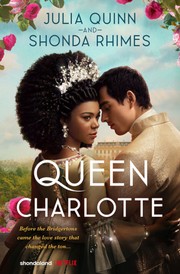
Written with Shonda Rhimes from the television prequel, covering Charlotte's arrival and marriage to George III decades before the novels. Last because it is the only Bridgerton book that originates outside Quinn's own continuity — the Queen is barely present in the original eight, and this expands a character the show invented a role for.
Discussion
Keep reading
Paths that share books, cover the same subject, or open a related topic.