The Bengal Famine of 1943: books to read, in order
Somewhere between two and three million people died in Bengal in 1943 and 1944 in a province that was not, on most estimates, catastrophically short of food. That gap between availability and starvation is why this famine produced one of the most influential ideas in modern economics, and why the argument over responsibility — Japanese conquest of Burma, provincial mismanagement, wartime priorities, decisions taken in London — has never settled. This path gives you the event, then the blame argument with its main antagonists, then the economics that came out of it, then the longer history of Bengal and of famine generally.
What happened in Bengal
BeginnerKnow the sequence — the fall of Burma, the denial policies, the cyclone and crop failure, the price spiral, the flight to Calcutta — and the wartime context the province was inside.
▸ Study plan for this stage
Pace: Five to six weeks. Read Hungry Bengal first, at around 300 pages over two to three weeks — it is the closest thing to a narrative of the event and everything later on this path assumes you have its chronology. The Raj at War is longer at around 430 pages but reads much faster, being general-audience
- The sequence itself, which most summaries garble: the Japanese conquest of Burma cutting off a rice import, the denial policies removing boats and stocks from the coastal districts, a cyclone and crop disease, then a price spiral and mass migration into Calcutta
- Denial policy as a specific set of decisions — the removal of rice stocks and the requisition of country boats from coastal Bengal, undertaken to deny resources to an expected Japanese invasion
- Boat requisition as the mechanism that mattered most locally: in a delta province, taking the boats removes fishing, transport and the market for everything at once
- Provincial versus central authority under the Government of India Act, which is why the question of who could have acted is genuinely complicated rather than rhetorical
- Janam Mukherjee's central move: treating the famine not as a discrete disaster but as one phase of a continuous wartime crisis running on into the Calcutta killings and partition
- Yasmin Khan's frame: India as a war economy with millions in uniform, mass requisitioning and severe inflation, inside which Bengal was one pressure point among many
- The urban concentration of the recorded deaths versus the rural location of most of the dying, which is a persistent distortion in the contemporary record
- That the death toll is an estimate with a wide range, and that the range itself is a subject of scholarly dispute rather than a settled figure
- Lay out the chronology from the fall of Rangoon to the peak mortality. Which events were decisions and which were natural shocks?
- What did denial policy consist of, who ordered it, and at what level of government was it executed?
- Why does Janam Mukherjee insist the famine cannot be separated from what follows it in Bengal? What does that continuity make visible?
- How much of India's war effort does Khan describe, and what does the scale change about how plausible it is that Bengal was overlooked rather than targeted?
- Where do the two books' estimates of mortality come from, and on what basis do they differ?
- Build a one-page chronology from Hungry Bengal, dated month by month from early 1942 to late 1944. Every argument in the later stages is a claim about this timeline and you will refer back to it constantly.
- Draw the rice trade on a map: Burma to Bengal, and the internal movement within the province. The geography explains the vulnerability faster than any paragraph.
- Summarise denial policy in 200 words using only what Mukherjee documents, separating what was ordered from what was carried out.
- From Khan, list the competing wartime demands on Indian shipping, grain and administration in 1943. Keep the list; the next stage is an argument about how to weigh it.
- Note every mortality figure either book gives, with its source. The spread between them is the first thing you should be able to explain.
Next up: With the sequence and the wartime context established, you can enter the blame argument as someone able to check a claim against a timeline rather than accept it on force of assertion.

The best single modern account, treating the famine not as an isolated disaster but as part of a continuous wartime crisis running into the 1946 Calcutta killings and partition. Start here for the fullest narrative on the ground.

India's whole Second World War — two and a half million soldiers, requisitioning, inflation, the Quit India movement — with the famine in its proper place inside it. Published in the United States as India at War, so read one edition, not both.
The argument about blame
IntermediateWeigh the case against the wartime British government, and the counter-cases, and be able to distinguish claims about intent from claims about priority and negligence.
▸ Study plan for this stage
Pace: Eight to ten weeks, and the stage that most needs discipline. Read Churchill's Secret War first, around 370 pages over three weeks, and read it as a case for the prosecution rather than as a settled account. Then Toye's Churchill's Empire, which reconstructs how imperial decisions looked to the peop
- The distinction the whole argument turns on, and which is worth holding separate at all times: intent, priority, and negligence are three different charges requiring three different kinds of evidence
- Madhusree Mukerjee's case built from shipping records and cabinet papers — that grain and shipping were available, that relief was refused or delayed, and that this reflected a settled attitude rather than an oversight
- The specific evidentiary points at issue: how much shipping was genuinely free, what the War Cabinet was told and when, and whether refused Australian and Canadian offers could have been physically delivered
- Toye's method, which is neither exoneration nor prosecution: reconstructing Churchill's imperial thinking across a whole career so that 1943 sits inside a pattern of belief rather than standing alone
- Collingham's counter-frame: a global war food economy in which roughly twenty million people died of hunger, which supports the argument that grain and shipping were genuinely scarce rather than merely withheld
- That both frames can be partly true — scarcity can be real and allocation can still be a choice — and that most of the serious disagreement lives in exactly that overlap
- The role of the provincial government, Bengali traders and hoarding in the price spiral, which the London-focused accounts tend to compress
- That this is a live scholarly disagreement between serious historians and economists, not a settled question with a suppressed answer
- Which specific claim in Churchill's Secret War rests on documents, and which on inference from documents? Separate them for at least three of her central assertions.
- Does Toye's reconstruction of Churchill's imperial thinking make the 1943 decisions more explicable, more damning, or both?
- Collingham argues shipping was genuinely scarce. Mukerjee argues it was not scarce enough to excuse the outcome. What evidence would settle this, and does either author have it?
- How would you distinguish, using the documents these books cite, a decision made from indifference from one made under genuine constraint?
- How much responsibility sits with the provincial administration and the Bengal grain trade, and does any of these three books give that question its due?
- Having read all three, which charge do you think the evidence supports — intent, priority, or negligence — and what would change your mind?
- Build a two-column table for each of Mukerjee's main claims: her evidence, and what Collingham or Toye says that bears on it. The table is the real output of this stage.
- Check three of Churchill's Secret War's footnotes against the sources they cite. Whatever you conclude, doing this once teaches you how to read a documented polemic.
- Write 300 words stating the strongest possible case for the wartime government, then 300 words for the prosecution. Write the one you find less congenial first.
- From Collingham, list the other wartime famines and near-famines by theatre. Bengal's position in that list is itself an argument and you should be able to state it.
- Take your chronology from the previous stage and mark each point at which one of these authors says a different decision was available. Those marked points are where the argument actually is.
Next up: Having seen how hard it is to settle blame from the documentary record, you are in the right position for the analytical move the famine produced — a framework that explains starvation without needing to establish who withheld what.

The prosecution case: a physicist-turned-journalist arguing from shipping records and cabinet papers that London diverted grain and refused relief it could have provided. Forceful, heavily documented and openly polemical — read it first and then read its critics.

A historian's account of Churchill's imperial thinking across his whole career, including 1943. More measured than Mukerjee and useful precisely because it neither exonerates nor prosecutes — it reconstructs how the decisions looked to the people making them.
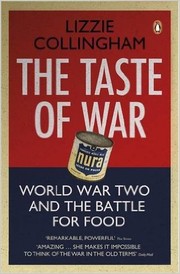
The global food economy of the Second World War, in which roughly twenty million people died of hunger and Bengal was one theatre among several. The widest frame available, and the strongest version of the argument that shipping and grain were genuinely scarce.
The economics the famine produced
IntermediateUnderstand the entitlement approach — that people starve when they lose the ability to command food, not necessarily when food disappears — and the objections to it.
▸ Study plan for this stage
Pace: Eight to ten weeks. Poverty and Famines is around 250 pages, technical in places, and should be read slowly — the central chapters on entitlement and the Bengal case study are the essential ones and deserve a week each. Hunger and Public Action is around 380 pages and reads more easily, being policy
- Entitlement as the core idea: people starve when they lose the ability to command food through what they own, earn, produce or are given, which can happen with no fall in total food supply
- The four entitlement channels Sen distinguishes — production, trade, own labour, and transfer — and why a wage earner and a landholder can face opposite fates in the same market
- Sen's Bengal case study, which argues that food availability in the province was not catastrophically low and that the collapse was in the purchasing power of rural labourers
- That Sen's Bengal food-availability figures have been contested by other economists, and that the entitlement framework can survive challenges to those particular numbers — the two disputes are separable and should be kept separate
- The policy turn in Hunger and Public Action: early warning, employment guarantees and public distribution as the instruments that convert the theory into things a state can do
- The comparison of post-independence India with China in that book, and the argument about famine prevention under different political systems, which is contested and should be read as a claim rather than a finding
- Ó Gráda's Ireland as the second great test case: a famine where food exports continued during mass death, which is the pattern entitlement analysis predicts and which nonetheless has its own contested literature
- Food availability decline versus entitlement failure as two explanations that are not mutually exclusive, and the discipline of asking which one a given famine's evidence actually supports
- State the entitlement approach in your own words in three sentences, without using the phrase food supply.
- Which of Sen's four entitlement channels collapsed in Bengal, and for which occupational groups? He gives the answer by occupation and it is more specific than most summaries suggest.
- What have Sen's critics disputed about his Bengal food-availability figures, and does the entitlement framework depend on those particular numbers being right?
- Hunger and Public Action compares India and China on famine prevention. What is the argument, and what would a critic of it point to?
- In the Irish case, food left the country while people died. Does that fact settle anything, or does it require the same care about causation you exercised in the blame stage?
- After all three, does entitlement analysis strengthen or weaken the case against the wartime government in Bengal? It can be argued either way and both arguments are worth constructing.
- Work through Sen's Bengal chapter with a pen, writing down each occupational group and what happened to its command over food. That table is the argument in its most usable form.
- Take one of the numbered entitlement channels and apply it to a modern food crisis you have read about in the news. If it does not fit, work out why — the misfit is more instructive than a fit.
- Summarise the objections to Sen's food-availability estimates in 200 words, using the critical literature the book's later editions and Ó Gráda point you to.
- Set the Irish and Bengali cases side by side in a table: what fell, whose entitlements collapsed, what the state did and did not do. The comparison is the reason the third book is here.
- From Hunger and Public Action, list the specific policy instruments proposed and mark which ones existed in Bengal in 1943. The blanks are the point.
Next up: Entitlement explains the mechanism of a collapse but not why Bengal was so exposed to one, which is the question the final stage answers from the province's own agrarian and social history.

The 1981 book that came directly out of this famine, which Sen witnessed as a child, and that reframed famine analysis around entitlement rather than food supply. Technical in places but the central chapters are readable, and it is the most consequential text on this path. Note that its Bengal food-availability figures have been contested by other economists.
Written with Sen, extending the framework to what states can actually do — employment schemes, early warning, public distribution. Read second: it is where the theory becomes a set of policy claims, and it compares India's post-independence record with China's.

Ó Gráda is the leading economic historian of famine, and the Irish case is the best-documented in the record — which makes it the sharpest available test of Sen's argument. Read it after Poverty and Famines and ask whether entitlement failure or food-availability decline explains Ireland better, then carry that answer back to Bengal. A short Economic History Society study, not a general history.
Bengal, and famine as an imperial pattern
IntermediatePlace 1943 inside Bengal's own agrarian and social history and inside the record of famine under colonial rule.
▸ Study plan for this stage
Pace: Ten to twelve weeks, and the most academic stage. Greenough's social history of the famine is around 430 pages and is the one to read first and slowly — four weeks at eighty pages a week is realistic. Sugata Bose's study of the rural economy is around 300 pages, dry in places, and needs three weeks
- Greenough's central subject: the famine as a social event, in which patron-client obligation, household hierarchy and the duty of the powerful to feed the dependent broke down under pressure
- The pattern of abandonment Greenough documents — who was let go first when a household could not feed everyone — which is a finding about Bengali social structure rather than about food
- Bose's structural account: tenancy arrangements, rural credit, jute cultivation and chronic indebtedness, which together made a large share of the rural population dependent on purchased food
- Why the jute economy matters — a cash crop province buys its rice, so a price spiral hits it differently from a subsistence province
- The fragility argument: Bengal was already close to the line before Burma fell, which redistributes explanatory weight away from any single wartime decision without excusing it
- Davis's thesis that the great nineteenth-century famines were produced by the collision of climate shocks with imperial market and revenue policy, and that they should be counted as political events
- That Davis is writing polemic on a substantial evidentiary base, and that his framing has been criticised by economic historians — read the argument, then read what has been said about it
- How 1943 looks placed at the end of that nineteenth-century sequence rather than as a wartime anomaly, which is the strongest version of the imperial-pattern case
- According to Greenough, which household members were abandoned first, and what does he argue that reveals about Bengali obligation?
- Bose describes a rural economy dependent on credit and cash crops. Which specific features made a price spiral lethal rather than merely painful?
- Was Bengal fragile before 1942? Marshal Bose's evidence, then ask whether fragility reduces or redistributes responsibility.
- Davis argues the nineteenth-century famines were political events. What would a critic of that framing say, and does the criticism apply equally to 1943?
- Does Greenough's social account fit inside Sen's entitlement framework, or does it describe something entitlement analysis cannot capture?
- Having read the whole path, write your own account of why two to three million people died. Which of the four stages does most of the work in your version?
- From Bose, draw the chain from jute cultivation to rice purchase to indebtedness on one page. It is the structural precondition and it is much clearer as a diagram than as prose.
- Write 300 words on Greenough's abandonment finding without moral commentary, restricting yourself to what he documents. The restraint is the exercise.
- Take three of Davis's famine case studies and check each against the entitlement criteria from the previous stage. Note which fit and which do not.
- Compile a single chronology from 1900 to 1947 combining Bose's structural changes with your wartime timeline from the first stage. Where they intersect is the argument of this stage.
- Write a 1,000-word account of the famine's causes citing at least four books from this path, and mark every sentence that is a judgement rather than a finding. The proportion will tell you something about how contested the subject remains.
Next up: This is the end of the path. The natural next step is the primary record — the Famine Inquiry Commission's report and the published War Cabinet papers — which after these twelve books you can read with your own questions rather than someone else's conclusions.
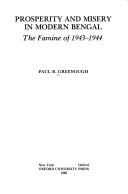
A social and cultural history of the famine itself, on how Bengali households and patron-client obligations broke down, and on the abandonment of women and children. The best account of the famine as a social event rather than an economic one.

The province's rural economy from 1919 to 1947 — tenancy, credit, jute, indebtedness — which is the structural condition the famine landed on. Academic and dry in places, and it explains why Bengal was fragile before anything went wrong.

Argues that the great nineteenth-century famines in India, China and Brazil were produced by the collision of El Nino droughts with imperial market policy. A polemic with a substantial evidentiary base, and the longest view of the pattern 1943 sits at the end of.
Discussion
Keep reading
Paths that share books, cover the same subject, or open a related topic.