The Bartimaeus Sequence Reading Order: Where to Start
Jonathan Stroud's Bartimaeus books are read in publication order — The Amulet of Samarkand, The Golem's Eye, Ptolemy's Gate — and then, and only then, the prequel. The Ring of Solomon is set two thousand years before the trilogy and appeared five years after it ended, which makes it look like the obvious place to start. It is not. The trilogy's emotional payload is a slow reveal about Bartimaeus's memory of a boy called Ptolemy, and the prequel takes that reveal for granted from its opening pages. Read the three first, then Ring of Solomon fourth, where it works as an epilogue that happens to be set in 950 BC. Beyond the sequence, Stroud went on to write Lockwood and Co., a five-book series with the same footnoted comedy and a far tighter plot engine, and this path takes that next before doubling back to his early novels.
The trilogy, in order
BeginnerRead the three core novels in publication order and follow the double narration that carries the whole sequence
▸ Study plan for this stage
Pace: Six to seven weeks for 1,560 pages — The Amulet of Samarkand at 462, The Golem's Eye at 576, Ptolemy's Gate at 522. These are long books that read short: the chapters are brief, the narration alternates, and 60 to 70 pages an evening is comfortable, so two weeks apiece is a realistic pace with room
- There is one correct entry point — The Amulet of Samarkand — and one correct order, publication order. The prequel is a trap for exactly this reason and is dealt with in the next stage.
- The double narration is the sequence's engine: Nathaniel in close third person, and Bartimaeus in a sardonic first person carrying his own footnotes. The two accounts of the same events do not agree, and the disagreement is the point.
- The footnotes are not decoration. They are where five thousand years of the djinni's history is delivered, including the Ptolemy material that eventually becomes the plot, so skipping them costs you the ending.
- The setting is an alternate imperial London run by magicians as a civil service, where power is entirely borrowed — every magician's ability is a summoned spirit doing the work under compulsion.
- That is the sequence's real argument: an empire whose greatness is done by enslaved labour it refuses to look at. Stroud puts it in a comic voice and never lets it stop being true.
- The Golem's Eye adds a third narrator from the Resistance, and with her the government's politics stop being background. This is where a caper becomes a story about an empire.
- Nathaniel's arc is a genuine moral decline before it is anything else. Readers expecting a boy hero find the series harder than its jacket suggests, and that is deliberate.
- Ptolemy is the name to watch from the first footnote onward. Everything the trilogy does at its close is built out of who he was and what he did.
- What does the alternation between Nathaniel's third person and Bartimaeus's first person let Stroud show that a single narrator could not?
- What are the footnotes actually doing? Find one that seems to be a joke and turns out to be plot.
- Every magician's power is borrowed from a compelled spirit. What does the trilogy think of that arrangement, and where does it say so most directly?
- Trace Nathaniel from the first chapter to the middle of The Golem's Eye. At what point does he stop being sympathetic, and does the book agree with you?
- What does Kitty's narration add that neither of the other two voices could supply?
- Who was Ptolemy, and why is he the thing the whole trilogy has been about?
- Read every footnote in the first fifty pages, then read them again as a block on their own. They form a second, parallel narrative and seeing it separated out is the fastest way to understand the trilogy's construction.
- Pick a scene narrated by Nathaniel and rewrite a paragraph as Bartimaeus would report it. The gap between the two is the series' whole comic and moral method.
- Keep a list of Bartimaeus's previous masters as the footnotes mention them. By Ptolemy's Gate the list is doing serious work.
- Mark the point in The Golem's Eye where you first feel the politics has become the plot rather than the setting. Comparing that page with another reader's is a good argument to have.
- After Ptolemy's Gate, go back and reread the first chapter of The Amulet of Samarkand. Almost every reader finds Bartimaeus's voice has changed without a word of it changing.
Next up: With the trilogy's reveal intact, the prequel can be read for what it is — an adventure — rather than as the spoiler it becomes if taken first.
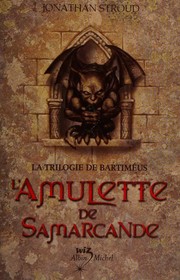
The only correct entry point. A twelve-year-old magician's apprentice in an alternate imperial London summons a five-thousand-year-old djinni to steal an amulet, and the book alternates between the boy's third person and the djinni's sardonic footnoted first. Everything the sequence does later depends on you meeting Bartimaeus this way first.
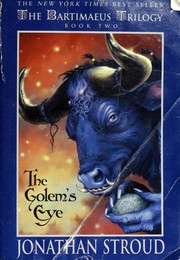
Second, and the volume that widens the world: a third narrator arrives from the Resistance, and the politics of the magicians' government stop being background. It is the longest of the three and the one that turns a caper into a story about an empire.

The conclusion, and the book the first two are built to make possible — the Ptolemy material that has been surfacing in footnotes since book one finally becomes the plot. Read it last of the three, and close behind The Golem's Eye; its ending is the reason people remember this series into adulthood.
The prequel, read fourth
BeginnerRead The Ring of Solomon in the position that preserves the trilogy's central reveal
▸ Study plan for this stage
Pace: About a week and a half for 448 pages. The Ring of Solomon reads at the same brisk 60 pages an evening as the trilogy and is a genuinely standalone story, so it can be picked up any time after Ptolemy's Gate without needing the earlier books fresh in mind. The only scheduling rule that matters is ne
- The Ring of Solomon is set in Jerusalem around 950 BC, with Bartimaeus enslaved to one of Solomon's magicians. Chronologically it is first in his life by two millennia and it is absolutely last in reading order.
- The reason is a reveal, not a preference. The book assumes from its opening pages the thing Ptolemy's Gate spends three volumes uncovering about how Bartimaeus actually regards his masters, so reading it early trades the trilogy's ending for a standalone adventure.
- It is also structurally lighter: one narrator on the djinni side, a single human protagonist, and a plot that resolves within the covers. Nothing carries over.
- The historical setting is used the way the footnotes use history in the trilogy — confidently and loosely, with the joke always at the expense of the magicians rather than the period.
- Reading it fourth turns it into a bonus rather than a foundation, which is the position that suits it: it is a good book and it is not the sequence's spine.
- Note for anyone buying it: the record carries a duplicated author credit with a misspelled variant, which is a catalogue artefact rather than two writers.
- What does the prequel take for granted about Bartimaeus that the trilogy withholds until its final volume?
- How does a single-strand narrative change the reading experience compared with the trilogy's three voices?
- What does Solomon's ring do, and how does that concentration of power differ from the distributed magician civil service of the London books?
- Is Asmira a Nathaniel or a Kitty? Where does she fit against the trilogy's two human types?
- Having read it fourth, can you make the case for reading it first? What would that reader gain, and what exactly would they lose?
- Before starting, write down what you learned about Bartimaeus's inner life at the end of Ptolemy's Gate. Then find the page in the prequel where that same understanding is simply assumed — usually within the first thirty.
- Compare the footnote density here with The Amulet of Samarkand. Stroud dials it differently and the effect on pace is measurable over a chapter.
- List what the prequel adds to the trilogy's world and what it merely repeats. It is a short list, and making it is the honest test of whether the book is essential.
- Recommend the sequence to someone in writing, in three sentences, including the prequel's position. Being able to justify the order concisely is the practical outcome of this stage.
Next up: With Bartimaeus finished, the obvious next move is Stroud's other completed series, where the same comic voice is attached to a much tighter plot.

Bartimaeus in Jerusalem in 950 BC, enslaved to one of Solomon's magicians — chronologically first by two millennia and absolutely last in reading order. It assumes from the start the thing Ptolemy's Gate spends three books revealing about how Bartimaeus regards his masters, so reading it early costs you the trilogy's ending for the sake of a standalone adventure.
Lockwood and Co., in order
BeginnerRead Stroud's other complete series, where the same voice is put to work on a much tighter plot
▸ Study plan for this stage
Pace: Ten to twelve weeks for 2,322 pages across five books — The Screaming Staircase 418, The Whispering Skull 464, The Hollow Boy 448, The Creeping Shadow 512, The Empty Grave 480. This is the longest stage on the path by a wide margin, and it is also the fastest-reading: these are propulsive ghost stor
- The premise: a London where a rising tide of hauntings, called the Problem, is lethal to touch, and only children can reliably see the ghosts — so children do the dangerous work, supervised or not.
- Lockwood and Co. is the one agency with no adult supervision at all, which is both the joke and the horror, and the series never lets you forget how young its investigators are.
- The five books are a single arc. The Screaming Staircase is the only one that reads as a standalone; from The Hollow Boy the overarching question about the source of the Problem drives everything.
- The skull in the jar is the structural descendant of Bartimaeus — rude, unreliable, funny, and the thing that makes the horror bearable. It arrives properly in book two and its reliability is a running question.
- Lucy narrates all five in first person, and unlike Bartimaeus she is inside the danger rather than commenting on it. The voice is warmer and the stakes land harder because of it.
- The Hollow Boy deliberately breaks the trio's dynamic. It is the volume that stops the series being episodic, and it is where readers who found the first two comfortable discover it is not going to stay that way.
- This is the better-plotted of Stroud's two series. Bartimaeus has the more brilliant voice; Lockwood has the tighter machine, and the ending answers its central question rather than dissolving it.
- Every book uses a real procedural texture — iron, salt, magnesium flares, the rules of a night watch — which is what makes the ghosts frightening rather than whimsical.
- Why are the agents children? What does Stroud gain from that premise beyond the obvious appeal, and what does he make it cost?
- How does the skull differ from Bartimaeus as a comic voice? What can it do that a summoned djinni could not, and what can it not?
- What actually breaks in The Hollow Boy, and why does the series need it broken?
- Track the question of what causes the Problem across all five books. When is it first raised, and how much is answered before the last volume?
- Lucy narrates alone, where Bartimaeus alternates. What does a single first-person voice buy this series?
- Compare the endings of Ptolemy's Gate and The Empty Grave. Which does more for its reader, and are they trying to do the same thing?
- Keep a note of the equipment and the rules as they are introduced in the first book. Stroud plays fair with them for five volumes, and knowing the rules makes the set pieces genuinely tense.
- After each book, write one sentence on what you now think causes the Problem. Five sentences in a row is the cleanest way to see how carefully the mystery is paced.
- Compare the skull's dialogue in book two with the same character in book five. Its function shifts substantially and most readers do not notice while reading.
- Read the last chapter of The Creeping Shadow and the first chapter of The Empty Grave in one sitting. That join is the tightest piece of construction in the series.
- Pick one haunting from any volume and describe how Stroud builds it — sound first, then temperature, then sight. The pattern is consistent and it is the engine of the whole series.
Next up: Both of Stroud's famous series work by putting a comic voice against genuine dread; the early novels show the dread arriving first, without the voice.

The natural next step after Bartimaeus and the better-plotted series of the two: a London where only children can see ghosts, and a three-person agency with no adult supervision. Start here — the five books are one continuous arc.

Book two, and the point where the talking skull becomes the series' equivalent of Bartimaeus — the rude, unreliable commentary that makes the horror bearable. Read it directly after the first.

Book three, which breaks the trio's dynamic on purpose and is the volume where the overarching mystery about the source of the Problem begins to move. The middle book, and the one that stops the series being episodic.
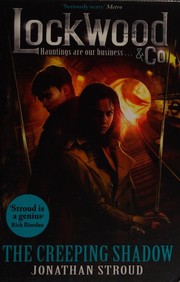
Book four, and the darkest instalment — the agency reassembles under changed terms and the conspiracy comes into view. Read it fourth; it ends on the series' sharpest cliffhanger.
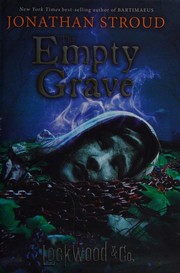
The finale, which answers the question the five books have been circling and does not soften it. Read last, and read it close to The Creeping Shadow.
Stroud before Bartimaeus
IntermediateRead the three early novels and see the folk-horror writer Bartimaeus grew out of
▸ Study plan for this stage
Pace: Three to four weeks for 818 pages — Buried Fire at 308, The Leap at 213, The Last Siege at 297. They are much shorter than anything else on this path and they read considerably slower, because none of them has the comic narrator that makes the later books move. The Leap in particular is 213 pages th
- Buried Fire, from 1998, is his first novel: a dragon buried under an English hillside and a village that begins to change around it. It is folk horror, not comic fantasy, and the difference is total.
- The English landscape is the antagonist in a way it never is in Bartimaeus. Hills, churches and old ground carry the menace, and the books trust the reader to find that unsettling without a joke to cushion it.
- The Leap uses split narration — the same device that later becomes Nathaniel and Bartimaeus — with no comedy in it at all. One of the two voices may be a delusion and Stroud declines to adjudicate.
- That is the clearest evidence on this path that the alternating structure was a technique he already had, and that the comedy was a later decision rather than the source of the method.
- The Last Siege puts three children in a derelict castle in midwinter and lets a game become real. It was published the same year as The Amulet of Samarkand and is completely unlike it.
- Taken together, the three are the road not taken: the writer who could have gone on making quiet, cold, ambiguous books instead of the funniest fantasy of his generation.
- The prose is plainer and colder here. Anyone who came for the Bartimaeus voice should know in advance that it is not present in any of the three.
- What is buried under the hill in Buried Fire, and how does Stroud make an English village feel like the dangerous element?
- In The Leap, what evidence does the text give for each of the two accounts? Can you settle it, and does Stroud want you to?
- How does split narration work here compared with the trilogy? What does removing the comedy change about the reader's position?
- The Last Siege and The Amulet of Samarkand were published the same year. What do they share, if anything?
- On this evidence, what did Bartimaeus add to Stroud's existing equipment — and what did it cost him?
- Read The Leap in as few sittings as possible; the ambiguity works by accumulation and dissipates if you put it down for a week.
- Mark every place in The Leap where the text could be read either way. The list is longer than it feels while reading and it is how the book is built.
- Take a descriptive paragraph from Buried Fire and one from The Screaming Staircase. Both are doing dread; the mechanisms are entirely different and comparing them is the sharpest exercise on this stage.
- Write one sentence on what each of the three early novels is afraid of. Landscape, memory, and children respectively is a defensible answer, and arguing with it is the point.
Next up: Having seen where he started, the last stage is the two books that sit outside both famous series and show where he is going.

His first novel, from 1998: a dragon buried under an English hillside and a village that starts to change. Much closer to English folk horror than to the comic fantasy he became known for, and the earliest of the three — read it first here.
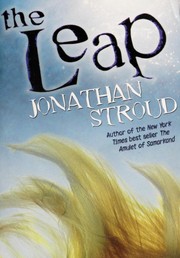
A girl convinced her drowned friend is alive somewhere else, told in two alternating voices, one of which may be a delusion. The most unsettling thing Stroud has written and the clearest early use of the split narration that Bartimaeus later made comic.
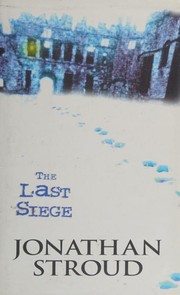
Three children occupy a derelict castle in midwinter and the game turns real. Published the same year as The Amulet of Samarkand and completely unlike it, which is why it is worth reading last of these three — it is the road not taken.
The two books outside both series
IntermediateRead the standalones on either side of Lockwood and judge where Stroud's work is going
▸ Study plan for this stage
Pace: Three to four weeks for 850 pages — Heroes of the Valley at 402 and The Outlaws Scarlett and Browne at 448. Both read at the brisk pace of his major series, 60 pages an evening, so ten days apiece is comfortable. Read Heroes of the Valley first: it was written between the two series and belongs to t
- Heroes of the Valley is a Norse-flavoured standalone in which the heroic sagas the protagonist grew up on turn out to be badly wrong about what actually happened.
- It is the funniest thing Stroud has written about storytelling itself, and the least-read book in his catalogue — a genuine gap in his reputation rather than a minor work.
- The structural joke is the same one Bartimaeus makes about empire, moved onto legend: the official version and the true version are both in the book, and only one of them is heroic.
- The Outlaws Scarlett and Browne opens his post-Lockwood series: a bank robber and a strange boy crossing a broken, half-flooded future Britain with something wrong about the boy.
- The pairing of a competent, cynical older figure with a dangerous unknowable one is a shape he has now used three times — magician and djinni, agent and skull, outlaw and Browne — and this is the least comic version of it.
- It is an ongoing sequence, so this is the one book on the path where the reader is left genuinely mid-story with no completed arc to return to.
- Read after everything else, the two standalones make the through-line visible: Stroud writes about people who discover the story they were told about their world is a lie, and he lets the funniest character be the one who knows it.
- What do the sagas in Heroes of the Valley get wrong, and how does the novel reveal it?
- How does Heroes of the Valley's joke about legend compare with Bartimaeus's joke about empire? Are they the same argument?
- What is the relationship between Scarlett and Browne, and where does it sit against magician-and-djinni and agent-and-skull?
- What kind of collapse has happened to Britain in Scarlett and Browne, and how much does the book choose to explain?
- Across everything on this path, what is Stroud's recurring subject? Answer in one sentence and test it against all five stages.
- List the three partnerships — Nathaniel and Bartimaeus, Lucy and the skull, Scarlett and Browne — with what each partner supplies. The pattern is unmistakable and it is the most useful thing this stage produces.
- Find the passage in Heroes of the Valley where the official saga and the actual event are given side by side, and read them consecutively. It is the book in miniature.
- Decide before finishing Scarlett and Browne whether you will follow an unfinished sequence. That is a real reading decision and this is the point to make it deliberately.
- Write a one-paragraph guide to reading Stroud for someone who has only read The Amulet of Samarkand. If you can do it, the path has done its job.
Next up: That is the whole of Stroud in order — the trilogy protected, the prequel placed, and both careers on either side of it read.
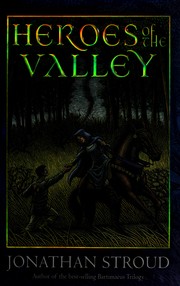
A Norse-flavoured standalone written between the two series, in which the sagas the hero has grown up on turn out to be badly wrong about what happened. The least-read book in his catalogue and the funniest thing he has written about storytelling itself.

His post-Lockwood series opener — a bank robber and a strange boy crossing a broken, half-flooded future Britain. The record for it uses the ampersand form of the title. Read it last: it is the current direction of travel, and the first of an ongoing sequence rather than a finished one.