Tennessee Williams Reading Order: Which Play to Read First
Williams left more than thirty full-length plays, and the ones written after 1961 are so raw and formally strange that meeting them first is how most readers decide he is not for them. This path takes the two plays that made him, then the strongest run of the middle period, then the late Southern-gothic work once you can hear what he is doing with it, and closes with the experiments and the prose. Read in publication order within each stage; the order below is not chronological across stages, because Williams's best work is not his earliest.
The Two Doors In
BeginnerUnderstand the Williams signature — a narrator or a stranger arriving into a closed household, and a fragile person destroyed by the truth — from the two plays that define it.
▸ Study plan for this stage
Pace: Three weeks for two short plays, because a play read at prose speed is not read at all. The Glass Menagerie is about 105 pages and A Streetcar Named Desire about 142 — one act a sitting, aloud where possible, and reread the whole of each before moving on. Content note: Streetcar's penultimate scene
- The Glass Menagerie announces its own artifice: Tom addresses the audience, tells you he is a magician who gives you truth in the disguise of illusion, and that the play is memory and therefore not realistic. Nothing else Williams wrote is this generous about explaining itself.
- Williams's production notes to the play argue for what he called a plastic theatre — music, projected legends, expressive lighting — against the conventions of realism. The notes are part of the text and are usually skipped; they are the clearest statement of his theatrical programme.
- The household is the recurring Williams shape: a mother living on a version of her Southern girlhood, a daughter too fragile for the world outside, a son who can only escape by abandoning them, and an outsider who arrives and destroys the equilibrium by being ordinary and truthful.
- The gentleman caller does nothing cruel. He is decent, encouraging, and engaged to somebody else, and the damage is done by the truth rather than by malice. That is the pattern Williams keeps rebuilding.
- Streetcar is the same architecture with the narrator removed and no mercy extended. Blanche arrives into a marriage as the outsider, but she is also the fragile one, so the play makes her the intruder and the victim simultaneously.
- Blanche knows she is performing. The paper lantern over the bare bulb, the constant bathing, the refusal of direct light — she narrates her own artifice, which is what separates the part from the diva role it is often reduced to.
- The polka that only Blanche hears is the play's use of sound as interior state, and it is the plastic-theatre idea from the Menagerie notes carried into a realist-looking play.
- Read in this order, Blanche becomes legible as a character rather than as a performance, because you have already seen the same fragility handled tenderly in Laura.
- Tom tells you the play is memory and therefore unreliable. Where in The Glass Menagerie does the unreliability actually show?
- What does the gentleman caller do wrong? Answer precisely, then say why the play is a tragedy anyway.
- Blanche lies constantly and is also telling the truth about the central thing. Which is which, and when does the audience know?
- What is Stanley defending, on his own account? State his position as he would state it before you judge it.
- The polka is heard by one character. What does that device do that a line of dialogue could not?
- Both plays end with a woman being left in the dark. What is different about the two endings?
- Read the production notes to The Glass Menagerie before the play itself, then mark every place in the text where a stage direction is doing what the notes describe.
- Read the last scene of each play aloud, all parts, alone. Ten minutes each, and the rhythm of Williams's dialogue is unavailable any other way.
- Write out everything Blanche says about Belle Reve and about her husband, in order. Assembled, it is a coherent account, which is easy to miss inside the play.
- Watch the 1951 film of Streetcar after reading, and list what the ending changes. The Production Code alterations are the fastest lesson in what the play was thought to be doing.
Next up: You have the signature architecture and the sound of the dialogue; the middle plays put the same pressure on a whole family instead of one intruder.
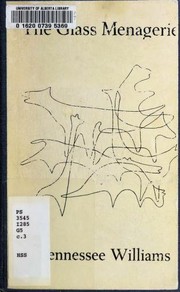
The right first Williams, not the most famous one. It is short, explicitly a memory play with a narrator who tells you so, and it lays out every preoccupation — the trapped Southern mother, the escape that costs somebody else everything — in a form that explains itself as it goes.
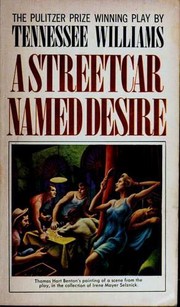
Second, because it is the same architecture with the safety rail removed: no narrator, no mercy, and a heroine who is fully aware of her own performance. Reading it after Menagerie makes Blanche legible as a character rather than a diva role.
The Middle Period, Where the Heat Rises
IntermediateSee Williams working at full length on families rather than individuals, and learn to read his stage directions — the poetry lives there as much as in the dialogue.
▸ Study plan for this stage
Pace: Five weeks. Cat on a Hot Tin Roof is about 158 pages and must be read twice — once through, then the alternate third act. Summer and Smoke is 95 pages and reads in two sittings; The Rose Tattoo is 144 and is the most fun on the path.
- Cat on a Hot Tin Roof is his most tightly built play: one evening, one bedroom, a birthday party downstairs, a diagnosis being concealed, and a marriage that has stopped. The unities do the work that a narrator does in the Menagerie.
- The withheld thing is the structure. What happened between Brick and Skipper is circled by every character and never settled on stage, and the play's power depends on it staying unsettled while everyone acts on their own version.
- Mendacity is the word the play puts at its centre — the lie about the illness, the lie about the marriage, the lie about the inheritance — and Big Daddy's long second-act scene with Brick is where the play stops being about a family and becomes about whether truth is survivable.
- The published text prints two third acts: Williams's own and the version he rewrote at his director's urging for Broadway, with a note explaining the disagreement. The two endings imply different plays, and Williams left the argument in print rather than resolving it. Read both and take a position.
- The 1958 film removed the Brick and Skipper material almost entirely, which is worth knowing because it is how most people encountered the play for decades.
- Summer and Smoke is schematic where the others are oblique: a minister's daughter and a doctor's son, an anatomy chart on one side of the stage and a stone angel on the other, and each character ending up where the other began. It states the body-and-soul argument outright.
- The Rose Tattoo is the corrective to thinking he only wrote tragedy — a loud comic play about a Sicilian-American widow, a truck driver, appetite and a second chance, and it ends happily and unironically.
- His stage directions are prose, not instructions. In all three plays they carry imagery, judgement and sometimes the emotional climax, and reading past them removes a third of the writing.
- What does Cat withhold about Brick and Skipper, and what does each character believe? List them separately.
- Read both third acts. What does each imply about whether Brick changes, and which does the rest of the play support?
- What does Big Daddy actually want from Brick in the second act, and does he get it?
- Summer and Smoke ends with the two characters having swapped positions. Is that a resolution or a joke at both their expense?
- The Rose Tattoo is comic and generous. Does it use the same machinery as the tragedies, or different machinery?
- Take one page of stage directions from any of the three and say what it does that dialogue could not.
- Read Cat straight through with Williams's third act, then reread only the third act in the Broadway version, then write 300 words on which play you would stage and why.
- Copy out one full stage direction from The Rose Tattoo and one from Cat, and annotate both for imagery and for judgement.
- Diagram Summer and Smoke's two-sided stage — the anatomy chart and the angel — and track which character stands where in each scene.
- Read Big Daddy's second-act scene aloud with someone else if you can. It is roughly thirty pages of two-hander and it is the best writing in the middle period.
- Watch the 1958 film of Cat after reading both third acts, and list every change. It is a case study in what the material was thought to be about.
Next up: The middle plays are his most controlled; the late ones deliberately give that control up, and knowing what has been abandoned is the only way to read them fairly.

His most tightly built play and the one where the withheld secret does the structural work. Read the published text's alternate third act — Williams printed both his own and the Broadway version, and the disagreement is the clearest window onto what he was fighting for.
Quieter and more schematic than Streetcar, but it is the play where Williams states the body-versus-soul argument outright rather than dramatising it obliquely. Placed here because it reads as a commentary on the two plays before it.

The corrective to thinking Williams only wrote tragedy — a loud, comic, Sicilian-American play about appetite and second chances. It complicates the portrait before the late work darkens it again.
The Late Southern Gothic
IntermediateFollow Williams as the plays get crueller, more mythic and more openly about his own damage, and be able to say why critics turned on him in the 1960s.
▸ Study plan for this stage
Pace: Six weeks for four plays, and they are short — roughly 86, 92, 120 and 127 pages. One a week with a gap, in the order given. Content notes: Suddenly Last Summer turns on a proposed lobotomy and ends with an account of a death by cannibalism; Sweet Bird of Youth closes with an explicit threat of cast
- Orpheus Descending is a rewrite of his own early Boston failure, and it is the moment the myth-making becomes explicit: a wandering musician in a snakeskin jacket arrives in a Southern town, is taken up by a woman married to a dying man, and is destroyed by the town. Once you have seen the drifter-a
- The town in Orpheus is a character with a memory, and the burned wine garden and the death of the heroine's father are the buried history the present action repeats.
- Suddenly Last Summer is a one-act you can read in an hour and will not forget: a wealthy woman wants her niece silenced about how her son died, and offers a surgeon money for a procedure that will do it. The play is almost entirely two long monologues.
- Its central speech, about turtles hatching on a beach and the birds that take them, states a view of a cruel and indifferent creation, and the death it eventually describes is the same image applied to a human being. Its brevity makes it the best test of whether you want the rest of the late work.
- Sweet Bird of Youth pairs an ageing film star travelling incognito with a local man who has come home believing he can still be somebody, and sets both against a political boss's machine. It is the fullest late treatment of ageing, vanity and small-town rot.
- The film star is a knowing self-parody of the faded-beauty role Williams was accused of repeating, and she is the only character in the late plays who survives by admitting exactly what she is.
- The Night of the Iguana is the gentlest of the late plays and his last major commercial success: a defrocked clergyman, a hotel proprietor and an itinerant portraitist with her dying poet grandfather, on a Mexican verandah, with a captured iguana under the deck.
- The iguana is the plainest symbol he ever used and the play knows it. Cutting it loose is the closest thing to grace in the late work, and it is offered without irony, which is why the play is where a reader can reasonably stop.
- What is the town in Orpheus Descending punishing, and what does the buried history have to do with it?
- In Suddenly Last Summer, who is telling the truth, and what does the play do with the fact that the audience can be sure and the characters cannot?
- What is the turtle speech arguing, and how is the play's final account of a death the same image?
- The film star in Sweet Bird of Youth survives and the man does not. What is the difference between them, in the play's terms?
- Critics turned on Williams in the 1960s. Using these four plays, construct the strongest version of the criticism, then the strongest defence.
- The Night of the Iguana allows its characters something the other three do not. Name it precisely.
- Read Orpheus Descending and then read a synopsis of Battle of Angels, and write 200 words on what the rewrite fixed.
- Read Suddenly Last Summer in one sitting, then write out the turtle speech's argument in five sentences of your own.
- List the sacrificial-outsider figure in each of these four plays and note what the community wants from him or her. The pattern is exact.
- Write 400 words making the case against late Williams — repetition, symbolism, sensationalism — using specific scenes, then write 400 words answering it.
- Read the last page of The Night of the Iguana aloud, and write a paragraph on whether the grace it offers is earned by the preceding two acts.
Next up: Two paths remain from here: the play where he abandoned realism altogether, and his own account of the life all of this keeps circling.
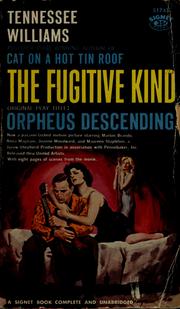
A rewrite of his own early failure Battle of Angels, and the moment the myth-making becomes explicit. Read before Sweet Bird of Youth because it introduces the drifter-as-sacrifice figure the later plays keep reusing.

A one-act you can read in an hour and will not shake off — the most compressed and most horrifying thing he wrote. Its brevity makes it the best test of whether you want the rest of the late work.

The fullest late-period treatment of vanity, ageing and political rot in one small town. It rewards having read Streetcar, because the Princess is a knowing self-parody of the faded-beauty role Williams was accused of repeating.
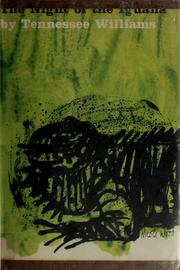
The last major commercial success and the gentlest of the late plays — three ruined people on a Mexican verandah reaching something like grace. It is the natural place to stop if you do not intend to go further.
The Experiments and the Prose
BeginnerMeet the Williams who abandoned realism, and read his own account of the life the plays keep circling.
▸ Study plan for this stage
Pace: Five to six weeks. Camino Real is about 131 pages in sixteen short blocks and is best read in two or three sittings rather than piecemeal, since it has no plot to pick back up. Vieux Carré is 115 pages and reads quickly. Memoirs is 289 pages of digressive prose; take it a chapter at a time and last.
- Camino Real abandons plot, place and psychology: a dead-end plaza in an unnamed country, populated by Casanova, Camille, Byron, Don Quixote and an American boxer, with street cleaners removing the bodies. It flopped, and it is the play Williams most wanted defended.
- It only makes sense as a deliberate refusal. He wrote it immediately after perfecting the form he had made his name in, and the point of reading it last among the plays is that you can see what is being rejected.
- The play's few famous lines — including the one about violets breaking through rock — are the residue of a Romanticism the realist plays keep under control. Here it runs unchecked, which is either the interest or the problem depending on your reading.
- Vieux Carré returns to the New Orleans rooming house of his early twenties, thirty years on: a young writer, a landlady, a dying painter, a couple in the next room, all remembered rather than dramatised.
- It is the same memory-play device as The Glass Menagerie with nothing softened and no unicorn — the writer's own hunger, sexuality and callousness on the page. Read directly after the plays it echoes, the effect is considerable, and it is fragmentary in a way that divides readers.
- Memoirs is unreliable, indiscreet and frequently self-serving, and Williams knew it. It was written in the mid-1970s for money and for a settling of accounts, and it is candid about his sexuality at a time when that candour was itself the news.
- Its account of his sister's lobotomy and of the death of his partner are the two passages that reframe the plays most sharply, and they are also the places where the prose stops performing.
- Read last, as placed, it corrects nothing and colours everything. Using it as a key to the plays is the mistake; using it as one more unreliable narrator in a body of work full of them is the way in.
- What is Camino Real refusing, concretely — which conventions of Cat and Streetcar does it discard?
- Does Camino Real have a protagonist? If so, on what grounds; if not, what holds the sixteen blocks together?
- Vieux Carré and The Glass Menagerie use the same device. What has changed in thirty years, and what has not?
- Where in Memoirs is Williams performing, and where does the performance stop? Point at a specific passage of each.
- Having read the memoir last, which play does it change most, and is the change an improvement in your understanding or an intrusion on it?
- Across the whole path, what is the one thing Williams wrote about that everything else is a version of? Answer in a sentence.
- Read Camino Real in one or two sittings and then write 300 words defending it, whether or not you liked it. Constructing the defence is the exercise.
- Set the opening of Vieux Carré beside Tom's opening speech in The Glass Menagerie and annotate every difference in how the narrator positions himself.
- While reading Memoirs, keep a list of episodes you recognise from the plays and mark which the memoir tells more honestly and which less.
- Write a one-sentence summary of each of the twelve plays on this path, in reading order, and then read the list back. The recurrences should be visible without any commentary.
- Choose the one play you would give to somebody who had read no Williams — it will probably not be Streetcar — and write five sentences justifying it.
Next up: This closes the path: the two plays that made him, the controlled middle period, the late gothic work, the experiment he most wanted defended, and his own indiscreet account of the life underneath all of it.

His great non-realist failure and the play he most wanted defended: a plotless dream-plaza of Casanova, Camille and Don Quixote. Save it for last among the plays because it only makes sense as a deliberate refusal of the form he had just perfected.
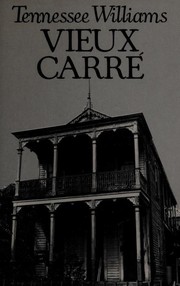
Late, fragmentary and autobiographical — a return to the New Orleans rooming house that produced Menagerie, written thirty years on with nothing hidden. Read directly after the middle plays it echoes and the effect is devastating.

Unreliable, indiscreet and frequently self-serving, which is exactly what makes it useful once you already know the plays. Read last so his self-account corrects nothing and colours everything.