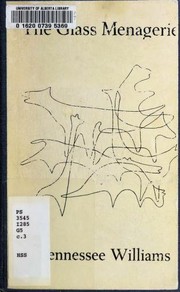
Start with The Glass Menagerie. It is short, it has four characters, and it announces itself in the first speech as a memory play — which means it hands you the key to how Williams works before it asks you to use it. It was also his first success, and everything after it is a variation on the family it describes.
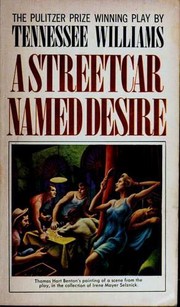
The obvious alternative is A Streetcar Named Desire, the most famous American play of the century and the one most people mean when they say Tennessee Williams. It is the better play. It is a bad first play, because it is faster, more violent, and its central cruelty is far more legible once you have watched him handle the same wounded sister figure gently.
The four that carry the reputation
The Glass Menagerie, then A Streetcar Named Desire, then Cat on a Hot Tin Roof, then The night of the iguana. That is the spine, roughly a decade and a half of work, and a reader who stops there has read the Williams that matters.
Cat on a Hot Tin Roof comes with an edition problem worth knowing before you buy. Elia Kazan pressed Williams to rewrite the third act for the Broadway production, and Williams did it while disagreeing with the reasons. Most editions now print both versions, with his own note explaining the quarrel. Read the original third act first, then the Broadway one, then his note. It is the clearest surviving record of what a director can do to a play.
The night of the iguana is the last of the major plays and the most forgiving of its characters. Readers who find the earlier work relentless often like this one best.
The strong second tier
Summer and smoke covers ground close to A Streetcar Named Desire — a repressed woman, a coarser man, a small Southern town — and Williams rewrote it years later because he was never satisfied. It is the one to read if you want to watch him work a problem twice.
The Rose Tattoo is the outlier: broad, warm, comic, Sicilian-American rather than genteel-Southern, and written while he was happy. It is the best corrective to the idea that he only had one register.
Orpheus Descending is itself a rewrite of an early failure, and Suddenly last summer is a one-act of real ferocity that runs barely an hour. Sweet bird of youth has one great part and a plot that strains.
Camino Real is the experiment — non-realist, allegorical, a famous flop that he defended for the rest of his life. It is genuinely interesting and it is a terrible entry point.
The late work, and where to stop
Vieux Carré is late, autobiographical, and set in the New Orleans boarding house of his twenties. It is the most rewarding of the late plays, which is a lower bar than it sounds — most readers and most critics find the work after the early 1960s a steep falling off, and Williams himself was bitter about how it was received. Stop after The night of the iguana unless you are committed.
Memoirs is worth the detour for a different reason. Published in the 1970s, it is candid about his sexuality in a way almost nothing else from that period is, and it is also unreliable — vague on dates, self-serving in places, written for money while he was unwell. Read it as a voice rather than a record, and check anything factual elsewhere.
The full ordered sequence, with the second-tier plays slotted in, is on the path below.
Follow the full ordered path here: Tennessee Williams Reading Order: Which Play to Read First.