Tamora Pierce books in order: where to start with Tortall
Tortall is unusually easy to order: four connected quartets, each following a different girl into a different kind of power, and for once publication order and internal chronology agree. Read the quartets in the order Pierce wrote them, because each one is a deliberate argument with the last — Alanna disguises herself as a boy to become a knight, and twenty years later Keladry does it openly and finds out how much harder that is. The final stage covers where the world goes after the four quartets, including the one book that jumps back in time.
Start here: Song of the Lioness
BeginnerRead the quartet that started Tortall, in order — it is short, it is 1980s YA, and everything later assumes it.
▸ Study plan for this stage
Pace: The shortest quartet on the path: 1,073 pages across four books — 241, 240, 256 and 336 — which is less than many single adult fantasy novels. A book a week is unhurried and finishes the quartet in a month; a determined reader will do it in a fortnight. Read all four. They were conceived as one nove
- Disguise as the enabling premise, and the fact that every later quartet is an argument about it
- Magic as a talent that has to be trained and can be refused, established here and consistent across the world
- Pierce writing physical training, injury and exhaustion in detail — the competence texture that defines the whole series
- Tortall's political geography introduced through one girl's court career rather than through exposition
- The quartet as a single split novel, visible in how the volumes begin and end
- How short these books are — 240 pages for a full instalment — and what that constrains
- What does the disguise let Alanna avoid, and which of those problems does the series later go back and face?
- How does Pierce use training scenes to do characterisation that dialogue would have to state?
- Where does In the Hand of the Goddess raise the stakes, and what changes in the writing at that point?
- What does The Woman Who Rides Like a Man attempt, and where does it fall short of the attempt?
- Does Lioness Rampant close the story, or set up the world? Argue from its last chapter.
- Keep a list of every rule of magic the quartet establishes; you will check it against Daine's very different powers in the next stage.
- Note each point at which Alanna's disguise nearly fails and what saves her. The pattern is the argument Keladry's quartet answers.
- Read the first chapter of Alanna and the first chapter of Lioness Rampant consecutively — 241 pages apart in one direction, 336 in the other — and describe what improved in the writing.
- Write down, before starting stage two, what you think a girl knight story cannot do. Protector of the Small is built to answer that.
Next up: With the founding quartet read, Daine's books can put Alanna in the background where a second generation can see her clearly.

The right first book. Alanna of Trebond swaps places with her twin brother to train as a knight. Slim and fast; our catalogue record is filed under the short title Alanna and carries a junk publication year.
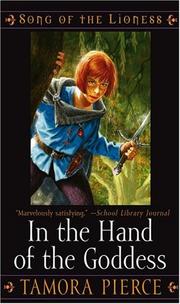
Alanna as a squire, and the book where the series stops being a disguise caper and starts having stakes. Direct sequel, no gap.
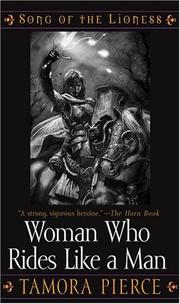
Alanna in the desert with the Bazhir. The most dated of the four on cultural grounds and the one where Pierce's ambitions clearly outgrow the format.
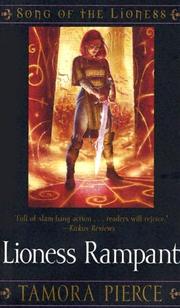
Closes the quartet. Read all four; they were conceived as a single novel and the split is arbitrary.
The Immortals: Daine
BeginnerRead the second quartet, set roughly a decade later in the same country, with Alanna now a supporting adult.
▸ Study plan for this stage
Pace: 1,236 pages across four — Wild Magic 326, Wolf-Speaker 304, Emperor Mage 294, The Realms of the Gods 312 — noticeably more even in length than the first quartet, and each volume runs a little longer. A month at one a week, the same cadence as before. The prose is stronger here and most readers speed
- Wild magic as a different order of power from the Gift, and how Pierce keeps the two systems from collapsing into each other
- Animals written as characters with their own priorities rather than as companions
- Alanna as a supporting adult, and what the series gains by refusing to keep its first heroine central
- The environmental argument in Wolf-Speaker, which is Pierce's most direct thematic statement
- Emperor Mage as a diplomatic story that turns, and the structural trick that makes the turn land
- A quartet that ends in the realms of the gods, and the risk of literalising the mythology the first quartet kept offstage
- How do wild magic and the Gift differ in cost, and where does the plot depend on the difference?
- What does Wolf-Speaker argue, and is the argument dramatised or asserted?
- Why is Emperor Mage usually named the best book in the series? Name the specific move it makes.
- What does seeing Alanna from outside add that the first quartet could not provide?
- Does The Realms of the Gods pay off the quartet, or does making the gods concrete cost the world something?
- Check your magic-rules list from stage one against Daine's powers and note every place the two systems are kept deliberately separate.
- Track the animals in Wild Magic by name and note which ones have goals independent of Daine's.
- In Emperor Mage, mark the page where you realised the diplomatic mission was not the story, and work out what Pierce planted earlier to make it fair.
- Write one paragraph on what Alanna looks like to Daine, using only what Daine observes. It is a different character from the one you read for 1,073 pages.
Next up: Two quartets in, the world is established well enough for Pierce to go back and interrogate its founding premise directly.
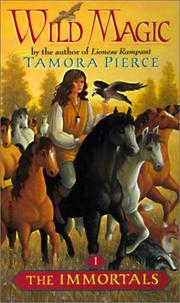
Daine and wild magic — talking to animals as a genuine power rather than a charm. Stronger prose than the Alanna books and the point where most readers get properly hooked.

Daine among wolves and the environmental plot Pierce clearly cares most about. Series-tagged in our catalogue as The Immortals #2.
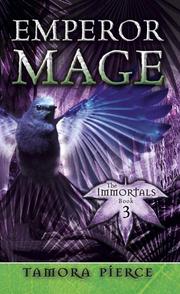
Daine in Carthak, and the best single book in Tortall — a diplomatic mission that turns into something much darker. Carries the Immortals #3 tag.
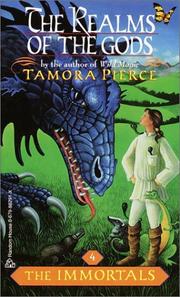
Closes the quartet in the divine realms. Read in sequence; it depends on all three.
Protector of the Small: Keladry
BeginnerRead the third quartet, which is deliberately the anti-Alanna: no disguise, no magic, no divine favour.
▸ Study plan for this stage
Pace: 1,333 pages across four, and the most uneven quartet in length: First Test 232, Page 268, Squire 404, Lady knight 429. That is the shape of the story — two short setup books and two long ones — so budget accordingly rather than assuming a book a week throughout. Six to eight weeks is realistic. Do n
- The anti-Alanna design: everything that made the first quartet possible removed on purpose
- Institutional resistance as the actual antagonist, distributed across adults who are not villains
- Competence over talent as the quartet's thesis, built slowly and mostly through unglamorous scenes
- The length jump from 232 to 429 pages tracking Kel's expanding responsibility
- The Chamber of the Ordeal as a test of character rather than of power, and how it differs from Alanna's
- Leadership and logistics as heroic material, which is a genuinely unusual thing for the genre to attempt
- What exactly does First Test make Kel face that Alanna never had to, and who enforces it?
- Why is Page the quartet's least eventful book, and what would be lost by cutting it?
- How does the Chamber of the Ordeal differ in what it tests between the two knights?
- Is Lady knight a war novel, an administration novel, or both? What does it choose to dramatise?
- Which quartet makes the stronger case about women and institutions — the one that goes around the barrier or the one that stands in front of it?
- List every adult who obstructs Kel and mark whether they are malicious, indifferent or simply following a rule. The distribution is the argument.
- Note the point in each of the four books where Kel wins by preparation rather than by ability, and count them.
- Read Kel's Ordeal and Alanna's back to back and write down what each test assumes about its candidate.
- Return to the prediction you wrote at the end of stage one about what a girl knight story cannot do, and mark what Lady knight falsified.
Next up: The three core quartets are complete and self-contained, which makes the later strands genuinely optional rather than necessary.
Keladry becomes the first girl to train openly as a knight, and Pierce spends the book on the institutional resistance that Alanna's disguise let her skip. The most quietly angry book in Tortall.

Kel's page years, and the one that most rewards patience — Pierce is building a slow argument about competence over talent.

The longest and best of the four. Kel's squire years, the jousting, and the Chamber of the Ordeal.

Closes the quartet with Kel running a refugee camp. Read it as the answer to Lioness Rampant twenty years on.
Where Tortall goes next
IntermediateSample the three later strands — Alanna's daughter, a prequel set two centuries back, and a prequel about Numair.
▸ Study plan for this stage
Pace: Three opening volumes, 1,509 pages — Trickster's Choice 448, Terrier 581, Tempests and Slaughter 480 — and the longest books on the path by some distance: Terrier alone is more than twice the length of the shortest volume in Keladry's quartet. Six to eight weeks. Read them as samples rather than as
- Three separate continuations, each a different genre: political espionage, procedural crime, and a school story
- Aly as a spy rather than a fighter, which is the biggest tonal departure the world has taken
- The journal form in Terrier as Pierce's most formally ambitious writing, and what a first-person daily record can and cannot show
- A prequel set two centuries earlier and what it reveals about Tortall as a constructed history rather than a backdrop
- Numair read backwards: a character you already know given a student's ignorance
- Unfinished strands as a practical reading problem — where to stop when the series has not
- How does Trickster's Choice change the kind of power the series is interested in?
- What does the journal form in Terrier let Pierce withhold, and where does she exploit it?
- What does seeing Tortall two hundred years earlier do to the political world of the quartets?
- Does Tempests and Slaughter work for a reader who has not met Numair? Test it against a specific scene.
- Given that none of these three strands is complete on this path, which one would you actually continue, and why?
- Before starting, write down which of the three premises interests you most, then read that one first and treat the others as optional.
- In Terrier, mark three places where the journal form conceals something a third-person narrator would have shown.
- List everything Tempests and Slaughter tells you about Numair that changes a scene you remember from the Immortals quartet.
- Draw the Tortall timeline with all four strands on it and mark where the two-century gap sits; the map is the clearest answer to what order this world can be read in.
Next up: This path covers fifteen of the Tortall books; continuing means finishing whichever of the three strands you chose, plus the Circle of Magic books, which are a separate world entirely.

Alanna's daughter Aly as a spy in the Copper Isles. The most political Tortall book and a genuine change of genre; its sequel Trickster's Queen completes the duology.

Provost's Guard, two hundred years before Alanna, written as Beka Cooper's journals. The most formally ambitious Pierce and the first of a trilogy with Bloodhound and Mastiff.
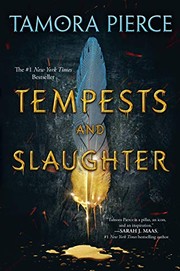
Numair's student years at the Carthaki university, opening The Numair Chronicles. Read last: it works far better once you know who he becomes in the Immortals books.