Start with Alanna, published as Alanna: The First Adventure, in which Alanna of Trebond swaps places with her twin brother to train as a knight. It is short, fast and unmistakably 1980s young adult fantasy, and everything later in Tortall assumes it. The alternative people reach for — starting with the better-written second quartet — costs you the argument the series is actually making, because each quartet is a deliberate response to the one before it.
Tortall is unusually easy to order: four connected quartets, each following a different girl into a different kind of power, and for once publication order and internal chronology agree. Read them as Pierce wrote them. The full ordered list is on the Tamora Pierce path.
Song of the Lioness
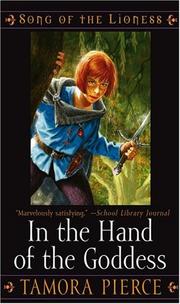
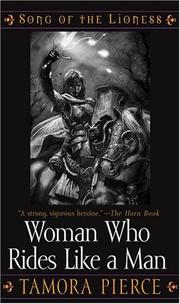
Alanna, then In the Hand of the Goddess, then The Woman Who Rides Like a Man, then Lioness Rampant. The four were conceived as a single novel and the split is arbitrary, so read them as one book. The second is where the disguise caper acquires stakes; the third, set in the desert among the Bazhir, is the most dated of the four on cultural grounds and the one where Pierce's ambitions visibly outgrow the format. Our record for the first book is filed under the short title and carries an impossible publication year, which is a cataloguing error rather than a different edition.
The Immortals
Set roughly a decade later, with Alanna now a supporting adult. Wild Magic introduces Daine and wild magic — talking to animals as a real power rather than a charm — and the prose is a clear step up; this is where most readers get properly hooked. Then Wolf-Speaker (The Immortals #2), then Emperor Mage (Immortals #3), which is the best single book in Tortall: a diplomatic mission to Carthak that turns much darker than it starts. The Realms of the Gods (The Immortals #4) closes the quartet in the divine realms and depends on all three before it.
Protector of the Small
Deliberately the anti-Alanna: no disguise, no unusual magic, no divine favour. First Test (Protector of the Small #1) has Keladry train openly as the first girl to do so, and Pierce spends the book on the institutional resistance that Alanna's disguise let her skip. It is the most quietly angry book in Tortall. Page (Protector of the Small) is a slow argument about competence beating talent. Squire (Protector of the Small #3) is the longest and best of the four at 404 pages. Lady knight closes the quartet with Kel running a refugee camp, and reads as the answer to Lioness Rampant twenty years on.
Where Tortall goes next
Trickster's Choice follows Alanna's daughter Aly as a spy in the Copper Isles; it is the most political Tortall book and a genuine change of genre, and its sequel Trickster's Queen — not in our catalogue — completes the duology. Terrier (Beka Cooper #1) jumps two hundred years back, is written as journals, and is the most formally ambitious thing Pierce has done; Bloodhound and Mastiff complete that trilogy and are likewise absent here. Tempests and Slaughter (The Numair Chronicles, Book One) covers Numair's student years and works far better once you know who he becomes, so read it last.
Several of these records carry the series tag inside the title. That is how our catalogue stores them; the books themselves are titled plainly.
What is not here, and what parents should know
The Circle of Magic books are set in a different world entirely and are not part of this order. They are a reasonable alternative starting point for a younger reader.
Pierce writes about sex, contraception and consent directly, which is the main reason these books get challenged. Characters take lovers, use a magical charm against pregnancy, discuss what they do and do not want, and the discussions are framed as the point rather than as incident — Pierce has been explicit that she wrote them that way on purpose. The first quartet also contains sexual assault as a plot element. None of this is graphic, and it begins in the second book rather than the first. An adult choosing for a ten-year-old should know it is there; an adult choosing for a fourteen-year-old will probably find it is the reason to hand the books over. More fantasy orders are on Discover.
Ready to learn something deeply?
Build a reading path — free