Sweet Tooth Reading Order: Where to Start Jeff Lemire's Post-Apocalyptic Comic
Sweet Tooth is a forty-issue series about a boy with antlers, a violent man who may or may not be protecting him, and a plague that arrived at the same moment as the hybrid children. Jeff Lemire wrote and drew all of it, which is unusual for a Vertigo series and is why it holds together — it is one long book rather than a serial. That creates a buying problem: it exists as six slim trades, three larger Book collections, and a later sequel, and the three sets overlap. This path takes the Book One / Book Two / Book Three collections, because in our catalogue that is the only convention that gives a complete run with no gaps and no duplicates. A note on why: the numbered trades resolve unevenly here — volumes three through six come back exactly, but a query for volume one and a query for volume two both return the same undifferentiated 2010 record, so building the path on the slim trades would silently list one book twice and skip another. After the core run the path takes the sequel, then Lemire's other creator-owned work, which is where most readers go next.
The Main Series, in Three Volumes
BeginnerRead the complete forty-issue run in order. By the end you should know what the Preserve was, who Jepperd is underneath the violence, what the plague and the hybrids actually have to do with each other, and why the ending is the only one the opening allows.
▸ Study plan for this stage
Pace: Two to three weeks for 972 pages — 300, 304 and 368 — which is the whole forty-issue run in three collections. These are Book-tier collections, so each holds roughly a dozen issues and is two or three sittings rather than one; Lemire's pages are sparse and his line is fast, so a 300-page volume goes
- One author writing and drawing all forty issues, which is why the series reads as a single book rather than a serial
- Gus and Jepperd as the central pairing — a protected child and a man whose protection is not disinterested
- The Preserve as the middle section's engine, and the point at which the road story ends
- Dr Singh as the series' conscience and its worst actor, often in the same scene
- The plague and the hybrid children arriving at the same moment, and what the series eventually says the connection is
- An ending determined by the opening: why the last pages are the only ones the first issue permits
- What is Jepperd doing in Book One, and at what point were you given enough to know?
- What was the Preserve, and who is responsible for what happened there?
- What is the actual relationship between the plague and the hybrid children, and when does the series commit to an answer?
- How does Lemire use flashback in Book Three, and what would the ending lose if the flashbacks were removed?
- Is the ending the only one the opening allows? Argue it from the first issue rather than from the last.
- Check the edition before buying. This path uses the Book One / Book Two / Book Three collections; the six slim trades overlap them and in our catalogue two of the trades return the same undifferentiated record, so mixing tiers risks reading one volume twice and skipping another.
- Keep a note of what you believe Jepperd wants, updated at the end of each Book. Three entries is a compact record of how the series manages a character whose motives are the plot.
- Read Books Two and Three with no gap, then go back and find the earliest panel that foreshadows the ending. It is earlier than most readers expect.
- Lemire writes and draws the whole run. Pick a page where the drawing carries information the script does not, and describe what it does. Single-authorship is the series' main technical fact and this is where you see it.
Next up: With the forty-issue run complete you can read the later return to the world as what it is — a separate story rather than a continuation.

The start of the run and the whole reason to read it: Gus alone in the woods after his father dies, and the arrival of Jepperd. Collects the first two slim trades, so starting here means you have not skipped anything.

The middle stretch, where the Preserve and Dr Singh take over and the series stops being a road story. This is where most readers either commit or stop, and it is the volume that pays back the slow opening.

The Alaska sequence and the ending. Read it directly after Book Two — the last stretch depends heavily on flashbacks whose weight you will lose if you leave a gap. Catalogued with a comma as Sweet Tooth, Book Three; it is the same collection.
The Sequel
IntermediateRead the later return to the world and be able to say how it relates to the original — it is a separate story rather than a continuation, and knowing that before you open it prevents the usual disappointment.
▸ Study plan for this stage
Pace: One evening. This is the 2020 six-issue sequel, 152 pages, set long after the main run and structured as a deliberate mirror of its opening — which is the reason it works better read immediately after Book Three, while the opening is still fresh. Read it knowing it is a separate story rather than a
- A sequel structured as a mirror of the original's opening rather than as a continuation of its ending
- Returning to a finished world years later, and what the choice of a new protagonist does
- Six issues as a deliberate constraint after forty, and what a short book can and cannot do
- Expectation management as part of reading: what this book is for, stated before you start
- The cataloguing collision between the sequel and the original, and how to tell which you are buying
- In what specific ways does the sequel mirror the opening of Book One?
- What does it add to the original — a perspective, a consequence, or a variation?
- Would this book work read on its own, with no knowledge of the forty-issue run?
- What does six issues let Lemire do that forty did not, and what does it prevent?
- Does the sequel change how the main series ends, or leave it untouched? Answer from the text.
- Before ordering, confirm you are getting the sequel rather than the original: check the date and the page count against what you have already read.
- Reread the first ten pages of Book One immediately before opening the sequel. The mirroring is constructed and it is much clearer with the original fresh.
- Write one sentence stating what the sequel is for. If you cannot, that is a legitimate finding and worth being able to defend.
Next up: With the world closed twice over, the next stage goes backwards to the earlier work Sweet Tooth's method came out of.

The 2020 six-issue sequel, set long after the main run and structured as a deliberate mirror of its opening. Our catalogue holds it under the bare display title Sweet Tooth with a 2021 date rather than under the full The Return title, so it looks like the original series in a listing; it is the sequel.
Where Lemire Came From
IntermediateRead the earlier work that Sweet Tooth grew out of. You should be able to describe the small-town Ontario register Lemire keeps returning to, and see how the mute-boy-and-damaged-adult pairing predates Gus.
▸ Study plan for this stage
Pace: Three to four weeks for 1,020 pages, and these read much more slowly than the comics you have just finished. The Collected Essex County is 517 pages — the omnibus of all three linked stories, and the edition to want — and it is deliberately quiet, with long wordless passages that collapse if you rea
- The small-town Ontario register Lemire keeps returning to — farms, hockey, silence, weather
- The mute or nearly-mute boy paired with a damaged adult, a structure that predates Gus by years
- Wordless sequence as Lemire's primary emotional tool, used at length rather than as punctuation
- The Underwater Welder as the theme stated plainly, without the plot Sweet Tooth buries it under
- Roughneck as the same material with no genre element at all, and what genre was doing in the other books
- Three linked stories in one omnibus: how Essex County uses recurrence across separate narratives
- What is the recurring pairing in Essex County, and how closely does it map onto Gus and Jepperd?
- How does Lemire use silence — count the wordless pages in one Essex County story and say what they carry.
- The Underwater Welder is a father, a death and a coming child. What does Sweet Tooth do with the same material, and what does the plot add or hide?
- What changes in Roughneck when there is no science fiction to displace the violence onto?
- Which of these three is closest to Sweet Tooth's method, as against its subject?
- Read one Essex County story at deliberately reduced speed, stopping on every wordless page. Then read the next at your normal pace. The difference is the argument for how these books want to be read.
- List the elements shared between The Underwater Welder and Sweet Tooth. It is a short list and it is almost the whole of both books.
- Confirm your edition of Essex County is the omnibus containing all three stories rather than a single volume; the omnibus is the one this path assumes.
- After Roughneck, write two sentences on what the science fiction was doing in Sweet Tooth. Reading the version without it is the only way to answer that.
Next up: Having traced the method backwards, the final stage follows Lemire forwards into the ongoing series he moved to next.

The book that made his name — three linked stories about farms, hockey and silence in rural Ontario. Catalogued here as The Collected Essex County, which is the omnibus of all three; that is the edition to want. The closest thing to Sweet Tooth's emotional method without the science fiction.
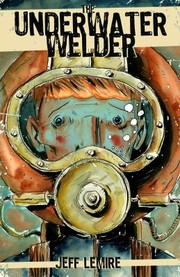
A standalone graphic novel about a diver, a dead father and a coming child, published while Sweet Tooth was still running. Short, and the most direct statement of the theme the main series buries under plot.

A brother and sister in a northern Ontario town, violence and addiction handled without any genre cushion at all. Read it third if the Essex County register is the thing you responded to.
The Genre Work After
IntermediateFollow Lemire into the ongoing series he moved to after Sweet Tooth, and be able to pick which one suits you — they are science fiction, small-town crime, superhero pastiche and horror respectively, and they share very little beyond the author.
▸ Study plan for this stage
Pace: Three to four weeks, and these five are the loosest stage on the path — they share very little beyond the author, so read what suits you rather than all of them dutifully. Two have recorded lengths: Descender Vol. 1 and Gideon Falls Vol. 1 are 160 pages each, 320 between them, and both are standard
- Trillium's inverted and interleaved structure as formal experiment, and the physical act of reading it
- Lemire drawing his own work against Lemire writing for others — the dividing line across these five books
- Nguyen's watercolour on Descender as a complete change of surface for a Lemire script
- Royal City as the bridge between the Essex County mode and the ongoing-series format
- Sorrentino's page layouts on Gideon Falls, among the most aggressive in mainstream comics
- Mazebook as a return to the quiet register, and choosing a stopping point rather than reading everything
- How does Trillium's structure work, and what does it require of you physically as a reader?
- What changes when Lemire writes for another artist rather than drawing his own script? Compare Descender with Royal City.
- What does Nguyen's watercolour do to a Lemire story that Lemire's own line would not?
- How do Sorrentino's layouts generate dread, and is the technique separable from the story?
- Which of these five is the real successor to Sweet Tooth, and on what criterion — subject, method, or audience?
- Read Trillium exactly as the book instructs, turning it where required. The structure is the book and reading it flat defeats it.
- Set a self-drawn page (Royal City or Mazebook) beside a scripted one (Descender or Gideon Falls) and describe what Lemire's own line does that a collaborator's does not.
- Pick two of these five to continue with rather than all five, and write one sentence justifying each. The stage is built to be chosen from.
- Finish with Mazebook and write a closing paragraph connecting it to The Underwater Welder. Two short self-drawn books about grief, a decade apart, are the neatest possible end to this path.
Next up: This is the end of the path: the complete forty-issue run in the one edition tier that gives it whole, the sequel read as a separate book, the earlier work the method came from, and the later series to choose among.

An eight-issue science fiction love story told in inverted and interleaved halves, drawn by Lemire himself. The most formally ambitious thing he has done and the natural next step from Sweet Tooth's artwork.
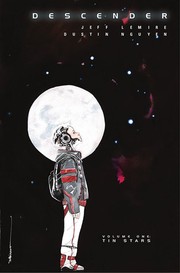
Space opera about a boy robot in a galaxy that has outlawed machines, painted in watercolour by Dustin Nguyen. The first volume of a long run; start here rather than with the Ascender sequel series.

Lemire drawing his own work again, back in a dying Ontario town with a family and a ghost. The clearest bridge between the Essex County mode and the ongoing-series format.

Horror, with Andrea Sorrentino doing some of the most aggressive page layouts in mainstream comics. Included because it is where Lemire's audience largely went after Sweet Tooth, though it shares almost nothing with it tonally.

A late, short, self-drawn book about grief and a maze, and a quiet return to the Underwater Welder register. A good place to stop.
Discussion
Keep reading
Paths that share books, cover the same subject, or open a related topic.

